

.svg)

.svg)
.svg)
.svg)
.svg)
.svg)
Retargeting has always been one of the strongest tools in digital advertising, but in 2025 it matters more than ever. Attention spans are shorter, ad costs are rising, and users rarely convert the first time they see a brand. Businesses that rely only on cold audiences often struggle to see consistent returns. This is where Facebook retargeting continues to stand out as a reliable performance driver.
Multiple industry studies show that Facebook retargeting ads can improve conversion rates by 30% to 80% while lowering cost per acquisition when compared to prospecting campaigns alone. Marketing LTB reports that retargeted users are far more likely to engage because they already recognize the brand. Instead of starting from zero, retargeting builds on existing interest.
However, many agencies still limit retargeting to website visitors only. While this approach works to a degree, it leaves a large portion of high-intent users untouched. Retargeting beyond website traffic means reaching people who engaged with social content, opened lead forms, watched videos, or interacted with a brand in other meaningful ways.
For agencies managing multiple clients, executing these advanced strategies can be difficult without the right resources. Hiring in-house specialists is costly and slow. This is why white label Facebook Ads solutions have become a smart growth option. They allow agencies to deliver advanced retargeting campaigns without expanding internal teams.
This blog focuses on practical, action-oriented strategies. You will learn why traditional retargeting falls short, how white label Facebook advertising supports deeper audience targeting, which retargeting audiences matter most, and how to structure campaigns that drive measurable results. If your agency wants to move beyond basic tactics, this guide will help you get there.
Retargeting Is More Than Website Visitors
1. Traditional Retargeting Limits
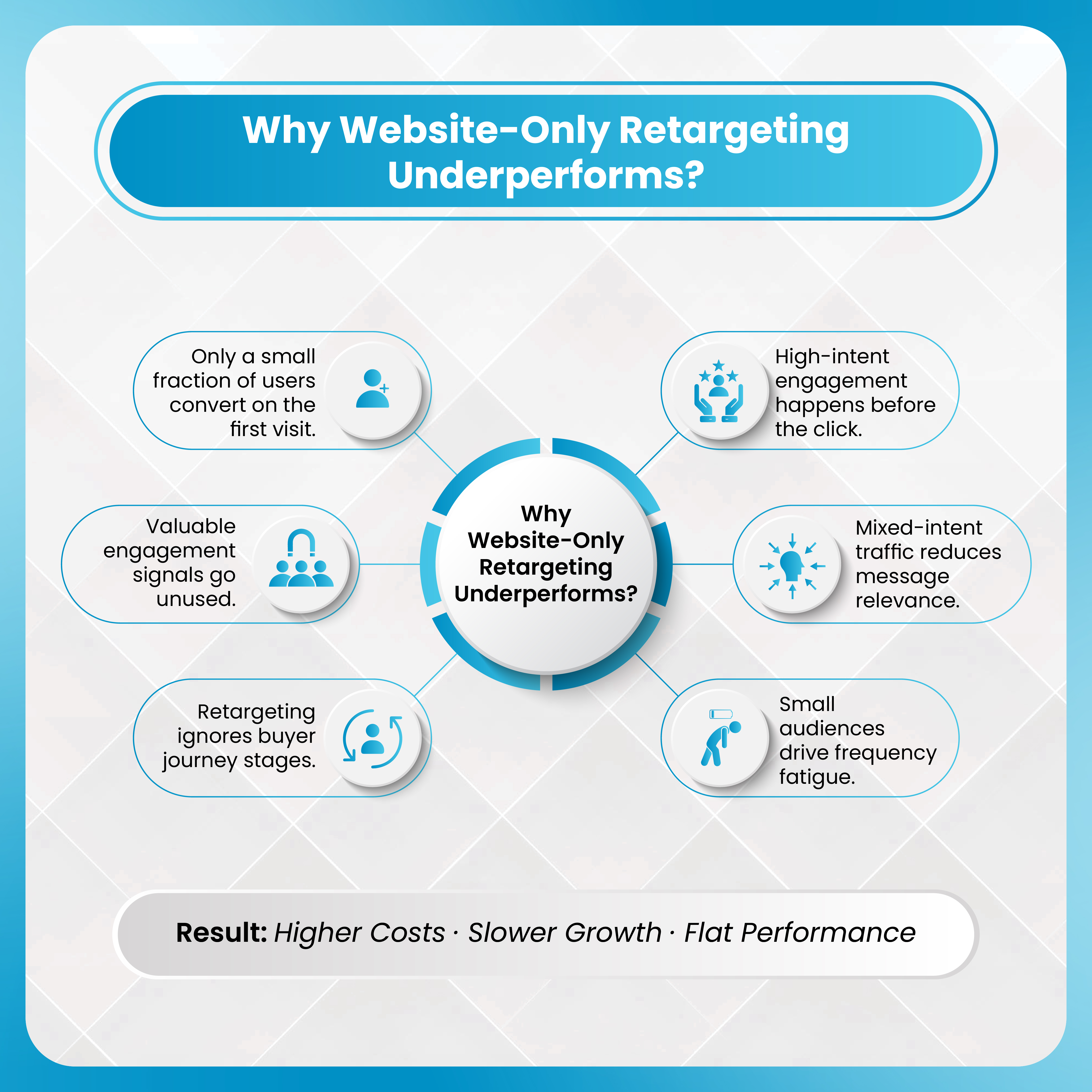
Many agencies still think retargeting means showing ads to people who visited a website in the last 30 days. While that audience is valuable, it is also limited. According to data from 7milemedia.com, only about 2% of website visitors convert on their first visit. That means 98 percent leave without taking action.
When agencies rely on a single website visitor audience, performance often plateaus. The audience size stays small, ads repeat too often, and users experience fatigue. Over time, costs rise while results flatten.
Another challenge is that website traffic alone does not reflect the full buyer journey. Many users engage with brands on social media before ever visiting a website. Others may watch a video, save a post, or open a lead form without submitting it. These actions show intent, yet they are ignored when retargeting is limited to page visits.
2. Why Your Clients Demand More
Advertising costs on Facebook and Instagram continue to increase as competition grows. Higher cost per click makes inefficient retargeting harder to justify. Clients expect clear returns and measurable impact on revenue.
Basic website retargeting misses several valuable audience groups, including:
- People who engaged with social posts or ads.
- Users who watched videos but never clicked through.
- Leads who opened a form but did not submit.
- Existing customers stored in CRM systems.
- Offline conversions, such as calls or in-store visits.
Ignoring these segments leaves money on the table. Clients want smarter use of ad spend, especially when budgets are under pressure.
3. Fragmented Execution
Most in-house teams struggle to manage advanced retargeting because it requires multiple skill sets. These include deep segmentation knowledge, creative sequencing, tracking accuracy, and consistent optimization. Without these, campaigns suffer from audience overlap, wasted spend, and unclear reporting.
What worked a few years ago is no longer enough. Rising costs and higher client expectations demand a more structured approach to retargeting that goes far beyond website visits.
White Label Facebook Ads as a Retargeting Engine
What White Label Facebook Ads Services Offer?
White label Facebook Ads services give agencies access to a complete retargeting infrastructure without building it internally. Instead of managing every detail, agencies partner with specialists who handle execution behind the scenes.
A strong white label solution typically includes:
- End-to-end campaign setup and management
- Custom audience planning based on user behavior
- Facebook pixel and Conversions API integration
- Creative development and ad sequencing
- Ongoing optimization and performance analysis
- Fully brandable dashboards for client reporting
DashClicks, for example, provides a white label dashboard that allows agencies to present results under their own brand while maintaining full transparency for clients.
Why Agencies Prefer White Label for Retargeting?
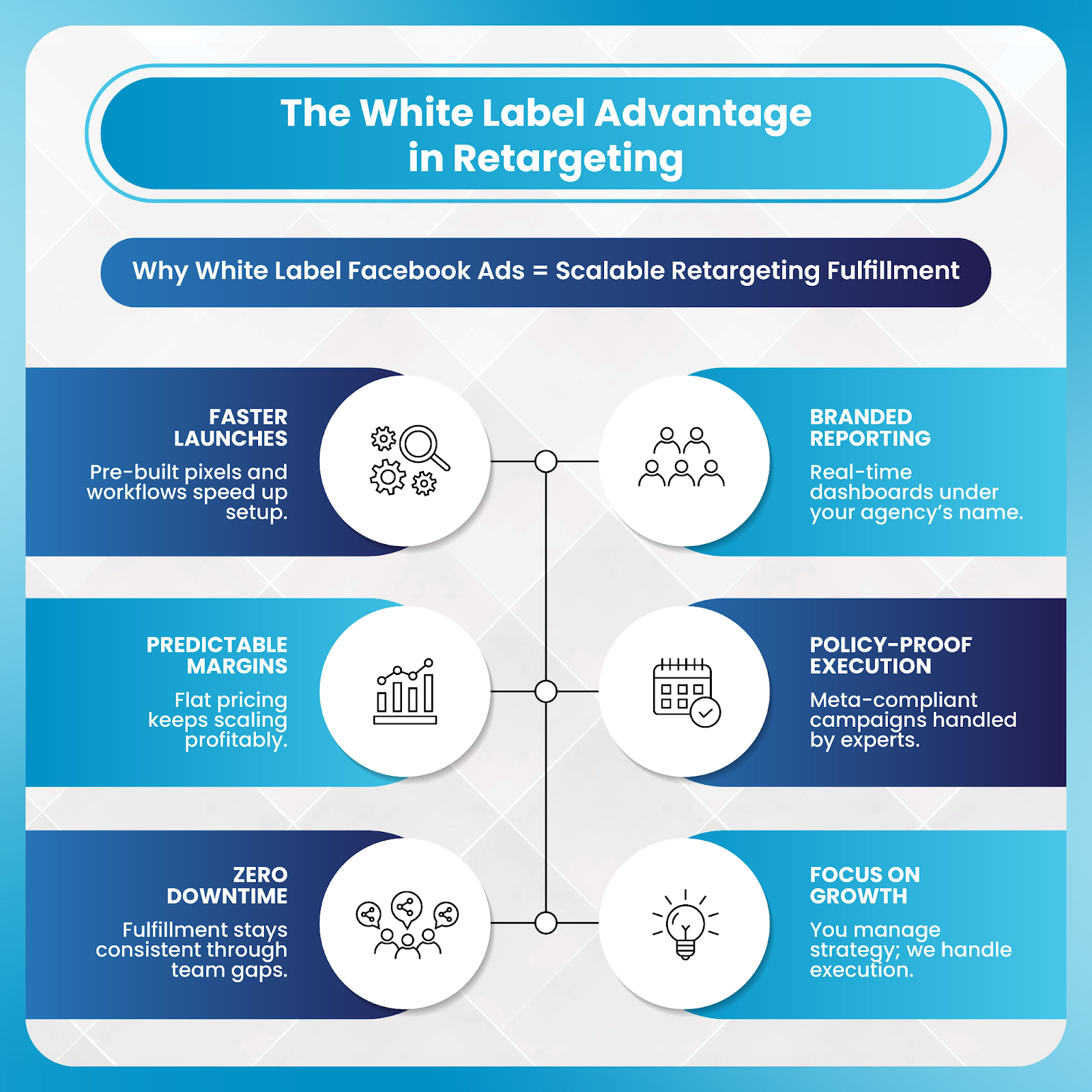
One of the biggest advantages is scalability. Agencies can manage more accounts and more complex campaigns without increasing headcount. This reduces financial risk while improving delivery speed.
White label partners also bring platform expertise. Meta’s advertising ecosystem changes often, from tracking updates to creative formats. Dedicated specialists stay current, helping agencies avoid costly mistakes.
Most importantly, clients benefit from higher ROI. Retargeting campaigns built on data and proven frameworks consistently outperform those based on guesswork. When execution improves, results follow.
The challenge is rarely a strategy. It is execution at scale. This is where white label Facebook Ads services become essential for agencies aiming to grow.
Further Reading: Building Retargeting Ecosystems Using White Label Facebook Ads Services
Retargeting Audiences Beyond Website Visits
Advanced retargeting starts with better audience signals. White label teams help agencies unlock these signals and structure them correctly.
1. Engagement-Based Retargeting
Social engagement is one of the strongest indicators of interest. Facebook allows advertisers to retarget users who interact with content across its platforms.
Key engagement audiences include:
- People who liked, commented, or shared posts.
- Users who saved content or followed a page.
- Instagram profile visitors and story interactions.
Video engagement is especially powerful. According to data from JJSC, retargeting users who watched at least 50% of a video often results in higher conversion rates than generic audiences. These viewers have already invested time and attention.
Lead form engagement is another high-intent group. Users who opened a lead form but did not submit are often close to converting. Retargeting them with a reminder or incentive can drive strong results.
2. CRM and First-Party Data Retargeting
First-party data is becoming more valuable as privacy rules evolve. Uploading customer email lists or phone numbers into Facebook allows brands to re-engage existing leads and customers.
Leadenforce reports that brands using first-party data in retargeting see up to 25% higher ROI compared to those relying only on third-party signals. These audiences are accurate, relevant, and compliant.
White label teams help clean, segment, and refresh CRM data to ensure campaigns remain effective without overwhelming users.
3. Event-Driven Retargeting
Event-based audiences focus on specific actions users take. These actions signal intent and help prioritize spend.
Common event audiences include:
- Add-to-cart without purchase.
- Initiate checkout but abandon.
- Downloaded content or attended webinars.
Proper structuring is critical. White label specialists separate these groups, control overlap, and assign tailored messaging to each stage. This reduces fatigue and improves relevance.
4. Lookalikes Based on Retargeted Pools
Once high-quality retargeting audiences are built, they can be used to create lookalike audiences. These expand reach while maintaining strong performance.
Marketing LTB reports that lookalikes built from engaged or converted users can perform up to 45 percent better than cold interest-based audiences. White label teams manage this expansion carefully to protect efficiency.
With expert execution, agencies can move beyond website traffic and tap into richer intent signals that drive better outcomes.
Retargeting Campaign Structures That Drive Results
1. Sequential Messaging Funnels
Effective retargeting is not about showing the same ad repeatedly. Sequential messaging guides users through stages of awareness and decision-making.
A common structure includes:
- Educational or awareness video.
- Value-focused message explaining benefits.
- Conversion-focused offer or call to action.
This approach feels natural and builds trust over time. White label teams manage timing and creative rotation to keep users engaged.
2. Dynamic Creative and Personalization
Facebook’s dynamic ads allow brands to show products or services users have already viewed. Personalization increases relevance and reduces wasted impressions.
Marketing LTB notes that personalized retargeted ads significantly outperform generic prospecting campaigns. Dynamic creative adapts to user behavior, improving efficiency.
3. Multi-Channel Retargeting
Advanced retargeting uses more than one placement or format. Combining Facebook and Instagram ads with Messenger follow-ups or email sequences captures more touchpoints.
A best white label Facebook ads specialist coordinates these efforts, so messaging stays consistent while adapting to each channel.
4. Frequency and Fatigue Management
Even strong audiences can burn out. Smart frequency control prevents overexposure and protects brand perception.
White label teams monitor frequency, test formats like carousels or reels, and refresh creatives regularly. This keeps engagement high and costs stable.
Strong results come from structure, not repetition.
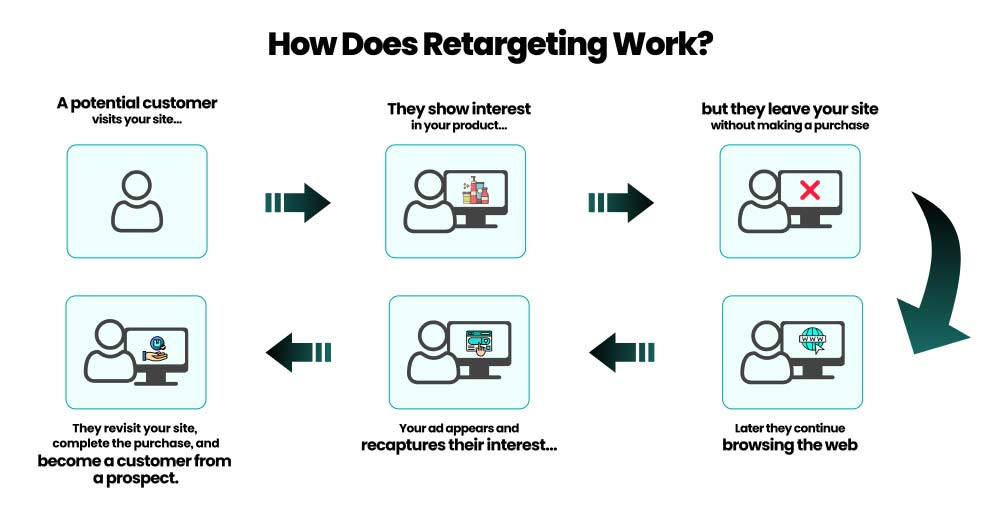
Image Source: Mastroke
Optimization and Measurement - What Agencies Must Track
Strong retargeting does not end once campaigns go live. Ongoing optimization and accurate measurement are what turn good performance into consistent, long-term results. As ad platforms evolve and privacy rules tighten, agencies must look beyond surface-level metrics to understand what is truly driving growth.
1. Advanced Metrics Beyond CTR
Click-through rate is useful, but it only shows how often people interact with an ad, not whether those interactions create real value. Effective retargeting focuses on deeper performance indicators that reflect business impact.
Key metrics to prioritize include:
- Cost Per Qualified Action: Measures how much it costs to drive meaningful actions such as completed lead forms, demo bookings, or purchases, not just clicks.
- Conversion Lift Compared to Control Groups: Helps identify how much retargeting actually influences conversions rather than taking credit for actions that may have happened anyway.
- Return on Ad Spend by Audience Segment: Breaks down which retargeting audiences deliver the highest value so budgets can be allocated more efficiently.
Tracking these metrics gives a clearer picture of which strategies are working and where improvements are needed.
2. Attribution and CAPI
Accurate attribution has become more challenging with increased privacy restrictions and browser limitations. Server-side tracking through Facebook’s Conversions API plays a critical role in closing this gap. By sending conversion data directly from servers instead of relying only on browser-based tracking, campaigns receive more reliable signals.
Industry publications such as SQ Magazine note that improved tracking leads to stronger optimization signals and more stable performance, especially after recent privacy updates. Better data allows retargeting algorithms to learn faster and optimize more effectively.
3. Iterative Testing Frameworks
Optimization is an ongoing process, not a one-time setup. White label teams follow structured testing frameworks that continuously refine campaign performance. These tests typically focus on:
- Creative variations such as headlines, visuals, and formats.
- Different offer angles or call-to-action.
- Audience segmentation and lookback windows.
Regular testing prevents campaigns from becoming stagnant and helps uncover new opportunities for improvement as audience behavior changes.
4. Reporting to Clients
Clear and transparent reporting is essential for long-term client relationships. White-labeled dashboards allow agencies to present data in a way that connects ad spend directly to results. Instead of overwhelming clients with raw numbers, reports highlight revenue impact, audience performance, and growth trends.
When clients can clearly see how retargeting contributes to their bottom line, trust increases and retention becomes easier. Consistent reporting turns optimization efforts into a visible competitive advantage for agencies.
How DashClicks Powers Advanced Facebook Retargeting for Agencies?
DashClicks helps agencies move beyond basic retargeting by providing a complete white label Facebook advertising solution designed for scale. Instead of focusing only on website visitors, DashClicks enables agencies to retarget users based on social engagement, CRM data, and event-driven actions such as add-to-cart or lead form interactions.
Campaigns are managed by dedicated Facebook Ads specialists who handle setup, Conversions API integration, creative sequencing, and ongoing optimization. DashClicks also applies structured messaging funnels, intent-based segmentation, and frequency controls to improve conversion quality. Fully white-labeled reporting dashboards allow agencies to present performance data clearly, focusing on qualified leads, ROAS, and long-term growth without building an internal ads team.
Conclusion and Action Steps
Retargeting has evolved. Relying only on website visitors limits growth and wastes valuable signals. In today’s competitive environment, agencies need deeper audience insights, smarter messaging, and accurate tracking to deliver results clients expect.
White label Facebook Ads services make this possible. They provide expertise, structure, and scalability without the cost of building in-house teams. By expanding retargeting beyond website visits, agencies unlock higher intent audiences and stronger performance.
Now is the right time to audit your current retargeting approach. Identify gaps, explore engagement-based and first-party audiences, and partner with a white label provider that supports growth.


.svg)


.svg)
.svg)
.svg)
.svg)
.svg)