

.svg)

.svg)
.svg)
.svg)
.svg)
.svg)
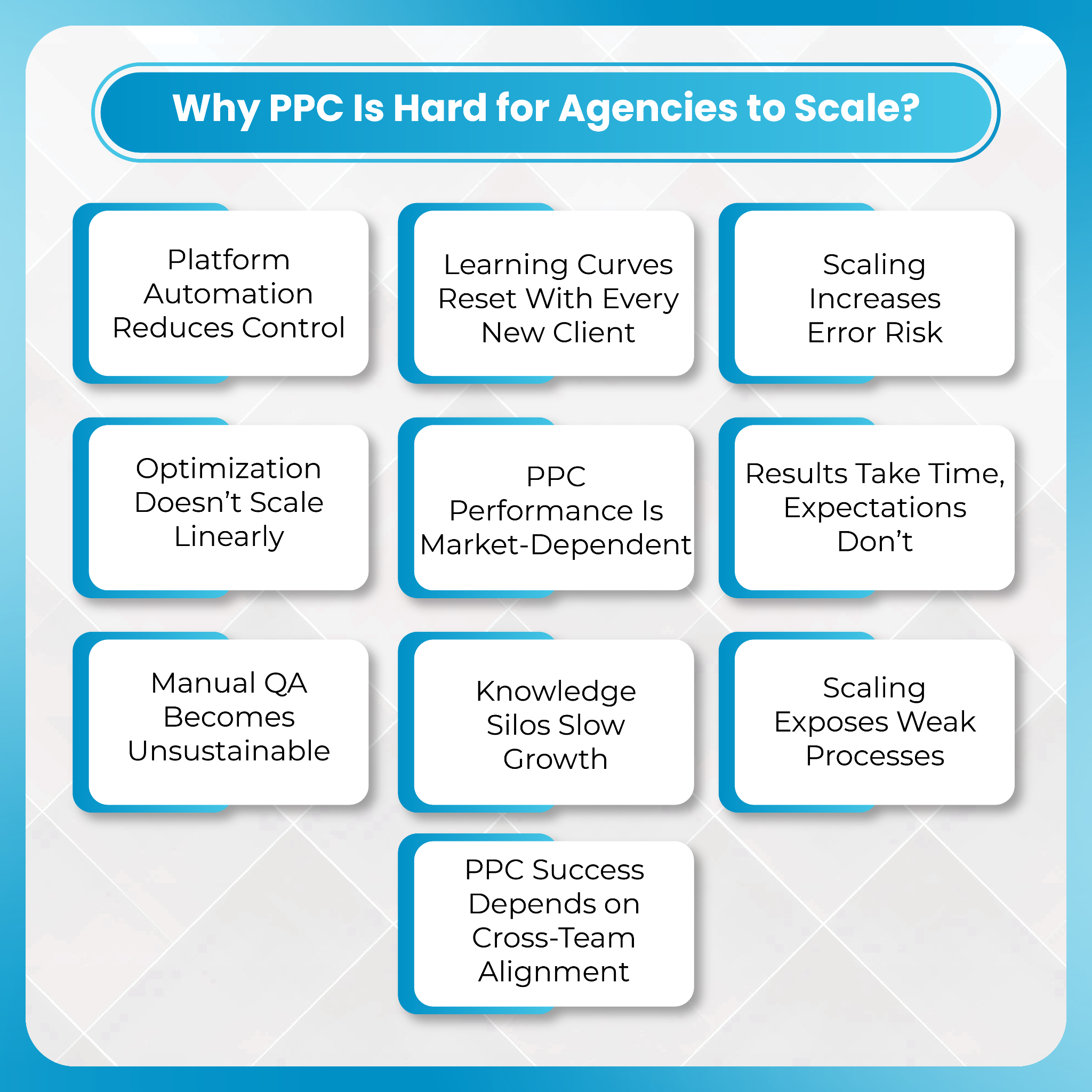
Adding PPC clients creates more than additional campaign-management work. Each new account introduces a new set of coordination requirements, fulfillment responsibilities, and quality standards that need to be maintained alongside everything already in motion.
As an agency grows, operations become more complex across account assignments, client onboarding, fulfillment workflows, quality assurance, staffing, reporting, and internal oversight. The underlying challenge is straightforward: the larger the client portfolio becomes, the harder it is to maintain consistent PPC delivery quality without creating operational strain.
That challenge is rarely about a lack of PPC expertise. Most agencies growing their portfolios already have capable specialists. The real difficulty is operationalizing that expertise consistently across an expanding book of business.
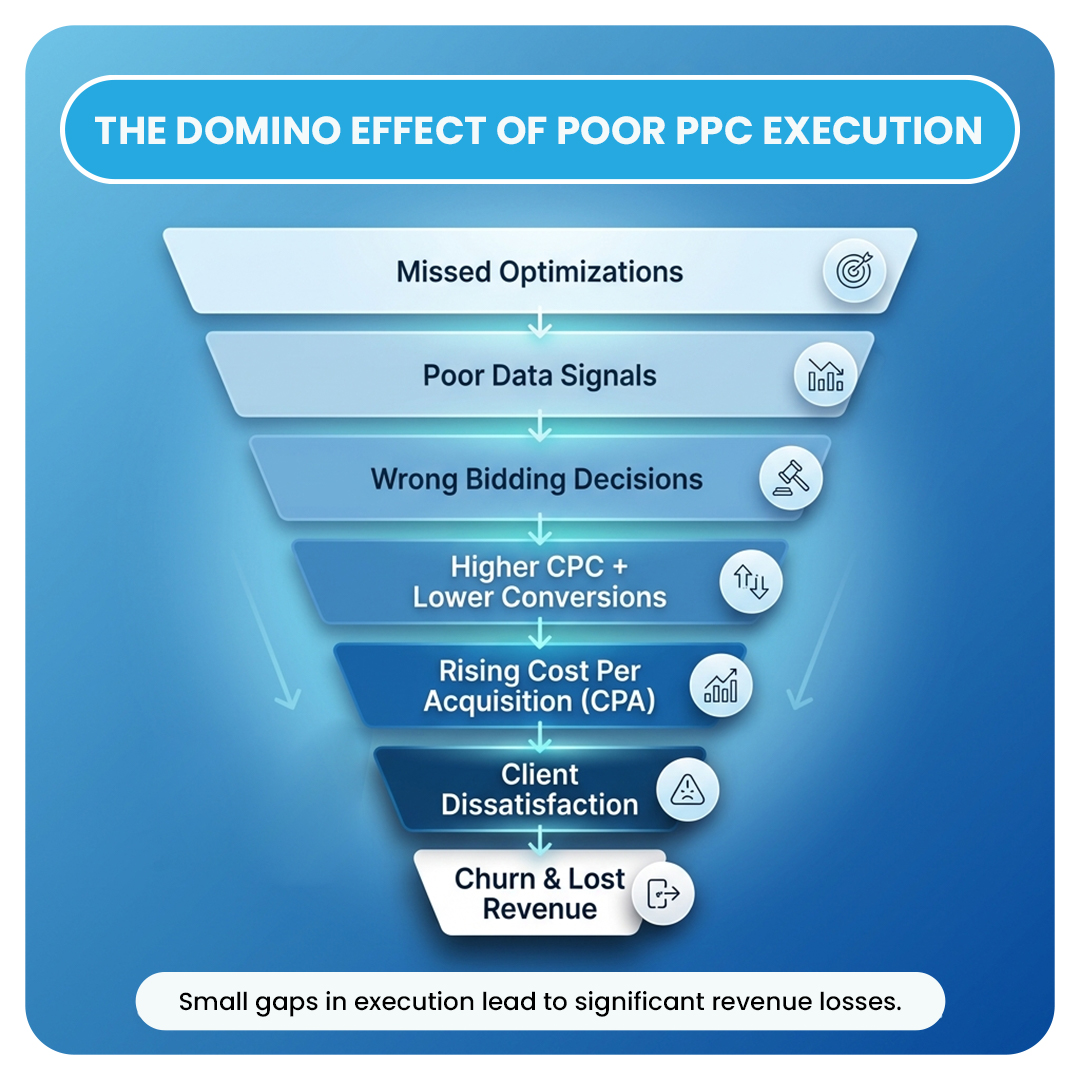
To understand what's at stake, consider the benchmarks from WordStream's 2025 analysis of more than 16,000 U.S. campaigns. The data shows an average CPC of $5.26, an average conversion rate of 7.52%, and an average cost per lead of $70.11. These figures illustrate why execution consistency matters. Small inefficiencies in PPC management add up quickly at these price points, and clients notice when performance drifts.
White label PPC services offer one path forward for agencies that need additional fulfillment capacity without immediately expanding every layer of their internal operation. This article walks through the specific operational challenges agencies encounter as they grow, and explains where structured white label PPC fulfillment can help.
1. PPC Account Assignments Become Harder to Balance
Assigning accounts based purely on client count stops making sense once your portfolio grows past a certain point. Two agencies might both have 40 PPC clients, but their actual fulfillment workloads could look very different depending on what those accounts require.
Several factors make some accounts significantly more demanding than others:
- Monthly ad spend: Higher-budget accounts often require more frequent monitoring, bid adjustments, and strategic decisions.
- Campaign complexity: Accounts running multiple campaigns across different objectives and bidding strategies take more time to manage than simple single-campaign setups.
- Geographic targeting: Multi-location or national campaigns may require more detailed segmentation and location-specific optimization.
- Conversion goals: Different conversion actions, such as form submissions, phone calls, or e-commerce purchases, require different tracking setups and optimization approaches.
- Client requirements: Some clients expect weekly check-ins, detailed reports, or frequent approval loops, all of which add coordination time.
- New client wins: An unexpectedly large account win can immediately disrupt the workload balance across your existing team.
Ten complex accounts can require more resources than thirty straightforward ones. Without a clear framework for evaluating actual workload, account assignments can become uneven and difficult to manage.
How White Label PPC Services Help?
A white label PPC agency can absorb new accounts or high-demand clients without immediately redistributing work across your existing team. External specialist capacity reduces internal workload pressure, allows new wins to be onboarded without disruption, and decreases dependence on a small number of internal specialists who are already stretched.
2. Client Onboarding Becomes a Fulfillment Coordination Problem
Client onboarding involves far more than receiving Google Ads access and starting campaigns. A complete and accurate information handoff is what determines whether a campaign launches correctly, on time, and aligned with the client's actual goals.
Several requirements must be addressed before fulfillment can begin:
- Google Ads access: Account access needs to be confirmed and verified before any work starts. Delays here push launch timelines back immediately.
- Analytics access: Relevant analytics data should be connected so performance can be tracked and informed decisions can be made.
- Conversion tracking: Tracking requirements should be identified early to avoid launch delays or data gaps that affect optimization.
- Campaign objectives: Fulfillment teams need to understand what the client is actually trying to achieve, not just what ad formats to run.
- Budget: Budget levels directly affect campaign structure, bidding strategy, and what is realistic to deliver.
- Geographic targeting: Service areas and location requirements should be confirmed before campaigns are built.
- Existing account history: Previous campaign data can inform decisions and help avoid repeating past mistakes.
- Landing pages: Destination pages need to be reviewed before launch to ensure they support the campaign's conversion goals.
- Client approvals: Any approval workflows should be identified upfront so they do not cause launch delays midway through setup.
- Sales-to-fulfillment handoff: Incomplete information passed from the sales team to the fulfillment team often results in rework, follow-up calls, and delayed launches.
As account volume grows, each of these steps becomes a coordination point that can slow the overall process down.
How Do White Label PPC Services Help?
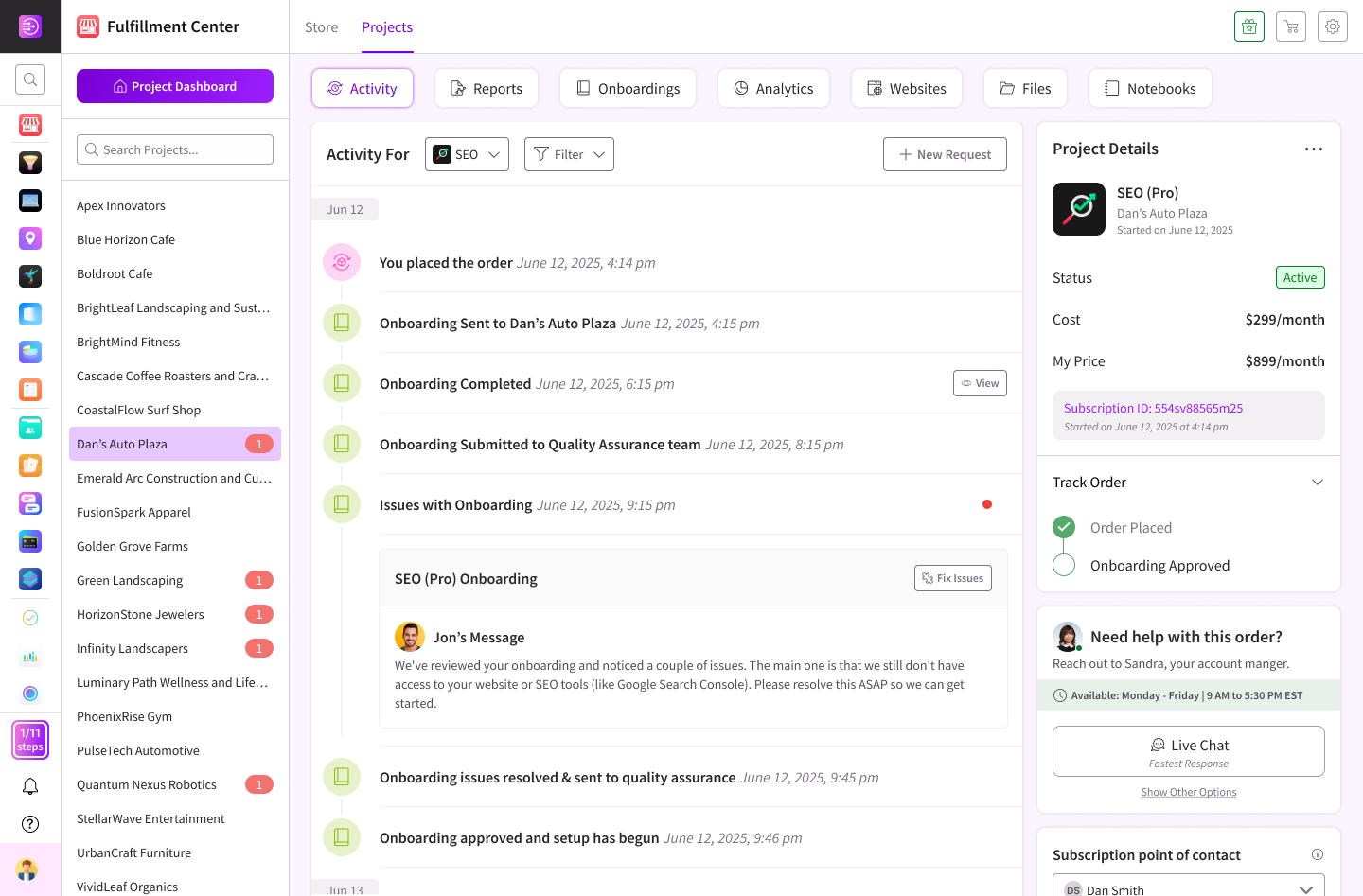
White label PPC services with standardized onboarding workflows make this process more repeatable. Dedicated fulfillment teams that follow defined intake procedures can reduce the inconsistencies that come from managing onboarding differently for each client.
3. Maintaining Consistent PPC Processes Becomes Difficult
When an agency has one or two PPC specialists, processes tend to stay consistent by default. As the team grows, individual working styles naturally diverge. Without documented standards, this inconsistency becomes an operational problem.
- Campaign setup: Different specialists may structure accounts in different ways, making it harder to review, hand off, or audit accounts consistently.
- Optimization: Review frequency and optimization priorities may vary between team members, leading to uneven account attention.
- Documentation: Account notes and internal records may not follow a consistent format, making it harder for others to understand an account's history.
- QA: Without a shared standard, quality checks may be applied differently depending on who is reviewing the work.
- Recurring tasks: Routine account checks may be completed at different intervals or not at all, depending on individual habits.
- Training: New hires may learn processes differently based on who trains them, which compounds inconsistency over time.
Relying on individual knowledge and habits rather than documented processes creates an operational risk that grows alongside your team.
How White Label PPC Services Help?
A structured white label PPC partner typically operates with defined SOPs, repeatable account processes, and standardized workflows. This makes account handoffs more reliable and reduces dependence on any one specialist's personal approach.
4. PPC Q/A Gets Harder Across a Growing Account Portfolio
Quality control is manageable when account volume is low. As the portfolio grows, the number of campaigns, changes, and execution points increases significantly, and manual review becomes harder to sustain.
- More accounts create more campaign changes that need to be verified.
- More specialists create more execution points where errors can occur.
- More changes across more accounts mean more opportunities for configuration mistakes.
- Managers have less time to manually review every change as the portfolio scales.
- Self-review becomes more common when teams are under pressure, which reduces the value of QA as a check.
- Small issues can go unnoticed until they affect campaign performance or surface in a client call.
QA that relies on individual effort rather than structured review processes will become inconsistent as volume grows.
How White Label PPC Services Help?
A fulfillment partner with defined Q/A checkpoints and consistent review procedures builds quality control into the delivery process rather than treating it as an add-on. Structured Q/A should be part of how fulfillment works, not something that gets done when time allows.
5. Account Managers Become the Middle Layer Between Clients and PPC Specialists
As agencies grow, account managers often find themselves coordinating between clients and fulfillment teams rather than focusing on strategy and relationship management. This coordination role is necessary, but it can expand well beyond what is efficient.
- Translating Client Requests: Account managers convert client feedback and questions into specific PPC tasks.
- Following up: They then need to check whether those tasks have been completed and when.
- Collecting updates: When clients ask for campaign updates, account managers may need to follow up internally before they can respond.
- Client communication: Once updates are gathered, account managers explain changes and results back to the client.
- Revisions: If a client has additional feedback, the coordination cycle begins again.
- Escalations: When performance concerns arise, account managers may need to follow up repeatedly to get a resolution.
Over time, this pattern shifts account managers away from the client-facing work that drives retention and growth.
How White Label PPC Services Help?
White label PPC services can create a clearer separation between client-facing responsibilities and fulfillment responsibilities.
- Client-facing responsibilities: Strategy, client communication, relationship management, retention, and account growth.
- Fulfillment responsibilities: Campaign execution, optimization, recurring PPC tasks, and operational delivery.
6. Senior PPC Specialists Become the Escalation Point for Everything
Experienced PPC employees are valuable. But in a growing agency, they often become the default solution for any problem that falls outside routine execution. Their time starts going toward:
- Reviewing junior specialists' work before it goes live.
- Solving unusual account problems that fall outside standard workflows.
- Handling complex or sensitive campaign changes.
- Reviewing new account launches.
- Fixing execution errors made by less experienced team members.
- Training new hires on account management and campaign structure.
- Supporting colleagues who are overloaded with account volume.
The consequence is significant. Senior specialists spend less time on strategy, innovation, complex accounts, and the higher-value work that actually benefits from their expertise.
How White Label PPC Services Help?
Additional experienced fulfillment capacity can absorb routine execution work and reduce unnecessary escalations. Senior internal specialists can then focus on the accounts and initiatives where their skills create the most value.
7. New Client Wins Can Outpace PPC Fulfillment Capacity
Sales and fulfillment do not always scale at the same rate. Growth in new client wins creates pressure that the fulfillment team may not be ready to absorb.
- Sales can acquire new accounts faster than the PPC team can prepare and launch them.
- A single large client win can consume a significant portion of available fulfillment capacity immediately.
- Seasonal demand spikes can create temporary but intense workload increases.
- Delayed launches affect the client experience right from the start of the relationship.
- Existing accounts may receive less attention while resources are redirected toward new account setup.
- Agencies may begin hesitating to accept more PPC clients when their fulfillment team is already at capacity.
This creates a ceiling on growth that is determined by fulfillment bandwidth rather than sales potential.
How Do White Label PPC Services Help?
External fulfillment through a white label PPC agency adds flexible capacity that can absorb sudden increases in account volume. This reduces pressure to make permanent hires in response to temporary demand, and it allows agencies to grow sales and fulfillment more independently of each other.
8. PPC Fulfillment Becomes Too Dependent on Individual Employees
When account knowledge concentrates in one or two specialists, the agency takes on operational risk it may not recognize until something goes wrong.
- One specialist becomes the primary source of knowledge for specific accounts.
- Account information becomes difficult to transfer because it exists in one person's head rather than in documented systems.
- Vacation or unplanned absence can disrupt fulfillment for the accounts they manage.
- Employee departures can create knowledge gaps that are difficult to fill quickly.
- Client relationships may become tied to specific individuals rather than to the agency.
- Account handoffs become complicated and time-consuming because documentation is incomplete.
How White Label PPC Services Help?
A broader fulfillment team, combined with documented workflows and structured account processes, distributes knowledge more evenly. This reduces the operational risk that comes from concentrating delivery in one internal specialist.
9. PPC Fulfillment Costs Become Harder to Control
Fulfillment costs extend well beyond employee salaries. Agencies that evaluate staffing decisions based only on headcount may underestimate the full cost of building internal PPC capacity.
- Recruitment: Hiring qualified PPC specialists takes time and involves advertising, screening, and interviewing costs.
- Training: New employees require time to learn account management processes, tools, and standards before they operate independently.
- Management: Leadership time spent supervising fulfillment is a real cost, even if it is not tracked directly.
- Software: PPC management tools, reporting platforms, and analytics software add to the cost of delivery.
- Benefits: Total employee cost goes beyond base salary once benefits and other obligations are included.
- Idle capacity: Agencies that hire ahead of demand may pay for capacity that is not always fully utilized.
- Demand fluctuations: Client volume can change unexpectedly, making it difficult to keep staffing levels aligned with actual workload.
Evaluating fulfillment based on capacity utilization, delivery margins, and demand variability gives a more accurate picture than headcount alone.
How White Label PPC Services Help?
Flexible white label PPC services give agencies an option between building a large internal department and limiting sales because fulfillment is already full. External capacity can scale with demand without requiring permanent structural changes.
10. Leadership Loses Visibility Into PPC Fulfillment at Scale
Operational visibility does not always keep pace with growth. Agency leaders may have a clear picture of client results while having limited insight into how fulfillment is actually functioning day to day.
- Understanding which specialists are overloaded and which have capacity becomes harder as the team grows.
- Task ownership can become unclear when coordination happens informally.
- Overloaded employees may not raise concerns until the situation is already affecting delivery.
- Whether SOPs are being followed consistently becomes difficult to determine without formal review processes.
- QA visibility can vary across the team depending on who is managing which accounts.
- Fulfillment problems may only become apparent after a client notices something is wrong.
How White Label PPC Services Help?
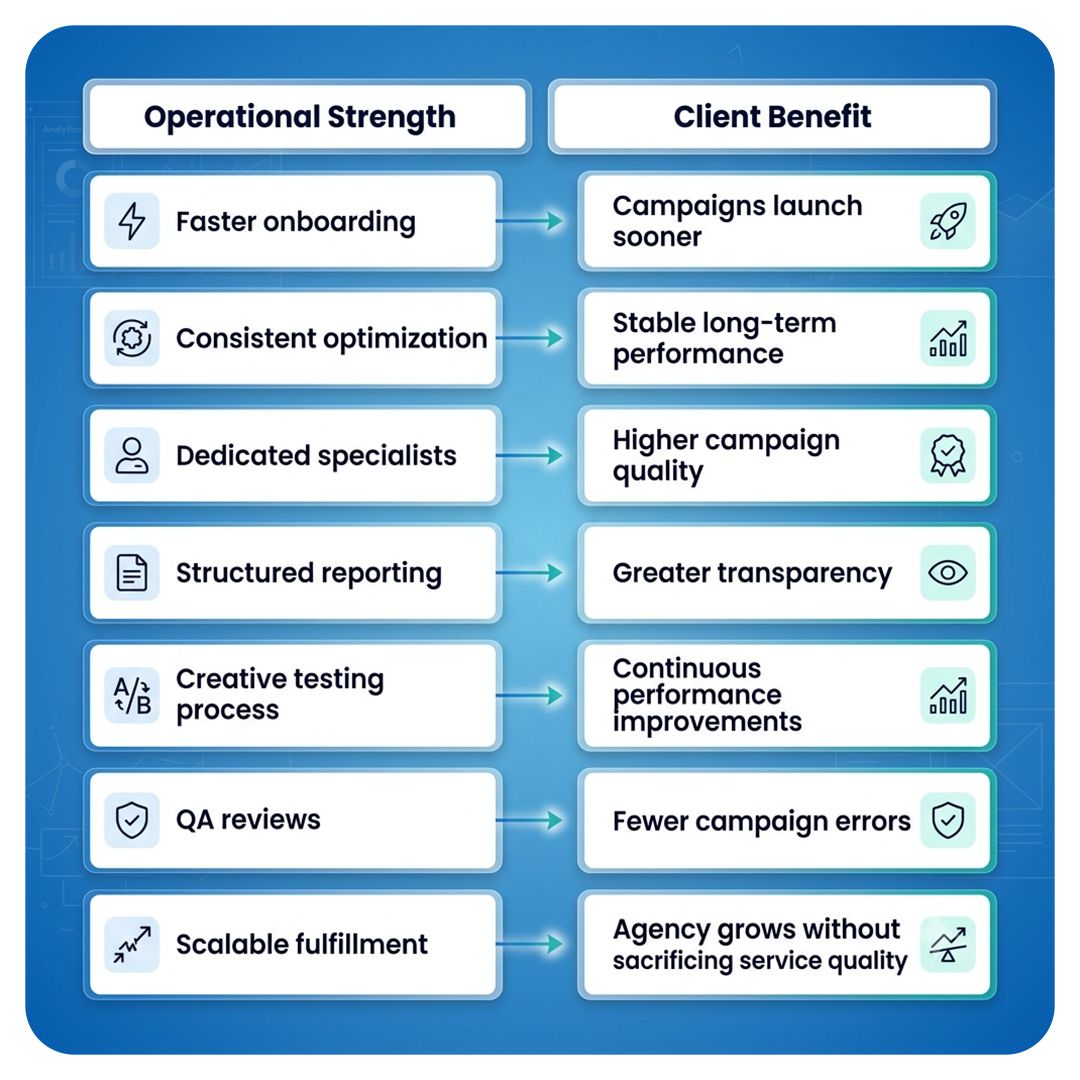
A structured fulfillment partner with defined delivery processes and clear ownership can provide more consistent operational accountability. Agency leadership can maintain oversight without needing to manage every PPC task directly.
How to Know When PPC Operations Are Ready for White Label Support?
Not every agency needs external fulfillment support at the same stage of growth. Several operational signals suggest it may be worth exploring.
- New PPC clients take longer to launch: Extended launch timelines often indicate onboarding or fulfillment capacity pressure.
- Specialists consistently operate at capacity: Little room for additional accounts suggests limited growth headroom.
- Account managers coordinate execution: When fulfillment coordination consumes account manager time, client-facing work tends to suffer.
- Senior specialists handle repetitive work: Experienced talent doing routine execution tasks is a sign of underutilization.
- QA depends on individuals: Without scalable review processes, quality becomes inconsistent.
- New sales require immediate hiring: When every new account triggers a hiring conversation, fulfillment is limiting growth.
- Temporary spikes disrupt existing accounts: A lack of buffer capacity means existing clients absorb the cost of new client wins.
- Fulfillment costs are difficult to predict: Misalignment between staffing and demand makes budgeting unreliable.
- Leadership lacks delivery visibility: Gaps in operational oversight suggest processes need more structure.
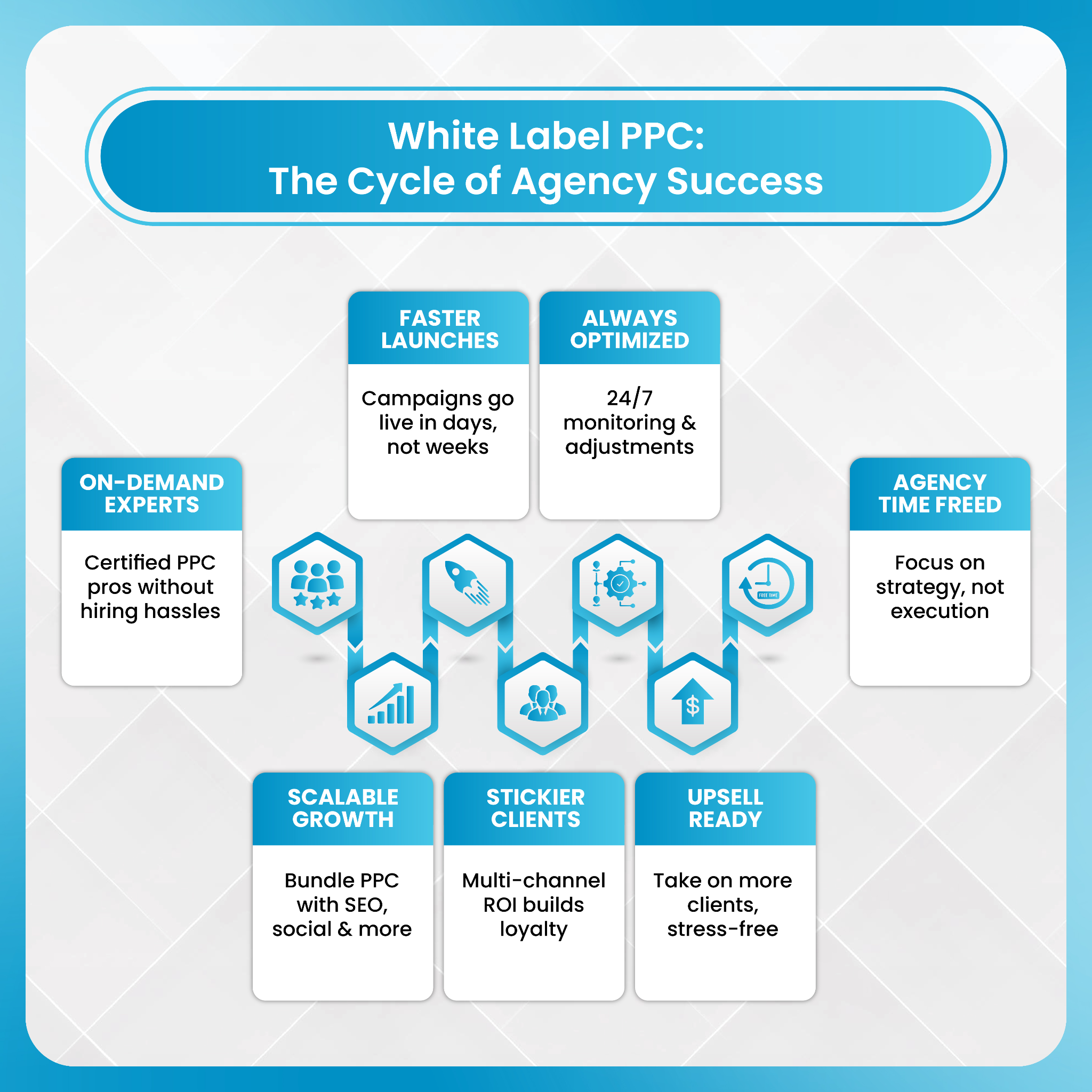
The decision to bring in external support should be based on operational capacity and delivery consistency, not simply the number of accounts an agency manages.
How DashClicks Supports Scalable PPC Fulfillment?
DashClicks provides white label PPC services designed around the operational realities agencies face as they grow.
1. Dedicated White Label PPC Specialists
The platform provides dedicated PPC specialists who can add execution capacity without requiring agencies to immediately expand their internal teams. This allows agencies to take on new accounts and manage workload increases without disrupting existing delivery.
2. Structured PPC Workflows
Delivery follows defined, repeatable processes that include:
- Standardized onboarding for new accounts.
- Consistent campaign setup and optimization procedures.
- Structured account handoff processes.
- Recurring optimization reviews on a defined schedule.
- Documented workflows that reduce dependence on individual working styles.
3. Quality Assurance
The platform integrates quality-control checkpoints into the fulfillment process. As account volume grows, structured QA helps maintain consistent execution standards rather than relying on manual, ad hoc reviews.
4. Scalable Fulfillment Capacity
DashClicks is built to absorb new client wins, seasonal demand increases, and fulfillment bottlenecks. Agencies can expand PPC delivery without making internal hiring the immediate prerequisite for every new account.
5. White Label Reporting
Agencies maintain client-facing PPC reporting under their own branding. Clients see the agency's work product while fulfillment takes place behind the scenes.
6. Agency Retains the Client Relationship
The division of responsibility is clear.
Agency owns: Client relationship, strategy, communication, and business growth.
Fulfillment partner handles: PPC execution, account fulfillment, operational support, and delivery.
Scaling PPC Requires Scalable Operations
Adding PPC clients does not just add campaign management work. It adds operational pressure across account allocation, onboarding, process consistency, quality assurance, account management coordination, senior specialist capacity, fulfillment bandwidth, employee dependency, cost management, and leadership visibility.
Agencies that address these challenges early can protect delivery quality while continuing to grow. Those that do not often find that growth creates service inconsistencies that are harder to fix retroactively.
White label PPC services provide one practical way to add fulfillment infrastructure when building every capability internally no longer makes operational sense. The goal is not to outsource accountability, but to create a delivery model that scales without breaking the things that earned client trust in the first place.


.svg)


.svg)
.svg)
.svg)
.svg)
.svg)