

.svg)

.svg)
.svg)
.svg)
.svg)
.svg)
Organic traffic drops rarely come with a warning. One day, rankings look stable, leads are flowing, and clients feel confident. The next impressions fall, clicks slow down, and revenue projections start to wobble. For agencies, this kind of sudden decline feels less like a normal fluctuation and more like a full-scale emergency.
These drops are happening more often than they used to. Algorithm updates roll out several times a year. AI-driven search features now summarize answers directly on results pages. Technical changes, even small ones, can silently block pages from being indexed. In 2025, SEO is no longer just about ranking well. It is about protecting visibility in an environment that keeps shifting.
The stakes are high. A sharp traffic loss can reduce sales within weeks. It can also damage client trust, especially when explanations are slow or unclear. According to multiple industry studies, agencies report higher churn rates after unresolved performance drops, even when the original cause was outside their control.
Recent data highlights how serious the issue has become. Research shows that AI Overviews now appear on a growing share of search results. When these summaries are present, organic click-through rates drop by roughly 47 to 61 percent. That means even pages holding top positions may see fewer visits than before. Traffic does not vanish entirely, but its value changes.
An SEO traffic crisis can be defined as any rapid and meaningful decline in organic visibility, sessions, or conversions that threatens business outcomes. It is not just a ranking dip. It is a situation that demands fast analysis, clear prioritization, and decisive action.
This is where a structured crisis management approach becomes essential. Many agencies turn to white label SEO teams to handle these moments. A reliable white label SEO agency provides rapid diagnosis, focused fixes, and recovery plans without overloading internal teams. Instead of scrambling, agencies gain a repeatable process to stabilize performance and restore confidence.
Why Traffic Drops Happen and Why Agencies Struggle to Respond?
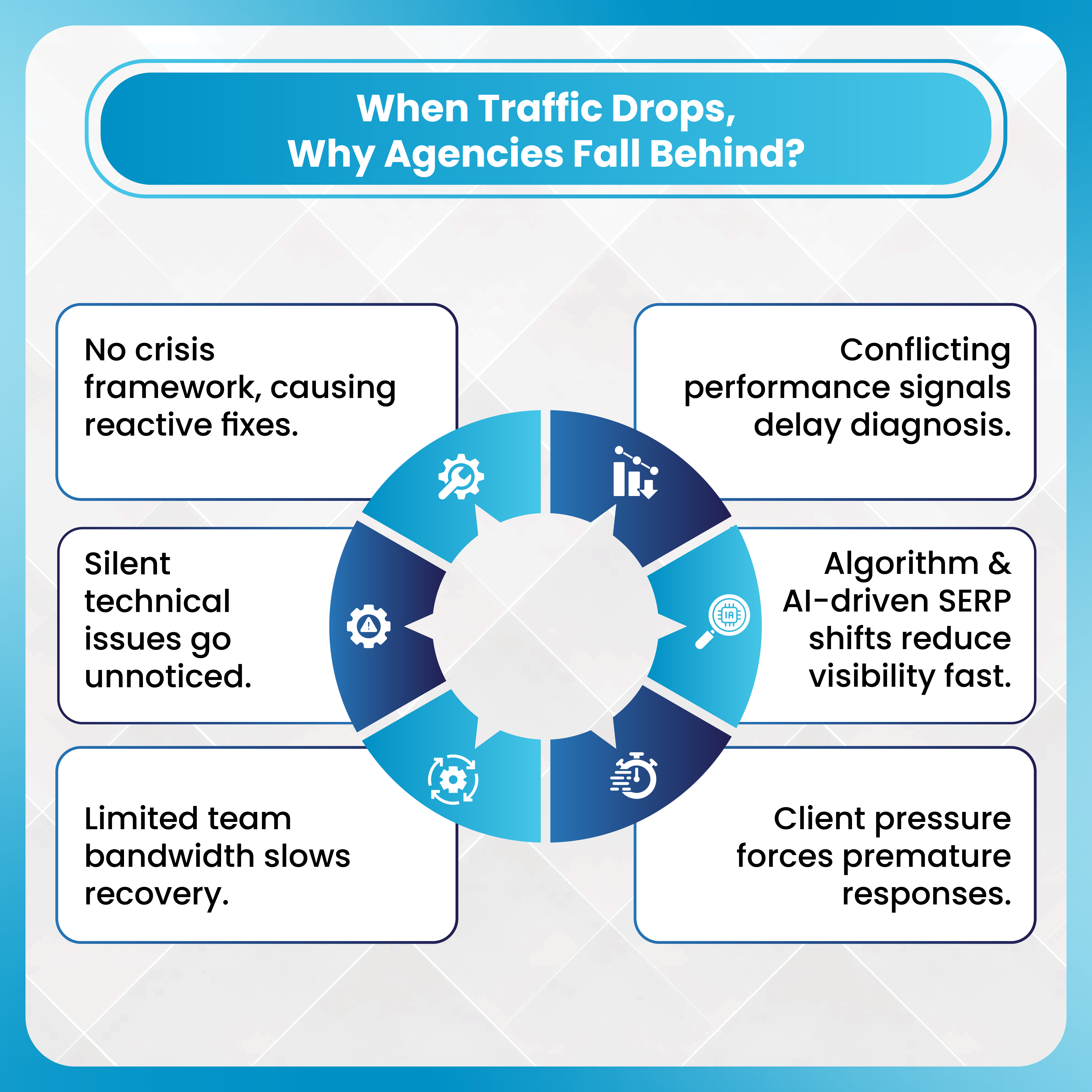
Organic traffic rarely drops for a single, obvious reason. In most cases, declines are triggered by a combination of factors unfolding at the same time. Algorithm changes, technical oversights, content relevance issues, and shifts in how users search all interact with each other. This layered complexity is what makes traffic drops difficult to diagnose and even harder to fix quickly.
For agencies, the pressure is immediate. Clients want answers fast, but the signals behind traffic losses are often delayed, incomplete, or misleading. Without a clear crisis response framework, agencies risk reacting emotionally rather than strategically.
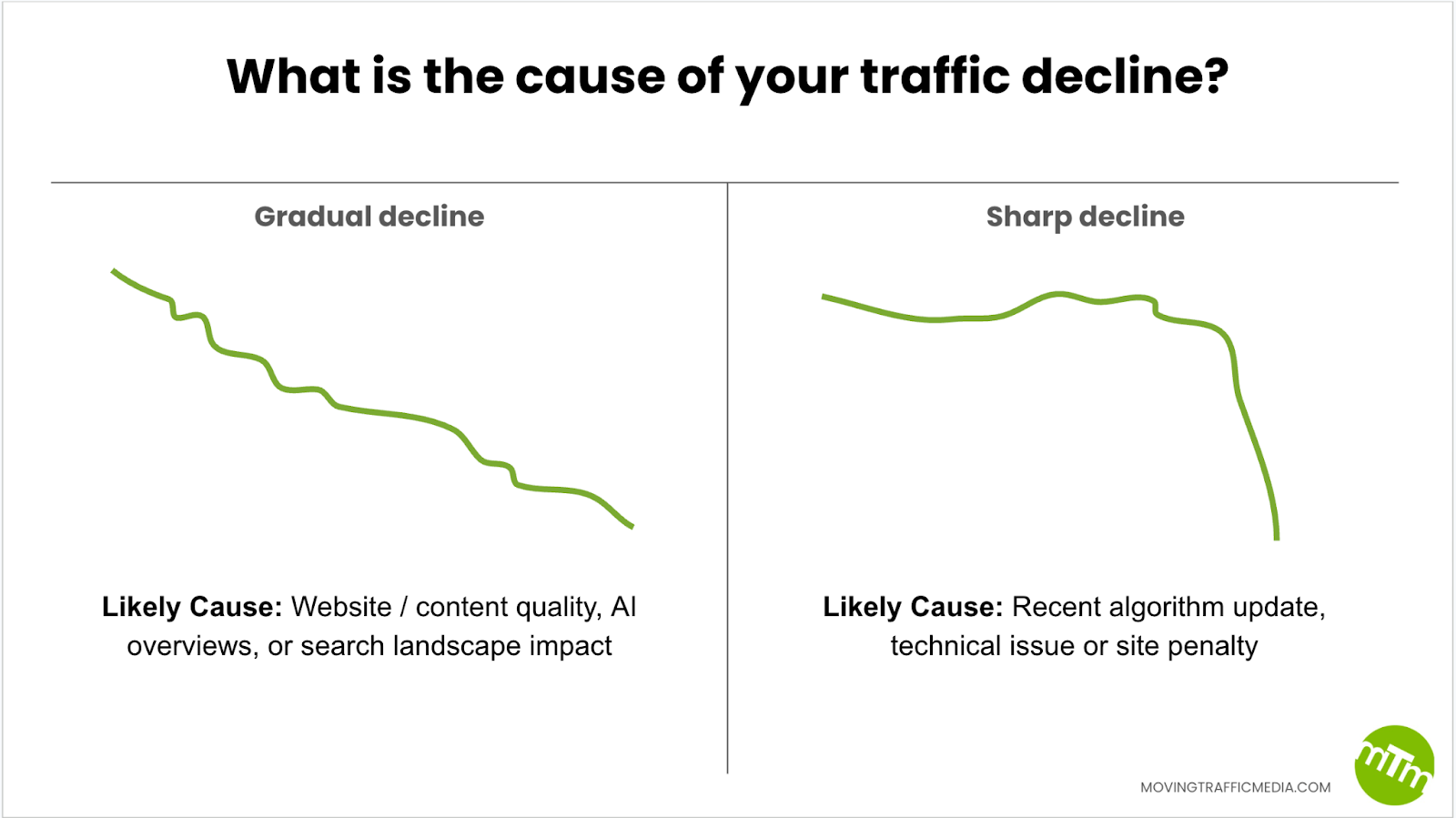
Image Source: MovingTrafficMedia
Below are the most common causes of traffic declines and the reasons agencies often struggle to address them efficiently.
1. Google Algorithm Updates and SERP Shifts
Google algorithm updates can reshape search results almost overnight. Entire sites or content sections may lose visibility without any obvious on-page errors. Industry data consistently shows that websites affected by major core updates often experience traffic declines of 30 to 50 percent, and sometimes more.
What makes these updates especially challenging is that they rarely target a single issue. Instead, they reassess overall content quality, intent alignment, trust signals, and competitive relevance across an entire niche. As a result, quick fixes rarely work.
Recovery is often slow and uncertain. Studies and case analyses suggest that sites without a structured response plan may take three to six months to recover lost visibility, assuming they recover at all. Many agencies fall into the trap of addressing surface-level symptoms rather than diagnosing the deeper causes behind the drop.
Common challenges include:
- Limited access to historical performance data that shows long-term trends.
- Difficulty isolating which content clusters or intent types were hit hardest.
- Unclear signals from Google about what specifically needs improvement.
- Delays caused by internal approval processes for content or technical changes.
Without a predefined crisis playbook, agencies often move from one tactic to another, hoping something sticks. This reactive approach usually prolongs recovery and increases client frustration.
2. AI Overviews and Clickstream Displacement
Search behavior is changing rapidly. Modern search results are no longer made up of ten blue links. AI overviews, featured snippets, and instant answers now occupy significant space at the top of the page.
In many cases, rankings remain stable, but traffic still drops. Users get their answers directly from the search results and never click through to the website. This phenomenon, often referred to as clickstream displacement, creates confusion for both agencies and clients.
From the outside, performance reports can look healthy. Rankings hold steady, impressions increase, and visibility appears unchanged. Yet sessions decline week after week.
Key indicators of clickstream displacement include:
- Stable or improving average positions alongside declining click-through rates.
- Traffic losses concentrated around informational or top-of-funnel queries.
- Rising impressions without a corresponding increase in sessions.
- Content that still ranks but no longer attracts engagement.
Agencies without advanced SERP analysis and intent-mapping tools may misread these signals. Instead of adjusting content strategy or targeting different query types, they may waste time optimizing pages that are no longer capable of driving clicks in the current SERP environment.
3. Technical Failures and Silent Structural Causes
Some of the most severe traffic losses are not caused by content or algorithms at all, but by technical failures. A single mistake can block thousands of pages from being crawled or indexed.
Common examples include:
- Accidental noindex tags applied during site updates.
- Broken redirect chains after URL changes.
- Misconfigured robots.txt files.
- Canonical errors pointing to the wrong pages.
- Server issues that limit crawlability.
What makes these problems especially dangerous is how quietly they occur. There is often no immediate alert. Traffic simply starts to decline, and by the time someone investigates, the damage has already compounded.
Research and industry audits consistently show that technical SEO issues rank among the top three causes of sudden organic traffic drops for mid-sized and growing websites.
Agencies tend to struggle when:
- Technical audits are scheduled infrequently rather than continuously.
- Monitoring relies solely on traffic and ranking data.
- Indexation and crawl health are not actively tracked.
- Root causes are hidden deep in server logs or crawl diagnostics.
Without specialized technical oversight and proactive monitoring, these issues can persist for weeks or even months, turning a fixable mistake into a long-term visibility problem.
4. Content Quality and E-E-A-T Gaps
Search engines increasingly reward content that demonstrates experience, expertise, authority, and trust. Pages that are thin, outdated, or misaligned with search intent lose ground after updates.
LinkedIn and industry surveys show that content refresh projects are often delayed due to resource constraints. Agencies may know content needs improvement, but lack the bandwidth to act quickly.
Warning signs include:
- Rankings slipping for previously strong pages.
- Increased bounce rates on core articles.
- Declines after quality-focused updates.
Without structured remediation, content decay accelerates traffic loss.
5. Redesigns, Migrations, and Implementation Errors
Website redesigns and platform migrations are high-risk moments. Studies estimate that over 60% of migrations result in temporary traffic loss due to missed redirects, metadata errors, or structural changes.
Many agencies do not have standardized migration checklists or QA processes. Small oversights compound into large visibility drops.
Typical issues include:
- Incomplete 301 redirect mapping.
- Lost internal links.
- Changed URL structures without index management.
Recovery becomes harder the longer errors go unnoticed.
6. Backlink and Reputation Crises
Links remain a strong ranking signal. Losing high-value backlinks or gaining toxic ones can disrupt authority signals.
These problems are rarely obvious. Deep audits are required to identify link loss patterns or spam risks. Without them, agencies may miss the real cause behind declining rankings.
Metrics to watch include:
- Sudden drops in referring domains.
- Rising spam scores.
- Referral traffic instability.
7. Lack of Structured Crisis Processes
Perhaps the biggest issue is process. Many agencies respond to traffic drops with ad-hoc actions. There is no prioritization, no clear diagnostic order, and no timeline for recovery.
This leads to:
- Wasted effort on low-impact tasks.
- Poor communication with clients.
- Longer recovery windows.
Without a framework, even skilled teams struggle to act decisively.
How White Label SEO Teams Execute Effective Crisis Management?
A strong white label SEO partner brings structure, speed, and accountability to crisis situations. Below is how experienced teams handle traffic drops methodically.
1. Rapid Triage and Root Cause Diagnosis
Every SEO crisis begins with controlled triage rather than assumptions. White label SEO teams start by collecting evidence from Google Search Console, analytics platforms, ranking trackers, crawl data, and server logs. The objective is to identify what changed, when it happened, and how broad the impact is.
Teams look for patterns such as algorithm update timing, indexing irregularities, page-level traffic drops, and CTR declines without ranking movement. These signals help isolate whether the issue is technical, algorithmic, content-driven, or authority-related.
The key metric at this stage is time to root cause identification, because faster diagnosis leads to faster and safer recovery actions.
2. Crisis Response Playbook and Prioritization Framework
Once the issue is identified, execution follows a predefined response framework. Experienced white label SEO teams rely on documented playbooks built for common crisis scenarios, including algorithm volatility, technical failures, content decay, and migration errors.
Instead of addressing every issue at once, teams prioritize actions based on impact, risk, and dependencies. This ensures resources are focused on the most damaging problems first.
Typical deliverables include a prioritized action roadmap, estimated impact per fix, and clear execution timelines with ownership assigned. This structure keeps recovery efforts focused and prevents reactive decision-making.
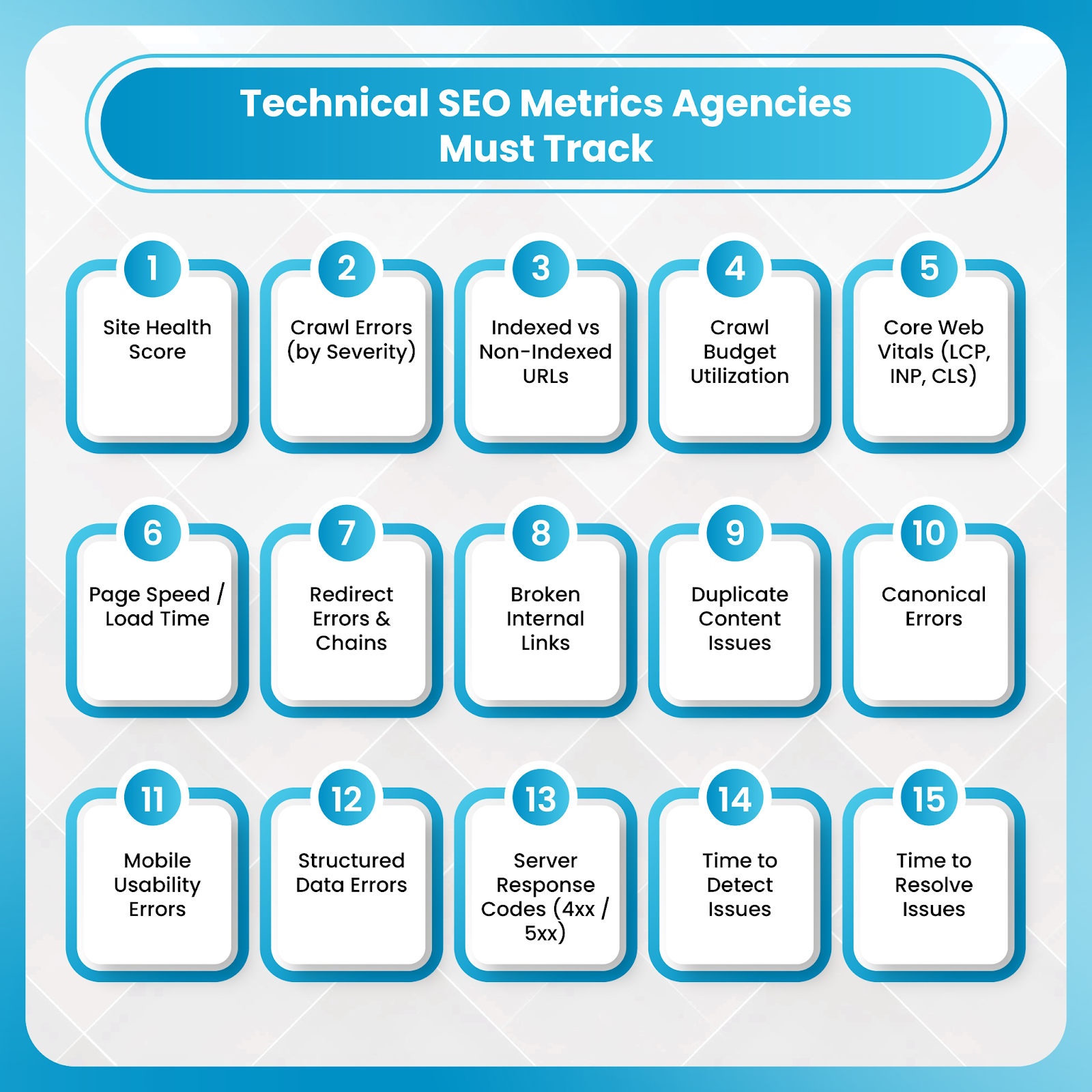
3. Technical SEO Emergency Fixes
Technical breakdowns often cause the sharpest traffic losses, which is why they are handled immediately. White label SEO teams focus on restoring crawlability, indexation, and performance signals that directly affect visibility.
Emergency fixes commonly include resolving crawl blocks, redirect conflicts, canonical errors, and Core Web Vitals regressions. Changes are validated through crawl testing and log analysis before full deployment.
Success is measured through error reduction rates, crawl success percentages, and index recovery timelines. These metrics confirm whether search engines are regaining stable access to the site.
4. Content and E-E-A-T Remediation Strategy
When content quality or intent mismatch drives performance loss, white label teams conduct targeted audits instead of sweeping rewrites. The goal is to realign pages with user intent while strengthening expertise, authority, and trust signals.
Teams evaluate content depth, structure, freshness, and credibility. Updates may include improved formatting, expanded topical coverage, clearer internal linking, and stronger expertise indicators.
KPIs at this stage include ranking recovery for priority URLs, improved content quality scores, and stabilization of engagement metrics.
5. Backlink Crisis Management
Backlink-related issues require careful handling to avoid compounding risk. White label SEO agency begins with detailed backlink audits to identify toxic link patterns, lost authority signals, or unnatural link velocity changes.
Corrective actions may include preparing disavow files, monitoring link removals, and planning recovery outreach for lost or devalued links. Each step is data-backed to minimize risk.
Key metrics tracked include spam score reduction, referral traffic stability, referring domain quality, link velocity normalization, and do-follow versus no-follow balance.
6. Real-Time Monitoring and Alert Systems
Crisis management does not end once fixes are implemented. White label SEO teams use real-time monitoring to detect early warning signs before minor issues escalate.
Monitoring covers impressions, clicks, rankings, crawl behavior, and page-level performance. Alert thresholds are customized using historical baselines rather than generic benchmarks.
The primary KPI here is mean time to detect, which directly affects how quickly corrective actions can begin.
7. Recovery Roadmaps and Post-Crisis Growth Planning
After stabilization, teams move from recovery to structured growth planning. White label SEO services provider develop phased 30, 60, and 90-day recovery roadmaps to rebuild visibility and prevent recurrence.
Early phases focus on stabilizing priority pages, while later phases emphasize topical cluster expansion, internal linking improvements, and authority growth.
This phased approach ensures recovery efforts are sustainable and aligned with long-term search performance.
8. White-Labeled Reporting and Client Communication
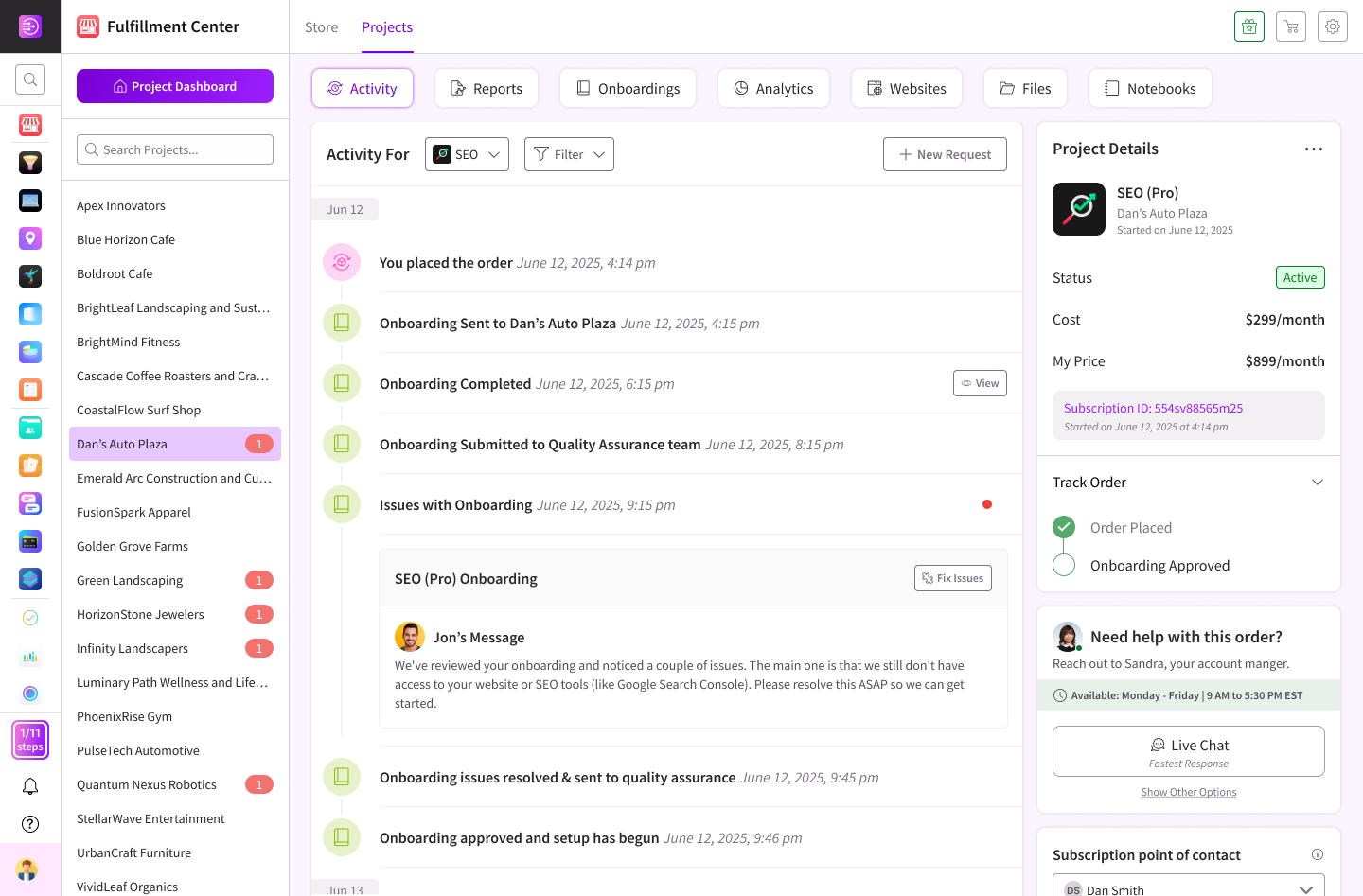
Clear reporting is essential during and after SEO crises. White label SEO partners provide rebrandable dashboards like DashClicks’ White Label Dashboard that offer full visibility into what happened, what actions were taken, and what progress has been made.
Reports typically include before-and-after performance comparisons, recovery milestones, completed fixes, and upcoming priorities. Consistent communication reduces uncertainty and maintains client confidence.
Transparency at this stage plays a key role in trust building and long-term client retention.
9. SLAs and Rapid Response Guarantees
Speed and accountability are critical during high-impact SEO incidents. Many white label SEO services formalize expectations through service-level agreements that define response times for critical issues.
These SLAs often include guaranteed acknowledgment windows, escalation paths, and clear ownership for execution. Typical response commitments range from 24 to 72 hours depending on severity.
SLA adherence ensures issues are addressed promptly and reinforces reliability during high-pressure situations.
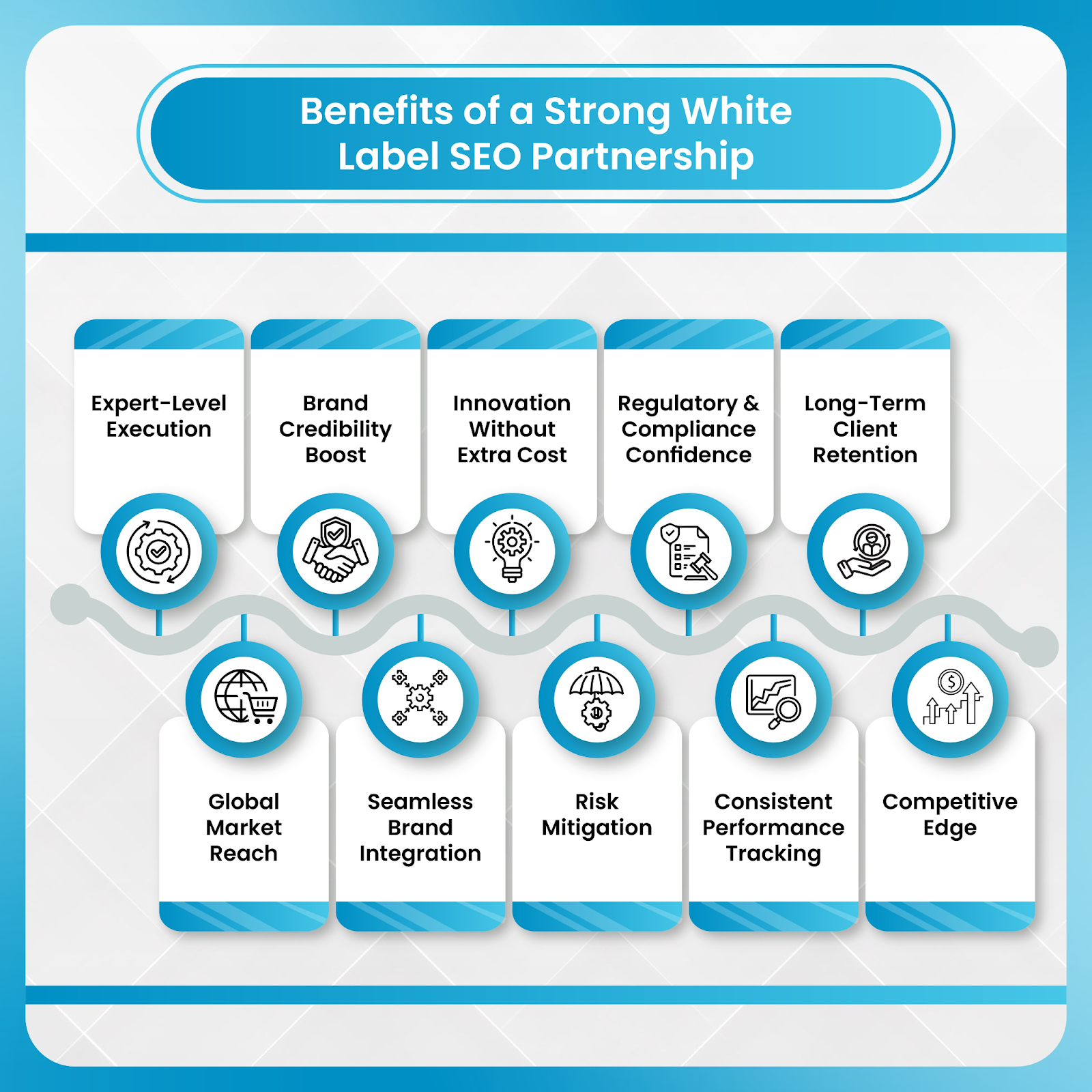
How DashClicks’ White Label SEO Services Support SEO Crisis Management
DashClicks plays a vital role in helping agencies manage SEO crises without stretching internal teams. Their white label SEO services focus on rapid diagnosis, structured execution, and clear communication.
When traffic drops occur, their specialists analyze technical signals, content performance, and algorithm impacts to identify root causes quickly. Fixes are prioritized based on impact, ensuring critical issues are resolved first.
Their platform includes continuous monitoring tools that flag early warning signs before losses escalate. This proactive approach reduces recovery time and helps prevent repeat issues.
DashClicks also provides rebrandable reporting, allowing agencies to present recovery progress clearly and professionally to clients. By handling execution behind the scenes, DashClicks enables agencies to stabilize rankings, protect revenue, and retain clients without expanding in-house resources.
Conclusion
SEO crises are no longer rare events. With constant algorithm updates, AI-driven search changes, and technical complexity, traffic drops are part of the modern search landscape. What separates successful agencies from struggling ones is not avoiding these crises, but responding to them with speed, structure, and clarity.
White label SEO partner provides the frameworks, tools, and expertise needed to diagnose issues fast and guide sites back to stability. For agencies, this means less panic, better outcomes, and stronger client relationships.
If your agency wants to improve its crisis readiness and protect client performance, it may be time to evaluate a reliable white label SEO partner with clear response processes and measurable recovery plans.


.svg)


.svg)
.svg)
.svg)
.svg)
.svg)