

.svg)

.svg)
.svg)
.svg)
.svg)
.svg)
Sustainable organic growth depends on consistent execution, not just a strong SEO strategy. While many agencies achieve quick wins at the start of a campaign, maintaining long-term performance becomes much more challenging as those initial opportunities disappear.
Early improvements often come from fixing technical issues, optimizing metadata, improving internal linking, and updating existing pages. Once those tasks are complete, continued growth relies on ongoing optimization, content improvements, technical maintenance, and responding to changes in search behavior and competition. According to BrightEdge, organic search accounts for approximately 53.3% of all trackable website traffic, making it a critical acquisition channel for businesses. However, sustaining that visibility requires continuous effort.
At the same time, client websites continue to evolve. New content is published, products and services change, competitors expand, and search algorithms are updated. When identified SEO tasks are repeatedly delayed, agencies begin to accumulate SEO execution debt: a growing backlog of technical fixes, content updates, internal linking opportunities, and optimization work that eventually limits growth and puts existing rankings at risk.
The challenge is often not strategy but execution capacity. Agencies may know what needs to be done but lack the bandwidth to implement it consistently across every client account.
This is where a white label SEO agency can help. By providing dedicated fulfillment capacity, agencies can maintain a consistent optimization cadence, protect existing performance, and continue driving sustainable organic growth without expanding their internal team.
What Sustainable Organic Growth Actually Means for an Agency?
Agencies often define SEO success as more traffic or more rankings. Both matter, but neither tells the full story. Sustainable organic growth rests on three interconnected pillars.
- Continuous Improvement: After the initial optimization layer is complete, campaigns must keep finding and acting on new opportunities. This means identifying pages approaching page one, closing content gaps, targeting emerging queries, and building topical depth. The work does not stop because the obvious problems are solved.
- Performance Protection: Rankings are not permanent. A page that ranks well today can slip within weeks if competitors improve their content, if a core update shifts how Google evaluates relevance, or if the page itself stops meeting current search intent. Every existing ranking requires active protection.
- Consistent Execution: Identifying opportunities is not enough. Sustainable SEO comes from acting on those opportunities before they become missed opportunities. Strategy without execution is just documentation.
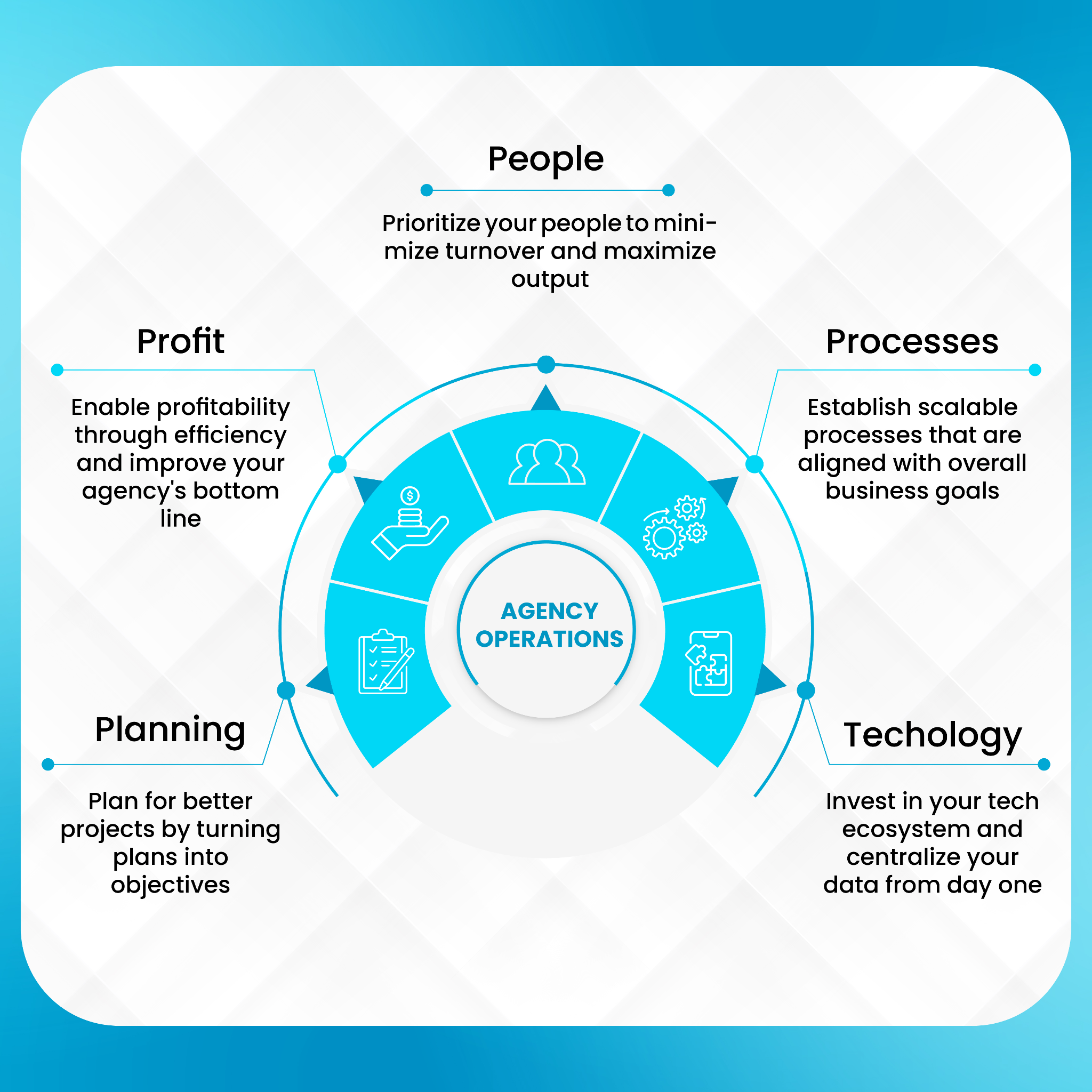
Put simply: Sustainable SEO = Grow What is Working + Protect Existing Performance + Respond to Ongoing Change
Google's own documentation reinforces this point, noting that search results continually evolve because user expectations, content quality, and the web itself are always changing. SEO cannot be treated as a fixed deliverable with an end date.
Why Organic Growth Often Stalls After the Initial SEO Wins?
The SEO plateau is real, and it is predictable.
Every campaign starts with an initial optimization layer, the foundational fixes that produce early momentum:
- Missing title tags
- Duplicate metadata
- Broken links
- Crawl and indexation issues
- Weak page optimization
These problems are usually widespread on new clients, which is why early results can feel dramatic.
The issue is that these wins have a ceiling. Once solved, they are solved. Growth then depends on harder, less obvious work:
- Pages ranking in positions 5 to 15 that need targeted content improvements to break into the top tier.
- Declining pages that are losing visibility to stronger competitors.
- Keyword cannibalization limiting how effectively internal pages compete.
- Content gaps where competitors cover topics the client's site does not address.
- Search intent mismatches between what users expect and what a page delivers.
- Internal authority distribution that is not aligned with high-priority pages.
At the same time, the website itself keeps evolving. New service pages get added. Products launch without proper optimization. Competitors enter the market or improve existing content. Older content decays as information becomes outdated. Google updates its understanding of what good content looks like.
Google's guidance specifically recommends that site owners regularly review and update existing content to keep it useful, accurate, and relevant. In practice, very few agency teams have the bandwidth to act on that recommendation consistently across all client accounts.
The Cost of SEO Execution Debt
Execution debt forms whenever SEO work gets identified but not completed. It is not a single missed task. It is a pattern of deferred action that compounds over time. Here is a simplified example of how it plays out:
Month 1: A content refresh gets delayed due to capacity constraints.
Month 2: A competitor publishes stronger content targeting the same queries.
Month 3: Rankings begin to slip as Google favors the competitor's updated page.
Month 4: Traffic drops become visible in client reports.
Month 5: Recovery requires more effort than prevention would have taken.
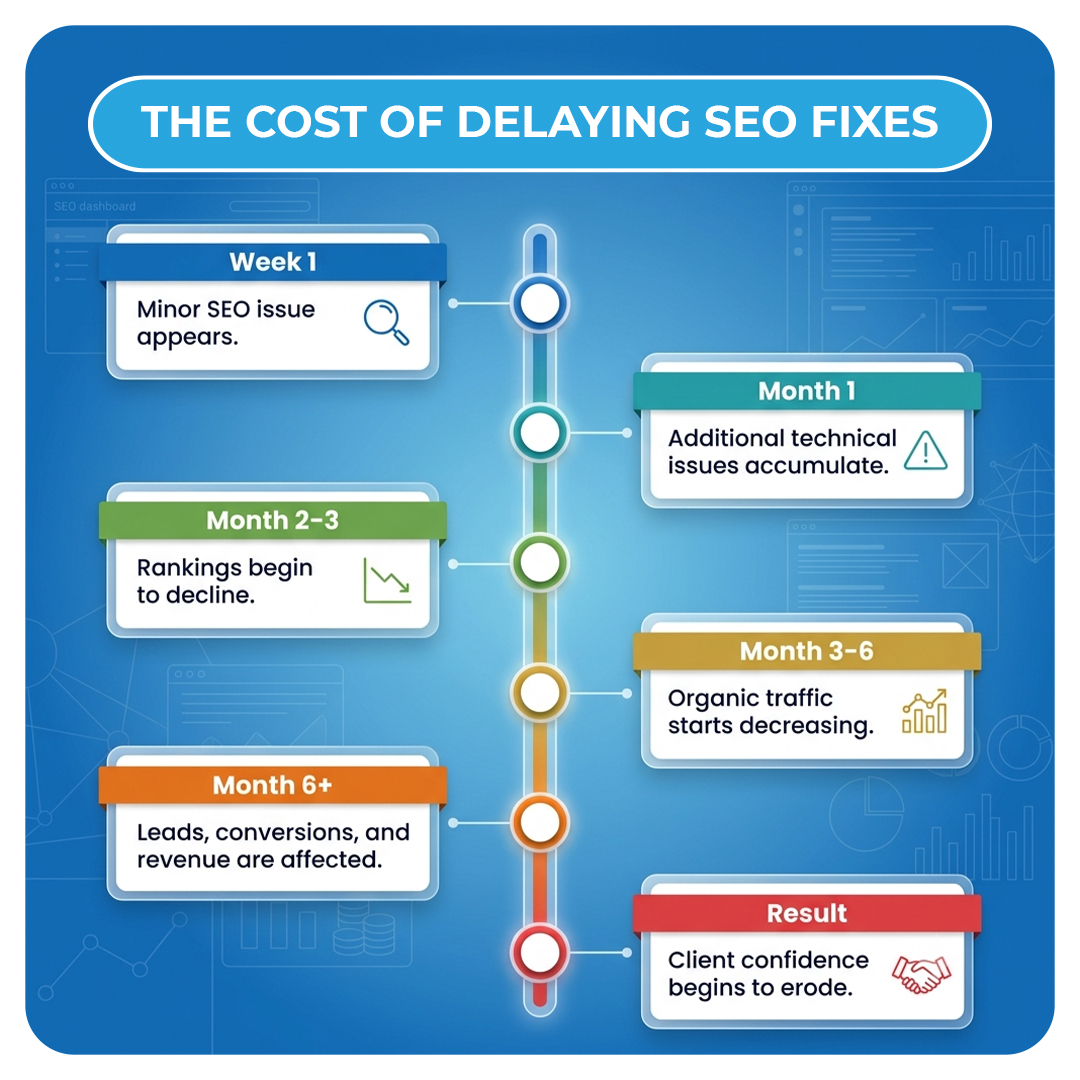
What starts as a delayed task becomes a performance decline that requires reactive work to address. The longer debt accumulates, the more expensive it becomes to resolve.
Common sources of execution debt include:
- Technical fixes sitting in the backlog for weeks.
- Declining pages ignored in favor of new campaign work.
- Internal linking opportunities identified but never implemented.
- New keyword opportunities not pursued because the team is stretched.
- Competitor changes not responded to.
- Reporting delivered without implementation to support it.
Here is the important part: execution debt is not primarily a knowledge problem. Most agency SEO teams understand what needs to be done. The bottleneck is fulfillment capacity. Larger agencies managing multiple accounts often feel this most acutely because the volume of identified work far exceeds what their teams can act on in any given month.
Sustainable SEO Requires a Balance Between Growth and Maintenance
The agencies that avoid execution debt tend to operate with something worth calling the Grow and Protect Model. It recognizes that sustainable organic growth requires two parallel streams of work running simultaneously.
Growth Activities
Growth-focused SEO work expands search visibility through new keyword targeting, landing page development, content expansion for topical authority, link acquisition, and conversion optimization. These activities are visible to clients and often get prioritized because results are easy to attribute.
Protection Activities
Protection-focused work maintains and defends existing performance. This includes technical maintenance, content refreshes, internal link auditing, redirect monitoring, indexation checks, and fixes for declining or cannibalized pages.
The challenge is that protection work rarely feels urgent until rankings start to slip. Agencies naturally emphasize growth because it is easier to present in client reports. However, sustainable growth comes from expanding search visibility while simultaneously protecting the assets already generating traffic.
Google's guidance is consistent here: content should remain useful, accurate, and current. A page that ranked well two years ago on the basis of strong optimization will not hold that position indefinitely without maintenance.
Where Agencies Commonly Lose SEO Momentum?
Understanding where momentum breaks down is the first step toward preventing it. Six patterns show up consistently across agencies of all sizes.
- Growing Optimization Backlog: Audits routinely surface more work than teams can realistically complete. When the backlog grows faster than the team can clear it, lower-priority tasks get pushed out repeatedly until they become urgent problems.
- Mature Accounts Receive Less Attention: New clients generate energy and scrutiny. Mature accounts that are performing adequately often receive less resources over time, even though those accounts still require ongoing optimization to maintain their performance.
- Publishing Replaces Optimization: It can feel more productive to publish new content than to refresh existing pages. However, optimizing a page that already has some authority and index history frequently delivers better ROI than starting from scratch. When agencies focus exclusively on new content, existing assets quietly decay.
- Technical Work Keeps Getting Postponed: Technical SEO issues tend to accumulate quietly. Site migrations introduce redirect chains. New page templates create structured data gaps. Site speed degrades as the codebase grows. None of these issues cause immediate ranking drops, so they keep getting pushed down the priority list.
- Ranking Declines Become Reactive: Proactive SEO monitoring catches problems early. Reactive agencies discover ranking drops in monthly reports and then scramble to respond. The difference between catching a decline at week two versus week eight can mean the difference between a minor correction and a significant traffic loss.
- Client Changes Create Additional SEO Work: New locations. New services. New products. Website redesigns. Each of these client-side changes generates SEO work that was not part of the original scope. Without capacity to absorb it, these changes introduce execution debt immediately.
Often the issue is not strategy. It is the execution bandwidth.
How White Label SEO Helps Keep the Optimization Cycle Moving
Partnering with a white label SEO firm is not simply about delegating tasks. The real value is execution continuity: keeping the optimization cycle moving month after month regardless of how many accounts an agency is managing.
- Converting Opportunities Into Recurring Execution: Effective SEO operates as a cycle: identify, prioritize, execute, measure, and reassess. The breakdown usually happens at the execution stage. White label SEO fulfillment keeps that cycle moving by converting identified opportunities into completed work rather than backlog items.
- Clearing Accumulated SEO Backlog: A capable white label SEO partner can address accumulated technical SEO issues, on-page optimization gaps, internal linking needs, schema implementation, local SEO work, content optimization, and off-page signals. The goal is not just clearing the list. It is increasing throughput so that backlog does not reform faster than it gets resolved.
- Supporting Mature Accounts: Mature accounts need a different kind of attention than new ones. That means optimizing existing pages rather than building from scratch, addressing content decay, identifying competitive gaps in topical coverage, and improving internal authority distribution. White label SEO services built around ongoing optimization, rather than launch-phase deliverables, are better suited to this type of work.
- Maintaining Optimization Cadence: Consistent optimization requires a reliable rhythm: monitor, identify, execute, measure, and repeat. White label fulfillment provides the infrastructure to sustain that rhythm. Rather than relying on a single in-house hire to manage every account's ongoing needs, agencies can distribute execution work across a specialized team that operates within standardized workflows.
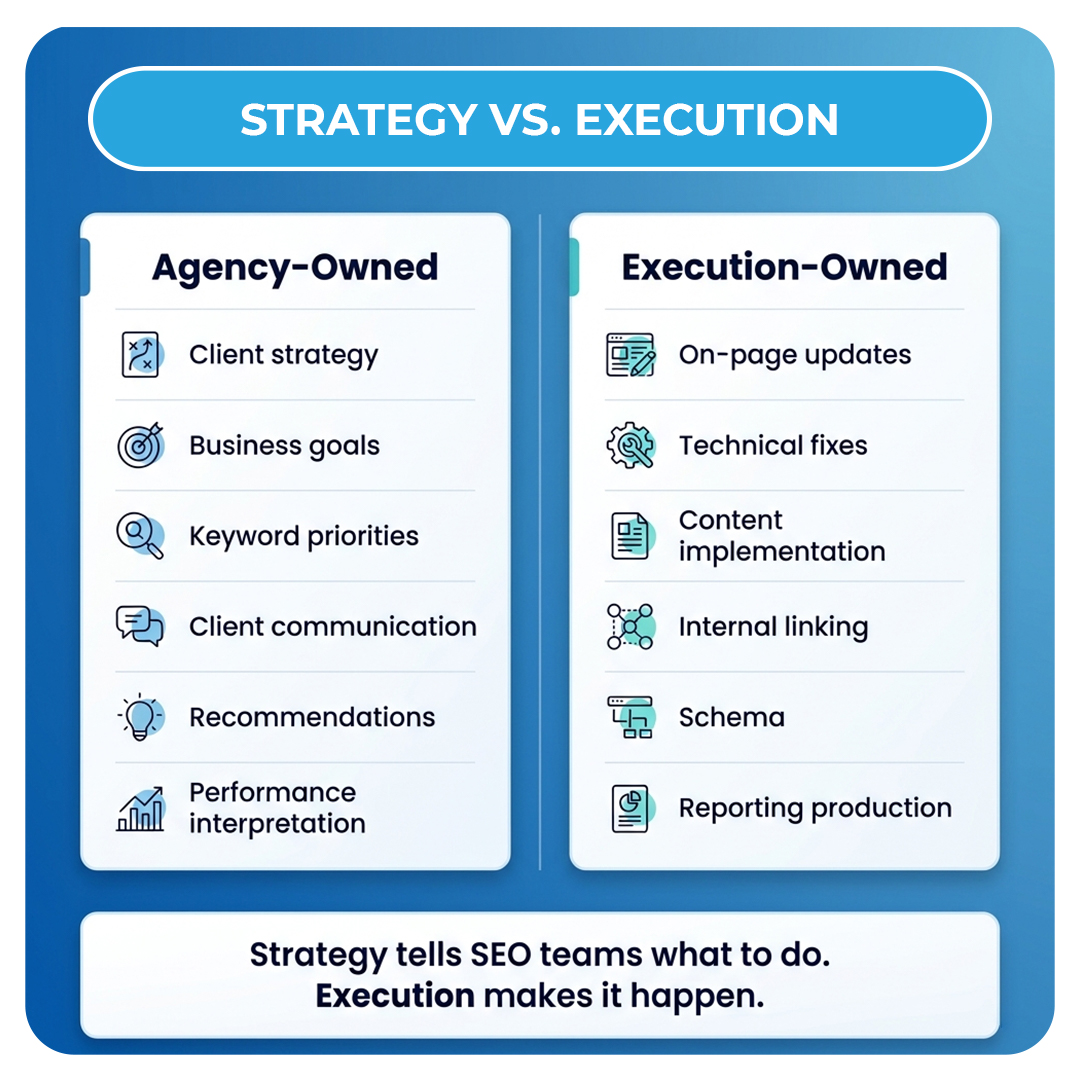
- Freeing Agencies for Higher-Value Work: When fulfillment is handled reliably, agency teams can focus on what they do best: strategy, client relationships, prioritization, performance interpretation, and business goal alignment. The client relationship becomes stronger because the agency is no longer buried in execution details. Reporting becomes more meaningful because there is consistent execution behind it.
A Sustainable SEO Operating Cycle for Agencies
The agencies that build lasting organic growth treat SEO as an operating system, not a project. Here is a practical framework for how that system works:
- Audit: Assess current performance, technical health, content quality, and competitive positioning.
- Prioritize: Rank opportunities by impact and effort.
- Execute: Complete the prioritized work within the month.
- Measure: Track outcomes from completed work.
- Detect Decay: Identify pages losing visibility or traffic.
- Refresh: Update and strengthen declining content and technical elements.
- Expand: Build on what is working through content depth, new keywords, and link acquisition.
- Repeat: Return to audit with the results of the previous cycle informing the next.
Visualized as a cycle: Audit > Prioritize > Execute > Measure > Detect > Refresh > Expand > Audit
This is not a one-time project. It is a recurring process that compounds over time when executed consistently and deteriorates when deferred.
How Agencies Can Tell Whether Their SEO Fulfillment Is Sustainable?
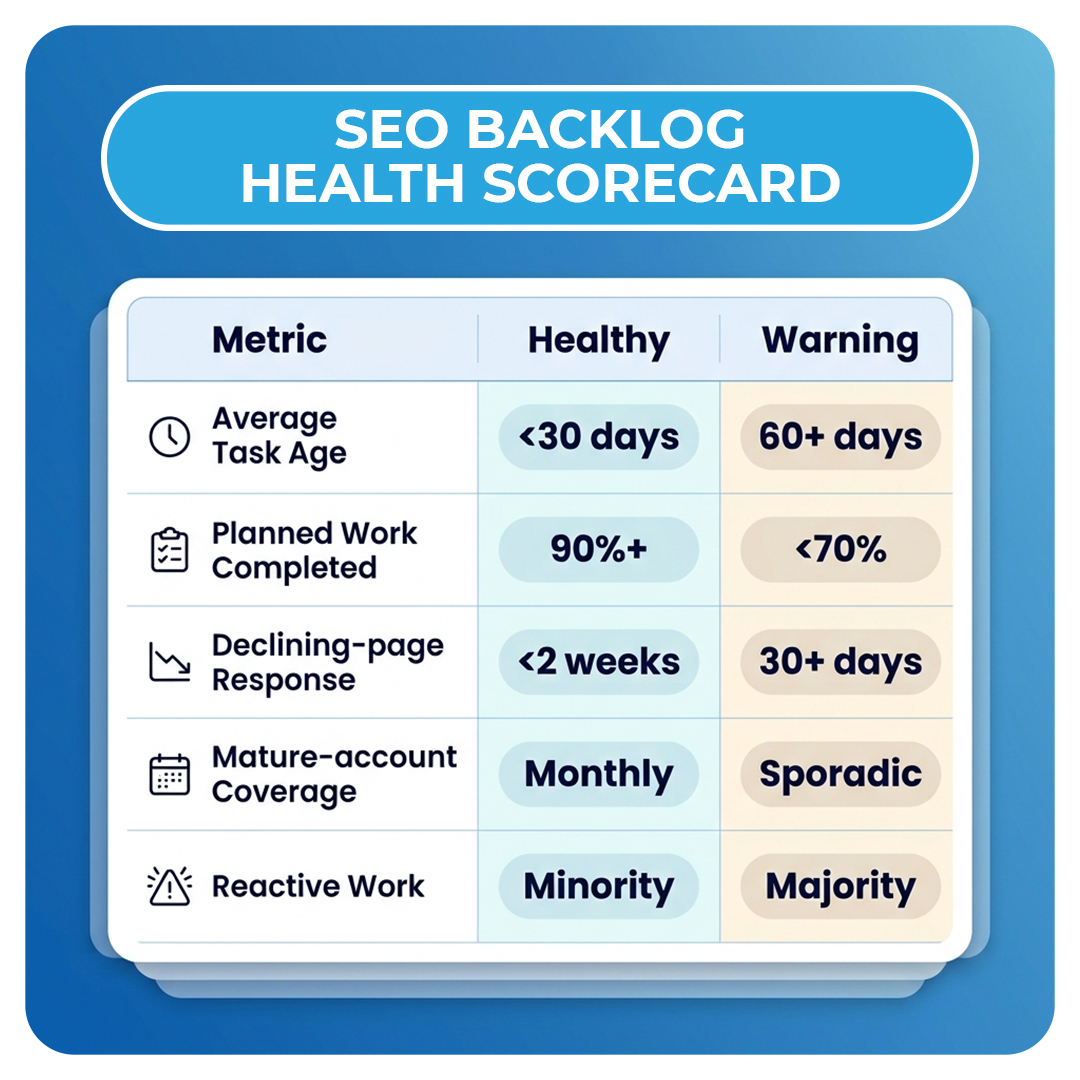
Before assuming a strategy problem, agencies should evaluate whether their fulfillment operations can actually support the work their strategy requires. A few operational indicators worth tracking:
- SEO backlog age: How long do identified tasks sit before completion?
- Task completion rate: What percentage of monthly planned work actually gets done?
- Optimization cadence: Are all active accounts receiving consistent ongoing work each month?
- Content decay response time: How quickly are declining pages identified and addressed?
- Proactive vs. reactive split: Is most of the team's time spent acting on plans or responding to problems?
- Account coverage: Are mature accounts receiving the same attention as newer ones?
If opportunities are consistently being identified but not executed, fulfillment capacity is likely limiting growth more than strategy.
How Does DashClicks Support Continuous SEO Fulfillment?
DashClicks is built around the operating model described throughout this article. The white label SEO services are designed for execution continuity, not one-time deliverables.
Recurring SEO fulfillment means client accounts receive consistent monthly optimization work rather than bursts of activity followed by gaps. Standardized workflows ensure that technical SEO, on-page optimization, content improvement, and link building all progress within a predictable structure rather than depending on who is available that week.
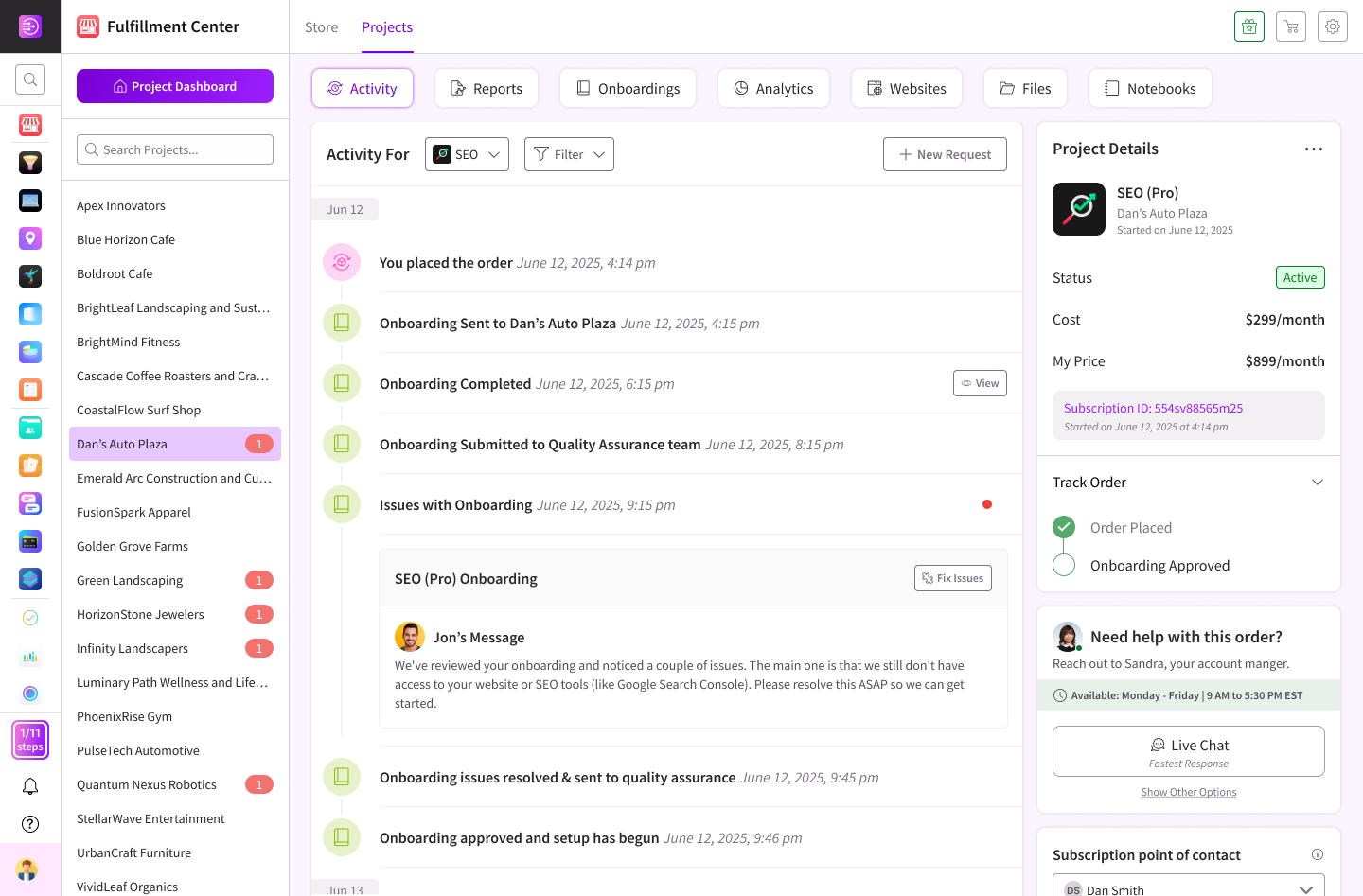
The client dashboard gives agencies visibility into what is being done and what results it is producing. Rank tracking provides the early detection capability that makes proactive optimization possible rather than reactive. White label reporting means agencies can present this work under their own brand without rebuilding the infrastructure from scratch.
The result is that agencies can scale their SEO services without scaling internal headcount at the same rate. The fulfillment infrastructure exists. Agencies bring the client relationships, the strategy, and the judgment about what matters most for each account.
The Agencies That Win at SEO Are the Ones That Never Stop Executing
SEO is never finished. Early wins eventually disappear. Existing rankings need protection. Deferred work creates execution debt that compounds silently until it becomes a visible performance problem.
The agencies building sustainable organic growth are not necessarily the ones with the most advanced strategies or the largest teams. They are the ones with the execution capacity to act on opportunities consistently, month after month, across every account they manage.
Partnering with a white label SEO firm provides that capacity without requiring agencies to build every operational function internally. It turns SEO from a deliverable into a system.
The agencies that build sustainable organic growth are not necessarily the ones that identify the most SEO opportunities. They are the ones that consistently act on those opportunities before they become missed opportunities.


.svg)


.svg)
.svg)
.svg)
.svg)
.svg)