

.svg)

.svg)
.svg)
.svg)
.svg)
.svg)
In 2025, agencies are under more pressure than ever to prove real results. Clients no longer care only about clicks, impressions, or even raw lead numbers. What they want are leads that convert into real conversations, real opportunities, and real revenue. This shift has pushed lead quality to the center of PPC performance discussions.
At the same time, paid advertising has become more expensive and more complex. Google Ads cost-per-click continues to rise across most industries. According to WordStream, the average cost per lead on Google Ads reached around $70.11 in 2025, with some industries seeing figures far higher. Legal, SaaS, and home services often exceed $100 per lead. When budgets are tight and expectations are high, low-quality leads become a serious problem rather than a minor inconvenience.
Many agencies still rely on traditional PPC metrics to guide decisions. Click-through rates, impressions, and even cost per lead are easy to track, but they rarely show whether a lead will turn into a sale. A campaign can look strong on paper while sales teams struggle with unresponsive or unqualified prospects. This disconnect leads to frustrated clients and strained agency relationships.
Building an in-house PPC team capable of handling advanced optimization, tracking, and lead qualification is expensive and time-consuming. Hiring experienced specialists, keeping up with platform changes, and managing performance at scale creates real operational challenges. This is where white label PPC services have become a strategic advantage rather than a backup option.
White label PPC services do more than manage ads. They bring proven frameworks, specialized expertise, and quality-focused measurement systems that help agencies attract fewer but better leads. By shifting the focus from volume to value, agencies can deliver stronger ROI and longer-lasting client results without overextending internal resources.
Defining the Real Lead Quality Problem
1. Misaligned Performance Focus
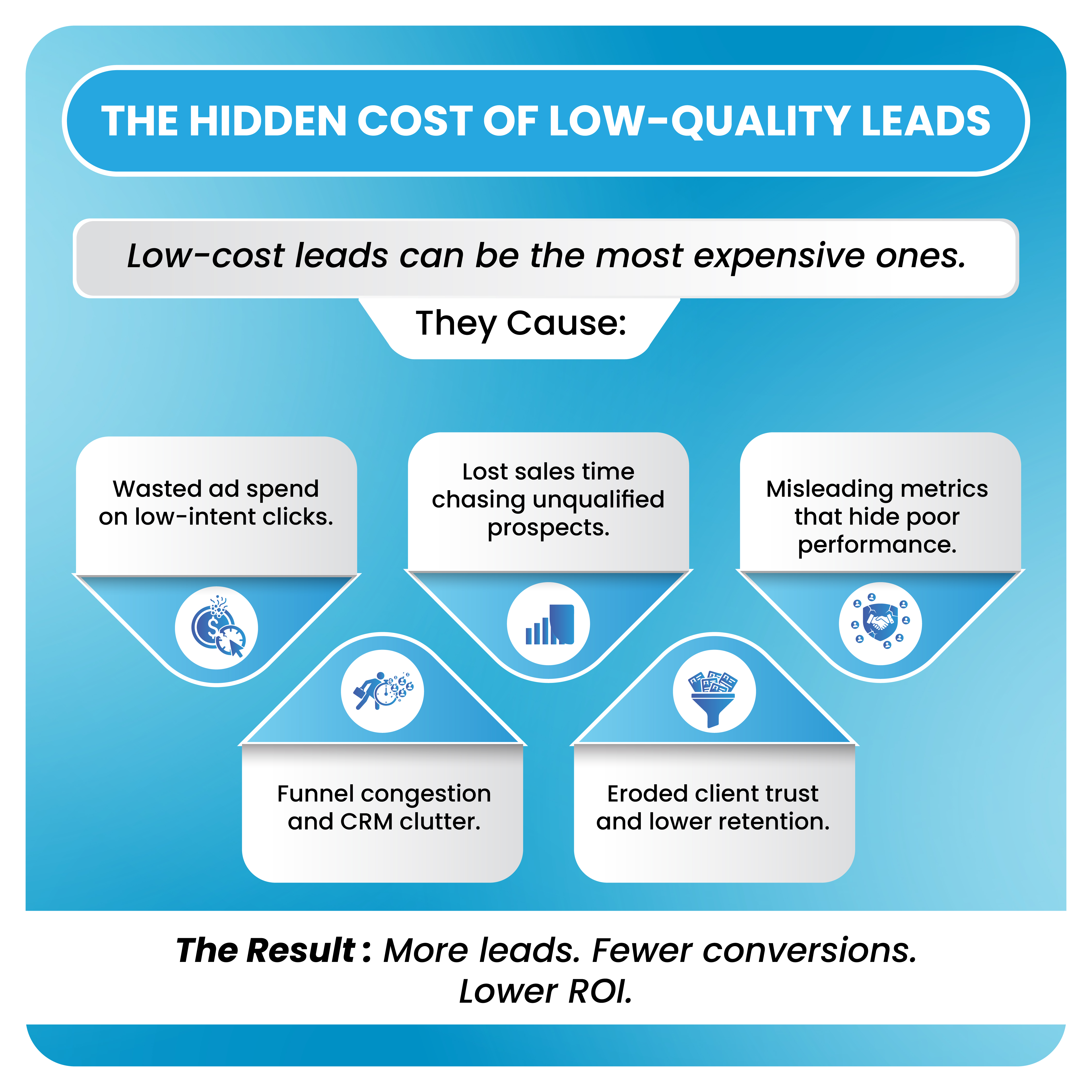
One of the most common mistakes agencies make is chasing low cost per lead at all costs. On the surface, this approach seems logical. Cheaper leads suggest better efficiency. In reality, low CPL often hides deeper problems.
A B2B campaign may generate dozens of leads at a low cost, yet half of them never respond to follow-ups. Others may lack decision-making authority or budget. This issue frequently shows up in online discussions among PPC professionals, including Reddit threads where marketers share stories of campaigns that look successful but fail to drive revenue.
Low-quality leads waste time for sales teams and reduce client trust. Over time, clients begin to question the value of PPC altogether, even when the channel itself is not the problem.
2. Benchmarks That Do Not Tell the Whole Story
Industry benchmarks can be helpful, but they are often misleading when used in isolation. WordStream reports that the average Google Ads conversion rate across industries is about 7.5%. While this number provides context, it says nothing about whether those conversions turn into meaningful business outcomes.
Two campaigns can share the same conversion rate and cost per lead, yet deliver very different results. One may produce leads that close quickly, while the other fills the CRM with low-intent inquiries. Without visibility into lead quality, agencies may optimize toward metrics that look good but fail to support client growth.
3. Internal Constraints That Hurt Quality
Smaller agencies and lean in-house teams often lack the bandwidth to refine campaigns beyond the basics. Advanced audience segmentation, landing page testing, and lead scoring require time, tools, and experience.
Data fragmentation adds another layer of difficulty. When ad platforms, analytics tools, and CRMs are not properly connected, it becomes nearly impossible to measure true lead value. Without clear attribution, teams are forced to make decisions based on incomplete information.
Optimizing for lead quality requires more than launching campaigns and adjusting bids. It demands a structured, ongoing approach driven by specialists who understand both platforms and buyer intent.
How White Label PPC Services Improve Lead Quality?
1. Access to Specialized PPC Expertise
White label PPC services give agencies access to dedicated specialists who live and breathe paid media. These professionals work across multiple platforms and industries, allowing them to spot patterns and opportunities that generalists may miss.
This expertise directly impacts lead quality in several ways:
- More precise keyword intent analysis that filters out low-value traffic.
- Smarter audience segmentation based on behavior, demographics, and lifecycle stage.
- Advanced bidding strategies focused on high-intent searches rather than broad exposure.
- Landing page optimization aligned with specific user intent.
According to DesignRush, agencies that partner with specialized PPC providers often see faster optimization cycles and more consistent performance. Specialists know which levers to pull and which signals matter most for attracting qualified prospects.
In one reported case from Brand White Label Solutions, a B2B agency using white label PPC support for LinkedIn Ads improved lead quality by around 20 percent after refining audience targeting and messaging. The improvement did not come from spending more, but from focusing on the right users.
2. Prioritizing Lead Quality KPIs Over Vanity Metrics
A major strength of white label PPC services is their focus on metrics that align with real business outcomes. Instead of optimizing only for clicks or cost per lead, quality-driven teams track indicators that reflect true value.
Key metrics often include:
- Lead quality score based on form data and behavior.
- Marketing Qualified Leads and Sales Qualified Leads.
- Time-to-contact and response rates.
- Conversion velocity through the funnel.
- Cost per qualified lead rather than cost per click.
Warmly AI highlights that aligning marketing and sales data helps teams identify which leads are most likely to convert. When PPC optimization includes these insights, budget decisions become more strategic and less reactive.
By shifting reporting toward quality-based KPIs, agencies can have more meaningful conversations with clients and demonstrate impact beyond surface-level performance.
3. Continuous Campaign Optimization Based on Real-Time Data
Lead quality is not a one-time fix. It requires continuous refinement as markets, audiences, and platforms evolve. White label PPC services are built around ongoing optimization rather than set-and-forget management.
Common tactics include:
- Regular bid adjustments for high-intent keywords.
- Ongoing keyword pruning and negative keyword expansion.
- Audience layering, such as combining remarketing with lookalike segments.
- Performance reviews tied to lead outcomes rather than traffic alone.
WordStream data shows that while average PPC conversion rates vary widely, campaigns aligned with buyer intent consistently deliver better ROI. Quality-focused optimization may reduce total lead volume, but it increases the likelihood that each lead will convert.
4. Landing Page and Funnel Optimization
Even the best-targeted ad will fail if the landing experience does not match user intent. White label PPC services often extend beyond ads to include post-click optimization.
This approach typically involves:
- A/B testing headlines, forms, and calls to action.
- Aligning ad copy closely with landing page messaging.
- Reducing unnecessary friction while keeping qualification questions intact.
- Segmenting landing pages based on intent, such as informational versus service-driven searches.
Agencies frequently report that segmented PPC landing page lead to better form submissions and higher-quality inquiries. Instead of attracting everyone, these pages speak directly to users who are ready to take the next step.
5. Better Attribution and Multi-Touch Measurement
One of the biggest challenges in lead quality optimization is attribution. Single-touch models often credit the last click while ignoring earlier interactions that influenced the decision.
White label PPC agency helps implement more accurate tracking systems, including:
- Multi-touch attribution models.
- Server-to-server tracking for better data reliability.
- Offline conversion imports from CRMs.
- Alignment between ad platforms and sales data.
This level of measurement allows agencies to see which campaigns drive real revenue rather than just form fills. Over time, budgets can be shifted toward channels and tactics that consistently produce qualified leads.
6. Scalability and Consistency Without Staffing Risk
Scaling PPC operations in-house often creates more pressure than progress. Hiring experienced PPC professionals requires a significant financial commitment, and the process itself can take months. Even after onboarding, ongoing training is needed to keep pace with platform updates, policy changes, and evolving best practices.
Staff turnover adds another layer of risk, as performance can dip when campaigns change hands or expertise is lost. These disruptions frequently lead to uneven optimization, missed opportunities, and a noticeable decline in lead quality.
White label PPC agency removes these challenges by offering built-in scalability without the operational burden. Agencies can increase or reduce campaign activity based on client demand, seasonal trends, or growth goals without worrying about staffing gaps or resource strain.
Campaigns continue to be managed by dedicated specialists who follow consistent optimization processes, ensuring performance remains stable even during periods of rapid change.
By eliminating staffing constraints, agencies gain the freedom to focus on what matters most. Time and energy can be directed toward strategy, client communication, and business development, while experienced PPC professionals handle execution, testing, and performance refinement behind the scenes.
Real-World Examples and Insights
Across a wide range of industries, agencies that leverage white label PPC support report clear improvements in lead quality and overall campaign efficiency. In B2B lead generation, refined targeting strategies and stronger qualification frameworks often lead to better alignment between marketing and sales teams. As a result, sales teams receive leads that are more informed, more responsive, and closer to making a decision.
Landing page split testing is another area where white label PPC services consistently drive results. Adjustments to headlines, form fields, or calls to action may seem minor, but they can significantly improve the ratio of marketing qualified leads to sales qualified leads. These changes help filter out casual inquiries and attract prospects with genuine intent.
Integrated retargeting funnels also play a major role in improving conversion quality. By prioritizing users who have already engaged with high-value content, agencies reduce wasted ad spend and focus on audiences that are more likely to convert. This targeted approach strengthens performance across the entire funnel.
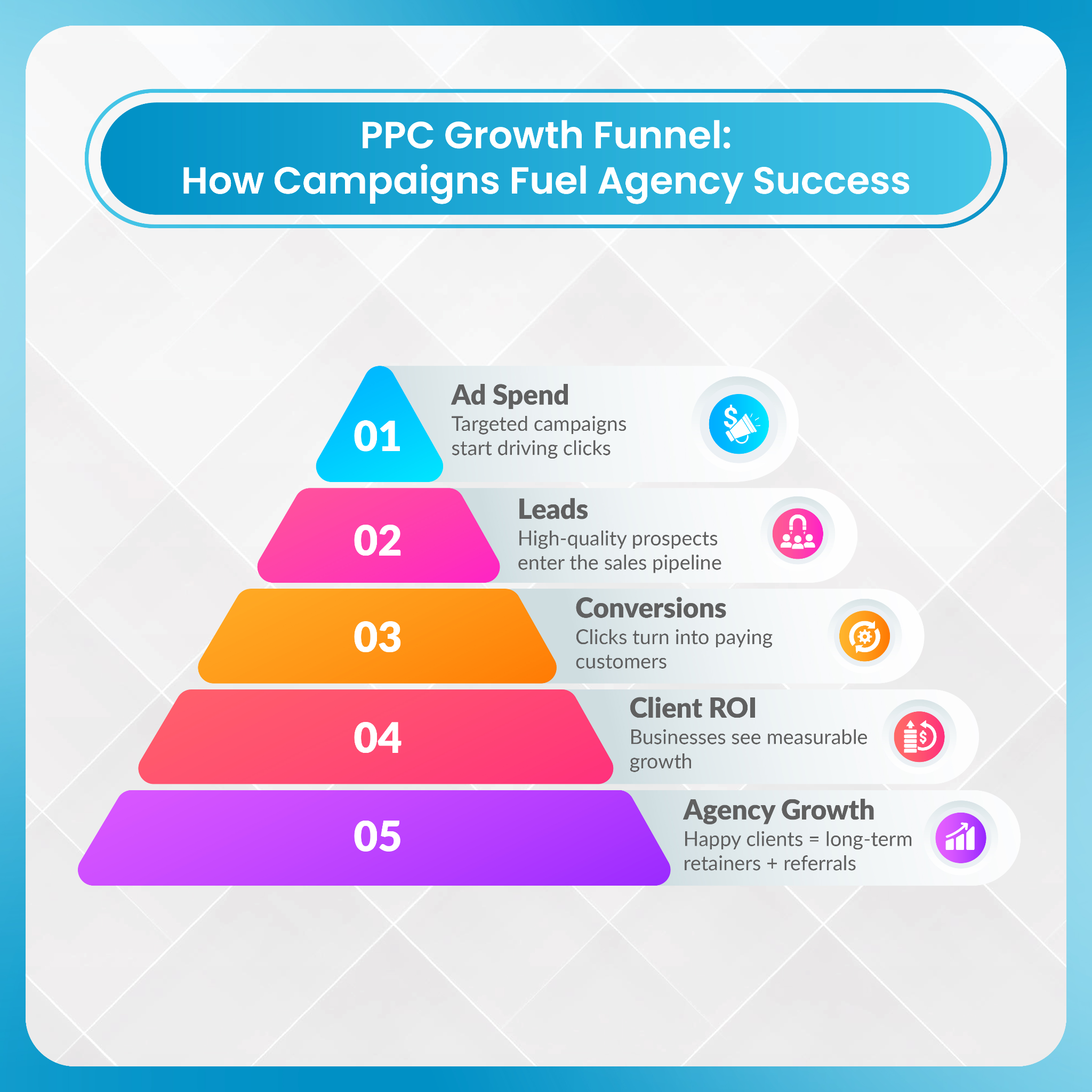
When agencies compare outcomes, the difference becomes clear. Traditional PPC management often produces a higher volume of leads at a lower upfront cost. White label PPC optimization, however, typically delivers fewer leads with stronger close rates and higher deal value. Over time, this shift leads to better ROI, stronger client trust, and improved retention, all of which support long-term agency growth.
How DashClicks’ White Label PPC Services Improve Lead Quality?
DashClicks approaches white label PPC with a clear focus on lead relevance and long-term results. Rather than chasing volume, the strategy centers on attracting users who are most likely to convert into real customers.
The process begins with high-intent keyword and audience research. Campaigns are built to filter out low-quality traffic through advanced negative keyword strategies and audience layering. This ensures ads are shown to users who match the client’s ideal profile.
DashClicks also emphasizes qualified conversion tracking. By aligning PPC data with CRM systems and offline events, agencies gain visibility into which leads actually turn into sales. This insight allows for smarter optimization decisions and more transparent reporting.
Landing page alignment plays a major role as well. Ad messaging is matched closely with post-click experiences to reinforce intent and reduce mismatches. Ongoing testing helps refine messaging and forms to improve lead relevance without sacrificing conversion rates.
All optimization is handled by specialists who focus exclusively on PPC performance. This expert-driven approach of DashClicks ensures campaigns are continuously refined based on real data rather than assumptions. Reporting remains fully white-labeled, allowing agencies to present results under their own brand while focusing on qualified leads and ROI.
The result is a scalable system that helps agencies deliver better lead quality without building or managing an internal PPC team.
Actionable Takeaways
Lead volume alone is no longer a meaningful measure of success. In a competitive and expensive PPC landscape, lead quality determines whether campaigns truly support business growth.
White label PPC services give agencies access to specialized expertise, advanced measurement, and continuous optimization frameworks that prioritize value over volume. By focusing on intent, qualification, and attribution, agencies can deliver stronger outcomes and build deeper client trust.
For agencies looking to improve results without increasing internal complexity, white label PPC is not a temporary fix. It is a sustainable way to turn paid media into a consistent source of high-quality leads.


.svg)


.svg)
.svg)
.svg)
.svg)
.svg)