

.svg)
.svg)
.svg)
.svg)
.svg)
.svg)
Agencies today face more pressure than ever to deliver strong, measurable results in paid advertising. Teams are stretched thin, ad platforms keep changing, and rising costs make every click more expensive to win. Many agencies want to scale, but they feel limited by staffing, expertise, or operational bandwidth, which makes PPC one of the toughest services to manage consistently.
Recent numbers highlight the reality. More than 60% of agencies rely on outsourcing to scale PPC effectively, according to Amra and Elma LLC. The average Google Ads conversion rate for search campaigns sits around 3.75%, based on WordStream benchmarks. And with the average cost per click in the United States climbing to $4.18 in 2024, as reported by DigitalPosition, agencies have to be more efficient than ever to maintain healthy margins.
This has pushed more agencies toward white label PPC. The promise is simple: eliminate the bottlenecks that slow growth and hand PPC fulfillment to specialists who do it all day, every day. In this blog, you'll learn how white label PPC solves major operational headaches, strengthens ROI, and gives agencies a scalable fulfillment engine without the burden of building an in-house PPC department.
6 Core Marketing Headaches Agencies Face
1. Limited Senior PPC Expertise and Skill Gaps
Many agencies rely on junior PPC staff who are still learning the complexities of bid strategies, keyword intent, audience segmentation, and conversion tracking. Even one misstep—bidding on broad terms, ignoring negative keywords, or misaligning landing pages—can raise costs fast.
When the average conversion rate is 3.75%, every wasted click pushes CPA up. Agencies without senior oversight often struggle to maintain healthy Quality Scores or consistent ROAS. This leads to inflated acquisition costs and inconsistent performance across campaigns.
Skill gaps can also slow response time when the algorithm shifts or when performance dips. Without deep platform knowledge, it becomes harder to diagnose issues, run efficient tests, or scale what works.
2. High Cost and Time Required to Hire, Train, and Retain PPC Talent
Recruiting experienced PPC talent has become expensive and time-consuming. Agencies must compete with in-house brands, marketing firms, and tech companies that offer higher salaries and faster growth prospects. Beyond recruitment, costs include:
- Ongoing training for platform updates.
- Subscriptions to advanced PPC tools.
- Salary benchmarks that rise annually.
Industry reports show that outsourcing certain digital functions can reduce overhead by up to 60%, according to ERVL. For many agencies, running PPC in-house simply isn’t sustainable unless they maintain a large book of clients.
Keeping talent is equally difficult. High turnover pulls teams into a cycle of repeated training, knowledge loss, and unstable client delivery.
3. Scaling Constraints During Growth or Seasonal Spikes
Many agencies hit a ceiling when they try to scale PPC services. Teams get overwhelmed, onboarding takes longer, and the quality of campaign oversight drops. Seasonal spikes—like the holiday rush or specific industry cycles—add even more pressure.
Agencies often face a tough choice: turn away new clients or overload their team. Both options limit growth. A common scenario is an agency missing a large opportunity because they don’t have the bandwidth to launch and optimize campaigns quickly.
Without flexible capacity, agencies struggle to maintain SLAs, deliver fast optimizations, and support high-value accounts that require detailed attention.
4. Tooling and Data Access Gaps
Running PPC at a professional level takes more than tactical knowledge. It depends heavily on having access to the right tools. Modern ad platforms have become more automated, but real performance gains still come from using specialized software that adds deeper insights, faster testing, and stronger attribution. The challenge is that many of these tools are priced for large agencies or enterprise brands, which puts smaller firms at a disadvantage.
Agencies that manage PPC in-house often run into cost barriers when looking for advanced bid automation tools. These platforms analyze thousands of data points in real time, adjust bids across devices and audiences, and react to changing auction conditions faster than manual management ever could. The same applies to audience modeling tools, which help identify high-value segments, create lookalike audiences, and build predictive targeting models that improve ROAS.
Conversion tracking is another area where agencies frequently struggle. Proper attribution requires connectors, tag managers, server-side tracking, and integrations with CRM or sales systems. Without them, it’s hard to understand which interactions actually contribute to conversions or revenue. Landing page testing tools also play an important role. They let teams test headlines, layouts, and calls to action, helping improve conversion rate without increasing ad spend.
Some of the essential tools include:
- Bid management platforms
- Automation scripts
- Landing page testing tools
- Attribution connectors
- Real-time reporting dashboards
Without access to these systems, agencies fall back on manual work. This slows decision-making, increases the risk of errors, and leads to inconsistent optimization cycles. It also creates gaps in reporting because teams don’t have enough data to show how campaigns influence revenue. Incomplete attribution makes it harder to justify budgets, defend performance, or identify the best-performing channels. When agencies can’t connect the dots between spend and results, it limits how confidently they can scale PPC for their clients.
5. Inconsistent Reporting and Difficulty Proving ROI
Clients want clear, transparent reporting that ties ad spend to actual business results. Many agencies struggle because they don’t have a unified system for tracking:
- Conversions
- Revenue attribution
- Cross-channel behavior
- Lead quality
- Long-term ROI
When reports lack structure or consistency, clients question performance—even if the campaigns are working. Missed or inaccurate reporting can lead to churn, reduced trust, and constant pressure to “show results faster.”
6. Margin Squeeze from Rising Media Costs
With CPCs rising year over year, agencies feel pressure from both sides. Clients expect stronger results, but budgets often stay the same. When CPC jumps to $4.18 or more in competitive niches, profit margins tighten.
If campaigns aren’t optimized at every level—audience, creative, bidding, landing pages—profitability suffers. Agencies end up doing more work for less revenue, especially if they rely solely on fixed retainers.
This combination of rising media costs and client expectations creates a long-term margin squeeze that’s difficult to escape without expert support.
Here’s the good news: white label PPC removes each of these headaches and gives agencies a scalable fulfillment engine built for growth.
How White Label PPC Removes Each Headache and Boosts ROI?
White label PPC turns complex ad operations into a repeatable system. By handling execution, optimization, and reporting behind the scenes, it removes common agency bottlenecks while improving ROI across client accounts.
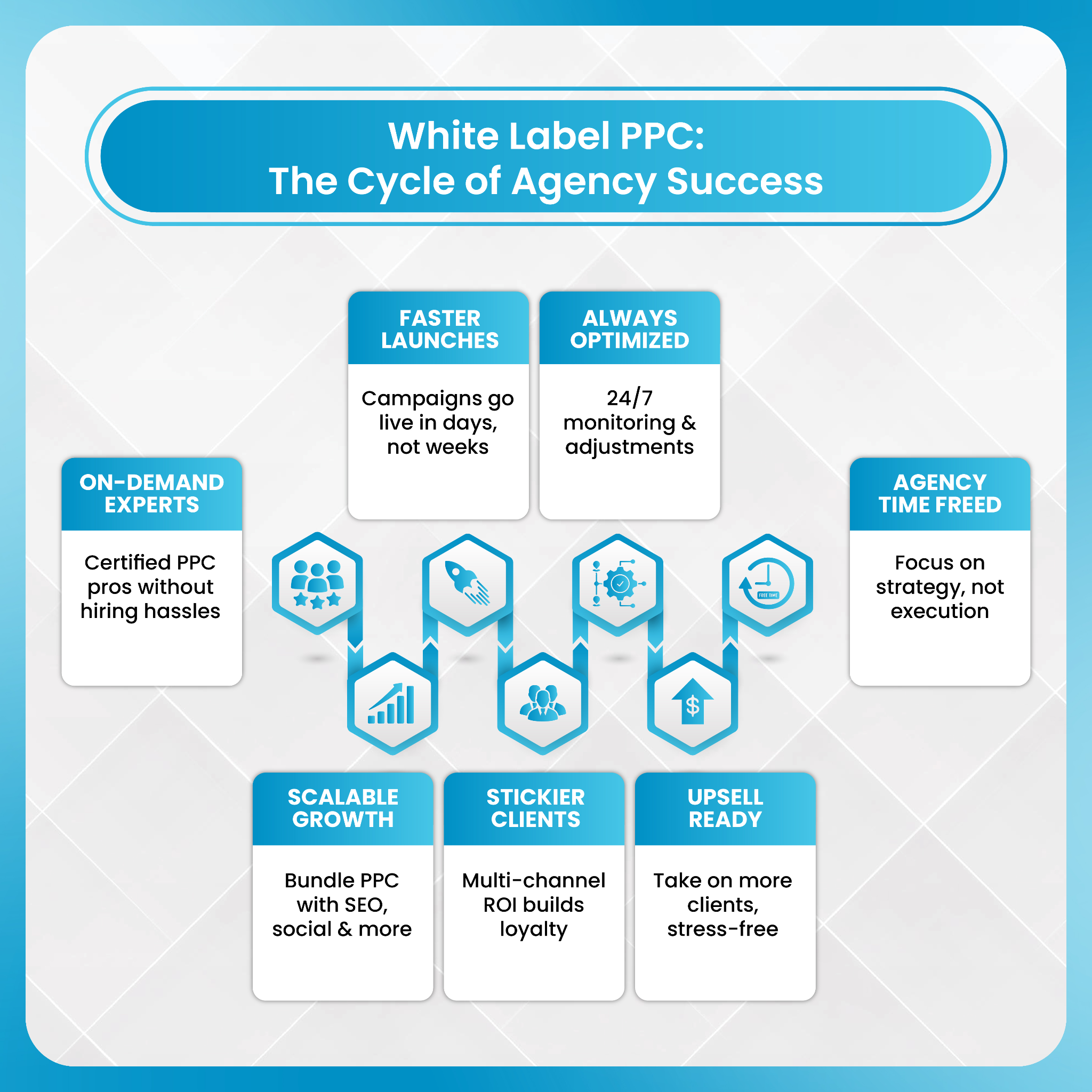
Here is how white label PPC services help agencies -
1. Expert-Led Account Ownership to Solve Skill Gaps
White label PPC agency brings senior-level strategists, paid media specialists, and long-time PPC managers who focus solely on driving performance. This means faster troubleshooting, smarter bidding decisions, and better alignment between landing pages and ad structure.
Expert partners optimize Quality Score, refine targeting, and adjust bidding strategies quickly. The result is stronger performance across all metrics—CPC, CPA, conversion rates, and ROAS. Many agencies experience noticeable improvements within the first 60–90 days.
Because white label PPC providers rely on specialization, they understand the nuances of each platform. Their results are their reputation, which means they’re highly incentivized to deliver measurable improvements.
2. Lower Hiring Costs Through Predictable, Variable Pricing
Instead of paying salaries, benefits, training, and tools, agencies pay only for the PPC accounts they need fulfilled. Pricing structures usually follow models such as:
- Flat monthly fee per account
- Tier-based pricing
- Percentage of ad spend
This shifts a large fixed cost into a flexible variable cost. Agencies improve profit margins because they can mark up white label PPC fulfillment and expand PPC offerings without expanding payroll.
Research shows that outsourcing specialized services can help agencies cut operational expenses significantly, often by up to 60%, based on ERVL data.
Offering PPC often boosts average client revenue by 25–40%, which gives agencies a dependable way to increase recurring revenue without stretching internal resources.
3. On-Demand Scalability and Faster Time-to-Market
White label PPC services help agencies scale immediately. Whether an agency signs a new account or sees a seasonal spike, the partner provides:
- Fast onboarding
- Instant access to extra capacity
- Support for large or complex accounts
There is no need to pause growth, hire new staff, or delay launches. Agencies can say yes to bigger opportunities and maintain strong SLAs. This flexibility is especially important for agencies targeting industries with predictable peaks, such as e-commerce, home services, and healthcare.
4. Enterprise Tools and Unified Attribution Without Extra Cost
White label PPC partners invest in advanced tools that improve campaign performance, including:
- Automated bidding platforms
- Conversion tracking systems
- Multi-touch attribution models
- CRO insights and testing frameworks
- Real-time dashboards
Access to these tools improves optimization cycles and reduces manual work. Agencies gain clearer visibility into the full customer journey, which helps demonstrate ROI more effectively.
These systems also unify data across Google, Meta, and other platforms, so teams can see performance trends without switching between multiple tools.
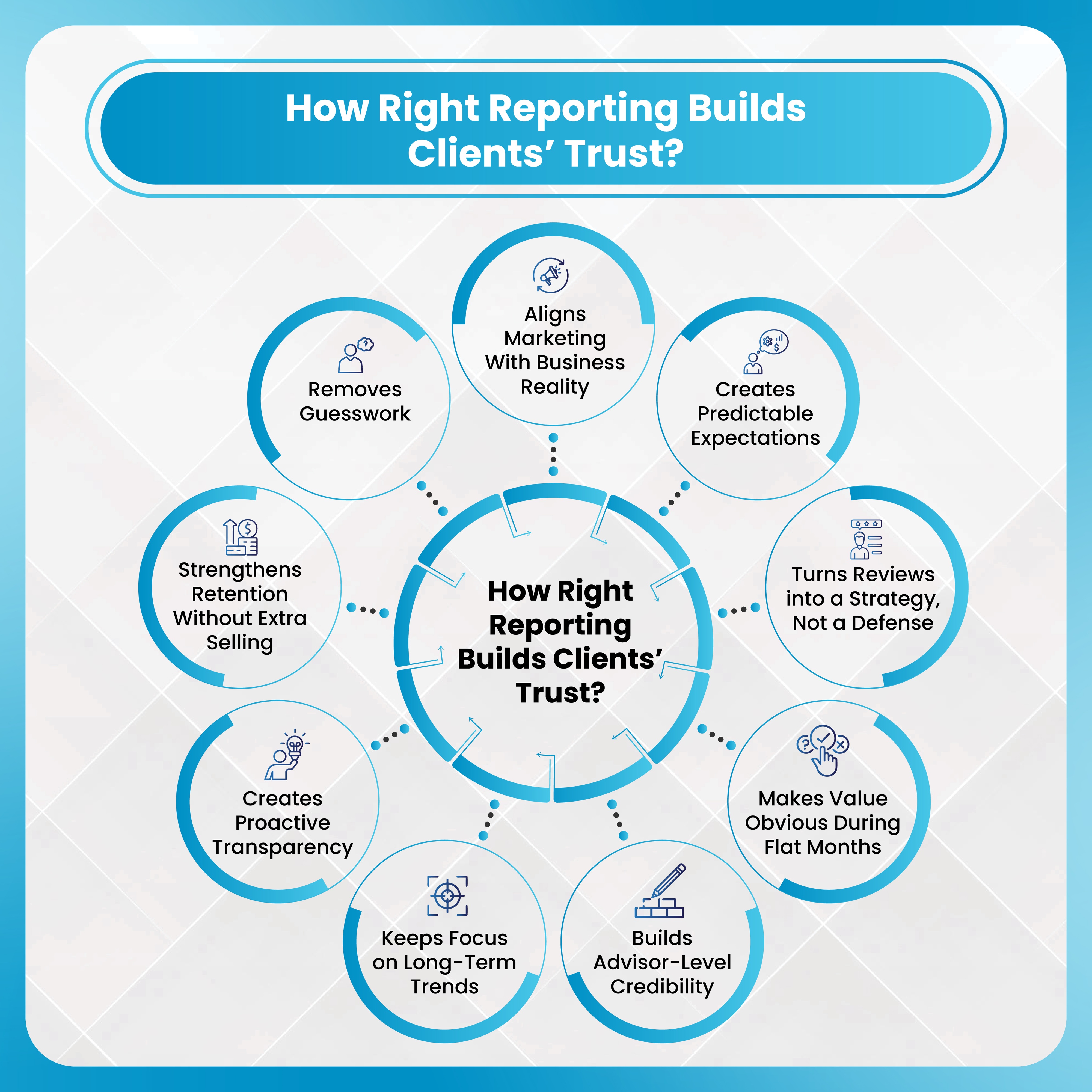
5. Consistent, White-Labeled Reporting That Builds Client Trust
White label PPC providers deliver structured reports with clear KPIs, such as:
- Impressions
- Click-through Rate
- CPC
- Conversion Rate
- CPA
- ROAS
- Revenue Impact
- Lead Quality
- LTV of Acquired Customers
These reports give agencies a professional, branded way to communicate results. Clients gain transparency into their campaigns, which strengthens trust and reduces churn.
A standard reporting cadence includes:
- Weekly performance snapshots
- Monthly executive summaries
- Quarterly strategy reviews
Structured reporting makes client conversations easier, more productive, and more strategic.
6. Efficiency-Driven Optimization to Offset Rising CPCs
As CPCs rise, the only way to protect margins is to improve efficiency. White label PPC teams apply advanced tactics, including:
- Audience refinement
- Aggressive negative keyword management
- Smart Bidding with expert oversight
- A/B testing for creatives and landing pages
- CRO-driven adjustments
- High-intent keyword prioritization
- Remarketing funnels
When conversion rates rise—even slightly—it helps offset rising CPCs. For example, a small increase from 3.75% to 5% can dramatically lower CPA and raise ROAS. These improvements make PPC sustainable even when costs increase across industries.
Measurable KPIs and Reporting Cadence Agencies Should Expect
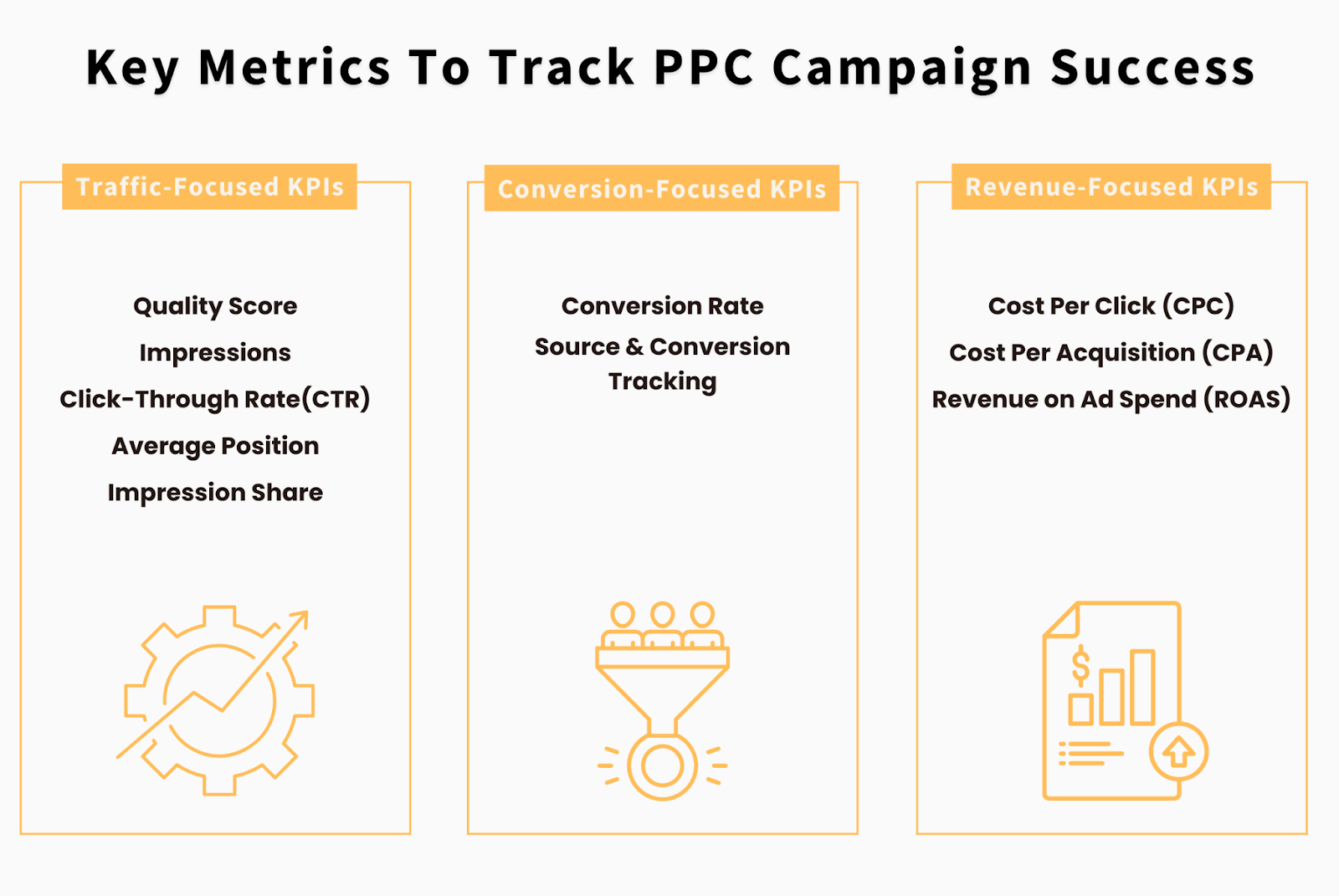
A strong white label PPC partner should provide clear KPIs that reflect both performance and revenue impact. Key metrics include:
- Conversion Rate: baselines around 3.75% for search
- CPC: compare against the US average of $4.18
- CPA: cost required to acquire a new lead or customer
- ROAS: revenue generated for each dollar spent
- LTV-to-CAC Ratio: long-term profitability
- Impression Share: visibility compared to competitors
The recommended reporting cadence includes:
- Weekly operational reports for optimization insights.
- Monthly executive summaries that highlight revenue, lead quality, and attribution.
- Quarterly reviews that include strategy shifts, seasonal planning, and budget opportunities.
A simple reporting layout includes columns for KPI, current period, previous period, and period-over-period variance. This helps clients see trends clearly and understand what’s improving.
How to Choose the Right White Label PPC Partner?
A dependable partner should meet several criteria before you trust them with your clients. Look for:
- Certifications and proven case studies with clear performance improvements.
- GA4 integration, server-side tracking, and platform expertise.
- Transparent SLAs and reporting structure.
- Flexible pricing with room to mark up for healthy margins.
- Fast onboarding and the option for a trial audit.
Red flags include:
- Vague or incomplete reporting.
- No clear onboarding timeline.
- Lack of performance guarantees.
- Long-term lock-in contracts.
- No visibility into optimization processes.
Choosing the right partner ensures your agency can scale confidently without sacrificing quality.
How DashClicks Helps Agencies Remove PPC Headaches and Boost ROI?
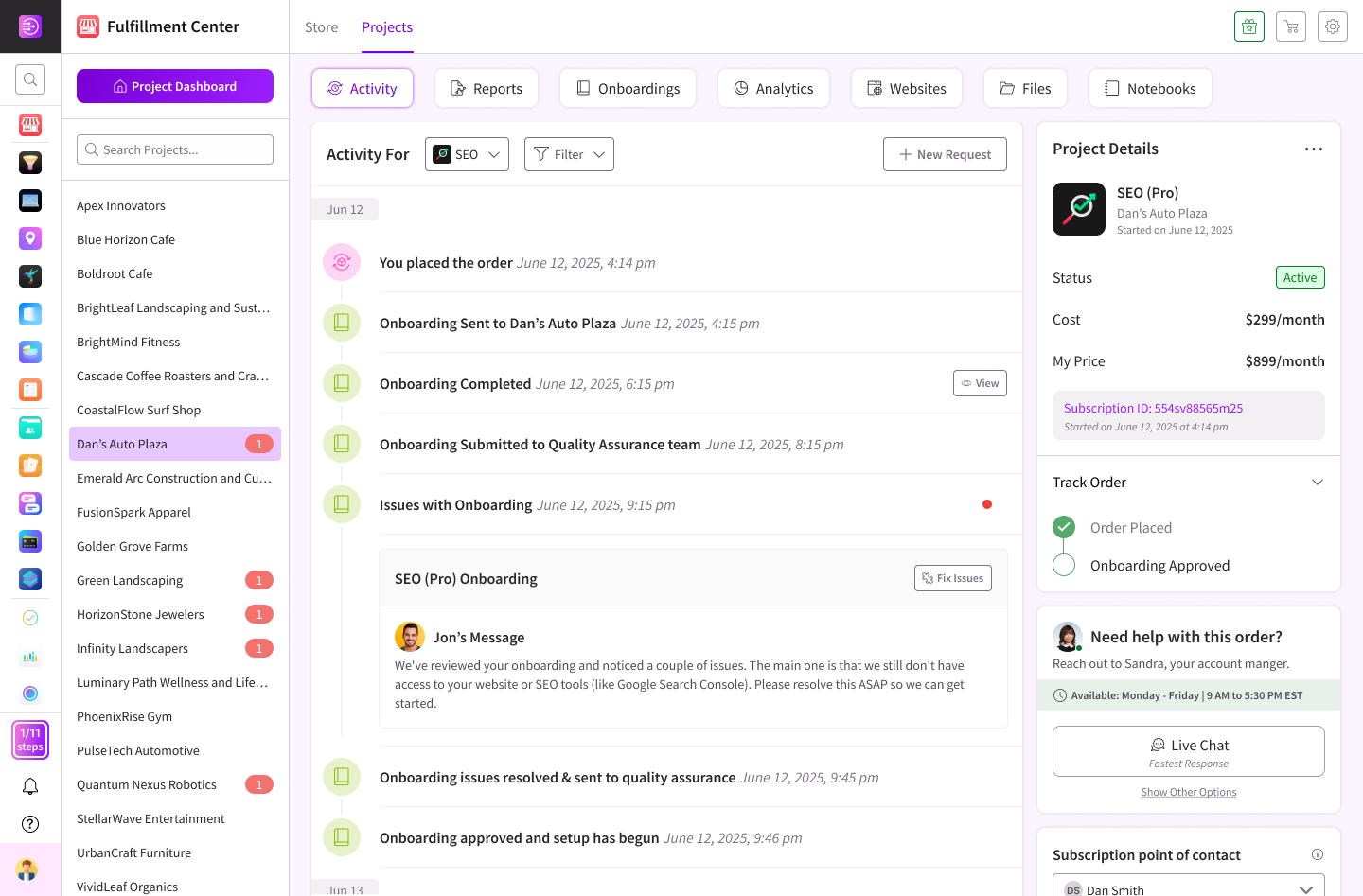
DashClicks provides complete white label PPC services designed specifically for agencies that want to scale without taking on more operational work. Their fulfillment team is staffed with senior-level PPC strategists who manage everything from campaign setup to optimization and reporting. This allows agencies to deliver expert-level PPC without hiring specialists internally.
DashClicks manages full campaign builds across Google and Meta, handles tracking setup with GA4, pixel installation, and event configuration, and performs weekly optimizations that include bid adjustments, creative testing, keyword refinement, and landing page recommendations. Their real-time white-labeled dashboards give agencies transparent reporting that clients can access anytime.
One of the biggest benefits is scalability. Agencies can onboard unlimited PPC clients without expanding their internal team. DashClicks offers predictable, margin-friendly pricing that agencies can easily mark up, helping them increase recurring revenue while reducing overhead. Their support team ensures smooth onboarding and fulfillment consistency, which makes it easy for agencies to grow their PPC offerings without the stress of managing everything in-house.
Wrap-Up
White label PPC gives agencies a reliable way to eliminate operational challenges and improve ROI for their clients. It removes talent shortages, reduces overhead, improves reporting, and provides scalability without the risk of hiring. With rising CPCs and client expectations, agencies need stronger optimization and clear attribution to remain competitive—white label PPC delivers both.


.svg)


.svg)
.svg)
.svg)
.svg)
.svg)