

Expanding into a new market can open up real growth for a client, but it rarely works the same way as scaling an existing campaign. New geographies and new customer segments bring different demand levels, different competitors, and different acquisition costs. What worked in one city or one audience segment doesn't automatically transfer to the next.
For agencies, this creates a two-sided challenge. New campaigns need research, planning, and careful setup before launch. At the same time, existing client accounts still need monitoring, optimization, and communication. Market expansion can't come at the cost of service quality elsewhere.
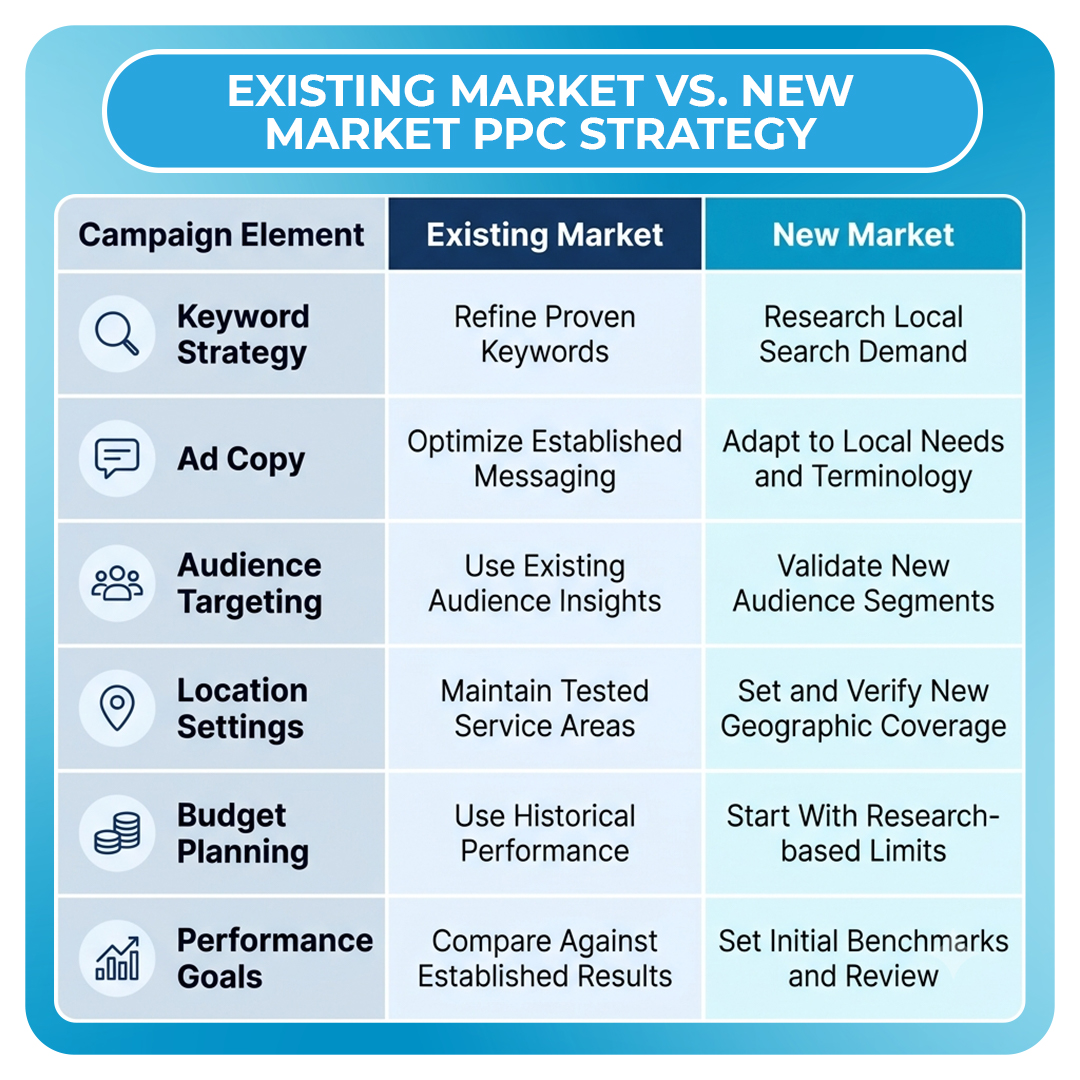
Simply copying an existing campaign into a new market rarely works well. Keywords, search intent, competition levels, location targeting, and landing page relevance can all look different once a client moves into unfamiliar territory. Treating a new market like a clone of an old one often leads to wasted spend and disappointing early results.
This is where white label PPC comes in. It gives agencies a way to add execution capacity for new campaign launches without pulling internal strategists off existing accounts. Done well, it lets an agency expand its service delivery while keeping full ownership of market selection, budgets, positioning, and client relationships.
Successful market expansion depends on three things working together: market-specific planning, disciplined measurement, and a repeatable process for launching and managing campaigns. The rest of this guide walks through how agencies can build that approach, and where a white label PPC company fits into it.
Why Entering a New Market Changes PPC Requirements?
A campaign that performs well in one market tells you very little about how it will perform in another. Several variables shift at once, and each one affects results.
1. Market Demand and Competition
Before committing a budget, agencies need to confirm that real demand exists in the new market. PPC keyword research helps answer whether people are actually searching for the client's products or services in that location or segment.
Demand alone isn't enough, though. Agencies also need to assess:
- Competitor Activity: Who else is advertising in this space, and how aggressively?
- Keyword Competition and Estimated CPCs: What will it realistically cost to compete for visibility?
- Customer Acquisition Economics: Once a lead converts, does the math still work for the client's business model?
A market with strong search volume can still be a poor fit if competition drives costs too high or if acquisition economics make profitable growth difficult. High demand and profitable demand are not the same thing.
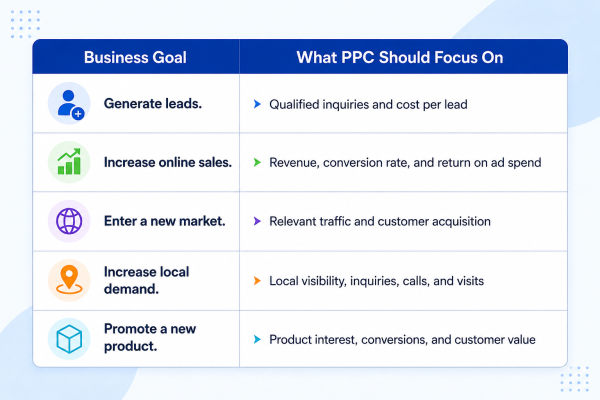
Image Source: LinkedIn
2. Audience and Search Intent
Customer needs, purchase behavior, and even the language people use to search can shift from one market to another. A term that resonates with one audience may mean little to another, or may carry different intent entirely.
Agencies should review how search queries differ by location or customer segment before assuming the existing keyword list still applies. Ad copy, offers, keywords, and landing pages often need adjustment to reflect what the new audience actually expects and responds to.
2. Campaign Economics
It's tempting to use an established market's conversion rates and lead costs as the benchmark for a new one. That approach sets agencies up for disappointment. Competition, sales cycles, customer value, and the client's internal ability to convert leads can all differ significantly.
A more reliable approach is to set realistic initial expectations based on available research, then revise those expectations as real market-specific data comes in. Early assumptions should be treated as a starting point, not a fixed target.
Industry benchmarks offer useful reference points, as long as they're treated as general context rather than guaranteed outcomes. According to WordStream's 2026 U.S. search advertising benchmark analysis, which reviewed more than 13,000 campaigns, the average cost per click sits at $5.42, and the average cost per lead is $66.69.
These figures describe broad national averages across many industries. They are not a forecast for any specific client, industry, or location. A new campaign should not be expected to automatically land at either number. Actual performance depends on the market, the industry, the offer, the level of competition, targeting choices, and how effectively leads convert once they reach the client.
How Agencies Can Prepare PPC Campaigns for a New Market?
Preparation determines whether a new market launch starts strong or starts guessing. A few key steps help agencies validate the opportunity and build a campaign that fits the actual market.
1. Validate Demand Before Launch
Before writing a single ad, agencies should confirm there's a real opportunity worth pursuing:
- Assess keyword opportunities and search intent to understand what potential customers are actually looking for.
- Review competitor positioning, offers, and landing pages to spot market-specific opportunities and challenges.
- Confirm which geographic areas the client can realistically serve, so targeting doesn't outpace delivery capacity.
- Determine whether demand and expected acquisition economics justify the proposed budget.
2. Adapt Rather Than Duplicate Campaigns
New markets deserve their own campaign structure, built from evidence rather than assumption:
- Reassess keywords and search terms instead of importing the existing campaign wholesale.
- Review negative keywords closely to reduce irrelevant traffic that a new market might attract differently.
- Adjust bids and budget allocations to match the campaign's actual objective and the evidence gathered so far.
- Adapt ad copy, offers, and landing pages to match the new audience's needs and terminology.
- Keep what works from existing campaigns, but test the assumptions that may not carry over.
3. Set Location Targeting Deliberately
Geographic precision matters more than it might seem. Google Ads supports targeting by country, region, city, and postal area, giving agencies granular control over where ads appear.
Before launch, agencies should verify location settings carefully, confirming they match the client's actual service coverage and expansion goals. It's worth noting that selecting a geographic target doesn't guarantee every impression or click comes from a perfectly matched customer. Reviewing location-based reporting after launch remains an important ongoing step.
4. Establish Market-Specific Baselines
Before a campaign goes live, agencies should define:
- Budget limits and spending controls.
- Initial qualified-lead targets based on the research gathered so far.
- Conversion tracking requirements and the specific events that matter to the business.
- Initial evaluation periods and scheduled review checkpoints.
- Clear criteria for continuing, revising, or pausing the campaign.
These baselines exist to guide evaluation, not to serve as fixed promises made before enough market-specific data exists. They should flex as real performance data comes in.
Where White Label PPC Fulfillment Supports Market Expansion?
Once a market-entry plan is in place, execution capacity becomes the next challenge. This is where white label PPC for agencies becomes especially useful, particularly when internal teams are already stretched across existing accounts.
1. Absorb Additional Campaign Workload
Agencies can delegate specific, approved tasks within an agreed scope, including:
- Campaign builds and implementation.
- Keyword research and campaign preparation.
- Ad implementation and setup checks.
- Routine optimization and monitoring.
- Reporting preparation and other agreed execution tasks.
Delegation works best when it follows the agency's documented requirements and approval process, rather than operating as an open-ended handoff.
2. Maintain Consistency Across Markets
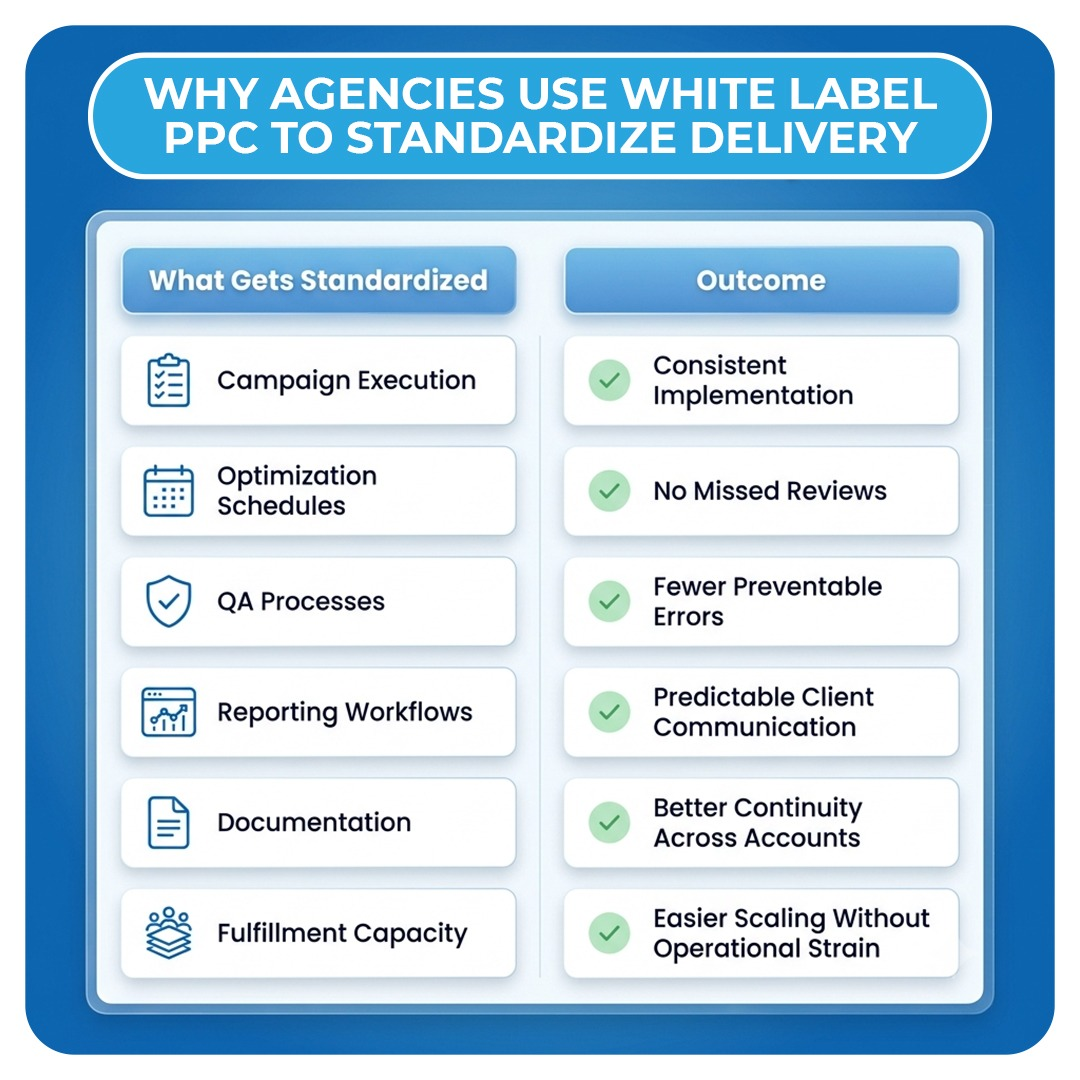
Shared processes can improve operational consistency across several campaigns running at once. This includes:
- Common naming conventions and account organization.
- Quality assurance procedures and pre-launch checks.
- Consistent conversion tracking standards.
- Standardized reporting templates.
- Documented workflows that still allow each market to follow its own strategy.
Consistency in process doesn't mean forcing identical keywords, budgets, offers, or campaign structures onto every market. Each market can still have its own approach while following the same operational standards.
3. Coordinate Multiple Launches
Documented campaign briefs help fulfillment teams understand each market's goals, audience, geographic coverage, and requirements before work begins. Implementation schedules and approval workflows help agencies coordinate overlapping launches without confusion.
When several campaigns are being prepared at once, clearly defined responsibilities reduce the back-and-forth that otherwise slows everything down.
4. Protect Existing Account Performance
Additional fulfillment capacity can reduce the workload placed on in-house PPC specialists who still manage established client campaigns. This matters because existing accounts need continued monitoring, optimization, and client communication, even while new campaigns are being launched elsewhere.
5. Define the Limits of Delegation
It's worth drawing a clear line between strategic ownership and execution support.
The Agency Retains Responsibility for:
- Market selection and expansion priorities.
- Budget allocation and business objectives.
- Positioning, offers, and campaign strategy.
- Client-facing decisions and communication.
- Final approvals and performance recommendations.
The white label PPC partner supports authorized execution work within the agreed scope. Outsourcing PPC management for additional capacity shouldn't mean giving up strategic control or stepping back from the client relationship.
How Agencies Should Measure Success in Each New Market?
Blended averages can hide a lot. Agencies need to evaluate each new market on its own terms before drawing conclusions.
1. Separate Performance by Market
Spend, clicks, conversions, and acquisition costs should be reported separately for each market. Combined averages can mask strong performance in one location while hiding weak performance in another. Using consistent reporting periods and clearly defined conversion actions makes location comparisons meaningful rather than misleading.
2. Measure Beyond Clicks and Conversions
Platform metrics only tell part of the story. Business outcomes matter just as much, including:
- Cost per qualified lead: Measures how much the campaign spends to generate a lead that meets the client's qualification criteria.
- Lead-to-sale rate: Shows what proportion of leads eventually become paying customers.
- Customer acquisition cost: Helps assess the true cost of acquiring a customer when reliable sales data is available.
- Revenue: Helps determine whether the campaign contributes to actual business outcomes, where revenue attribution exists.
- CPC and conversion rate: Useful diagnostic signals, but not complete measures of success on their own.
For these comparisons to mean anything, lead quality, conversion definitions, and sales tracking need to stay consistent across markets.
3. Use Staged Budget Decisions
Agencies should set checkpoints for reviewing performance before increasing spend, revising targeting, or pausing a campaign. It takes time to distinguish a genuine problem from normal early fluctuation, so decision criteria should be set in advance.
That said, waiting indefinitely isn't the right move when evidence points to a clear issue. Tracking failures, irrelevant traffic, or other material problems warrant immediate adjustment rather than a wait-and-see approach.
4. Account for Local Economics
Every market comes with its own economic context. Agencies should account for:
- Profit margins and service delivery costs specific to that market.
- Sales cycle length and lead-to-sale rate.
- Customer lifetime value or average customer value, where relevant.
- Competitive conditions and acquisition costs.
- The client's capacity to actually serve additional customers.
A higher CPC can still be commercially viable if the market produces valuable, high-converting customers. A low CPC, on the other hand, doesn't guarantee profitability on its own.
Acquisition costs tend to move, and they don't always move in a predictable direction. WordStream's 2025 analysis found that CPC increased in 87% of industries studied. That statistic is a useful reminder to monitor acquisition costs closely rather than assume a new market will stay inexpensive.
It shouldn't be read as a prediction that CPC will rise in every new market, nor as a universal trend that applies to every advertiser equally. It's a reason to watch the data closely, not a forecast.
Building a Repeatable Market-Entry PPC Workflow
A consistent, five-phase process helps agencies manage market-entry campaigns reliably, without reinventing the approach every time a client expands.
Phase 1: Research and Planning
The agency validates demand, reviews competition, identifies the target audience, defines campaign objectives, and approves the initial budget. Service coverage, conversion tracking requirements, and initial performance criteria should all be confirmed before implementation begins.
Phase 2: Brief and Implementation
The agency provides a market-specific brief covering objectives, keywords, audience, geographic targeting, landing pages, budget limits, and approval requirements. The fulfillment team then executes approved tasks according to that brief and the agreed scope. Clarifying responsibilities before work starts helps prevent unnecessary rework later.
Phase 3: Launch and QA
Before going live, the campaign should pass through a quality assurance check covering:
- Geographic targeting and exclusions.
- Destination URLs and landing page functionality.
- Conversion tracking and relevant conversion actions.
- Campaign settings, keywords, negative keywords, ads, and budgets.
- Required approvals and reporting arrangements.
This check should align with the agency's own quality assurance process before the campaign launches.
Phase 4: Review and Optimization
Once live, market-level data gets evaluated against the original objectives and baselines. If performance gaps appear, the agency investigates whether they relate to targeting, search intent, ad copy, landing pages, conversion tracking, or lead quality. Adjustments should be based on evidence, documented clearly, and communicated to the client.
Phase 5: Scale Selectively
Spending increases, or coverage expansion, should happen when performance and business economics genuinely support the decision. That means weighing qualified-lead costs, conversion quality, customer acquisition costs, and the client's capacity to serve additional demand.
A campaign shouldn't scale simply because it launched or generated early clicks. Monitoring continues as the campaign grows, not just before it.
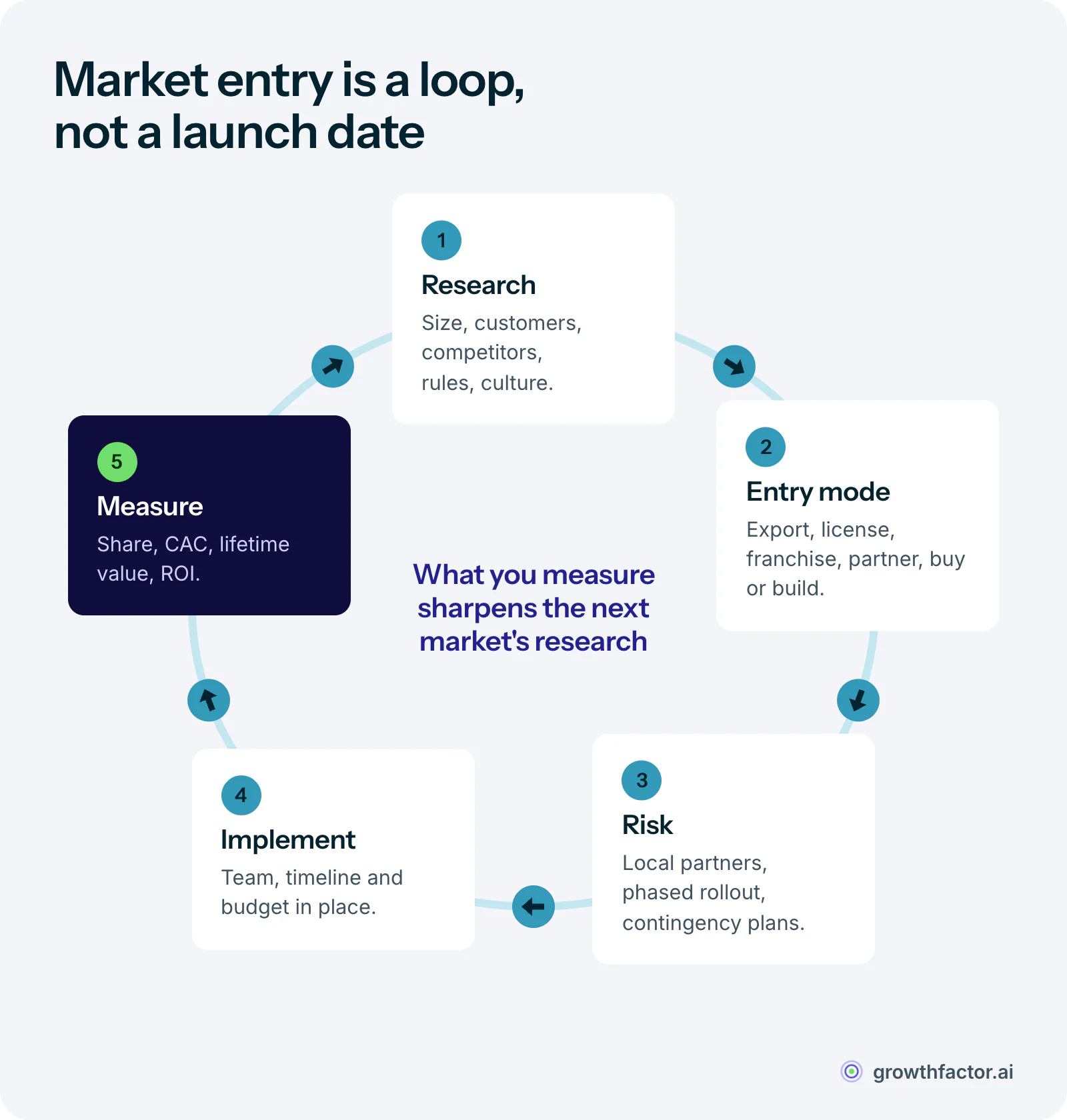
Image Source: GrowthFactor
Using DashClicks White Label PPC to Support Client Expansion
Agencies exploring white label PPC management as part of their market-entry process have several factors to weigh. DashClicks is one example of a provider offering white label marketing fulfillment, including PPC services, that agencies can consider for this purpose.
1. Add Execution Capacity Without Expanding Headcount
DashClicks' white label PPC for agencies can help manage additional campaign workload as clients expand into new geographic or customer markets. This doesn't eliminate every staffing need or guarantee lower operating costs, but it does give agencies a way to take on more execution work without immediately hiring additional PPC specialists.
2. Support Campaign Delivery at Scale
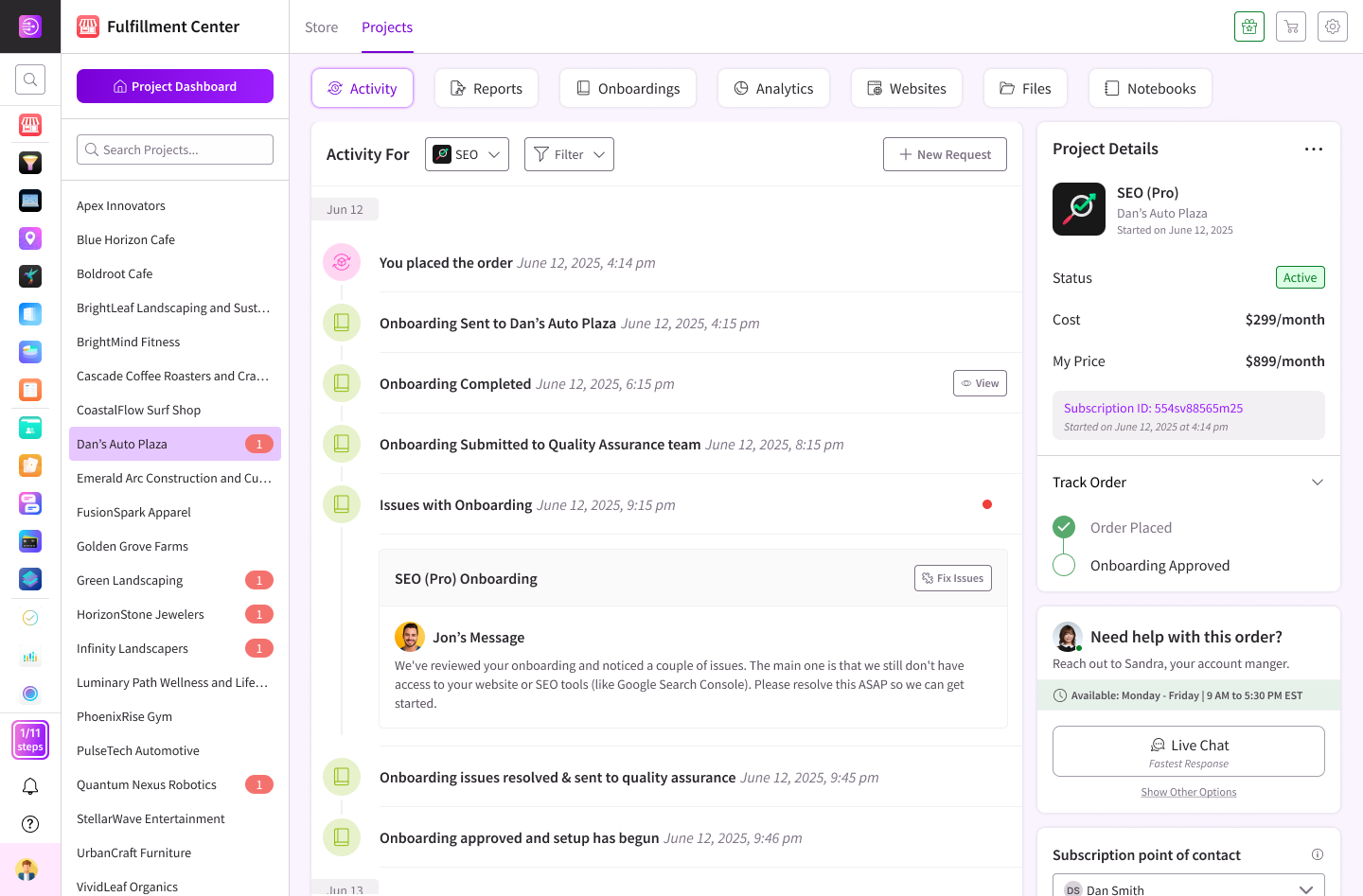
Fulfillment support connects to approved campaign implementation, ongoing optimization, and reporting within an agreed service scope. A structured fulfillment process can help agencies coordinate additional campaign work while maintaining consistent quality checks and reporting standards across multiple client accounts.
3. Keep Client Relationships and Strategy In-House
Throughout this process, the agency continues to direct:
- Market-entry decisions and campaign priorities.
- Budget allocation and strategic recommendations.
- Client communication and expectations.
- Approvals and decisions about major campaign changes.
- Interpretation of performance and recommendations for next steps.
White label PPC functions as an extension of execution capacity, not a replacement for the agency's strategic role or its relationship with the client.
4. Build a Repeatable Fulfillment Partnership
A productive fulfillment partnership depends on a few consistent elements:
- Clear market-specific briefs.
- Defined roles and responsibilities.
- Agreed approval processes.
- Consistent implementation and quality assurance.
- Scheduled performance reviews and transparent reporting.
A well-defined partnership helps agencies coordinate multiple market launches without losing sight of each client's specific objectives along the way.
Supporting Client Growth Without Losing Control
Market expansion asks a lot of agencies. Each new market needs its own demand research, audience analysis, competitive assessment, and campaign plan. None of that can be skipped by reusing what worked somewhere else.
Measurement deserves the same level of care. Performance should be assessed market by market, weighing lead quality and business economics rather than relying on clicks or conversions alone. A repeatable workflow, covering research, implementation, launch checks, optimization, and scaling decisions, gives agencies a consistent way to manage this process as clients expand into new territory.
White label PPC company offers agencies a practical way to handle the added execution demands of market entry, all while keeping strategic ownership, budget decisions, client communication, and final approvals firmly in-house. For agencies weighing their options, DashClicks' white label PPC for agencies is worth a closer look as a source of additional fulfillment capacity.