

.svg)

.svg)
.svg)
.svg)
.svg)
.svg)
Advertising agencies currently operate in an environment characterized by intense margin pressure and platform instability. Managing client accounts requires navigating a reality where algorithms change overnight, and acquisition costs consistently escalate. The fundamental difficulty facing agencies is maintaining predictable growth when the advertising platforms themselves have become inherently unpredictable.
Google Search CPCs increased by 13% YoY in Q1 2024, according to Tinuiti’s Digital Ads Benchmark Report.
This rise in click costs fundamentally changes how agencies must operate. When baseline expenses escalate, the margin for error in campaign execution disappears. In Q4 2024, Google Search CPCs were still up 7% YoY despite slowing click growth, showing that acquisition costs continue rising faster than traffic opportunities.
This dynamic puts immense pressure on agency profitability. LocaliQ data found that 86% of industries experienced higher Google Ads costs in 2024.
Because these rising costs affect nearly every client portfolio, agencies cannot simply rely on basic campaign setups to demonstrate value. In this turbulent context, white label PPC functions as a risk distribution model. It allows agencies to reduce dependency on internal hiring cycles and spread operational pressure across specialized execution teams. By leveraging external specialists, agencies protect their margins when ad costs rise faster than retainer fees.
Agencies no longer lose clients solely because campaigns fail. They lose clients because performance becomes inconsistent, reporting becomes reactive, and internal teams cannot adapt fast enough to auction volatility.
Why White Label PPC Creates Predictable Agency Growth?
An unpredictable advertising market requires a highly predictable fulfillment system. That is where white label PPC services create a strategic advantage. Instead of scaling overhead alongside every new client, agencies gain a flexible fulfillment infrastructure that supports growth without increasing operational strain.
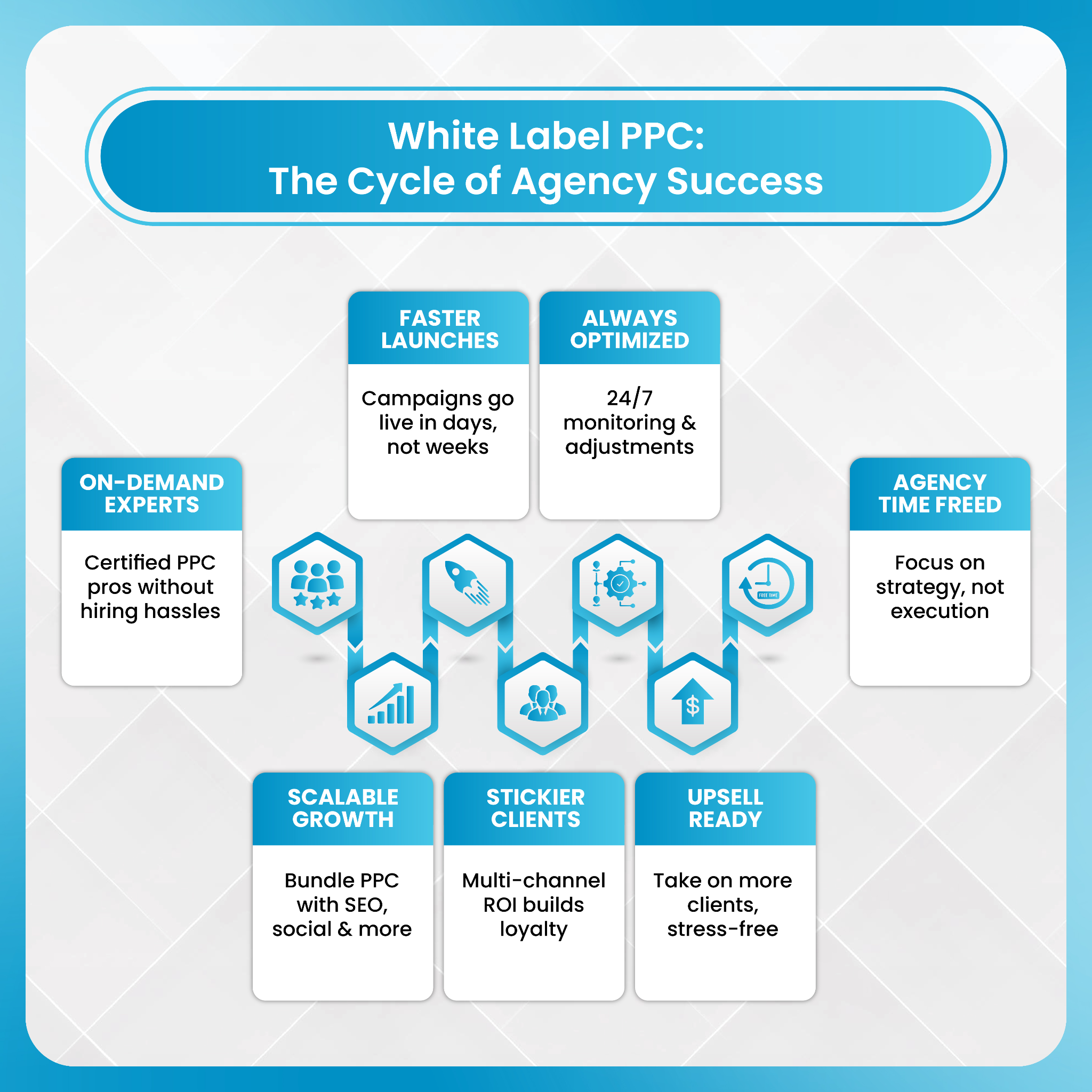
By partnering with a specialized white label PPC agency, agencies separate client strategy from daily campaign execution. As platforms become more automated and optimization demands increase, internal teams often spend more time managing bid adjustments, reporting, and platform changes than building agency-client relationship. White label fulfillment helps maintain campaign consistency while freeing account managers to focus on retention and growth.
Predictable agency growth also depends on standardized delivery. Established white label PPC providers operate with structured optimization processes, reporting systems, and campaign management workflows that help maintain service consistency as agencies scale. When delivery becomes more reliable, agencies improve retention stability and create a stronger recurring revenue foundation.
Agencies Are No Longer Competing on Campaign Setup: They Are Competing on Stability
There was a time when PPC success largely depended on campaign structure, keyword targeting, and ad creative. While those elements still matter, the competitive landscape has evolved.
Today, modern PPC management has fundamentally shifted. Success is no longer about launching ads. It is about stabilizing customer acquisition costs, lead quality, and return on ad spend despite continuous platform volatility.
Clients no longer evaluate agencies solely based on occasional performance spikes or isolated campaign wins. Instead, they increasingly value:
- Stable lead flow
- Predictable CPL trends
- Forecasting accuracy
- Faster optimization cycles
- Consistent reporting transparency
In many cases, “performance reliability” has become a stronger retention factor than short-term ROAS gains.
For example, an agency that consistently keeps cost-per-lead fluctuations within a 10–15% monthly variance may retain clients longer than an agency that occasionally produces exceptional ROAS but delivers highly unstable performance month-to-month.
This shift creates enormous pressure on internal PPC teams. Agencies are expected to continuously stabilize:
- CAC (Customer Acquisition Cost)
- Lead quality
- Conversion rates
- Budget efficiency
- Reporting accuracy
all while ad platforms themselves continue changing at an accelerated pace.
The reality is that clients increasingly associate operational consistency with agency competence. And that is where many internal teams begin to struggle.
Why Internal PPC Teams Become Financially Inefficient During Ad Market Volatility?
Building an internal media buying team sounds ideal in theory, but it often becomes a financial liability during periods of market instability.
Many agencies underestimate the hidden costs associated with scaling internal PPC operations, including:
- Senior PPC specialist salaries
- Recruitment expenses
- Training and onboarding delays
- Platform certification requirements
- Cross-channel specialization gaps
- Burnout caused by rapid platform updates
The challenge is magnified by how quickly advertising platforms now evolve.
Google Ads alone continuously introduces changes related to:
- AI-driven bidding automation
- Performance Max optimization
- Search intent interpretation
- AI-generated SERP features
- Audience modeling
- Attribution frameworks
At the same time, platforms like Meta, LinkedIn, YouTube, and Microsoft Ads each require specialized expertise and ongoing adaptation.
Media buyers face intense burnout from trying to keep pace with these rapid platform updates. Reuters reported aggressive bidding from Temu and Shein significantly inflated keyword CPCs across retail categories during Black Friday competition cycles.
This aggressive auction behavior forces internal teams to spend far more time analyzing bids just to maintain baseline results. This volatility directly compresses agency margins. Account managers must dedicate more optimization hours, conduct more reporting work, and hold more strategy calls, all while collecting the exact same retainer fees from the client. When it takes twice as long to achieve the same result, the agency loses money.
This creates the need for a fulfillment structure capable of absorbing operational volatility without continuously increasing internal overhead.
White Label PPC as an Operational Buffer Against Margin Compression
To survive in a fluctuating market, agencies must control their fixed costs while maximizing their service output. White label PPC helps agencies absorb market instability without scaling internal overhead.
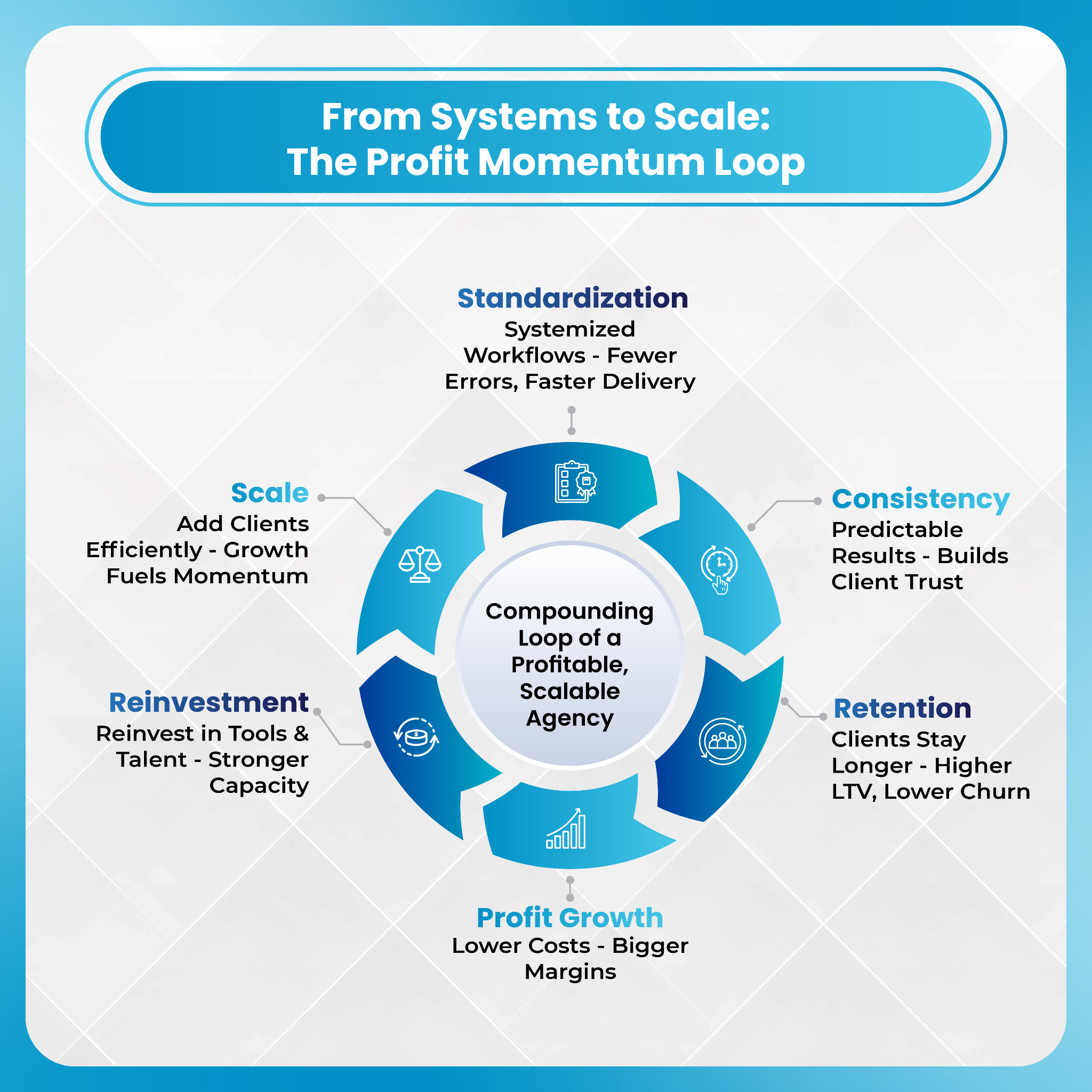
By transferring the execution burden to a specialized partner, agencies turn a fixed payroll expense into a flexible cost of goods sold.
A. Specialized Media Buying Expertise
Navigating complex ad networks requires deep specialization. Through white label PPC services, agencies gain access to channel-specific specialists who spend all day inside specific platforms. This dedicated focus allows for faster adaptation to platform changes, better bid calibration, and more advanced audience segmentation.
Specialization improves adaptation speed because experts do not have to split their attention across varying disciplines. A dedicated Google Ads specialist will identify an algorithm shift and adjust bidding strategies long before a generalist digital marketer even notices the drop in performance.
By utilizing specialized teams, the agency ensures that client budgets are managed by individuals who possess deep, tactical knowledge of the specific ad network. This reduces wasted ad spend and accelerates the timeline to achieve a positive return on investment.
B. Scalable Execution Infrastructure
Capacity bottlenecks kill agency growth. A white label PPC agency provides a highly scalable execution infrastructure. This translates directly to the ability to:
- Onboard more PPC clients simultaneously
- Launch campaigns faster
- Reduce dependency on individual account managers
- Expand service offerings without hiring immediately
- Maintain delivery consistency during rapid growth periods
Execution becomes elastic instead of fixed. If the sales team closes five new accounts in a single week, the white label provider easily absorbs the influx of work. Faster campaign launch cycles mean clients see activity sooner, which builds early momentum and trust. The agency can scale its revenue aggressively without needing to pause sales efforts while frantically attempting to recruit, hire, and train new media buyers.
C. Cross-Industry Optimization Intelligence
Operating in a vacuum severely limits optimization potential. White label providers often manage campaigns across numerous industries and hundreds of accounts simultaneously. This broad perspective creates faster pattern recognition, better budget allocation, and more efficient scaling frameworks.
We can view white label PPC providers as shared intelligence systems instead of outsourced labor. Because the white label team analyzes data across a massive aggregate portfolio, they can spot macroeconomic trends or platform-wide algorithmic shifts and apply preventative measures to your clients' campaigns immediately.
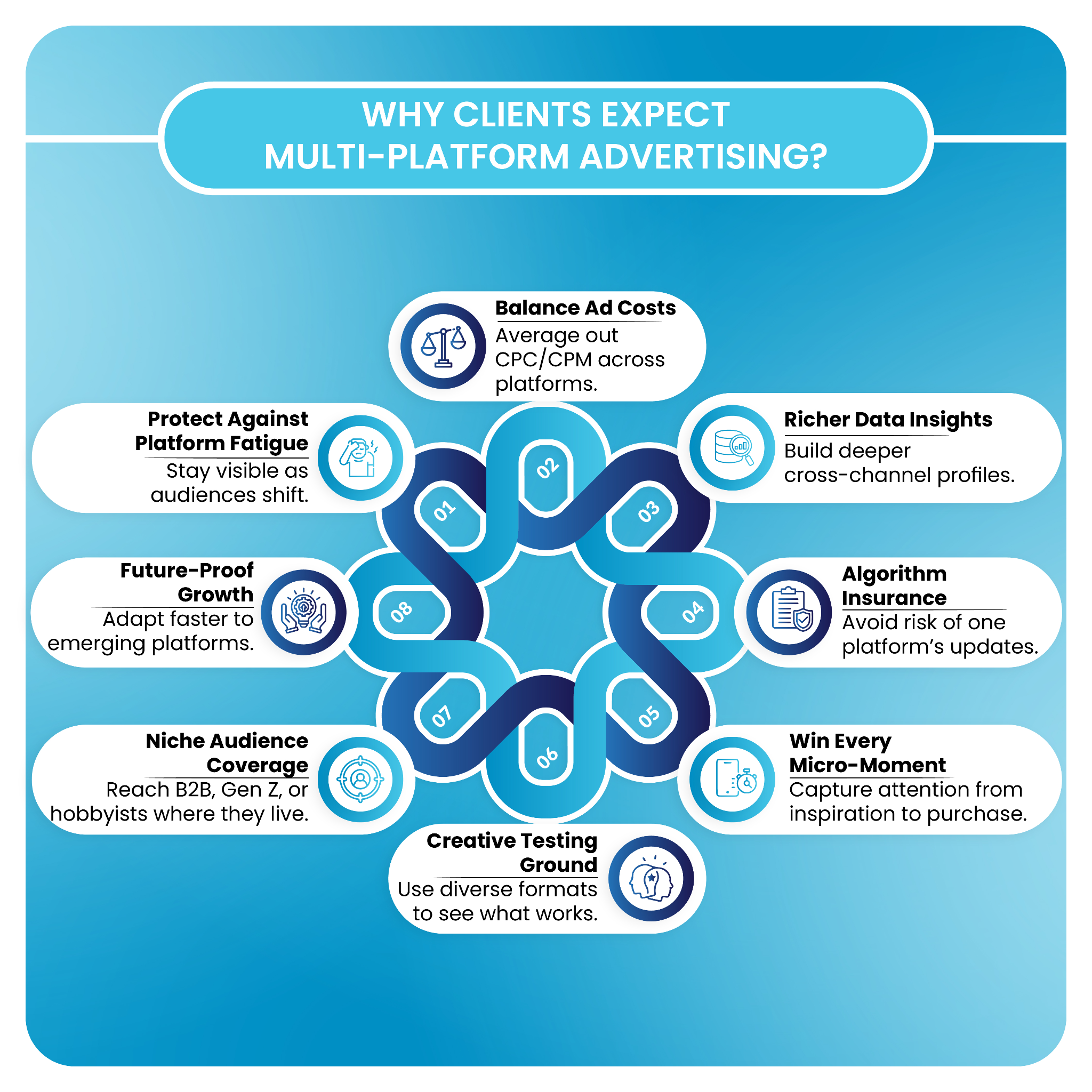
If a specific bidding strategy stops working for dental clients in one region, the white label team will proactively adjust similar campaigns across your portfolio. This cross-industry insight acts as an advanced warning system against performance degradation.
Operational scalability alone is not enough. Predictability also directly affects client retention.
Predictable Performance Creates Predictable Client Retention
Client churn is the most expensive problem an agency can face. There is a direct relationship between campaign consistency, reporting confidence, retention duration, and agency cash flow stability. When clients know exactly what to expect from their campaigns and their agency team, they stay. When ambiguity replaces clarity, clients start looking for other options.
Clients will often accept:
- Moderate CPL increases
- Seasonal fluctuations
- Temporary performance dips
- Platform-driven volatility
But they are far less forgiving of:
- Communication gaps
- Reactive account management
- Delayed optimizations
- Unclear reporting
- Unexplained performance swings
If a client has to ask the agency why the lead volume dropped last week, the agency has already lost a crucial degree of trust. White label PPC improves retention because it creates faster response times, more structured optimization, better reporting continuity, and significantly reduced delivery bottlenecks.

By implementing a framework of Retention Through Predictability, agencies establish a clear cadence that reassures the client. This means maintaining a predictable reporting cadence, predictable optimization schedules, predictable strategic recommendations, and predictable communication.
Consider a hypothetical scenario where an agency managing 15 PPC accounts internally struggles after CPC inflation increases optimization demands by 40 percent. The internal team burns out, reports are delayed, and clients become frustrated with the lack of strategic communication. After shifting fulfillment to a white label PPC partner, the entire dynamic shifts. Campaign turnaround time improves dramatically. Reporting consistency stabilizes. Account managers suddenly have the capacity to spend more time on client strategy and upselling instead of being bogged down by operational firefighting.
This operational predictability ultimately changes how agencies position themselves long-term.
The Agencies That Will Scale in the Next 5 Years Will Be Operationally Flexible
The digital marketing landscape of the future will punish rigid business models. The future advantage will not belong to agencies with the biggest teams or the most lavish offices. It will belong to agencies with flexible fulfillment systems, faster adaptation capacity, lower operational drag, and a much more stable delivery infrastructure.
Agencies must embrace the concept of “Variable Operations for Variable Ad Markets.”
When ad markets fluctuate, agencies need fulfillment systems that can expand or contract without damaging profitability. If a major platform update temporarily suppresses campaign performance across a specific sector, an agency with massive fixed payroll costs will bleed cash. An operationally flexible agency simply adjusts its variable costs.
White label PPC enables agencies to maintain that flexibility by creating:
- Leaner fixed operational costs
- Faster scalability
- Easier expansion into new verticals
- Multi-channel PPC capability
- Reduced hiring dependency
- Faster service diversification
It allows agencies to pivot and offer faster service diversification. If a client wants to test LinkedIn Ads, the agency does not need to hire a LinkedIn specialist; they simply leverage their white label partner. Agencies dependent entirely on internal fulfillment may eventually face slower adaptation cycles, reduced margins, and higher client churn during volatile advertising periods.
Predictable agency growth today depends less on controlling advertising platforms and more on building operational systems resilient enough to survive platform unpredictability.
How DashClicks’ White Label PPC Services Support Operational Stability?
Managing multiple paid search campaigns often creates internal friction for growing agencies. Every new client introduces unique onboarding workflows, optimization schedules, and reporting cycles. Without a centralized execution infrastructure, these fragmented processes lead to execution bottlenecks and strained resources.
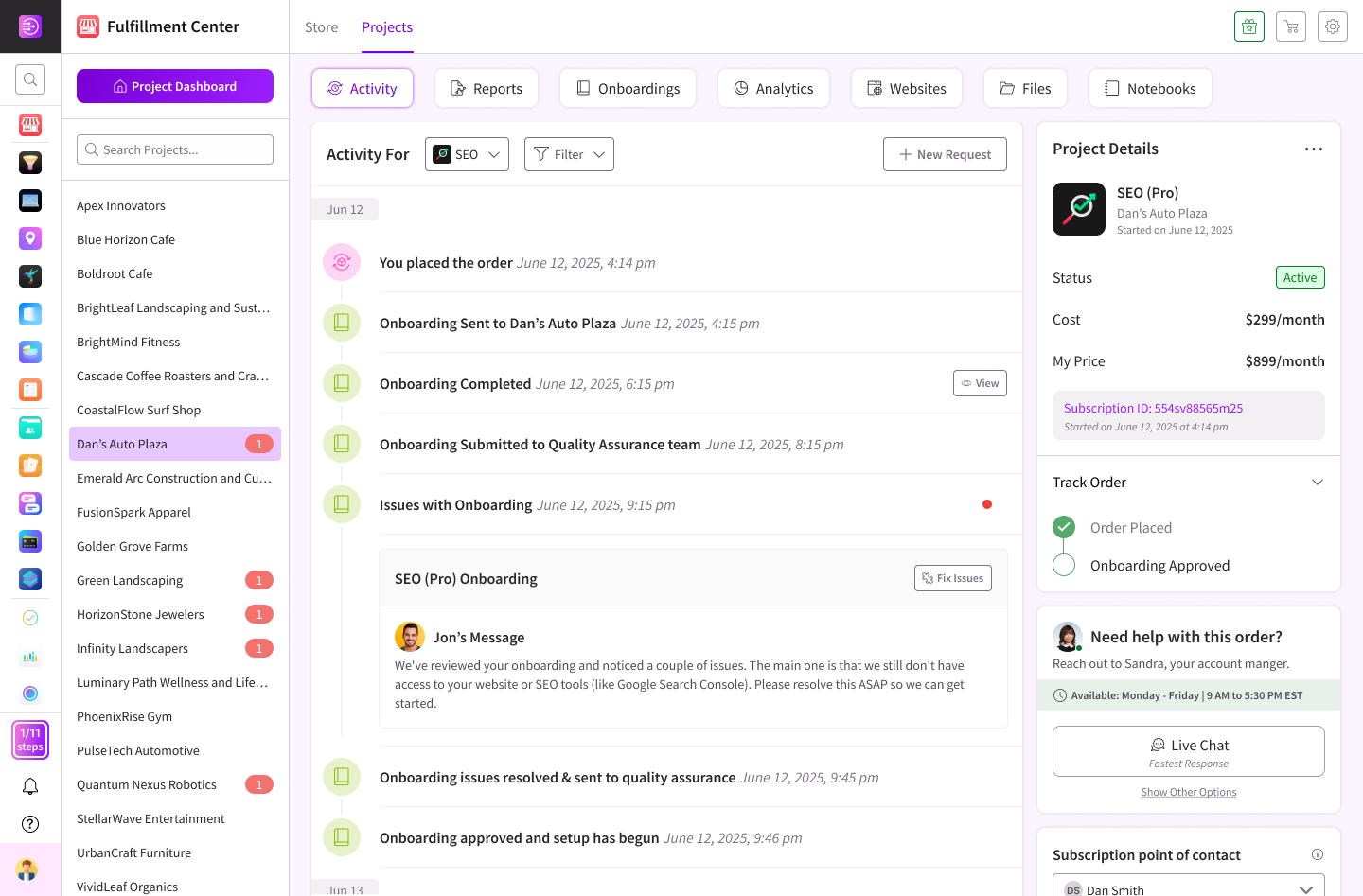
Deploying a white label PPC agency solves this problem by standardizing backend delivery. When agencies leverage DashClicks as their operational infrastructure, they instantly gain a scalable framework for campaign setup, ongoing optimization, and data tracking. This distinct separation between client strategy and backend fulfillment execution stabilizes daily operations. Instead of treating every campaign launch as a custom project, agencies rely on structured onboarding workflows that guarantee execution consistency.
Delivery continuity relies heavily on transparent data management. Centralized operational systems provide unified reporting dashboards that consolidate campaign visibility across multiple client accounts. This dashboard-driven approach improves reporting continuity, ensuring account managers always have accurate performance metrics readily available without manually compiling spreadsheets.
By utilizing DashClicks as a backend delivery framework, agencies can scale their PPC volume without the dependency of hiring large in-house teams. Offloading the heavy lifting of campaign coordination and fulfillment standardization allows internal staff to reallocate their time to high-value activities. Freed from daily optimization tasks, agency teams can focus entirely on proactive client communication, long-term growth strategy, upselling, and account retention. Ultimately, this creates a stable environment where operational scalability happens naturally, completely untethered from internal capacity constraints.
Conclusion
The advertising economy is becoming increasingly volatile, making it extremely difficult for traditional agency structures to maintain healthy profit margins. Rapid CPC inflation and AI driven automation continuously reduce predictability on major ad platforms. To survive and scale, agencies require scalable systems instead of endlessly expanding internal teams that quickly become financial liabilities during market downturns.
Adopting a white label PPC framework is a fundamental business strategy. White label PPC enables agencies to protect margins, maintain campaign consistency, improve client retention, and scale rapidly without introducing severe operational fragility. By transforming fixed labor costs into flexible execution expenses, marketing firms secure their financial baseline regardless of how the ad auctions fluctuate.
The agencies that thrive over the next decade will not necessarily be the ones spending the most on ads. They will be the ones building the most resilient delivery ecosystems behind their PPC services.


.svg)


.svg)
.svg)
.svg)
.svg)
.svg)