

.svg)

.svg)
.svg)
.svg)
.svg)
.svg)
Running profitable Facebook Ads campaigns is only half of an agency's responsibility. Helping clients understand why campaigns perform the way they do is equally important. According to the 2024 Nielsen Annual Marketing Report, 56% of marketers plan to increase digital advertising spend, making clear performance communication more valuable than ever.
Many clients expect immediate ROI, focus on a single metric, or compare reporting periods without considering factors like seasonality, audience fatigue, or budget changes. When results fluctuate, they often question the strategy rather than the normal optimization process.
Agencies that retain clients over the long term do more than manage campaigns effectively. They also help clients understand performance trends, explain optimization decisions, and set realistic expectations. Campaign execution and client communication must work together to build trust.
This is where white label Facebook Ads management becomes a valuable operational solution. It enables agencies to scale campaign execution and deliver consistent reporting without expanding internal teams, allowing them to focus on strategy and client relationships.
In this article, we'll explore why Facebook Ads performance is often misunderstood, why reporting matters as much as optimization, and how Facebook Ads services help agencies communicate results more effectively while supporting long-term client retention.
Why Facebook Ads Performance Is Often Difficult for Clients to Understand?
Client confusion about campaign performance is not a communication failure on their part. It reflects a genuine gap between how digital advertising works and what most clients expect when they start spending.
Several patterns show up repeatedly across agencies:
- Expecting Immediate ROI: Clients often believe that ad spend should translate to revenue within days. In reality, campaigns need time to gather data, exit the Meta Learning Phase, and optimize toward the right audience.
- Judging Campaigns Only by Lead Volume: A client generating 30 leads this month and 20 last month may assume performance declined, even if the leads this month converted at a higher rate.
- Focusing on Vanity Metrics: Impressions and reach look impressive but don't always connect to business outcomes. Clients without a clear understanding of attribution may optimize for the wrong signals.
- Comparing Different Periods Without Context: Comparing January to December, or a campaign during a promotion to one without, produces misleading conclusions.
- Ignoring Seasonality: Audience behavior, competition in the ad auction, CPM, and CPC all shift throughout the year. What looks like underperformance may simply reflect market conditions.
- Misunderstanding Attribution: When a client sees fewer conversions, they may assume the campaign is failing, when the issue could be a change in the attribution window, browser tracking limitations, or delayed conversion data.
- Overlooking the Meta Learning Phase: According to the Meta Business Help Center, Meta's delivery system continuously learns and optimizes based on user behavior, meaning campaign performance naturally fluctuates while campaigns gather data and improve. Most clients are unaware this phase exists, let alone what it means for early results.
Facebook Ads optimization is an ongoing process, not an instant result. Campaigns require constant refinement of audience targeting, creative testing, budget optimization, and conversion tracking. Helping clients understand that process is part of the agency's job.
Since clients often interpret campaign performance differently than agencies do, reporting becomes one of the most valuable parts of account management.
Why Reporting Matters as Much as Campaign Performance?
A well-run campaign that goes unexplained will not retain clients as reliably as a well-run campaign accompanied by clear, consistent reporting. Reports are not just a summary of what happened. They are the primary way agencies demonstrate ongoing value.
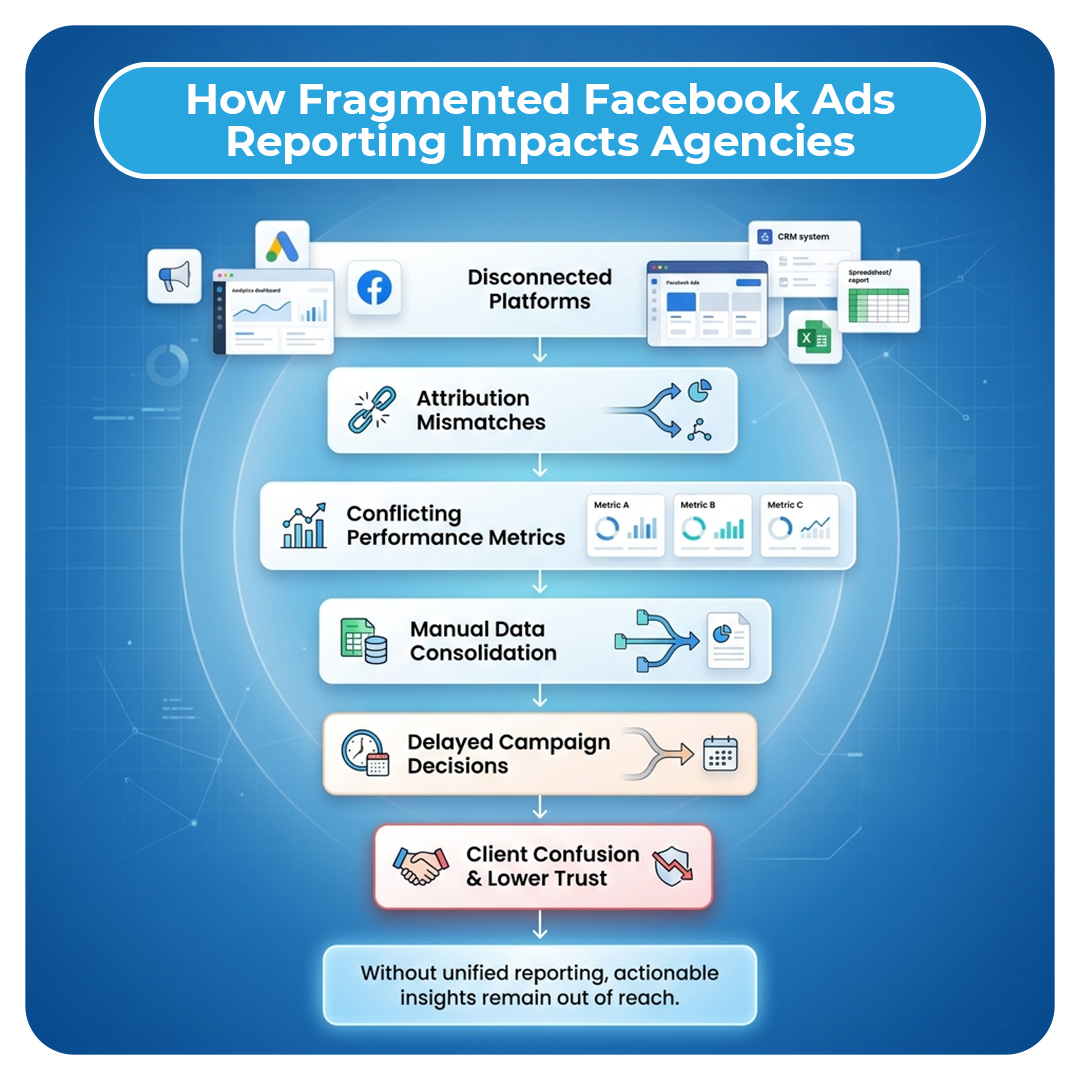
Effective reporting does several things at once:
- Demonstrates Ongoing Work: Clients do not see the day-to-day work happening inside Meta Ads Manager. Reports make that work visible.
- Explains Optimization Decisions: When an agency shifts budget, pauses an ad set, or rotates creatives, clients need to understand why. Reports provide that context.
- Justifies Advertising Investment: Clients who understand how their budget is being managed are more likely to maintain or increase spend.
- Connects Campaign Metrics to Business Outcomes: A report that shows ROAS, CPA, and conversion trends alongside revenue impact is far more meaningful than a list of clicks and impressions.
- Reinforces Agency Expertise: Consistent, structured reporting signals that the agency operates systematically, not reactively.
Effective reports answer three core questions:
- What happened? (Campaign performance summary)
- Why did it happen? (Context and explanation)
- What are we doing next? (Optimization plan)
Simply listing CPC, CPM, and click data does not answer these questions. Clients need interpretation, not just information.
According to the 2024 Databox State of Business Reporting Survey, more than 70% of businesses say clear reporting improves confidence in marketing performance. That confidence is what keeps clients from second-guessing every fluctuation in their ad account.
Creating this level of reporting consistently becomes increasingly difficult as agencies grow.
Why Scaling Facebook Ads Reporting Creates Operational Challenges?
Reporting for 10 clients is manageable. Reporting for 40 or 80 clients is an entirely different operational challenge.
As agencies scale, account managers are simultaneously handling:
- Campaign optimization across multiple accounts
- Budget pacing and allocation decisions
- Creative testing and ad rotation
- Audience refinement and segmentation
- Scheduled reporting and performance summaries
- Client meetings, check-ins, and strategy calls
The bottlenecks that emerge tend to follow a predictable pattern:
- Manual Report Creation: Account managers spend hours pulling screenshots from Meta Ads Manager and assembling reports by hand.
- Inconsistent Reporting Formats: Different account managers produce different styles of reports, creating an uneven client experience across the agency.
- Repetitive Metric Explanations: The same questions about CPC, ROAS, and impressions get answered over and over, consuming time that could go toward strategic work.
- Last-minute Reporting: Reports assembled before meetings tend to be reactive rather than structured, leading to gaps in context and explanation.
- Time Spent on Reactive Communication: When clients reach out with questions between reporting periods, it disrupts workflow and delays proactive account management.
As reporting demands increase, agencies often become inconsistent, not because they lack expertise, but because they lack standardized operational processes.
The Most Common Facebook Ads Questions Agencies Have to Answer
Understanding what clients are really asking, beneath the surface question, is one of the most important skills in account management.

The pattern across every one of these questions is the same. Clients rarely want more metrics. They want reassurance. They want to know that their budget is being managed thoughtfully, that the agency has a plan, and that short-term fluctuations are not signs of a failing strategy.
Context builds confidence more effectively than dashboards. A client who receives a clear explanation of why CPM increased during a competitive period will respond very differently than one who simply sees the number go up without any commentary.
Answering these questions repeatedly consumes valuable account management time, especially as agencies continue growing.
How White Label Facebook Ads Help Agencies Deliver Better Performance Communication?
White label Facebook Ads management is not just a staffing solution. It is an operational framework that helps agencies standardize how campaigns are executed, documented, and communicated to clients. When reporting and fulfillment are handled systematically, agencies can deliver a consistent client experience at any scale.
1. Professional Reporting
White label fulfillment partners produce structured campaign reports built around client-facing clarity. Rather than raw data exports from Meta Ads Manager, these reports are formatted to explain performance in business terms. Metrics like ROAS, CPA, and conversion rates are presented alongside context, so clients understand what the numbers mean and why they changed.
2. Consistent Campaign Summaries
Beyond the numbers, white label reporting includes optimization summaries. These explain what changes were made, why those decisions were made, and what the plan looks like going forward. Clients receive a narrative alongside the data, which reduces the number of reactive questions agencies have to field between reporting periods.
3. Standardized Reporting Processes
One of the most significant advantages of white label Facebook advertising is operational consistency. Every client receives the same standard of reporting, on the same cadence, in the same format. This removes the variability that comes from different account managers building reports in different ways, and it ensures that no client falls behind during busy periods.
4. Internal Quality Assurance
Reliable white label partners include review processes before reports go out. This means reporting accuracy is checked against live campaign data before clients ever see it. Agencies avoid the situation where a client spots a discrepancy before the account manager does.
5. Scalable Fulfillment
As an agency grows from 15 clients to 40 to 80, the internal team does not need to scale at the same rate. Agencies retain full ownership of client relationships, strategy, and business development. The fulfillment partner manages the recurring execution behind the scenes, including campaign optimization, audience targeting, budget management, and reporting.

When reporting becomes consistent and repeatable, agencies spend less time defending campaign metrics and more time discussing business growth.
Beyond Reports: Building Client Confidence Through Better Communication
Reporting is the foundation, but proactive communication is what turns a satisfied client into a long-term one. The most effective agencies do not wait for clients to ask questions. They communicate changes before clients notice them.
That means consistently explaining:
- Why CPM increased. Competitive auction dynamics, seasonality, and audience saturation all affect CPM. Clients who receive this context proactively will not interpret the change as a management failure.
- Why creatives changed. Creative testing is one of the most important levers in Facebook Ads optimization. Clients need to understand that rotating ad creatives is standard practice, not a sign that previous ads were wrong.
- Why audience testing matters. Expanding or refining audience targeting is part of ongoing campaign optimization. Without explanation, clients may see this as inconsistency rather than strategy.
- Why conversions fluctuate. Attribution windows, browser privacy changes, and platform-level reporting delays all affect conversion data. Explaining these factors early prevents confusion later.
- Why budgets shift. Budget optimization decisions made inside Meta Ads Manager are not always visible to clients. Explaining pacing and allocation decisions builds trust in how their investment is being managed.
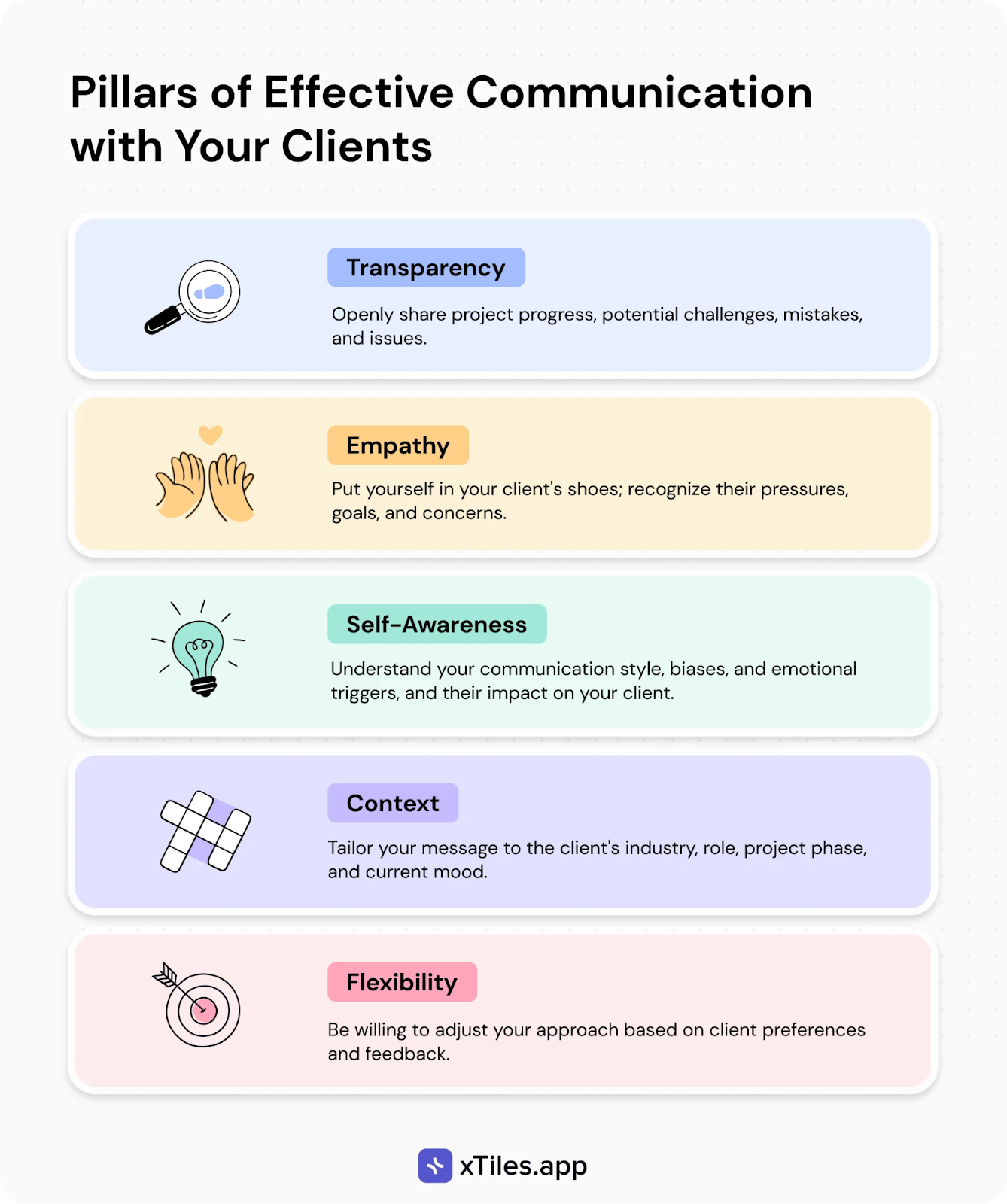
Image Source: xTiles
A practical framework for monthly client communication looks like this:
What Improved: Highlight specific wins, including metrics that moved in the right direction and why.
What Changed: Explain any optimizations made during the period, including audience adjustments, creative rotations, and budget reallocations.
What We're Testing: Outline current tests in progress and what the agency is trying to learn from them.
What's Next: Summarize the plan for the coming period, including any strategic shifts or upcoming opportunities.
According to HubSpot's State of Marketing Report, organizations that consistently communicate marketing performance are more likely to maintain long-term client relationships through transparency. Consistency builds confidence more effectively than occasional performance spikes. One strong month followed by silence does not retain clients the way regular, structured communication does.
This level of communication becomes significantly easier when campaign execution follows standardized operational systems.
How DashClicks Helps Agencies Simplify Facebook Ads Reporting?
DashClicks is a white label Facebook Ads agency platform designed to help agencies scale fulfillment, standardize reporting, and improve client communication without growing their internal teams.
1. White Label Facebook Ads Fulfillment
The platform manages end-to-end campaign execution on behalf of agencies. This includes:
- Campaign setup and ongoing management inside Meta Ads Manager
- Audience targeting and refinement
- Budget optimization and pacing
- Creative testing and performance monitoring
Agencies maintain full control over client relationships and strategy while DashClicks handles the operational work behind the scenes.
2. White Label Reporting
Reporting through DashClicks is structured, branded, and built for client-facing communication. Agencies receive:
- Branded campaign performance reports
- Optimization summaries explaining what changed and why
- Business-focused performance insights connected to client goals
- Scheduled reporting on a consistent cadence
Reports go beyond CPC and CPM to provide the context clients need to stay confident in their investment.
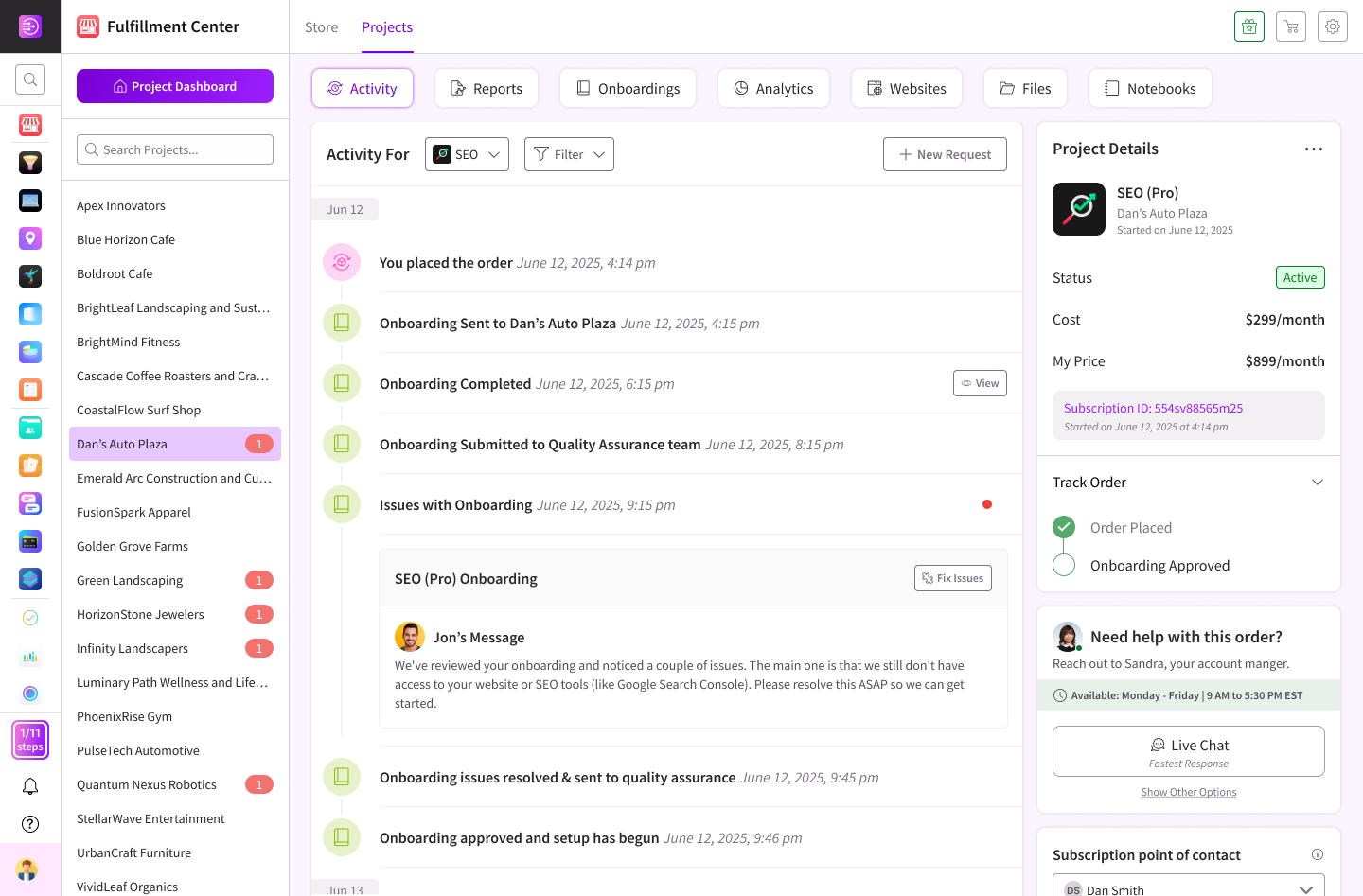
3. Client Dashboard
The platform provides a white label client dashboard that gives clients visibility into campaign performance at any time. This transparency reduces reactive questions between reporting periods and reinforces that the agency is actively managing their account.
4. Dedicated Fulfillment Specialists
Each agency account is supported by dedicated fulfillment specialists who manage recurring campaign optimization and maintain consistency across accounts. Agencies are not relying on automated processes alone. There is a team actively managing execution and ensuring reliable delivery.
Agencies continue owning the client relationship, the strategy, the sales process, and the growth of their business. The platform manages fulfillment behind the scenes.
With fulfillment standardized, agencies spend less time explaining routine metrics and more time helping clients achieve long-term business growth.
The Agencies That Grow Are the Ones That Communicate
Facebook Ads success is not measured by campaign performance alone. It is measured by whether clients understand that performance, trust the process, and stay long enough to see meaningful results.
Strong reporting demonstrates ongoing value. Consistent optimization reinforces that the agency has a strategy, not just a reaction. Transparent communication turns short-term fluctuations into manageable moments rather than reasons to leave.
White label Facebook Advertising gives agencies the operational foundation to deliver all of this at scale. When reporting is standardized and fulfillment is reliable, account managers stop spending their time assembling screenshots and answering repetitive questions. They start spending it on the conversations that actually drive retention and growth.
The agencies positioned for long-term success are not just the ones with the best targeting or the most advanced creative testing. They are the ones who combine structured fulfillment with proactive communication, and deliver a consistent client experience at every stage of the relationship.



.svg)


.svg)
.svg)
.svg)
.svg)
.svg)