As a digital marketing agency picks up new clients and expands its service menu, choosing the right SEO reseller plan becomes less of a formality and more of a strategic decision. Early on, it's tempting to pick a plan based on price alone or on how many services are bundled into the package. But those surface-level factors rarely reflect what your agency actually needs to deliver consistent, quality SEO work.
An unsuitable plan can quietly create problems. You might end up paying for capabilities you never use, or you might discover gaps in fulfillment just as client demand spikes. Either way, the mismatch creates unnecessary expense or operational strain, neither of which serves your agency's long-term interests.
The right approach is to choose a plan that supports your current workload while leaving room to grow. According to Conductor's 2025 State of SEO Report, 91% of respondents reported that SEO positively impacted website performance and marketing goals. That doesn't mean every campaign guarantees results, but it does confirm that SEO remains a valuable service worth investing in, and a real opportunity for agencies looking to expand their offerings strategically.
This guide walks through how to evaluate your fulfillment needs, match SEO reseller plans to your agency's growth stage, compare providers on the features that matter, and recognize when it's time to upgrade.
Understand Your Agency's Current SEO Fulfillment Needs
Before comparing SEO reseller plans, take an honest look at your agency's actual workload and delivery requirements. Client count alone won't tell you how much fulfillment support you need. The following factors give a clearer picture.
- Client Volume: Start by assessing how many active SEO clients your agency currently manages. Then consider how many new accounts you realistically expect to onboard in the next several months. Projected growth matters because fulfillment demand doesn't scale in a straight line. A handful of new clients with complex needs can strain capacity faster than you'd expect.
- Service Requirements: Identify the specific SEO services your clients currently require, including technical SEO, on-page optimization, content, link building, and local SEO. Not every client needs the same mix of deliverables. Evaluating what your portfolio actually requires, rather than assuming uniformity across accounts, helps you avoid paying for coverage you don't use.
- Internal Capacity: Determine which SEO tasks your in-house team handles well and which ones require outside support or specialist expertise. This distinction is the foundation for deciding what you actually need from an SEO reseller program. If your team already excels at technical audits but struggles with link building, that gap should shape your search.
- Workload Predictability: Separate recurring monthly deliverables from fluctuating or project-based work. Agencies with steady, predictable workloads may do well with a straightforward fulfillment arrangement, while those with irregular demand might need more flexible terms.
- Reporting Expectations: Finally, consider the level of reporting, branding, and performance visibility your clients expect. Reporting requirements should factor directly into how you evaluate reseller providers, since not every provider offers the same depth or customization.
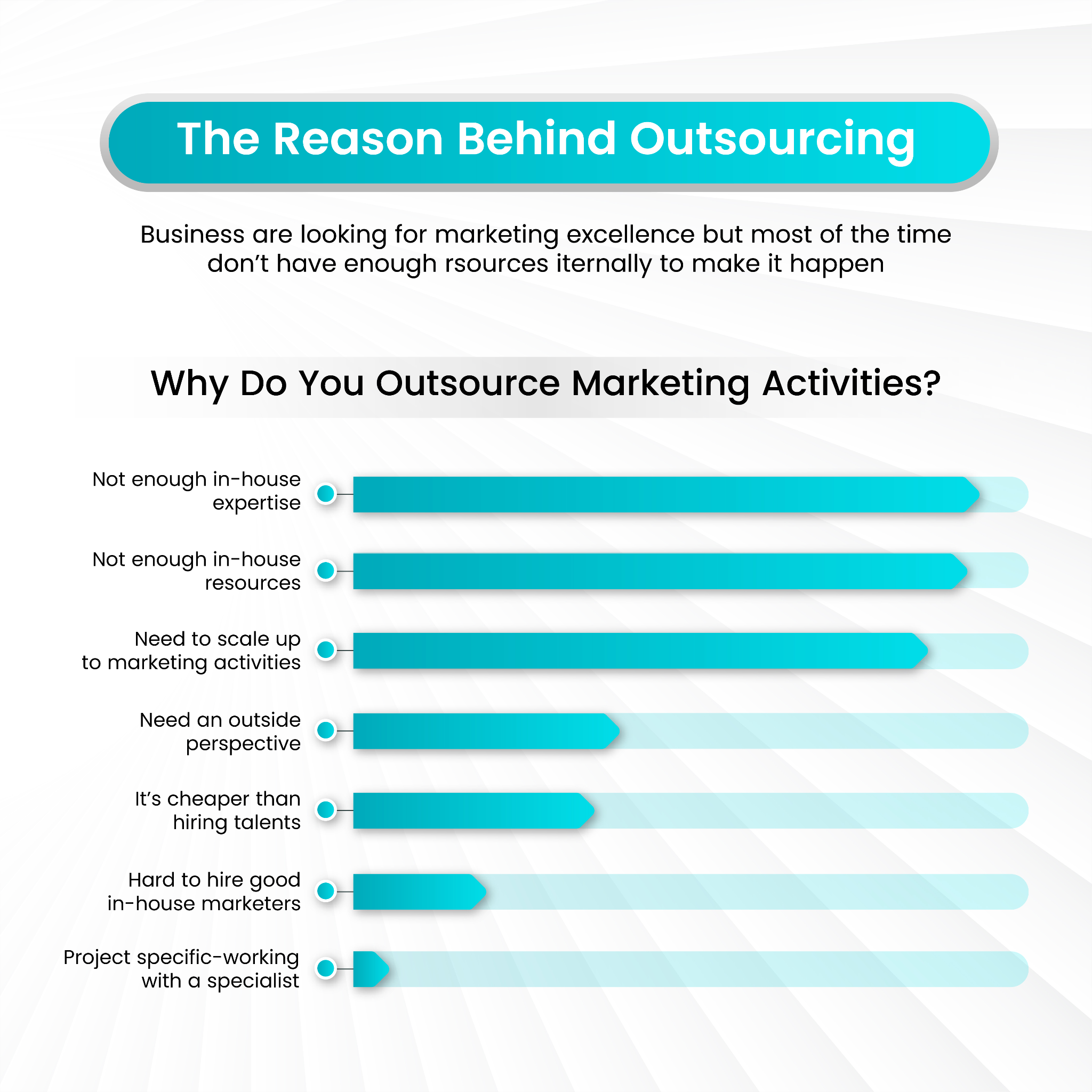
Key point: Calculate your actual fulfillment demand before comparing plans. Client count alone doesn't reveal how much work your agency needs outsourced.
Match SEO Reseller Plans to Your Agency's Growth Stage
The right SEO reseller plan depends on your agency's operational maturity, workload, and fulfillment complexity, not simply on revenue or headcount. Here's how priorities tend to shift across four growth stages.
- Early-Stage Agencies: Newer agencies should prioritize affordable entry points, essential SEO deliverables, and commitments they can comfortably manage. It's easy to overcommit to a plan loaded with capabilities you don't need yet. Look for providers that let you start with a limited client portfolio without locking into services outside your current scope.
- Growing Agencies: As client demand increases, agencies need broader service coverage, predictable turnaround times, and consistent fulfillment. Growth often puts pressure on internal resources that worked fine when the client list was smaller. At this stage, flexible capacity matters most, since you want to onboard new clients without renegotiating your entire fulfillment arrangement each time.
- Established Agencies: Agencies with established client portfolios need specialized SEO expertise, reliable quality assurance, consistent reporting, and solid operational coordination. With multiple campaigns running simultaneously, reliability becomes the priority. Evaluate whether a provider can manage varying client requirements without letting delivery standards slip.
- Large or Rapidly Expanding Agencies: Agencies managing a large or fast-growing client base need fulfillment depth, standardized processes, scalability, and clear communication channels. At this scale, the operational demands of juggling multiple accounts and shifting workloads require a provider that can support different campaign requirements while keeping fulfillment and communication organized.
Key point: Growth stages should be defined by operational complexity and fulfillment demand, not just revenue or client numbers.

Evaluate the Features That Matter When Comparing SEO Reseller Plans
Package names and service counts don't necessarily reflect the actual fulfillment experience. These are the practical criteria worth examining before you commit to a provider.
- SEO Service Coverage: Check whether the provider covers the services your clients actually need, including technical SEO, on-page optimization, off-page SEO, content, and local SEO. Assess service depth and relevant deliverables rather than relying on a broad list of offerings that may not translate into meaningful execution.
- Pricing and Commitments: Understand per-client costs, minimum order requirements, recurring fees, and any additional charges that might apply. Compare the complete cost of fulfillment rather than headline pricing alone, and consider whether that pricing remains practical as your agency adds more accounts.
- Fulfillment Flexibility: Determine whether you can select services according to individual client requirements rather than being locked into restrictive, fixed bundles. Flexibility matters because different clients often need different combinations of SEO deliverables, and your fulfillment arrangement should be able to accommodate changing campaign needs without friction.
- White Label Capabilities: Check whether the provider offers branded deliverables, reports, dashboards, and client-facing communication options. Strong white-label capabilities help your agency maintain its own brand identity throughout service delivery, supporting a consistent client experience from onboarding to reporting.
- Turnaround Times and Quality Assurance: Evaluate delivery timelines, review procedures, revision policies, and overall consistency. Understanding how work is reviewed before it reaches you, or your client, matters just as much as the deliverable itself. Dependable fulfillment standards become increasingly important as you manage more accounts simultaneously.
- Communication and Support: Understand how the provider handles updates, issues, and coordination as your account volume grows. Evaluate communication channels, response expectations, and processes for resolving delivery concerns. Clear communication becomes more important, not less, as your agency scales.

Key point: Compare the actual fulfillment experience, not just the number of services listed in a package.
Conductor's 2025 State of SEO Report found that 60% of respondents reported siloed, ad hoc, inconsistent, or nonexistent regular SEO reporting. That statistic underscores why reporting capabilities and consistent performance communication deserve serious consideration when comparing SEO reseller plans. Choosing a reseller plan won't automatically fix every reporting challenge, but it should include clear processes and visibility that give you and your clients confidence in the results.
Common Mistakes to Avoid When Choosing an SEO Reseller Plan
Even experienced agency owners can fall into decision-making traps that create unnecessary costs or fulfillment problems down the line.
- Choosing the Cheapest Plan Without Evaluating Deliverable Quality: Low pricing doesn't necessarily mean suitable fulfillment. Before committing, examine service scope, execution standards, and quality assurance processes rather than defaulting to whichever plan costs the least.
- Paying for Services That Do Not Align With Current Client Requirements: Selecting a package loaded with services you don't currently need wastes resources. Match plan inclusions to your actual client needs instead of paying for coverage that sits unused.
- Underestimating the Workload Created by New Client Acquisitions: Additional clients mean additional execution, coordination, and reporting demands. Account for future demand when choosing a plan, rather than sizing your fulfillment arrangement strictly to today's client list.
- Overlooking Reporting, Quality Checks, and Communication Processes: These operational elements directly affect your ability to monitor fulfillment and maintain client confidence. Service coverage alone isn't enough if reporting and quality processes are weak or inconsistent.
- Committing to Restrictive Packages Without Understanding Upgrade Options or Additional Costs: Limited flexibility, unclear upgrade conditions, and unexpected charges can trap an agency in a plan that no longer fits. Review the provider's pricing structure and expansion options carefully before signing on.
When Should Your Agency Upgrade Its SEO Reseller Plan?
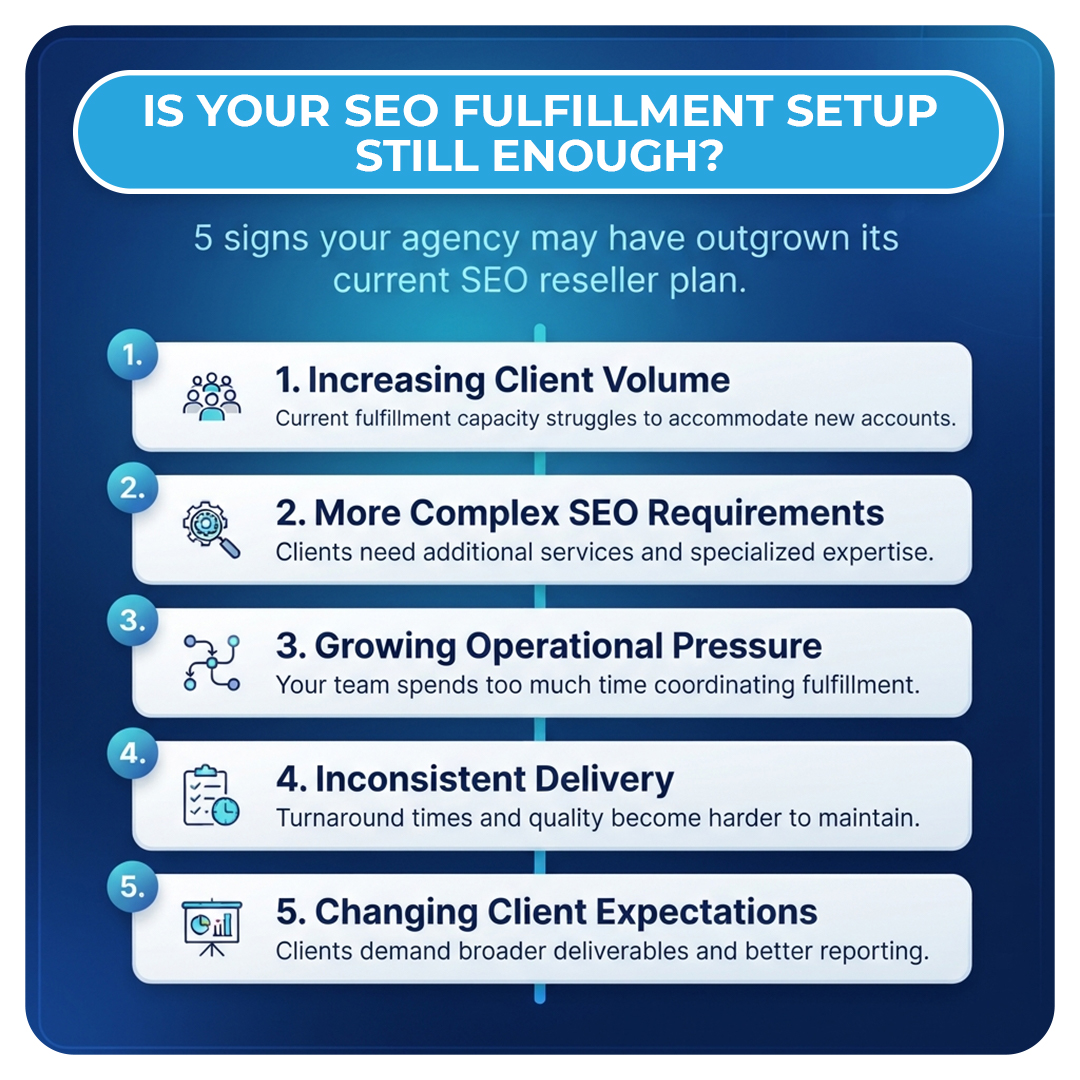
Several operational signals suggest an agency may have outgrown its current fulfillment arrangement. Watch for these triggers.
- Increasing Client Volume: If your existing fulfillment capacity starts struggling to accommodate newly acquired accounts, that's worth noticing. Recurring delays or resource pressure often signal that additional capacity is needed.
- More Complex SEO Requirements: As clients begin requesting additional services or more specialized expertise, your current plan may no longer cover your changing fulfillment needs.
- Growing Operational Pressure: When internal teams spend excessive time coordinating or monitoring fulfillment, that oversight eats into time better spent on strategy, client communication, and business development.
- Inconsistent Delivery: If turnaround times and quality become harder to maintain as workloads increase, inconsistent execution is a clear sign that your current fulfillment arrangement needs reassessment.
- Changing Client Expectations: As client relationships mature, they often require better reporting, broader deliverables, or more structured processes. Selecting a plan that can support these evolving expectations keeps your agency ahead of client needs rather than reacting to them.
Key point: Upgrade based on measurable operational limitations rather than moving to a higher plan simply because your agency has reached a particular size.
Scaling SEO Fulfillment With DashClicks White Label SEO Services
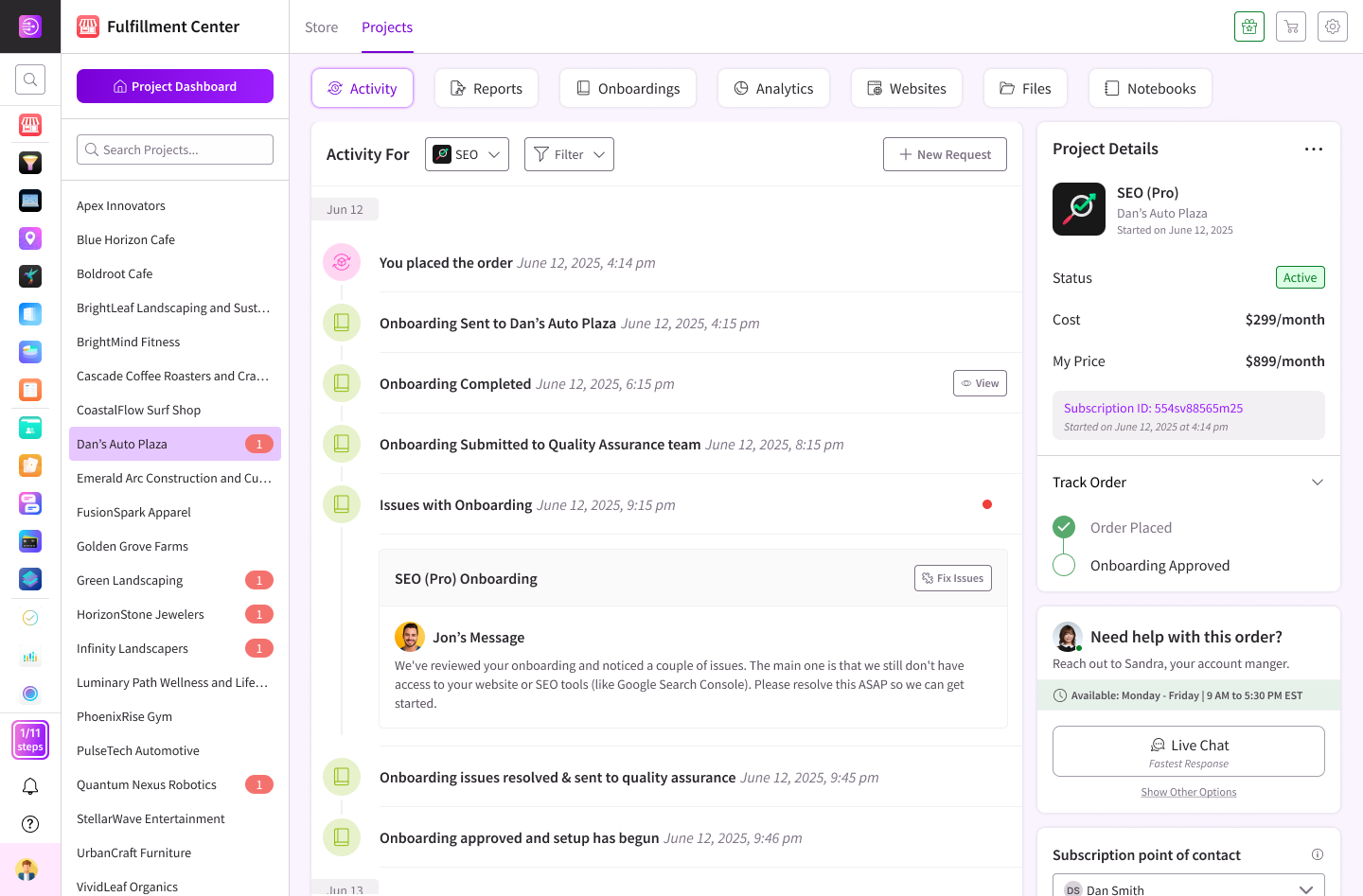
As agencies grow, many look for a fulfillment partner that can help them expand SEO service delivery without building every execution capability internally. DashClicks' White Label SEO Services are built with that need in mind, aligning with many of the evaluation criteria discussed throughout this guide.
- Comprehensive SEO Fulfillment: The platform provides support across technical SEO, on-page optimization, content, local SEO, and link-building activities. That range of coverage matters because different client accounts rarely require the exact same mix of services.
- Flexible Delivery Capacity: Additional fulfillment support through white label SEO fulfillment can help agencies accommodate new clients and expand their service offerings without constantly renegotiating their fulfillment setup. Aligning delivery capacity with changing workloads keeps operations steady during growth phases.
- Branded Reporting: DashClicks offers white-label reports and client dashboards that let agencies maintain their own brand identity throughout the client relationship. Branded reporting supports consistent client-facing communication and gives clients clear visibility into performance.
- Operational Support: Established processes, specialist execution, and quality checks are all relevant considerations when evaluating a fulfillment partner. Structured execution helps maintain consistency across multiple client accounts, which becomes more important as an agency's portfolio grows.
- Agency Control and Client Relationships: Agencies retain full control over client relationships, SEO strategy, recommendations, and final decisions, while the platform supports the execution side. That arrangement allows agencies to expand their service delivery without handing over ownership of the client relationship.
DashClicks functions as a fulfillment partner designed to help agencies align SEO delivery capacity with business growth, rather than simply offering another standardized SEO package.
Choose an SEO Reseller Plan That Grows With Your Agency
The right SEO reseller plan balances current fulfillment requirements, service quality, operational flexibility, and future capacity. Rather than defaulting to the cheapest option or the most feature-packed bundle, evaluate providers based on what they can actually deliver and how well that aligns with your agency's evolving needs.
Neither the lowest price nor the longest service list guarantees the best fit. The right arrangement is the one that matches your agency's operational reality today while leaving room to scale tomorrow. Take the time to assess your fulfillment requirements honestly, compare SEO reseller services against your findings, and choose a partner built to grow alongside your agency, not one that holds it back.