

.svg)

.svg)
.svg)
.svg)
.svg)
.svg)
A website redesign is rarely just a design project. New templates, navigation, content, and URL structures can all affect how search engines understand a site, even when the domain stays the same.
During a redesign, URLs may change, content can be rewritten or removed, and site architecture may be reorganized. Metadata, internal links, canonical tags, and indexing directives can also be altered, sometimes unintentionally. Each of these changes can affect organic visibility if SEO is not considered before launch.
This raises a practical question for agencies: how can a team deliver a smooth redesign without treating SEO as an afterthought?
The key distinction is simple: not every redesign is a full migration, but every major redesign should be evaluated for its SEO impact. A site can retain the same domain and still experience traffic or ranking changes when URLs, content, internal linking, or technical signals are modified without proper planning.
Google has acknowledged that significant site changes can cause temporary ranking fluctuations as Google recrawls and reindexes pages. For medium-sized sites undergoing URL changes, Google notes that it can take a few weeks or longer for new URLs to replace old ones in search results, while larger sites may take longer.
That uncertainty is why SEO should be involved before launch, not brought in afterward to fix problems. For agencies with limited internal resources, white label SEO partner can provide additional execution capacity during a redesign while allowing the agency to retain ownership of the client relationship and project.
Why Website Redesigns Create New SEO Work for Agencies
A redesign can generate substantial SEO work, even on the same domain, because so many elements that search engines rely on are being touched at once.
- URL Changes: When page paths change, every changed URL creates a redirect and mapping requirement that needs to be tracked and implemented correctly.
- Content Changes: Removing, shortening, consolidating, or rewriting content changes the information search engines have indexed, which can affect how a page ranks for its existing terms.
- Site Architecture Changes: New navigation and page hierarchies affect how easily search engines can crawl a site and understand the relationships between pages.
- Metadata Changes: Title tags and meta descriptions are often overwritten by new templates, so they need to be reviewed rather than replaced without checking.
- Internal-link Changes: A new template can quietly drop links that used to pass authority and context between related pages.
- Canonical and Indexing Changes: Canonical tags and indexability directives need to be verified during development, since these settings are easy to misconfigure in a new build.
- Redirect Requirements: Any time existing URLs change, permanent redirects become necessary to preserve rankings and link equity.
- Pre-launch Monitoring: SEO QA should happen before the redesigned site goes live, not after problems surface in Search Console.
- Post-launch Monitoring: SEO work continues well beyond launch day, since ranking and indexing changes take time to stabilize.
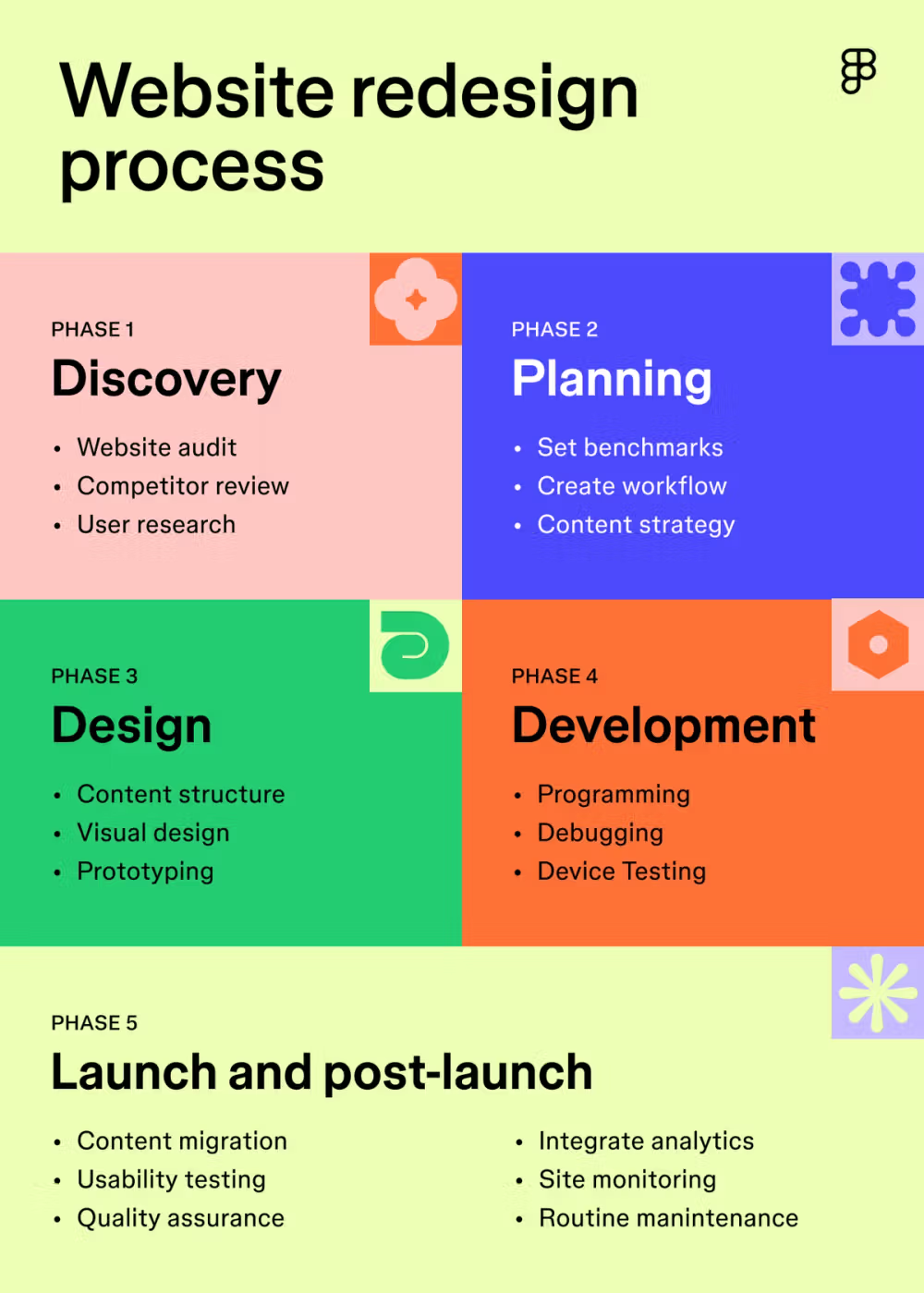
Image Source: Figma
Google specifically recommends creating a URL mapping whenever existing URLs are changing, along with using server-side permanent redirects such as 301 or 308 redirects for moved URLs. This guidance illustrates why a redesign can require considerably more SEO coordination than simply reviewing the finished site once development wraps up.
Where White Label SEO Fits Into the Redesign Process?
A white label SEO partner can support an agency across the full redesign timeline, not just at the end. The work generally breaks down into four stages: before the redesign, during planning and development, before launch, and after launch.
Before the Redesign
Before any development begins, the agency needs a clear picture of what the current site is doing well so nothing valuable gets lost in the rebuild.
- Existing-site SEO audit: This identifies technical and on-page conditions worth preserving or fixing as part of the redesign.
- URL Inventory: Documenting existing URLs helps the team identify which pages matter most before any changes are made.
- Ranking and Traffic Review: This shows which pages already generate organic visibility, so those pages get extra attention during planning.
- Valuable-page Identification: Some pages carry more organic weight than others and should be flagged early for special handling.
- Organic Traffic Review: Reviewing analytics data helps confirm which pages are driving meaningful visits.
- Backlink Review: Pages with strong external links often need dedicated URL or redirect protection to avoid losing that authority.
- Metadata Documentation: Recording important titles and meta descriptions before development prevents them from being overwritten and lost.
- Indexability Documentation: Capturing existing canonical and indexing signals gives the team a baseline to compare against after launch.
Google recommends starting URL mapping with important URLs identified through sitemaps, analytics, server logs, and Search Console. These sources help agencies pinpoint existing organic assets before a redesign has the chance to disrupt them.
During Planning and Development
SEO requirements work best when they're built into the redesign specifications from the start, rather than bolted on after development is finished.
- New Architecture: The proposed site structure should be reviewed for crawlability before it's built, not after.
- URL Mapping: Existing URLs need to be matched to their corresponding new URLs early in the process.
- Content Preservation: Important content should be identified for retention or thoughtful consolidation rather than accidental removal.
- Metadata: Recommendations for important title tags and meta descriptions should be provided to developers ahead of launch.
- Internal Linking: The new structure needs to preserve useful relationships between related pages.
- Technical Requirements: Crawlability and indexability requirements should be documented clearly for the development team.
- Canonical Recommendations: Canonical signals need clear rules for how they should behave on the new site.
- Indexability: Important pages shouldn't end up accidentally blocked from search engines during the build.
- Staging Checks: The development environment should be reviewed for SEO issues before it goes live.
This stage generally follows a consistent workflow: existing SEO data feeds into redesign requirements, which shape SEO recommendations, which inform development, which is then verified through SEO QA. Many agencies use seo outsourcing at this stage specifically because it lets specialist SEO work happen in parallel with design and development instead of stacking up at the end of the project.
Before Launch
A redesigned site should pass a real SEO QA process before it goes live, not just a design review.
- Redirect Implementation and Review: Every changed URL should be checked to confirm it points to the correct new destination.
- Canonical Checks: Canonical tags need to be confirmed as pointing to the intended version of each page.
- XML Sitemap: The sitemap should accurately reflect the URLs the team wants indexed.
- Robots.txt: This file needs to be checked to confirm important areas aren't accidentally blocked.
- Indexability: Important pages should be verified as crawlable and indexable.
- Staging Checks: Staging restrictions need to be removed and production settings confirmed before launch.
- Technical SEO QA: Core technical elements should be reviewed one more time before the site goes public.
- Internal Links: Important pages need to remain properly connected within the new structure.
- Metadata: Titles and descriptions should get a final review pass.
- Structured Data: Applicable structured data should be checked for accuracy.
- Analytics: Tracking needs to be confirmed as functional before launch.
- Conversion Tracking: Key conversion actions should be tested to make sure they still fire correctly.
Google's own migration guidance recommends thoroughly testing the new site before a move, preparing URL mapping, configuring redirects, submitting the new sitemap, and monitoring Search Console after launch. Google also recommends keeping redirect chains to ideally no more than 3 hops and fewer than 5, even though Googlebot can technically follow up to 10 hops. That gives agencies a concrete, checkable QA item, though it's worth noting that not every redirect chain automatically causes ranking loss.
After Launch
Launch day is not the end of the SEO workflow. In many ways, it's the start of a new monitoring phase.
- Crawl the New Site: This shows how the live site is actually being discovered and rendered.
- Check Redirects: Important old URLs should be verified as resolving correctly.
- Check Indexing: Important pages need to be confirmed as indexed the way the team expected.
- Monitor Rankings: Watching priority search terms helps catch meaningful visibility changes early.
- Review Search Console: This surfaces indexing, crawling, and other technical signals worth acting on.
- Identify Crawl Errors: Unexpected errors on important URLs should be investigated right away.
- Review Traffic: Organic traffic should be compared against the pre-launch baseline.
- Review Conversions: Key conversion actions need to be confirmed as functioning properly.
- Resolve Technical Issues: Any problems discovered after launch should be addressed promptly.
- Check Old URLs: Legacy URLs need confirmation that they've been handled correctly.
- Confirm Accessibility: Important pages should remain reachable through the new site structure.
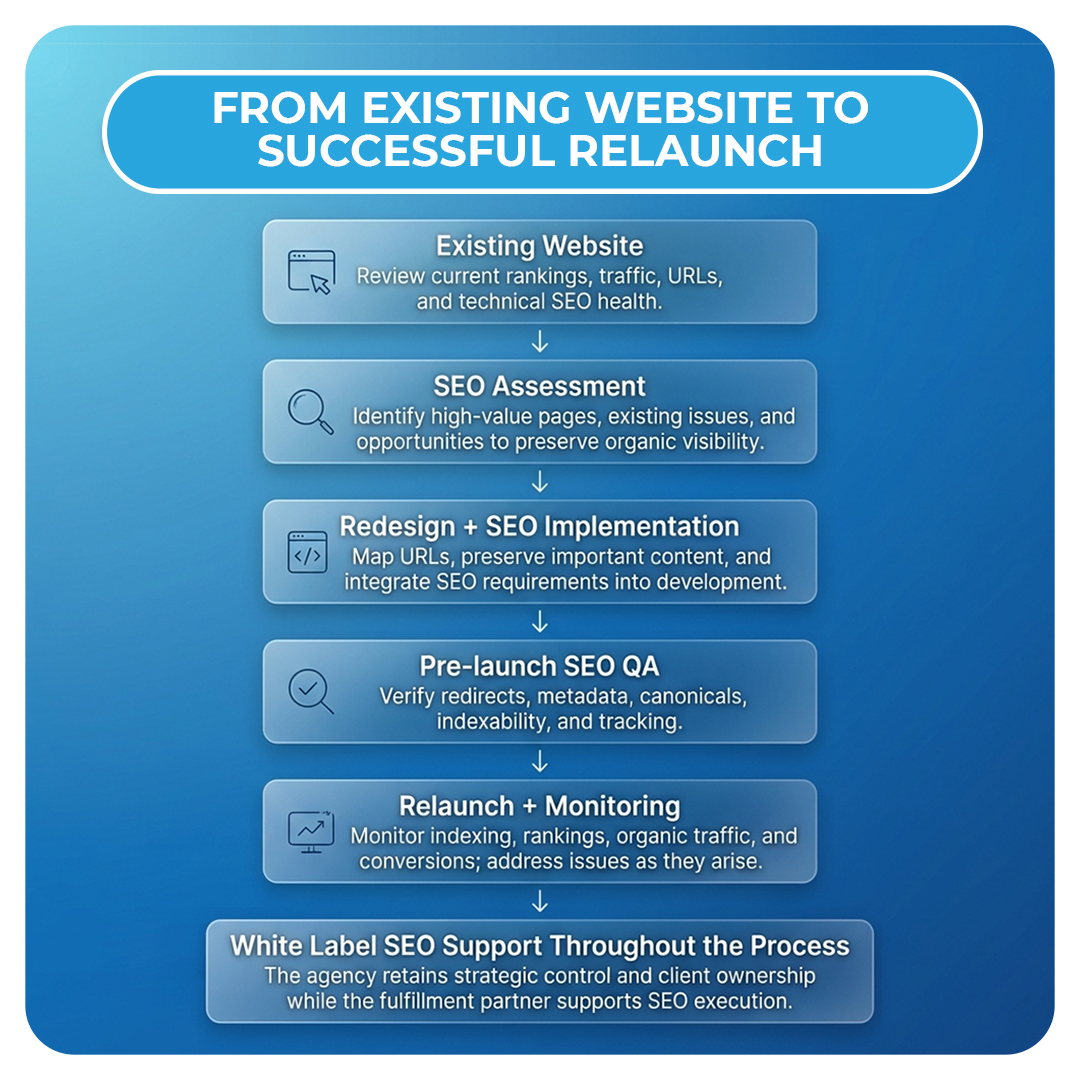
Google recommends monitoring both the old and new sites during this transition period. Its documentation notes that medium-sized sites can take a few weeks or more for new URLs to gradually replace old ones in search results, with larger sites potentially taking longer. The takeaway for agencies is straightforward: launch day is not the end of the SEO workflow.
How Agencies Can Divide Responsibilities With a White Label SEO Partner?
A redesign project runs more smoothly when everyone understands where their responsibilities begin and end. The agency should hold on to strategic and client-facing ownership, while the white label partner supports execution.
Agency Owns:
- Client Communication: The agency remains the primary point of contact for the client throughout the project.
- Strategy: The agency determines the overall SEO and redesign strategy.
- Project Scope: The agency defines exactly what the project includes.
- Design and Development Coordination: The agency coordinates the broader redesign effort across all vendors involved.
- Final Approvals: The agency reviews and approves work before it reaches the client.
- Client Reporting: The agency controls how results and progress get communicated.
- Overall Project Management: The agency keeps the redesign on track toward launch.
White Label SEO Partner Supports:
- SEO Audit: Provides a specialist review of the existing site's technical and content condition.
- Technical Recommendations: Identifies technical SEO requirements for the new build.
- URL Mapping: Helps map existing URLs to their new destinations.
- On-page SEO: Supports optimization work on important pages.
- Metadata: Supports title tag and meta description work.
- Internal Linking: Helps review and implement internal-linking improvements.
- Migration QA: Supports checks around URL and technical changes.
- Technical Checks: Helps identify issues before and after launch.
- Monitoring: Supports post-launch SEO monitoring.
- Reporting Data: Provides SEO data the agency can use in client reporting.
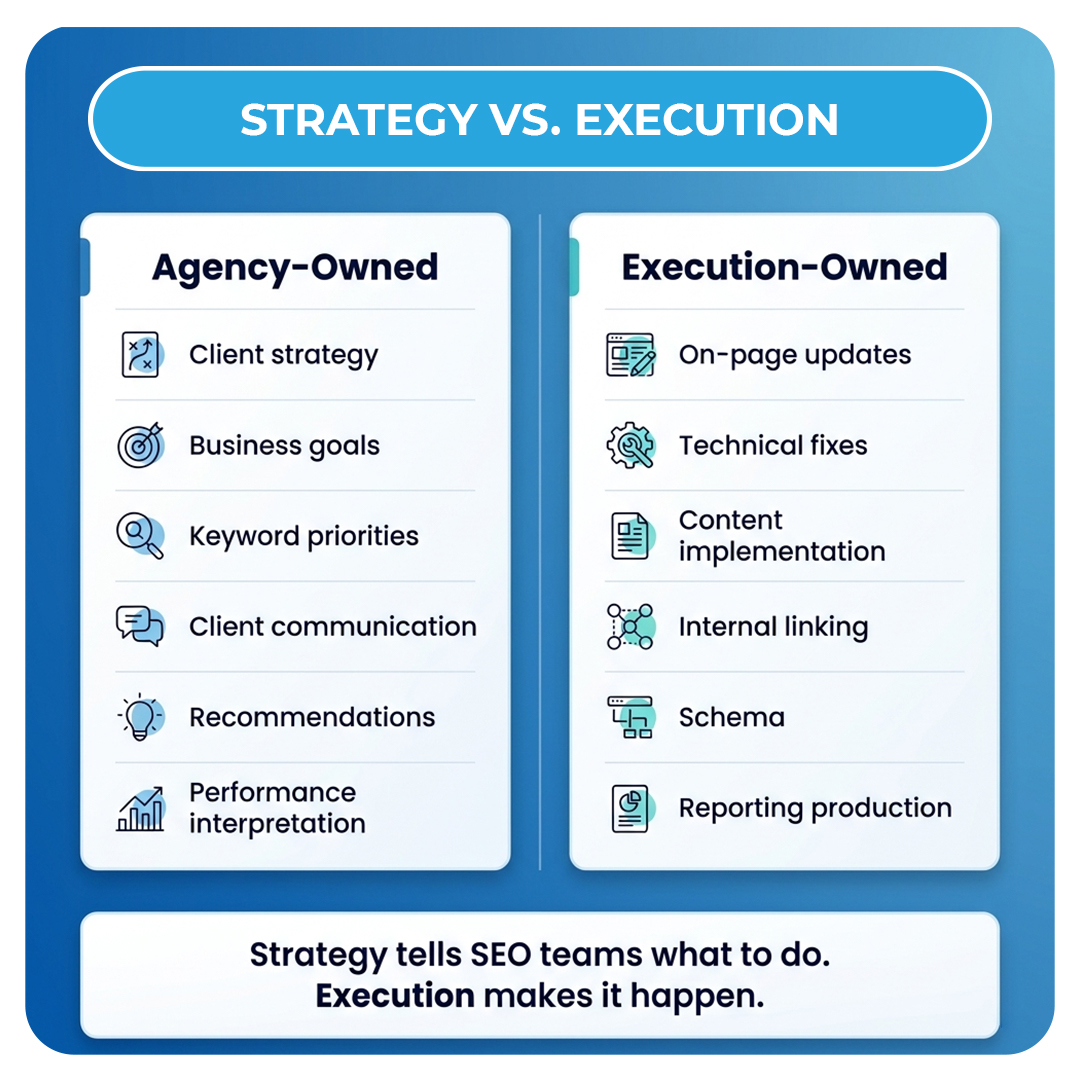
This structure lets the agency retain full strategic control while moving execution-heavy SEO work to a specialist fulfillment team. It's also the core reason agencies look for a white label SEO partner in the first place: the work still gets done to a high standard, but it doesn't require the agency to build out a full in-house SEO department.
How White Label SEO Helps Agencies Manage Redesign Deadlines?
Redesign deadlines tend to create a predictable pattern: as the deadline approaches, SEO workload increases, internal team capacity gets stretched, white label fulfillment absorbs the execution work, and the agency keeps the project moving toward launch.
- Parallel Workflows: SEO work can progress alongside design and development instead of waiting until the project is nearly finished.
- Defined SEO Deliverables: Agencies can set clear SEO responsibilities within the redesign scope from the outset.
- Specialist Support: Additional SEO capacity can take on execution-heavy tasks that would otherwise bottleneck an internal team.
- QA: Dedicated support can review technical SEO requirements more thoroughly than a stretched internal team might manage alone.
- Deadline Management: SEO work can be scheduled around the same launch timeline as development, rather than trailing behind it.
- Avoiding Last-minute SEO Work: Early SEO involvement reduces the risk of discovering critical issues right before launch.
- Reducing Internal Workload: A fulfillment partner can absorb recurring implementation and QA tasks when internal resources are limited.
Google notes that after a migration, the new site may temporarily be crawled more heavily than usual, since crawls of old URLs get redirected to new URLs in addition to normal crawling activity. That's not necessarily a problem, but it's another reason agencies benefit from maintaining technical capacity in the weeks after launch rather than considering the project finished once the site goes live.
What Agencies Should Check Before Launching a Redesigned Site?
A practical pre-launch checklist keeps the team from missing something important in the rush to hit a launch date.
- Important URLs: Confirm they're preserved or properly redirected.
- High-value Content: Confirm important organic content has been retained or intentionally replaced.
- Titles and Meta Descriptions: Review important metadata one more time.
- H1s: Confirm page headings remain relevant and properly structured.
- Canonicals: Verify canonical URLs point where intended.
- Internal Links: Check important links and page relationships.
- Redirects: Test redirects from every changed URL.
- Redirect Chains: Review chains and remove unnecessary hops.
- XML Sitemap: Update and verify the sitemap.
- Robots Directives: Check robots.txt and page-level directives.
- Indexability: Confirm important pages can be indexed.
- Structured Data: Check applicable structured data.
- Forms: Test important forms for functionality.
- Analytics: Confirm analytics tracking is live and accurate.
- Conversion Tracking: Test key conversion actions.
- Search Console: Prepare for monitoring launch and post-launch changes.
Google's Recommended Migration Checks Include:
- Test the new site
- Map old URLs to new URLs
- Implement permanent redirects
- Update sitemaps
- Check canonical and robots directives
- Monitor Search Console and traffic
- Watch for crawl and indexing errors
These checks line up closely with the QA process an agency should already be running before launch. Treating them as a joint checklist, rather than separate tasks handled by different people, reduces the odds that something slips through.
How Agencies Can Use White Label SEO Without Losing Control of the Client Experience?
Outsourcing SEO execution doesn't mean outsourcing the client relationship. A well-run white label seo firm relationship should be invisible to the client, not a second vendor they need to manage.
- Agency Remains Client-Facing: Clients continue communicating directly with the agency, not the fulfillment partner.
- Deliverables Follow Agency Processes: Fulfillment work should fit neatly into the agency's existing workflow and tools.
- Branding Stays Consistent: Client-facing materials should reflect the agency's brand, not the partner's.
- Agency Reviews SEO Work: The agency maintains quality control before anything reaches the client.
- SEO Partner Operates as an Extension of the Team: The partner supports execution without stepping into the agency's role.
- Communication Stays Centralized: The agency remains the single point of contact throughout the project.
- Client Sees One Coordinated Relationship: The client never needs to manage multiple providers to get the project done.
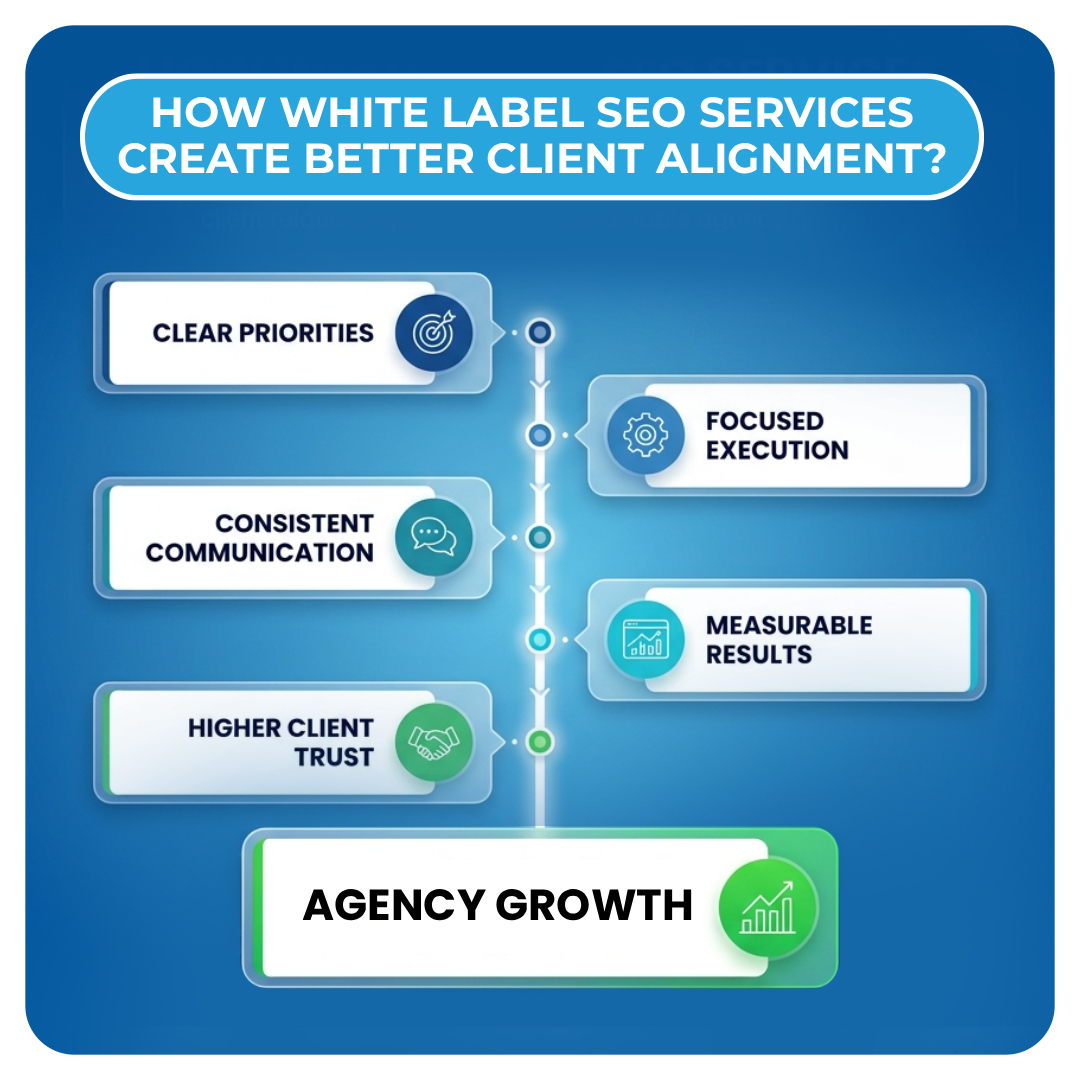
The agency stays responsible for strategy, scope, client expectations, recommendations, approvals, and overall project direction. The fulfillment partner simply adds capacity where it's needed most.
Support Website Redesigns With DashClicks White Label SEO Services
DashClicks supports the SEO workload surrounding a redesign while the agency remains responsible for the client relationship and overall project.
- Pre-redesign SEO reviews: Support for assessing the existing site's SEO condition before development starts.
- Technical SEO execution: Support for technical SEO work tied to the redesign.
- On-page Optimization: Support for optimizing important pages during and after the rebuild.
- URL and Redirect Support: Assistance with SEO work associated with changed URLs.
- SEO QA: Support for pre-launch and post-launch checks.
- Post-launch Monitoring: Help tracking the redesigned site's SEO condition after launch.
- Ongoing SEO Fulfillment: Continued support for SEO work once the redesign is complete.
- Branded Reporting: Support for agency-branded client reporting.
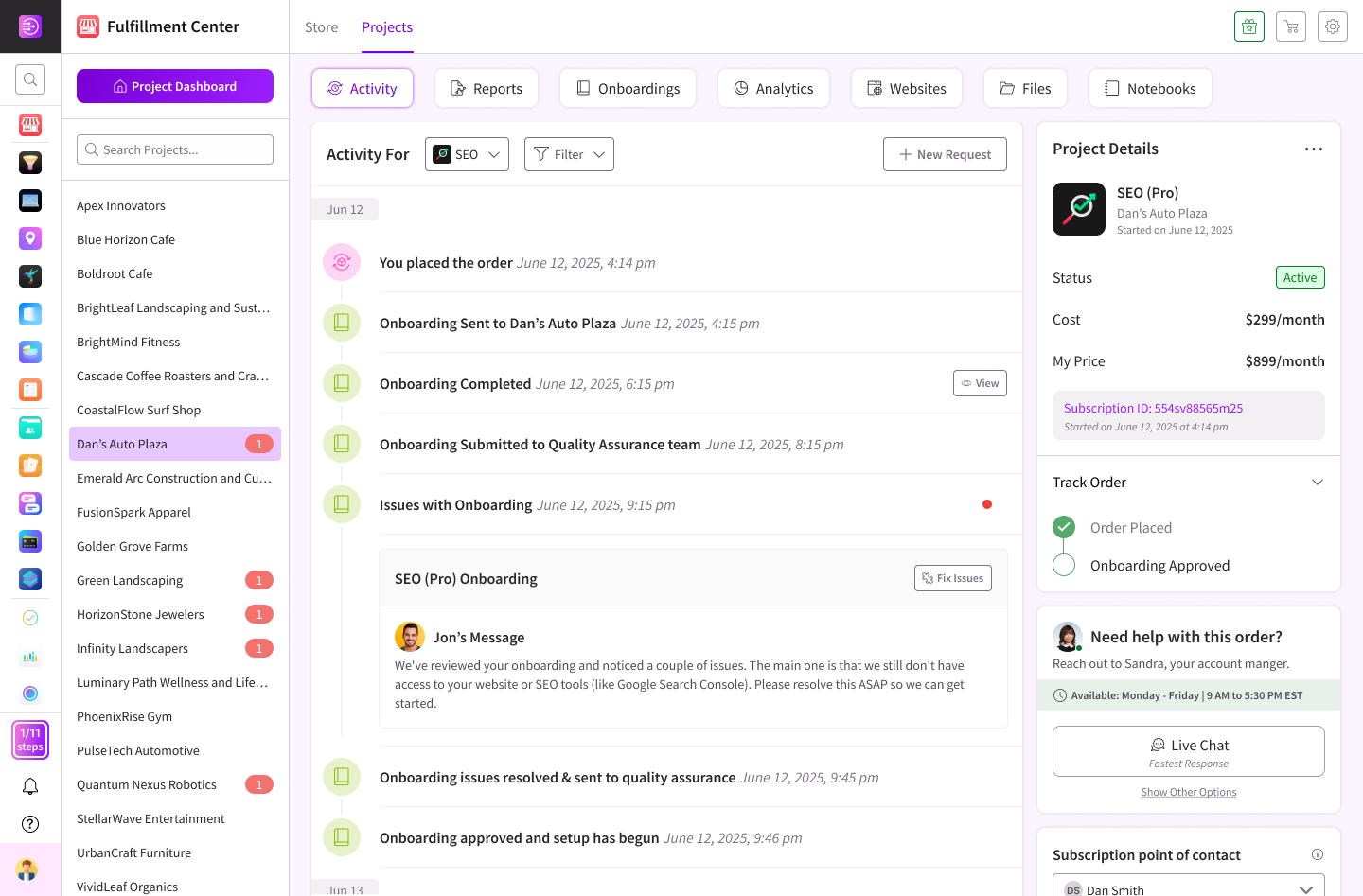
- Client Dashboard: White label client dashboard included as part of the DashClicks offering to help agencies track progress.
The agency doesn't have to hand over the redesign or the client relationship to get this support. It can use white label SEO partner to add specialist execution capacity around the project, while keeping ownership of strategy and the client experience exactly where it already is.
Protecting Organic Performance Through a Redesign
A redesign can affect SEO even when the domain never changes. URL structure, content, navigation, metadata, internal links, and indexing settings all play a role in how search engines understand a site, and any of them can shift during a rebuild.
SEO needs to be part of the conversation before, during, and after the redesign, not treated as cleanup work once the new site is already live. URL mapping clarifies how old and new pages relate to each other. Redirects protect the value built up in existing URLs. Content preservation protects organic assets that took time to earn. Technical QA catches problems while they're still cheap to fix. Post-launch monitoring catches the issues that only show up once real users and real crawlers interact with the live site.
SEO outsourcing gives agencies a way to handle all of this without expanding their internal team for every redesign project that comes through the door. The agency keeps the client relationship, the strategy, the communication, and the final say on every deliverable. The white label partner takes on the execution-heavy work that redesigns tend to generate in large volume.
Not every redesign is a full migration, but every major redesign deserves an honest evaluation of its SEO impact. Agencies that build that evaluation into their redesign process, with the right fulfillment support behind them, put themselves in a much better position to protect organic performance while keeping the project moving toward launch.


.svg)


.svg)
.svg)
.svg)
.svg)
.svg)