Larger client accounts rarely come with simple requirements. They involve multiple stakeholders, longer sales cycles, and higher expectations for reporting, communication, and strategic thinking. A marketing director overseeing several locations wants more than a monthly ranking report. They want evidence that an agency understands their business and can manage a complex scope of work without dropping the ball.
This creates a real challenge for growing agencies. Winning bigger clients often requires demonstrating capabilities an agency has not yet had the budget or client base to build in-house. Hiring a full roster of specialists, technical SEO experts, content strategists, local SEO specialists, and link-building coordinators, before landing the accounts that would justify those salaries is a difficult bet to make.
White label SEO solutions offer one way to close this gap. By partnering with a fulfillment provider, agencies can expand execution capacity while keeping ownership of client relationships, strategic direction, and business decisions in-house. This is not a shortcut to winning larger clients. It is a way to build the delivery capability that responsible growth requires.
The central argument of this article is straightforward. Agencies need a credible delivery model before they pursue larger accounts. Specialist support can help close capacity gaps, but it only works when paired with realistic proposals, documented processes, and a genuine understanding of each client's business goals.
What Larger Clients Look for in an SEO Agency?
Larger clients do not evaluate agencies the way smaller businesses do. They are less impressed by a long list of services and more interested in whether an agency can coordinate complex work, communicate clearly across departments, and deliver consistently over time.
1. Broader SEO Expertise
Bigger accounts typically require a wider range of capabilities than a single-location small business campaign. These often include:
- Technical SEO audits and implementation coordination across larger, more complex websites.
- Content strategy and on-page optimization at scale.
- Local SEO for businesses operating across multiple locations or regions.
- Link-building coordination and related off-page SEO activities.
Agencies need a clear plan for covering these specialties. That plan might rely on internal staff, external specialists, or some combination of both. What matters is that the agency can speak to its coverage with confidence rather than vague assurances.
2. Reliable Execution Across Complex Accounts
A larger website, multiple business locations, and several SEO workstreams running at once demand more than good intentions. They require documented workflows, defined responsibilities, built-in quality checks, and consistent delivery.
Prospective clients want to know who handles each task, how approvals move through the process, how delays get escalated, and how work is reviewed before it reaches them. An impressive proposal means little if the agency cannot fulfill the agreed scope reliably once the contract is signed.
3. Business-Focused Reporting
Reporting for larger clients needs to connect SEO activity to outcomes that matter to the business, such as qualified leads, conversions, and revenue opportunities, where the data supports those connections.
There is an important distinction between activity metrics and business performance indicators. Pages optimized or technical issues resolved are activity metrics. They show work was done, but they do not automatically translate into measurable revenue. Agencies should report progress transparently and be upfront about the limits of attribution, rather than implying every task produces a direct, trackable financial result.
4. Strategic Communication and Realistic Timelines
Decision-makers at larger companies need information presented in terms they can act on: priorities, trade-offs, risks, dependencies, and realistic timelines. This is where many agencies lose credibility, either by overpromising speed or by failing to explain why SEO takes time.
According to Ahrefs, SEO typically takes three to six months to show results, based on a poll of 3,680 respondents. That figure is useful context for setting expectations with larger clients, but it is a general reference, not a guarantee. Actual timelines depend on factors like competition, the website's starting condition, available resources, how quickly changes are implemented, and the overall scope of work.
Agencies that communicate this honestly, rather than promising instant rankings, build the kind of trust that larger clients are looking for before they sign a contract.
How White Label SEO Helps Agencies Compete for Larger Accounts?
White label SEO firm can help agencies address capability and capacity gaps when pursuing more demanding accounts. The benefit here is operational, not a promise of new business.
1. Expand Capabilities Without Hiring for Every Specialty
Agencies can use specialist execution support for technical audits, content optimization, on-page SEO, and local SEO as the need arises. This provides access to additional expertise without requiring an immediate hire for every individual service area.
That said, the agency still carries the responsibility of evaluating a provider's actual capabilities and confirming the arrangement genuinely fits the client's requirements. Access to specialist support is only valuable if it matches what the client actually needs.
2. Take On More Complex Scopes Responsibly
Fulfillment support can help agencies coordinate SEO work across larger websites, multiple locations, and campaigns involving several simultaneous workstreams. But additional capacity only helps when the agency already has suitable project management, communication, approval, and quality-control processes in place.
It is worth being direct here: not every white label SEO firm can handle every type or scale of SEO engagement. Agencies need to confirm fit before assuming a partner can support a demanding account.
3. Reduce Delivery Bottlenecks
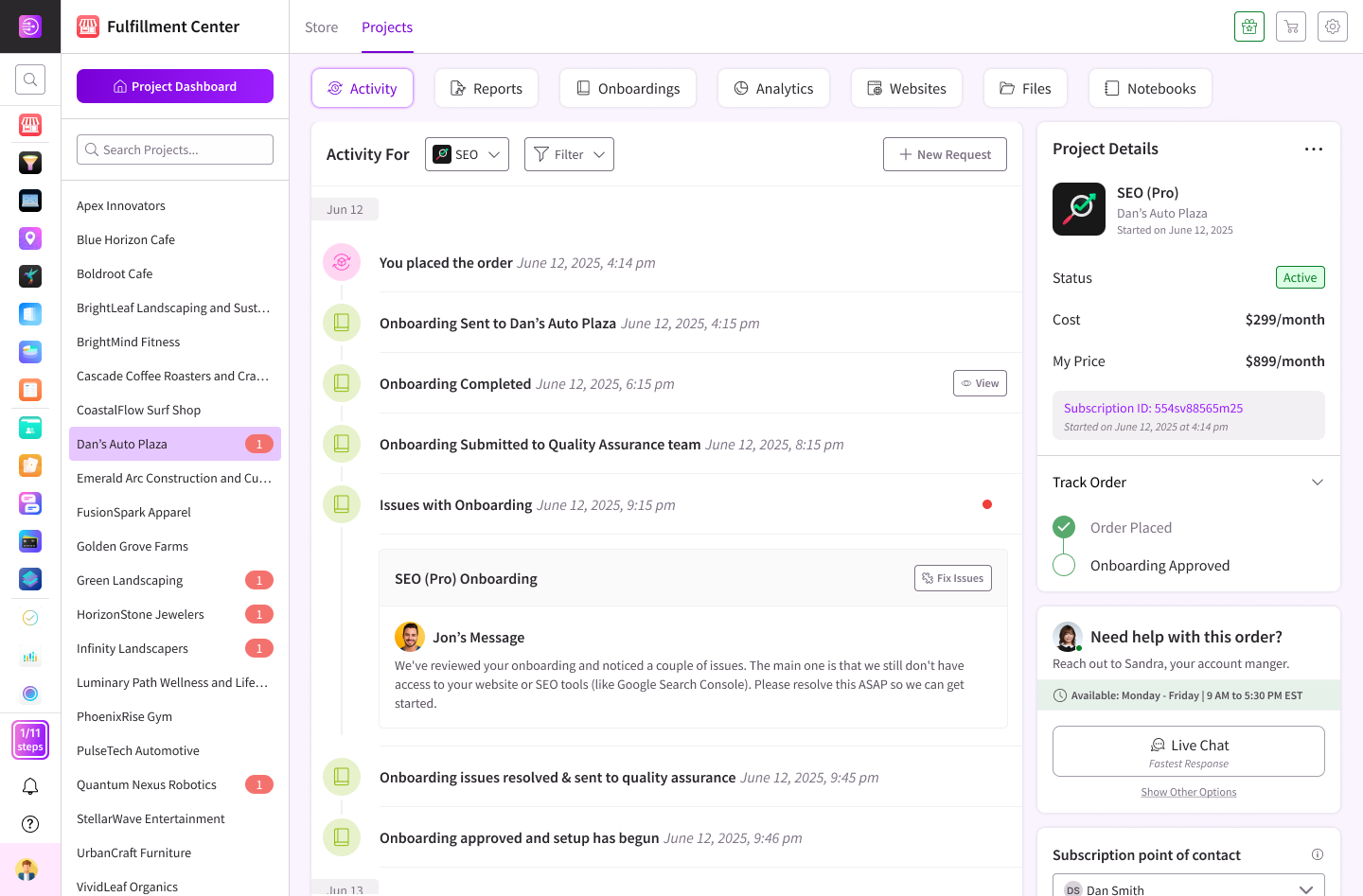
Repeatable processes for onboarding, implementation, quality assurance, and reporting reduce avoidable delays and confusion. When workflows are documented, teams can manage competing deadlines, clarify who owns what, and maintain consistency across multiple client accounts at once.
4. Protect the Agency's Strategic Role
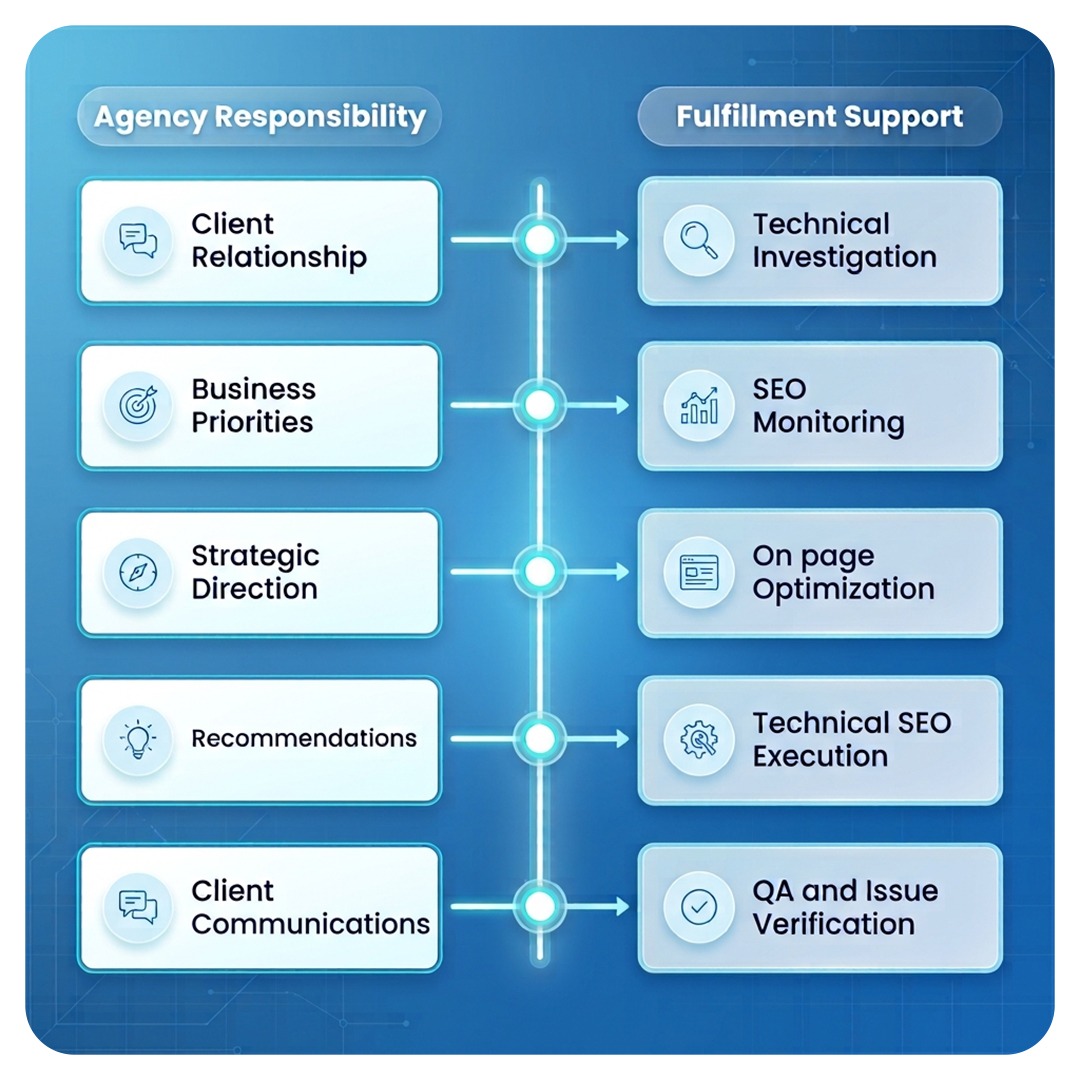
Agencies should retain responsibility for discovery, client communication, recommendations, prioritization, and overall account direction. Fulfillment supports the execution of an agreed strategy, but it should never replace the decisions that depend on knowledge of the client's business, commercial priorities, or goals.
5. Avoid Overpromising During Sales
Before signing a larger client, agencies need to confirm fulfillment capacity, scope, turnaround expectations, and responsibilities. Transparent proposals help align what the client expects with what the agency and its fulfillment partner can actually deliver.
This distinction matters: white label SEO solutions can strengthen an agency's ability to deliver, but it does not automatically generate leads or guarantee that a prospect will choose that agency over a competitor.
Turn SEO Fulfillment Into a Stronger Sales Proposition
A reliable delivery model becomes a genuine sales asset when agencies know how to present it. The goal is to connect SEO capabilities to business needs, not simply list available services.
1. Sell Business Outcomes, Not a List of Tasks
Proposed SEO work should connect to the prospect's growth goals, market coverage, audience needs, and conversion opportunities. Technical improvements, content optimization, and local SEO may address different business needs depending on a prospect's website and market.
Agencies should avoid guaranteeing specific business outcomes. Instead, a proposal should explain the intended objective, the work required to pursue it, and how progress will be evaluated over time.
2. Build Proposals Around the Client's Complexity
A strong proposal demonstrates understanding of the prospect by identifying relevant technical issues, content gaps, competitive opportunities, and location-specific needs. Organizing the proposal around the client's actual priorities, rather than offering the same generic package to every large prospect, makes a clear difference.
Clear prioritization signals that the agency understands the scope involved and has thought through what matters most for that specific business.
3. Demonstrate Delivery Readiness
A proposal aimed at larger clients should outline:
- The implementation roadmap and key workstreams.
- Responsibilities and approval requirements.
- Quality assurance procedures.
- Reporting cadence and performance review process.
- Escalation procedures for delays, technical issues, and scope changes.
These details help prospective clients understand not only what the agency recommends, but how the work will actually be managed day-to-day.
4. Use Specialist Support to Close Capability Gaps
Agencies can describe access to specialist fulfillment expertise without overstating their internal staffing or capabilities. Being transparent about the operating model, while keeping the focus on accountability, quality controls, and the delivery process, builds more trust than vague claims of full in-house teams.
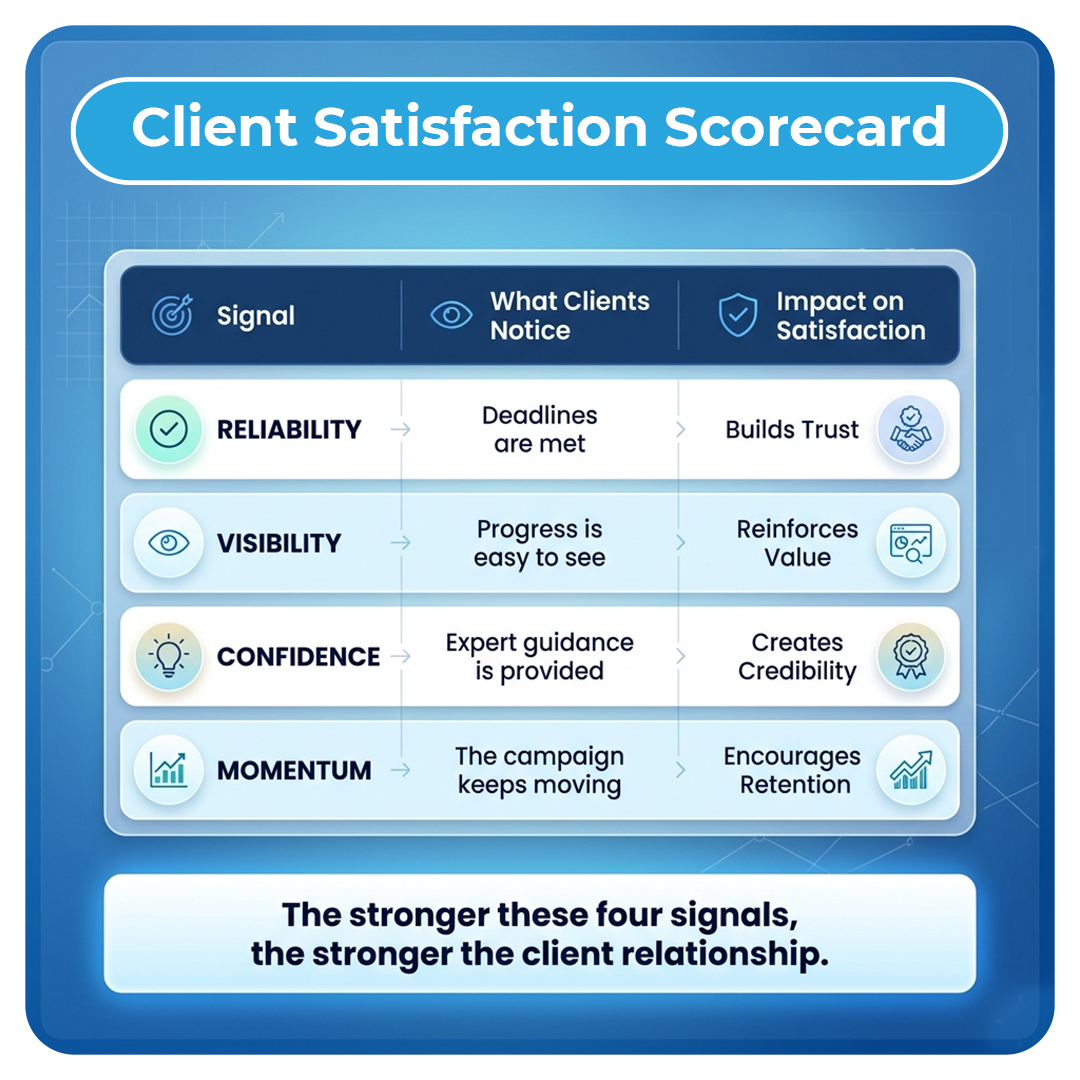
Delivery reliability matters more than agencies sometimes assume. In Setup's 2024 Marketing Relationship Survey, 48% of clients cited dissatisfaction with delivery as a reason for ending an agency relationship. This does not mean white label SEO firm prevents client churn on its own. It does mean that agencies need a credible plan for consistent delivery if they want to build lasting client relationships, and that plan should be part of the sales conversation from the start.
Choose the Right White Label SEO Partner Before Pursuing Bigger Accounts
The right fulfillment partner depends on an agency's target clients, required services, operating processes, and quality expectations. A provider should be evaluated carefully before an agency commits to a demanding engagement.

1. Match Expertise to the Intended Client Profile
Agencies should evaluate a potential partner's technical SEO capabilities, content quality, local SEO experience, link-building processes, and track record with larger websites or multi-location businesses. An agency pursuing enterprise-style or multi-location accounts likely needs different support than one primarily serving smaller local businesses. Matching actual provider capabilities to the proposed scope matters more than relying on broad service claims.
2. Evaluate Operational Maturity
Documented processes, quality assurance, reliable communication, clear turnaround expectations, and consistent delivery all signal operational maturity. These factors matter even more when multiple people, websites, locations, or workstreams are involved in a single engagement.
3. Define Ownership Before Onboarding
Before onboarding a new fulfillment partner, agencies should clarify who is responsible for strategy, implementation, client questions, approvals, reporting, and urgent issues. Clearly defined ownership reduces duplicated work, conflicting instructions, and delays. The agency remains accountable for the client relationship and strategic direction even when execution is outsourced.
4. Check Reporting and Brand Consistency
Deliverables and reports should fit the agency's existing workflow and client-facing brand. Consistency in formatting, terminology, documentation, communication, and reporting schedules all affect how polished the final client experience feels. Not every provider offers the same level of customization or white label functionality, so agencies should verify available options before committing.
5. Test Before Committing to a Large Account
Where practical, agencies should start with a defined scope or pilot project. A limited engagement helps the agency evaluate deliverable quality, communication, turnaround time, responsiveness to feedback, and adherence to the agreed process before assigning a larger workload to a new partner.
Build a Repeatable Model for Winning and Retaining Larger Clients
Agencies that prepare their delivery systems before pursuing larger accounts put themselves in a stronger position. A repeatable model makes it easier to assess readiness, coordinate execution, monitor profitability, and expand only when justified.
1. Create a Bigger-Client Readiness Checklist
Before pitching or accepting a large account, agencies should assess:
- Available fulfillment capacity.
- Coverage of the specialist skills required.
- Proposed scope and deliverables.
- Expected margins and fulfillment costs.
- Timelines and dependencies.
- Reporting requirements.
- Account management and communication responsibilities.
This readiness check helps agencies avoid selling work they cannot deliver reliably or profitably.
2. Standardize Client Onboarding
A consistent onboarding process should gather:
- Required website, analytics, and search platform access.
- Business goals and target audiences.
- Target markets and locations.
- Competitors and relevant search landscape information.
- Existing SEO performance and known technical issues.
- Stakeholders, approval processes, and communication preferences.
A thorough handoff helps fulfillment teams understand the engagement fully before beginning execution, which reduces miscommunication down the line.
3. Establish a 90-Day Delivery Roadmap
A flexible 90-day framework can be adapted to each client's specific needs. It generally covers three stages:
- Initial assessment and prioritization. Review the website, existing performance, technical issues, content gaps, and business goals to identify where work should begin.
- Implementation and optimization. Address agreed priorities, coordinate technical fixes, and begin relevant content or local SEO work.
- Review and refinement. Assess implementation progress, check data quality, review early performance signals, and adjust priorities based on what the data shows.
This roadmap is a planning framework, not a promise of rankings or measurable business results within 90 days. The actual timeline should reflect the scope, access requirements, implementation dependencies, competition, and client approvals.
4. Protect Profitability as Accounts Grow
Larger accounts often require more coordination, revisions, reporting, stakeholder communication, and account management than smaller ones. Agencies should account for fulfillment fees, internal labor, project management, revision cycles, reporting, and unexpected work when setting prices and scopes.
Margins can be protected by clearly defining deliverables, documenting scope changes as they occur, setting approval procedures, and monitoring actual workload against the original plan. Without this discipline, larger accounts can quietly become less profitable than they appear on paper.
5. Use Early Results to Guide Account Expansion
As engagements progress, agencies may identify genuine opportunities to extend work into additional services, locations, or business units. Expansion should depend on observed performance, client priorities, available capacity, and a realistic business case, not simply a desire to increase account value. Additional scope should serve a real client need and be supported by the agency's actual ability to deliver it well.
How DashClicks Can Support Agency SEO Fulfillment?
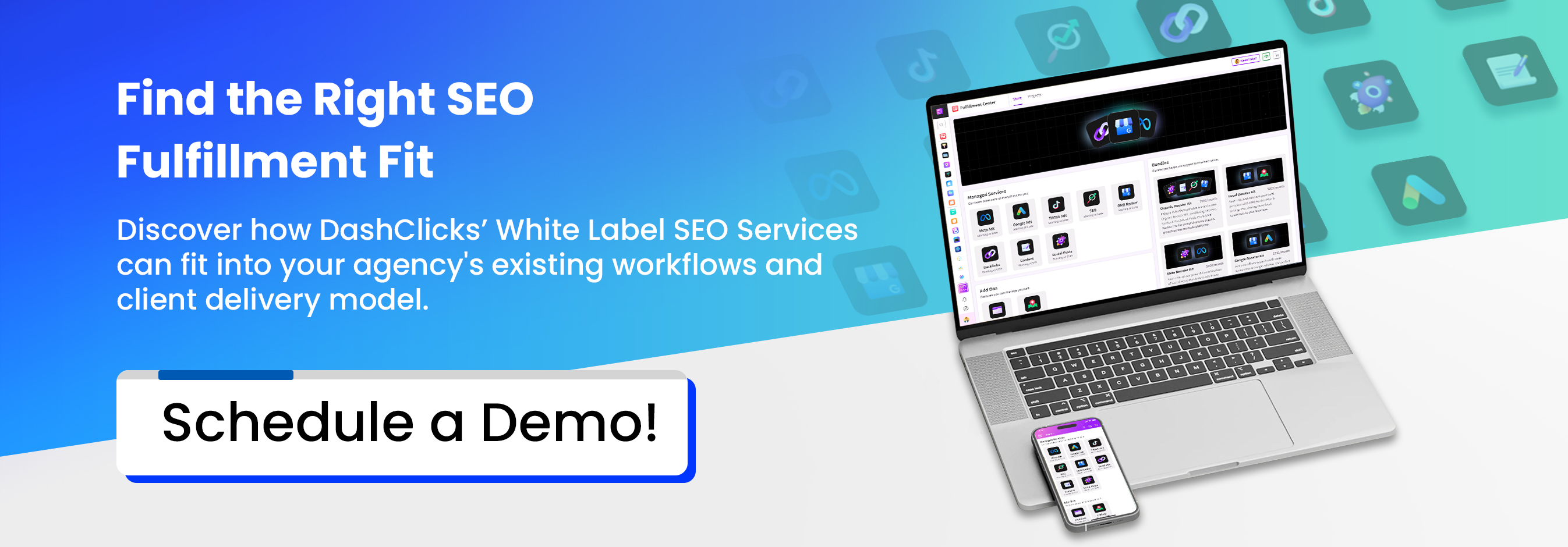
Agencies evaluating white label SEO solutions have several models to consider. DashClicks is one option for agencies seeking fulfillment support without building every specialist role internally.
- Extend Execution Capacity: The platform offers fulfillment support across several relevant SEO areas, including technical and on-page SEO, SEO content, local SEO, link building, and reporting. These represent potential areas of execution support that agencies can draw on as client needs require, rather than a one-size-fits-all package applied to every account.
- Retain Client Relationships and Strategic Direction: Using a fulfillment partner does not change where responsibility for client communication, strategic decisions, prioritization, and account direction sits. That remains with the agency. This connects directly to the operational practices discussed earlier: clear handoffs, defined ownership, quality checks, and consistent reporting all still apply when working with an outside fulfillment team.
- Assess Fit Before Committing: As with any fulfillment partner, agencies should evaluate DashClicks against their required service scope, existing workflow, quality standards, reporting needs, communication expectations, and target client profile. The best fulfillment arrangement is the one that actually supports an agency's business model and the delivery commitments it makes to clients, rather than the one with the longest feature list.
Build the Delivery System Bigger Clients Expect
Winning and retaining larger accounts requires a credible combination of SEO expertise, strategic thinking, clear communication, and dependable execution. No single element carries the full weight on its own.
White label SEO services for agencies address capacity and specialist coverage gaps, strengthening the delivery model needed to prepare for more complex engagements. But fulfillment is not a substitute for business development, client understanding, or agency strategy. Agencies must still qualify prospects carefully, set realistic expectations, maintain quality controls, and protect profitability as accounts scale.
The central takeaway is simple. Agencies should build delivery systems capable of supporting the clients they want to win, then expand responsibly as client needs, performance, and capacity justify it.