

.svg)

.svg)
.svg)
.svg)
.svg)
.svg)
There's a gap between what SEO clients want and what SEO can actually control. A client might expect a specific keyword to hit #1, a noticeable traffic jump within a few weeks, or an instant recovery after a ranking dip. Others want more leads without touching their website, or they assume the strategy that worked last year will keep working forever.
Here's the thing: these clients usually aren't being unreasonable. The trouble starts when a business hope quietly becomes an SEO promise that no agency can guarantee. That's when reporting turns defensive, strategies get changed too early, and account managers spend more time explaining fluctuations than explaining progress.
Google itself is clear on this. According to Google's SEO documentation, no one can guarantee a #1 ranking, and search positions naturally shift over time. So the goal for agencies isn't to lower client expectations or talk people down. It's to translate vague wishes into something workable.
The most effective agencies turn fuzzy expectations into measurable objectives, realistic timelines, defined responsibilities, and evidence-based decisions. This blog walks through eight of the most common difficult SEO expectations, why they cause operational headaches, and how to reset each one without damaging the client relationship. We'll also look at how white label SEO fulfillment fits into all of this.
Why Unrealistic SEO Expectations Are Hard to Manage?
Unrealistic expectations don't just make client calls awkward. They create real operational drag inside an agency.
Account managers end up defending normal ranking fluctuations instead of reporting on strategy. SEO teams change direction prematurely because a single keyword slipped. Clients judge months of careful work based on one term they happen to check every morning. Fulfillment teams receive contradictory priorities from week to week. Short-term reactions start undermining long-term plans. And reporting drifts away from explaining performance and toward defending it.
A lot of this comes from blurring three different things that should stay separate.
Client expectation ≠ SEO KPI ≠ Business Outcome
Consider these three statements:
- "I want more traffic" is an expectation.
- "Increase non-branded organic sessions by 20%" is a KPI.
- "Generate more qualified service inquiries" is a business outcome.
When agencies collapse all three into one promise, they lose control of the conversation. The client hears a guarantee. The fulfillment team hears a vague goal. And the agency ends up accountable for outcomes it can influence but not command. Keeping expectation, KPI, and business outcome distinct gives everyone a clearer picture of what's being measured and why.
1. "Why Aren't We Ranking #1 Yet?"
This is the classic. A client fixates on one keyword and treats its position as the scoreboard for the entire campaign. The problem is that a single keyword ranking reflects a small slice of what's actually happening.
Rankings are influenced by a long list of factors, most of which sit outside any agency's direct control:
- Competitor performance
- Search intent behind the query
- Content quality and relevance
- Overall website authority
- Algorithm changes
- Shifting searcher behavior
- The makeup of the SERP itself

Google has stated plainly that SEOs cannot guarantee #1 rankings. So chasing one position as the definition of success sets everyone up for frustration.
The fix is to change the question the reporting answers. Instead of asking:
"Did keyword X reach #1?"
Move toward: "Is the site becoming more visible for commercially valuable searches?"
That shift lets you report on things that actually reflect progress. Track ranking distribution across a group of terms, non-branded visibility, organic traffic trends, qualified conversions, and visibility across relevant search themes rather than a handful of hand-picked keywords. When a client sees the site climbing across dozens of related queries, one keyword's position matters a lot less.
2. "Can You Guarantee a Specific Ranking by a Certain Date?"
This looks similar to the first expectation, but it adds a second layer of risk: time. Now the client wants a ranking outcome tied to a deadline.
SEO doesn't run on a fixed production schedule. Google has explained that some changes can be reflected in search within days, while others can take several months, and not every change produces a noticeable impact at all. That makes a dated ranking guarantee something no honest agency can deliver.
Here's the difference in practice.
A promise you should avoid: "We'll get you to position 3 in 90 days."
A better approach:
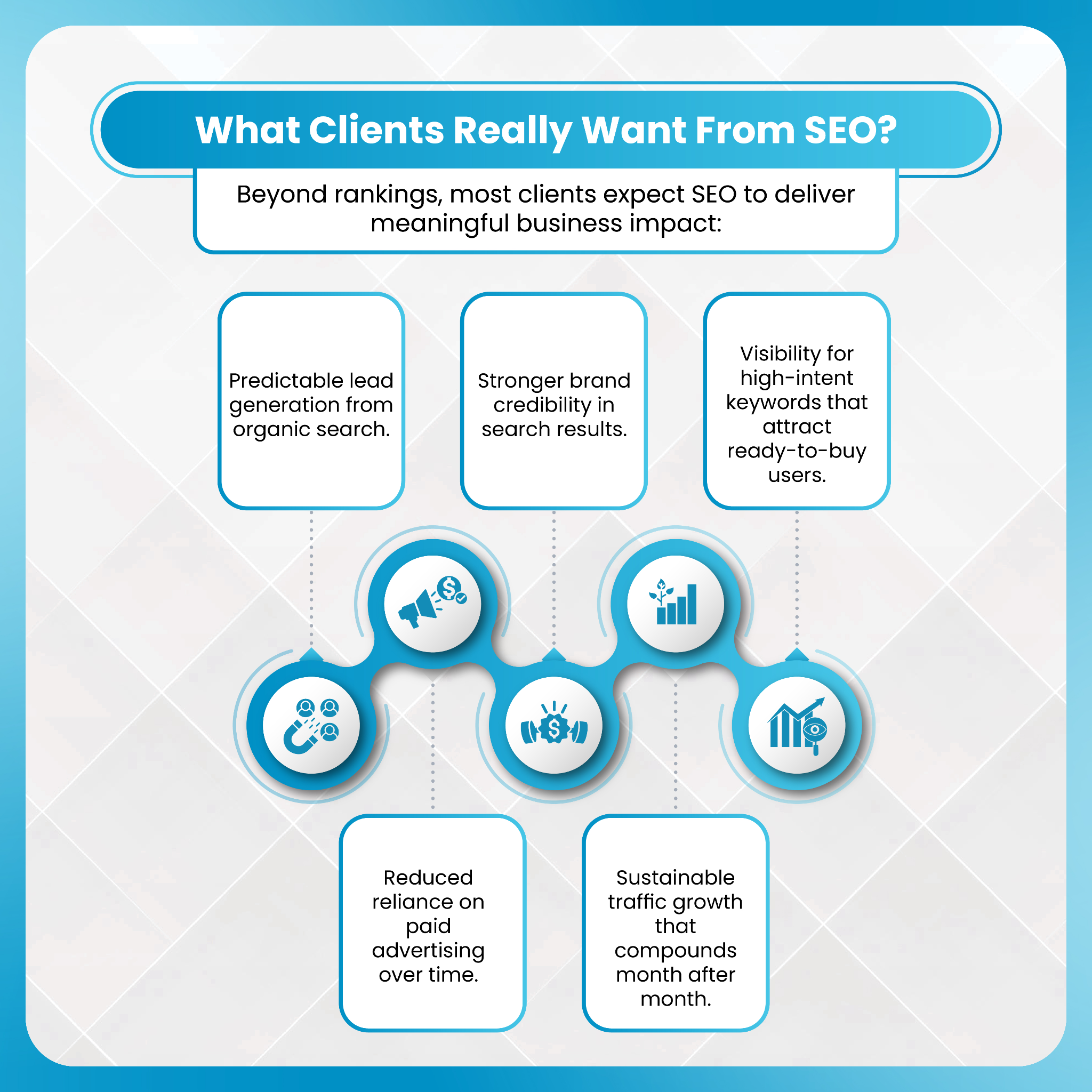
Instead of promising the ranking, commit to the plan. Define clearly:
- The work that will be completed in the period
- The pages that will be prioritized
- The technical issues that will be addressed
- The content opportunities that will be pursued
- The indicators that will be monitored
- When results will be reassessed
This is especially useful for account managers, because it gives them something concrete to be accountable for on every call. You guarantee the process and your accountability to it. You don't guarantee Google's response. That distinction protects the relationship when rankings move slower than hoped.
3. "We Only Want to Target These Five Keywords"
Sometimes a client arrives with a locked keyword list and expects the whole campaign to revolve around it. A fixed list feels safe, but it can quietly restrict the campaign.
Clients usually build these lists based on:
- What they assume customers search
- Terms their competitors seem to target
- Raw search volume
- Historical industry terminology
- Personal preference
The issue is that assumptions don't always match how people actually search. Search intent, real search demand, related queries, and live ranking data often reveal better opportunities than the original list. A client might request a high-volume head term when a cluster of lower-volume, higher-intent queries would drive far more qualified visits.
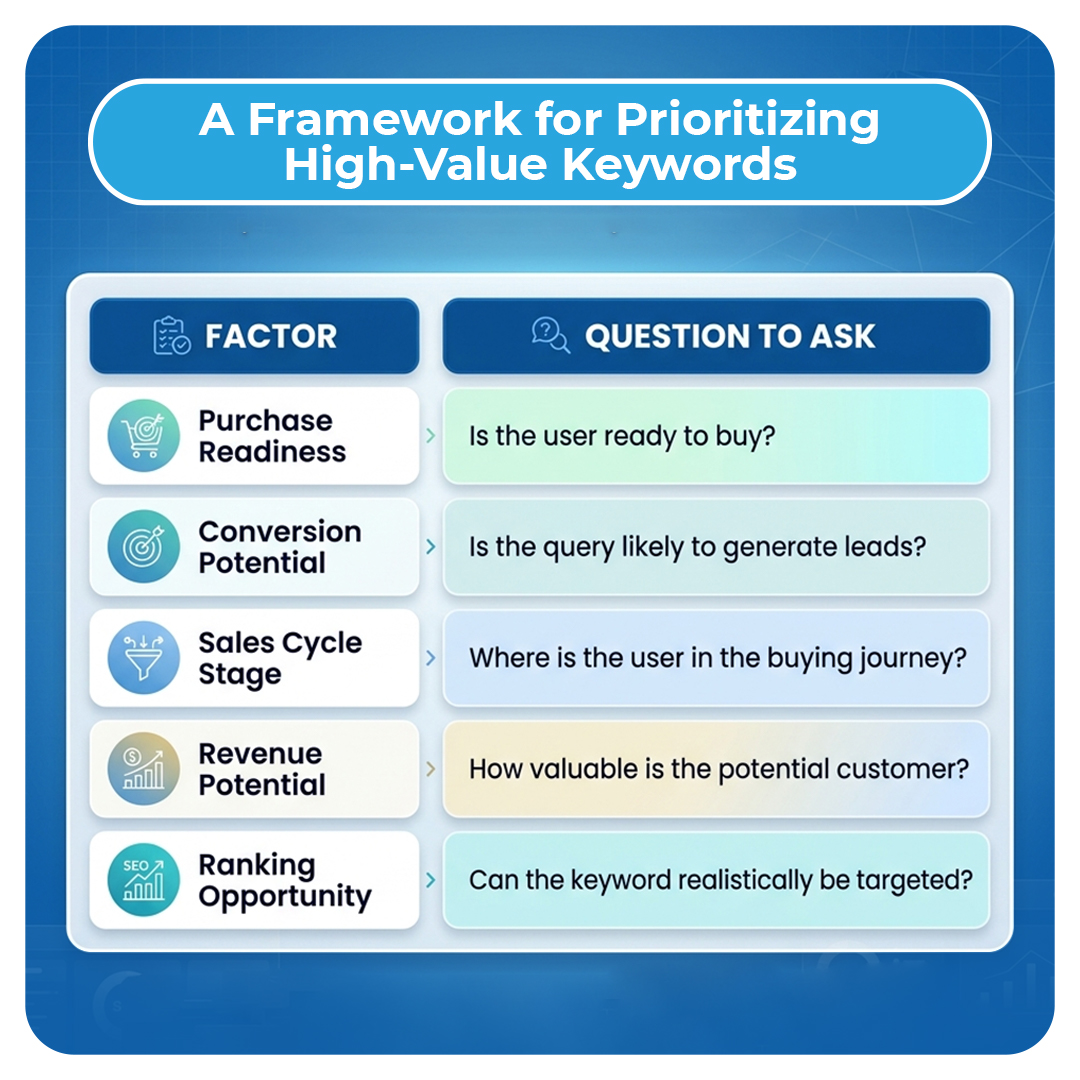
A simple framework helps here:
Client priorities → Search opportunity → Business value
Use the client's list as an input, not the entire strategy. Start with their priorities, layer in the search opportunities the data surfaces, then filter everything through business value. Reporting around search themes and business categories is often more useful than dropping a spreadsheet of hundreds of individual keywords in front of a client. Themes tell a story. A keyword dump invites nitpicking.
4. "Can You Improve SEO Without Changing Our Website?"
This one creates a fulfillment bottleneck, which is why it deserves attention beyond the client call.
Clients resist website changes for understandable reasons:
- They need developer involvement they don't have
- Internal approvals take time
- Brand teams want sign-off
- Legal has to review certain content
- Nobody wants to hand over CMS access
- Changes cost money
The awkward reality is that an agency can spot a valuable SEO opportunity and still be stuck unable to act on it. You can identify that service pages need restructuring, that technical issues are hurting crawling or indexing, that internal linking is weak, that content needs expanding, or that conversion paths need adjusting. But recommendations don't implement themselves.
A responsibility matrix makes this shared reality explicit from the start:
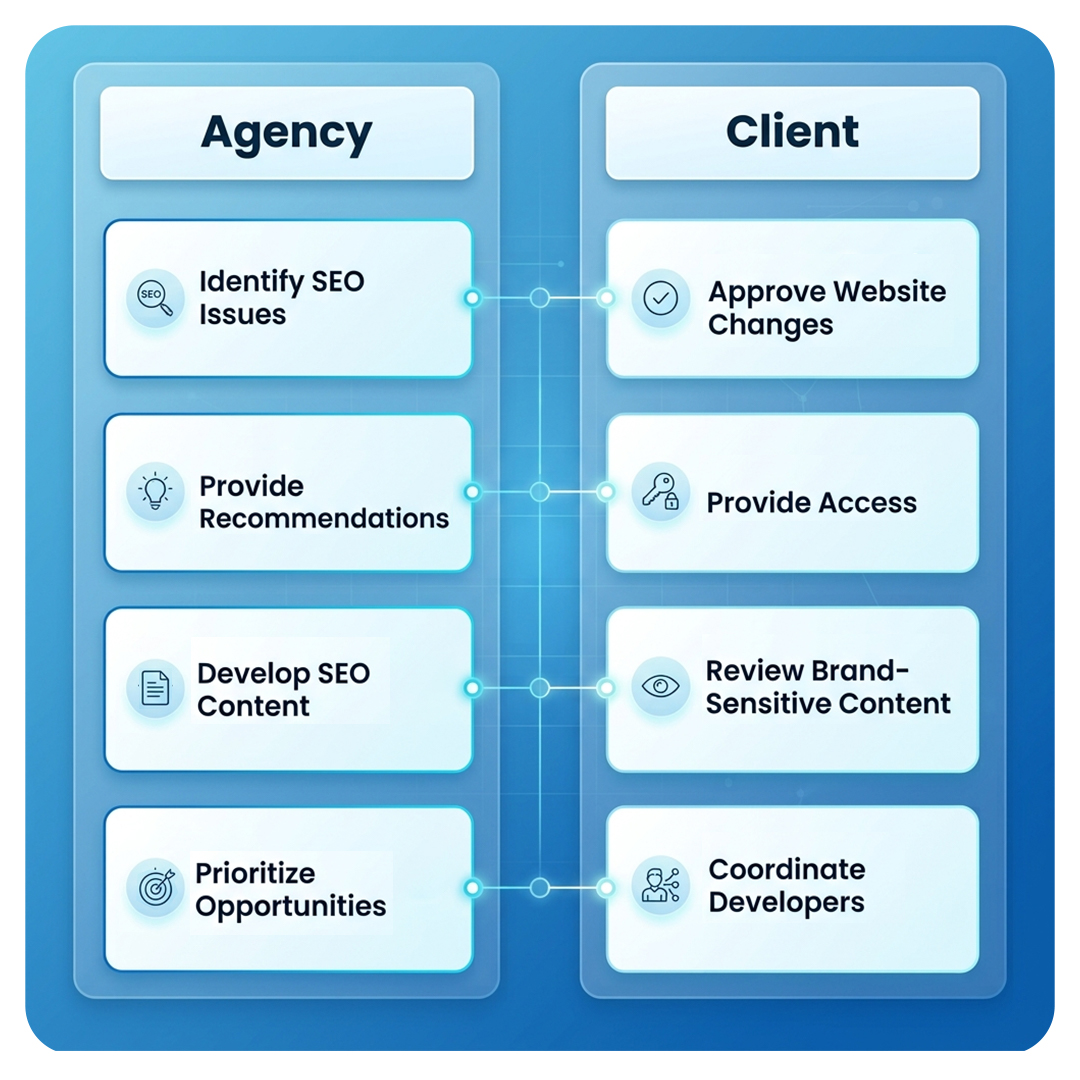
Laying this out early prevents the "we hired you to fix SEO, why isn't it fixed" conversation later. The core message for the client is simple:
SEO recommendations only create value when the necessary changes can actually be implemented.
5. "Our Rankings Dropped. SEO Isn't Working."
A drop in rankings triggers panic, and panic triggers rushed decisions. But a decline doesn't automatically mean the strategy failed.
Rankings can dip for many reasons:
- Core updates
- Smaller algorithm changes
- Seasonality
- Changing search interest
- Site migrations
- Technical issues
- Competitor movement
- Changes elsewhere on the web
Google has explained that search positions fluctuate and that a drop doesn't necessarily call for drastic action. Reacting to every wobble by overhauling the strategy is often the worst response an agency can make.
Before changing anything, run a diagnostic.
Before Changing Strategy, Ask:
- Is the decline isolated to one page or sitewide?
- Did impressions decline, or only clicks?
- Did rankings slip across many queries or just a few?
- Did overall search demand change?
- Did competitors gain visibility?
- Did a website change happen recently?
- Did the timing line up with a known Google update?
Working through these questions usually reveals the real cause. Maybe demand dropped because of seasonality. Maybe a migration introduced a technical SEO issue. Maybe a competitor published something strong. Diagnosing first protects the long-term strategy from being torn up over a temporary or explainable dip.
6. "Can We Pause SEO and Pick It Up Later?"
During slower business periods or tight budgets, clients often ask to pause SEO and resume later. It sounds reasonable, like pausing a subscription.
But pausing SEO interrupts several ongoing streams of work:
- Content development
- Technical maintenance
- Competitive monitoring
- Internal linking
- Authority development
- Performance analysis
- Strategic adaptation
Rather than insisting that "SEO has to continue every month," it's more persuasive to frame the conversation around the competitive environment. Ask a simple question:
What happens to the competitive environment while SEO activity is paused?
Competitors don't pause. While a client sits still, competitors keep publishing content, improving existing pages, building authority, and capturing search demand the paused client is no longer pursuing.
A more practical option than a full stop is to scale down:
Full program → Core maintenance → Strategic monitoring
Reducing scope keeps essential work moving and preserves momentum, which is usually easier and cheaper than rebuilding from a cold start later. For many clients, core maintenance is a far better answer than a complete pause.
7. "We Want More Leads, But Don't Want to Change Anything"
This is where expectations quietly contradict themselves. The client wants:
More organic traffic + more leads + the same website + the same offer + the same conversion path.
SEO can increase qualified traffic. It cannot guarantee that a website will convert that traffic into leads. Those are two different jobs.
It helps to walk the client through the full path:
Visibility → Relevant Traffic → Landing Page → Conversion → Qualified Lead
Leads live at the end of that chain, and SEO mainly influences the front of it. When leads aren't materializing, the bottleneck could sit in one of three places:
- SEO Problem: The right people aren't finding the website in search.
- Conversion Problem: The right people arrive but don't take action once they land.
- Offer Problem: People understand the service but don't find the proposition compelling enough to reach out.
The agency's job is to figure out where the breakdown actually is before promising more leads. If traffic is growing but leads aren't, more SEO won't fix a weak landing page or an unconvincing offer. Naming the real bottleneck honestly is far more valuable than agreeing to a promise the current website can't support.
8. "Do Whatever It Takes to Get Results"
Under pressure, clients sometimes push for shortcuts:
- "Can't we build links faster?"
- "Why can't we publish 50 pages this month?"
- "Can we use the exact keyword more often?"
- "Why not just copy what our competitors are doing?"
- "Can we get this ranking by any means necessary?"
There's an important line to draw here:
Aggressive Execution ≠ Risky Execution.
Working hard and moving fast is fine. Cutting corners that violate search guidelines is not. Google has warned against deceptive and manipulative SEO practices, and sites that break its guidelines can face consequences that set a client back much further than slow progress ever would.
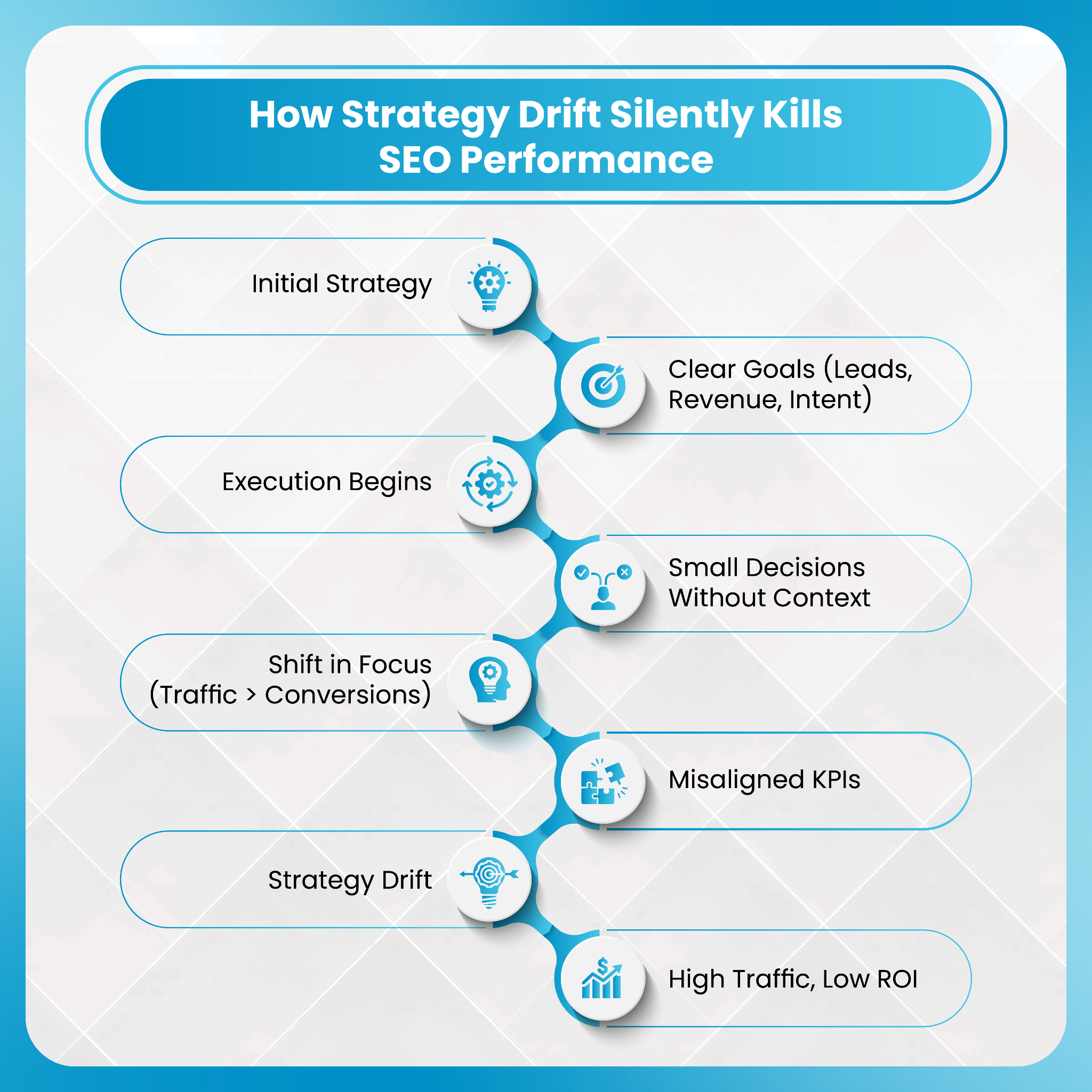
Part of an agency's value is protecting clients from decisions that feel urgent but carry real risk. So the guiding principle becomes:
A client's urgency should change prioritization, not the agency's quality standards.
You can reorder the roadmap to tackle high-impact work sooner. You shouldn't trade long-term stability for a risky quick win.
How Agencies Can Reset Difficult SEO Expectations Without Creating Friction?
Managing these eight expectations comes down to a repeatable framework, not one-off damage control. Here's how to build it into your process.
1. Replace Promises With Working Assumptions
Drop language like "traffic will increase by X%." Instead, talk in terms of targeted outcomes, planned work, and monitored indicators. This keeps you accountable for effort and direction without pretending you control Google.
2. Separate Controllable and Uncontrollable Factors
Make this split explicit with clients so nobody's surprised later.
The Agency Controls:
- Strategy
- Implementation
- Content
- Technical recommendations
- Monitoring
- Reporting
The Agency Does Not Control:
- Google rankings
- Competitor actions
- Search demand
- Algorithm changes
- The client's approval speed
3. Define Decision Thresholds
Agree in advance on what actually triggers a change. Decide together what conditions should prompt a strategy review, content changes, technical escalation, keyword reprioritization, or a broader client discussion. This stops emotional, reactive decisions during a rough month.
4. Report Decisions, Not Just Activities
Activity reports invite "so what?" Decision reports show judgment. Compare these two lines:
"We published five blogs."
versus
"We prioritized these topics because they address higher-value search intent and support the client's current service priorities."
The second version tells the client why the work matters. That's the difference between reporting motion and reporting progress.
How White Label SEO Helps Agencies Manage Difficult Client Expectations?
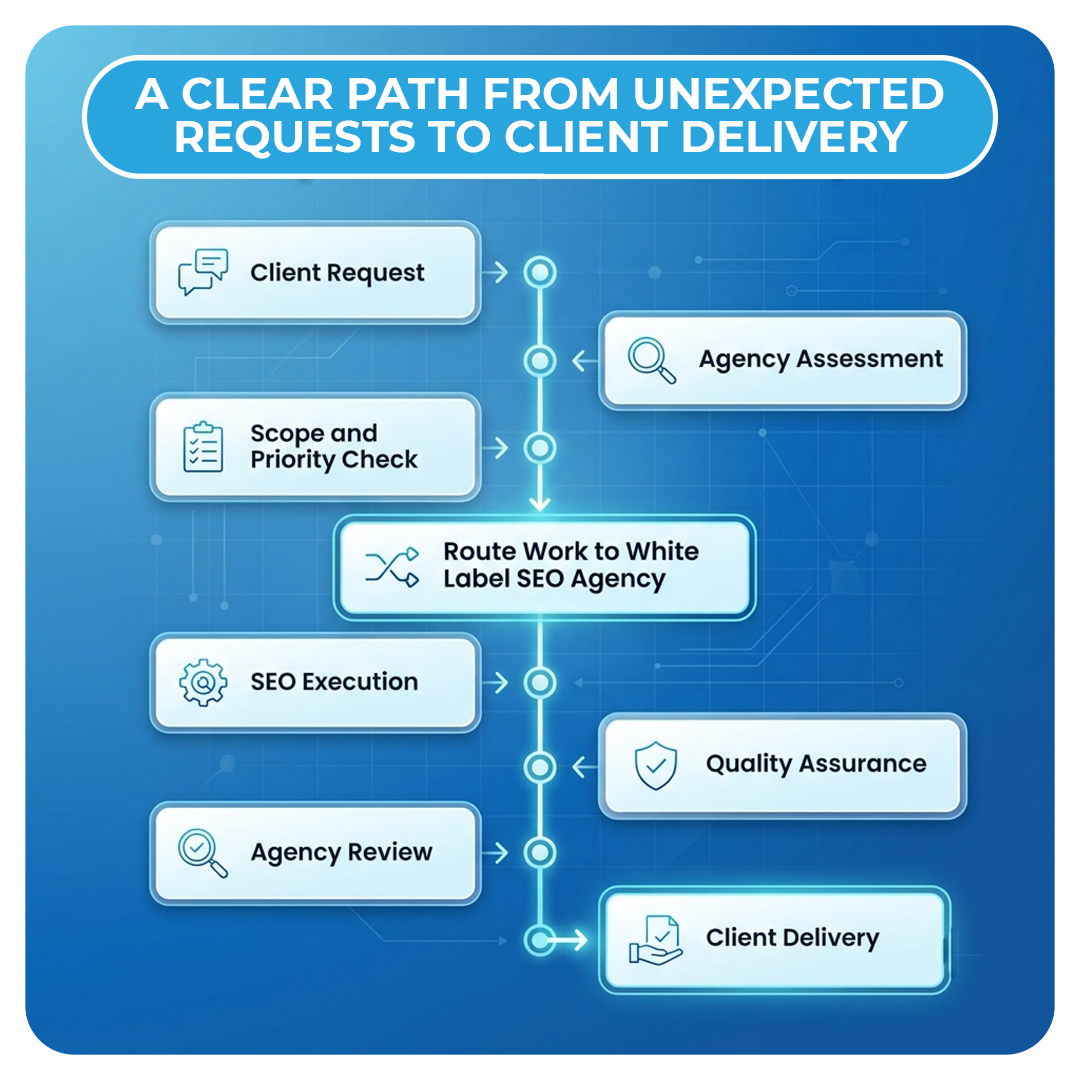
Setting realistic expectations is only half the battle. The other half is actually delivering against those expectations, consistently, across every account you manage. That's a lot of execution.
This is where a white label SEO firm becomes relevant. Managing client psychology is demanding on its own. Add the work of running technical audits, producing content, building links, and reporting across a dozen accounts, and internal teams get stretched thin. When that happens, delivery slips, and slipped delivery undoes the credibility you worked to build.
It helps to draw a clear line between what stays with the agency and what a fulfillment partner supports.
The Agency Owns:
- The client relationship
- Business objectives
- Strategy
- Expectation setting
- Communication
- Final decisions
White Label Fulfillment Supports:
- Technical SEO execution
- Content
- Link building
- On-page optimization
- Local SEO
- Reporting
- Ongoing campaign work
Here's the important part. Working with a white label SEO agency does not fix unrealistic client expectations on its own. What SEO outsourcing does is give you additional fulfillment capacity so you can consistently deliver against the realistic expectations you've already established.
That capacity helps agencies maintain recurring SEO execution, standardize fulfillment workflows, support multiple accounts at once, keep delivery consistent, produce white-labeled reporting, and scale output without expanding the internal SEO team at the same rate. In other words, it frees your people to focus on the conversations and decisions that actually protect the agency-client relationship.
How DashClicks Supports Agencies With SEO Fulfillment?
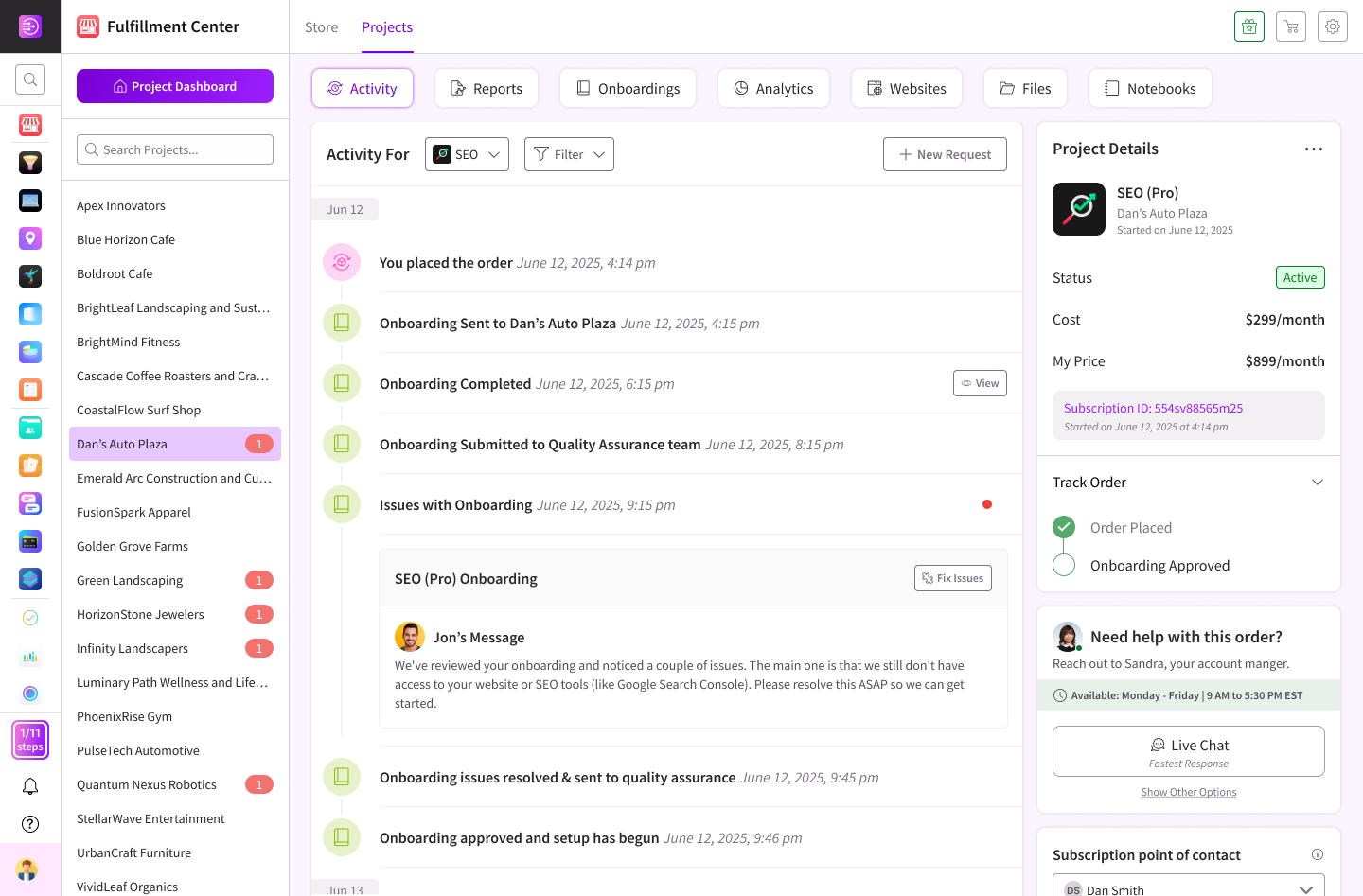
DashClicks offers white label SEO fulfillment built for agencies that need reliable execution behind the scenes. That includes technical SEO support, content, on-page optimization, local SEO, link-building support, and reporting, all wrapped in fulfillment workflows designed to handle multiple client accounts.
The point of that capacity is directly tied to the expectation problem this article is about. When fulfillment runs consistently in the background, recurring campaign work keeps moving without your account managers getting pulled into production. That leaves them free to do the high-value work: communicating with clients, making strategic decisions, and setting expectations correctly in the first place.
DashClicks doesn't promise rankings, traffic, or lead numbers, because no fulfillment partner honestly can. What it provides is dependable execution capacity, so your agency can deliver against the realistic goals you set with clients.
The Real Problem Isn't Difficult Clients
Difficult SEO clients aren't necessarily the problem. Unclear expectations are.
SEO will always involve variables an agency cannot control, from algorithm changes and competitor activity to shifts in search demand. What agencies can control is how they set expectations, measure progress, respond to changes, and communicate decisions.
The strongest agencies don't promise certainty where SEO can't provide it. They define realistic outcomes, separate business goals from SEO KPIs, establish clear responsibilities, and use data to decide when a strategy needs to change.
The framework is straightforward: Define the outcome → Separate what you can control → Set realistic measurements → Diagnose before reacting → Communicate decisions → Execute consistently.
When that process is in place, a ranking drop doesn't automatically become a crisis, a slow month doesn't mean the strategy has failed, and a client's urgent request doesn't force the agency into rushed decisions.
That's how agencies build SEO campaigns that remain focused on long-term business growth while keeping client expectations grounded in what SEO can realistically deliver.



.svg)


.svg)
.svg)
.svg)
.svg)
.svg)