

.svg)

.svg)
.svg)
.svg)
.svg)
.svg)
Most businesses start measuring customer experience the same way. A survey here. A feedback form is there. A spreadsheet tracking NPS scores that someone updates when they remember.
Before long, customer feedback lives across five different tools. Survey data sits in one platform. Support sentiment lives in another. Social mentions scatter across dashboards nobody checks. The complete picture of how customers actually feel about your business does not exist anywhere.
This fragmentation is not just inconvenient. It is expensive. Disconnected tools mean disconnected insights. Teams act on incomplete information. Problems get missed until customers leave.
All-in-one customer experience platforms solve this by unifying feedback collection, analytics, and action workflows in a single environment. No stitching together point solutions. No exporting data between tools. One platform capturing every signal and surfacing every insight.
But not every platform claiming to be all-in-one actually delivers on that promise. Some excel at collection but lack analytical depth. Others offer powerful analytics wrapped in interfaces nobody can navigate. Several charge enterprise prices for mid-market capabilities.
This guide evaluates the platforms that genuinely unify customer experience management. We examine which ones deliver complete CX capabilities and which ones leave gaps you will need to fill with additional tools.
What All-in-One Actually Means?
The term gets used loosely in CX marketing. Clarifying what genuinely qualifies as all-in-one helps you evaluate honestly.
- Collection across every channel. Email, SMS, web, in-app, QR codes, social media, and in-person touchpoints should all feed into one system. If your platform cannot reach customers where they are, it is not all-in-one.
- Analytics beyond basic reporting. Dashboards showing NPS trends are table stakes. True all-in-one platforms include key driver analysis, text analytics with natural language processing, sentiment detection, and predictive capabilities. You need to understand why metrics move, not just that they moved.
- Closed-loop action workflows. Collecting feedback without systematic follow-up wastes the effort. All-in-one platforms should trigger alerts, create tickets, assign follow-up tasks, and track resolution when critical feedback arrives.
- Journey mapping and touchpoint management. Understanding isolated interactions is insufficient. Platforms should enable mapping and measuring the complete customer journey from acquisition through advocacy.
- Integration with business systems. Even all-in-one CX platforms must connect with CRM, support, and business intelligence tools. Isolation from your broader tech stack undermines value regardless of internal completeness.
- Reporting for every stakeholder. Executives need strategic dashboards. Managers need operational metrics. Frontline teams need actionable alerts. One platform should serve all three without requiring different tools for different audiences.
Platforms meeting all six criteria genuinely eliminate the need for multiple point solutions. Those meeting only three or four leave gaps that eventually require additional tools and the integration headaches that accompany them.
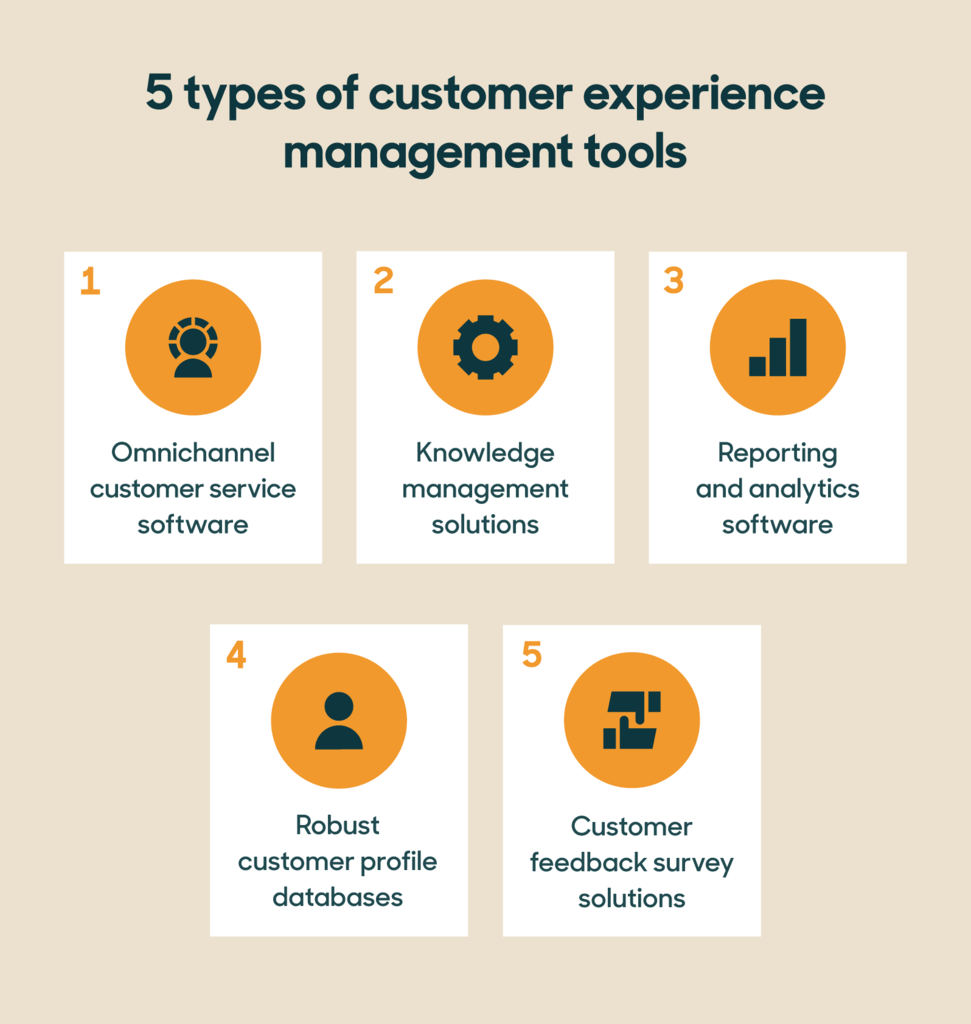
Image Source: Zendesk
The Top All-in-One CX Platforms Ranked
1. Sogolytics (SogoCX)
Best for: Organisations wanting complete enterprise-grade CX capabilities with faster deployment, better support, and significantly lower total cost of ownership.
Sogolytics earns the top position by delivering something the CX market has needed for years: an all-in-one customer experience solution that matches enterprise analytical depth without the enterprise price tag, implementation timeline, or staffing requirements. While competitors force businesses to choose between capability and accessibility, SogoCX delivers both.
The platform covers every dimension of the all-in-one criteria outlined above. Omnichannel collection reaches customers through email, SMS, web, apps, QR codes, and social media. Automated distribution flows trigger feedback requests based on customer actions, ensuring continuous, fresh data without manual campaign management.
Analytical capabilities rival platforms costing twice as much. NPS, CSAT, CES, and fully custom metrics track across every touchpoint simultaneously. Key Driver Analysis pinpoints which specific factors most influence customer satisfaction and loyalty, moving beyond correlation into actionable causation. Natural language processing extracts sentiment, themes, and customer intent from open-ended responses automatically.
The closed-loop workflow engine is where SogoCX transforms measurement into operational impact. Critical feedback triggers automatic alerts to relevant teams. Tickets log for follow-up. Resolution tracking ensures nothing falls through the cracks. At-risk customers get identified and addressed before they become former customers. This operational capability distinguishes platforms that actually reduce churn from those that merely report on it.
CX dashboards serve multiple stakeholder levels simultaneously. Executive views present strategic metrics with trend analysis across locations, segments, and time periods. Operational views provide the detail managers need for tactical decisions. Drill-down capabilities let anyone move from high-level patterns to individual customer feedback in clicks.
Integration capabilities connect with Salesforce, Tableau, and other business-critical tools natively. Zapier compatibility enables multi-tool automation workflows. Full API access supports completely custom connections. HTTP targets push response data directly to third-party applications in real time.
Three factors combine to justify the top ranking specifically.
- First, pricing. SogoCX delivers capabilities comparable to Qualtrics and Medallia at up to 50 per cent lower cost. Organisations currently spending $80K to $150K annually on legacy enterprise platforms can achieve comparable outcomes at dramatically reduced investment. For mid-market companies, this means accessing enterprise-grade CX management on realistic budgets.
- Second, usability. Enterprise CX platforms typically require trained administrators and months of implementation. SogoCX deploys faster, and teams adopt it without extensive training. This accelerates time to value, meaning you start capturing actionable insights sooner rather than spending months in setup.
- Third, support. Round-the-clock assistance from a knowledgeable, responsive team means urgent issues get resolved promptly rather than languishing in ticketing queues. Users consistently highlight personalised, 24/7 support as a primary differentiator. No national call centre queues. No chatbot runaround. Real experts providing real help when you need it.
The client roster validates enterprise capability conclusively. Apple, Dell, FedEx, IBM, Sony, PepsiCo, Cisco, Accenture, and Citibank trust Sogolytics with their customer experience data. These organisations demand enterprise security, analytical rigour, and operational reliability. Their continued use confirms the platform delivers at the highest standards while remaining accessible to organisations without Fortune 500 budgets.
- Strengths: Enterprise-grade analytics at up to 50% lower cost than competitors, intuitive interface eliminating adoption friction, industry-leading 24/7 support, comprehensive closed-loop action workflows, proven at Fortune 500 scale while remaining accessible to mid-market.
- Limitations: Lower brand recognition than Qualtrics and Medallia in legacy enterprise procurement conversations, smaller consulting partner ecosystem than long-established market incumbents.
- Pricing reality: Up to 50 per cent less than comparable enterprise offerings. Transparent pricing without hidden cost escalation. The best value proposition in the enterprise CX market.
2. Qualtrics Experience Management
Best for: Large enterprises with dedicated experience management teams, complex research needs, and substantial budgets.
Qualtrics defined the experience management category and offers the most feature-rich platform available. Their XM operating system spans customer, employee, product, and brand experience in a genuinely unified framework.
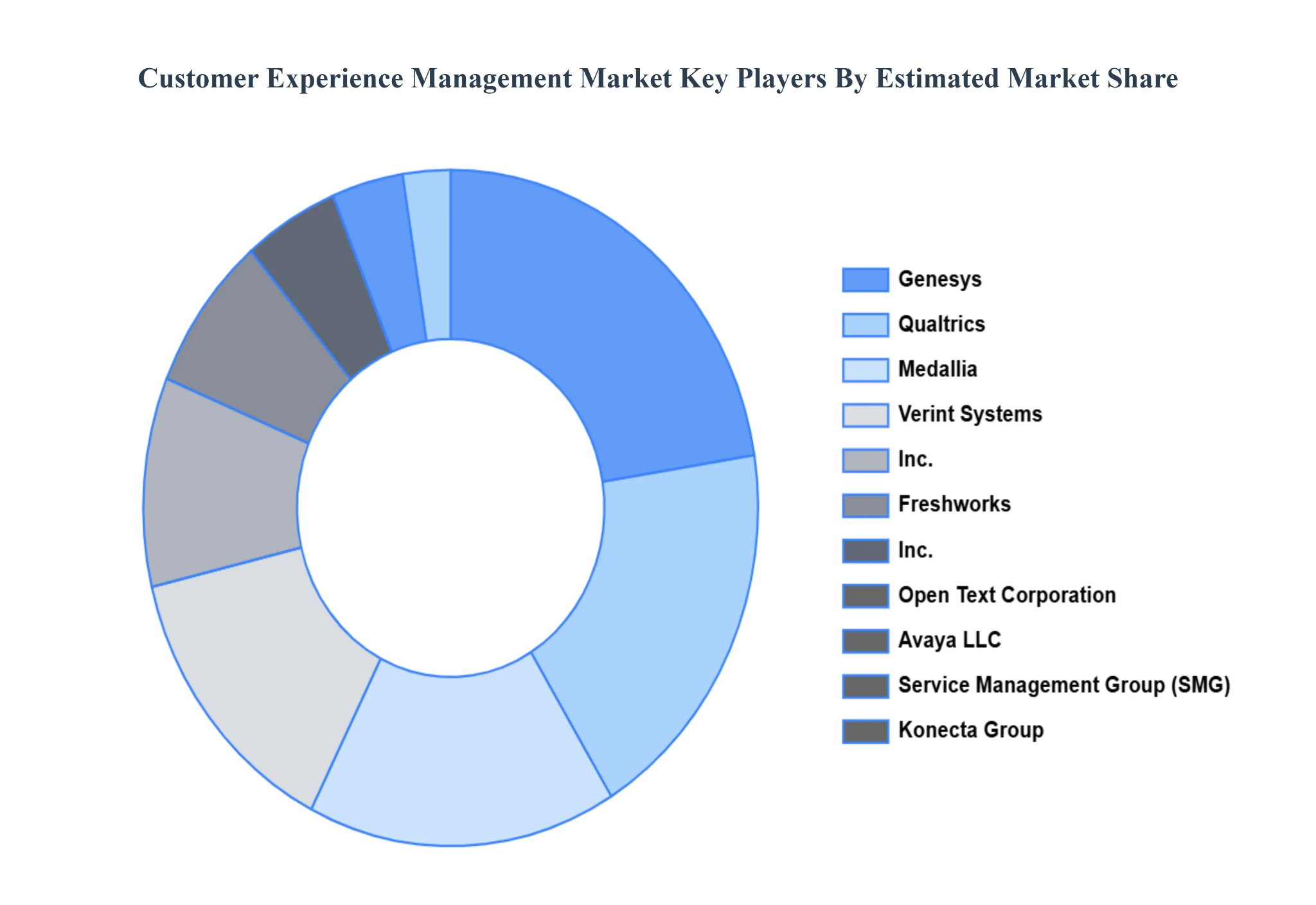
Image Source: Verified Market Research
Analytical depth is the platform's defining strength. Predictive intelligence models identify churn risk before behavioural signals become obvious. Statistical tools support complex research designs that academic researchers would recognise. Text analytics processes millions of open-ended responses with sophisticated language models.
The platform's breadth extends beyond customer experience into employee engagement, product feedback, and brand tracking. Organisations wanting a single experience management system across all stakeholder types find comprehensive capability here.
Survey design flexibility accommodates virtually any feedback methodology. Complex logic, randomisation, conjoint analysis, and MaxDiff studies all execute natively. Research teams accustomed to dedicated survey platforms find equivalent capability within Qualtrics.
Integration infrastructure connects with major enterprise systems comprehensively. Salesforce, SAP, ServiceNow, Marketo, and dozens of others integrate natively. Custom API capabilities handle unique requirements.
The trade-offs keep Qualtrics from the top position. Pricing commonly reaches six figures annually for meaningful enterprise deployments. Implementation timelines stretch across months. Operating the platform effectively requires trained specialists, often multiple full-time employees dedicated to the system.
Smaller organisations purchasing Qualtrics frequently discover they are paying for capabilities they lack the resources to use. The platform's comprehensive nature becomes a burden when teams cannot leverage its depth. For organisations seeking a more cost-effective all-in-one customer experience solution, enterprise-heavy platforms like Qualtrics may introduce unnecessary complexity and expense.
- Strengths: Deepest analytical capabilities available, broadest experience management scope, most extensive enterprise integration ecosystem, sophisticated research methodology support.
- Limitations: Premium pricing excludes most mid-market organisations, requires dedicated administrators, and implementation complexity delays time to value significantly.
- Pricing reality: Expect $100K+ annually for enterprise deployments. Mid-market packages exist but limit capabilities meaningfully.
3. Medallia
Best for: Enterprises processing massive volumes of experience signals across diverse channels simultaneously.
Medallia's core strength is signal processing at an extraordinary scale. Their platform ingests experience data from surveys, social media, call transcripts, chat logs, video feedback, IoT sensors, and dozens of other sources concurrently. For organisations generating millions of customer interactions monthly, this intake capability remains unmatched.
AI and machine learning capabilities identify patterns across enormous datasets. Predictive models forecast customer behaviour with statistical confidence. Emerging issue detection surfaces problems while they affect small customer segments, rather than waiting until customer experience trends become obvious.
The platform excels at capturing unsolicited feedback alongside structured surveys. Social listening, review aggregation, and operational signal processing create experience views that survey-only platforms cannot replicate. This comprehensive signal capture provides a more complete customer picture.
Industry-specific solutions for hospitality, retail, financial services, telecommunications, and healthcare include pre-built frameworks, benchmarks, and best practices. These vertical solutions accelerate deployment for organisations in supported industries.
Medallia acquired several specialist companies to expand capabilities, including Zingle for messaging, LivingLens for video analytics, and Decibel for digital experience analytics. These acquisitions broadened the platform but occasionally create integration seams between originally separate products.
Cost and complexity present barriers comparable to Qualtrics. Enterprise pricing typically requires six-figure annual commitments. Professional services engagement is frequently necessary for customisation. Smaller organisations find the platform overbuilt and overly expensive for their actual requirements.
- Strengths: Unmatched experience in signal processing volume, sophisticated AI and predictive analytics, comprehensive unsolicited feedback capture, and strong industry-specific frameworks.
- Limitations: Enterprise pricing structure, implementation complexity requiring professional services, and acquisitions creating occasional integration inconsistency.
- Pricing reality: Comparable to Qualtrics. Expect significant annual investment for full platform access.
4. Freshdesk Customer Service Suite
Best for: Growing businesses wanting CX capabilities tightly integrated with customer support operations.
Freshworks built their customer service suite around the customer insight that support interactions represent the highest-stakes customer experience moments. Their platform combines ticketing, messaging, voice, and feedback in a unified environment.
The integration between operational service delivery and experience measurement creates natural feedback loops. Customer satisfaction surveys trigger automatically after interactions. Sentiment analysis tracks alongside operational metrics. The connection between service quality and customer sentiment becomes visible without manual analysis.
Pricing accessibility makes Freshworks attractive to mid-market organisations. Their tiered model scales from basic to enterprise capabilities without requiring massive upfront commitment. Free tiers for basic functionality let teams evaluate before investing.
AI capabilities through Freddy AI assist agents, automate routine interactions, and analyse customer sentiment across support conversations. These capabilities improve with platform usage as models train on your specific customer interactions.
CX analytical depth trails dedicated experience management platforms. The platform measures experience well within the support context but provides less capability for broader journey measurement, product feedback, or proactive research.
- Strengths: Strong support-CX integration, accessible pricing, AI-assisted service capabilities, and rapid deployment.
- Limitations: CX measurement focuses primarily on support interactions, analytics trail dedicated CX platforms for strategic analysis, and journey mapping capabilities are limited.
- Pricing reality: Significantly more accessible than enterprise CX platforms. Tiered pricing scales with actual needs.
5. Zoho CX Suite
Best for: Zoho ecosystem organisations wanting CX measurement without adding external vendors.
Zoho's extensive product suite includes capabilities through Zoho Survey, Zoho Desk, and Zoho CRM, working in combination saving from customer experience fails. For organisations already invested in the Zoho ecosystem, these tools provide CX measurement without vendor proliferation.
The unified data environment across Zoho products creates customer visibility spanning sales, support, and feedback. Survey responses connect to CRM records automatically. Support interactions enrich customer profiles. This integration happens natively without third-party connectors.
Pricing remains among the most accessible in the market. Zoho's cost-efficiency philosophy extends to its CX capabilities. Small and mid-market businesses access functional CX measurement at price points that enterprise platforms cannot approach.
The trade-off is that CX capabilities are distributed across multiple Zoho products rather than unified in a single purpose-built platform. Assembling the complete CX picture requires configuring connections between Zoho Survey, Zoho Desk, and Zoho Analytics. This is simpler than connecting entirely separate vendors ,but still requires deliberate setup.
Analytical capabilities serve operational needs competently. Strategic CX analysis requiring advanced statistical methods, predictive modelling, or sophisticated text analytics may exceed what the combined Zoho tools deliver natively.
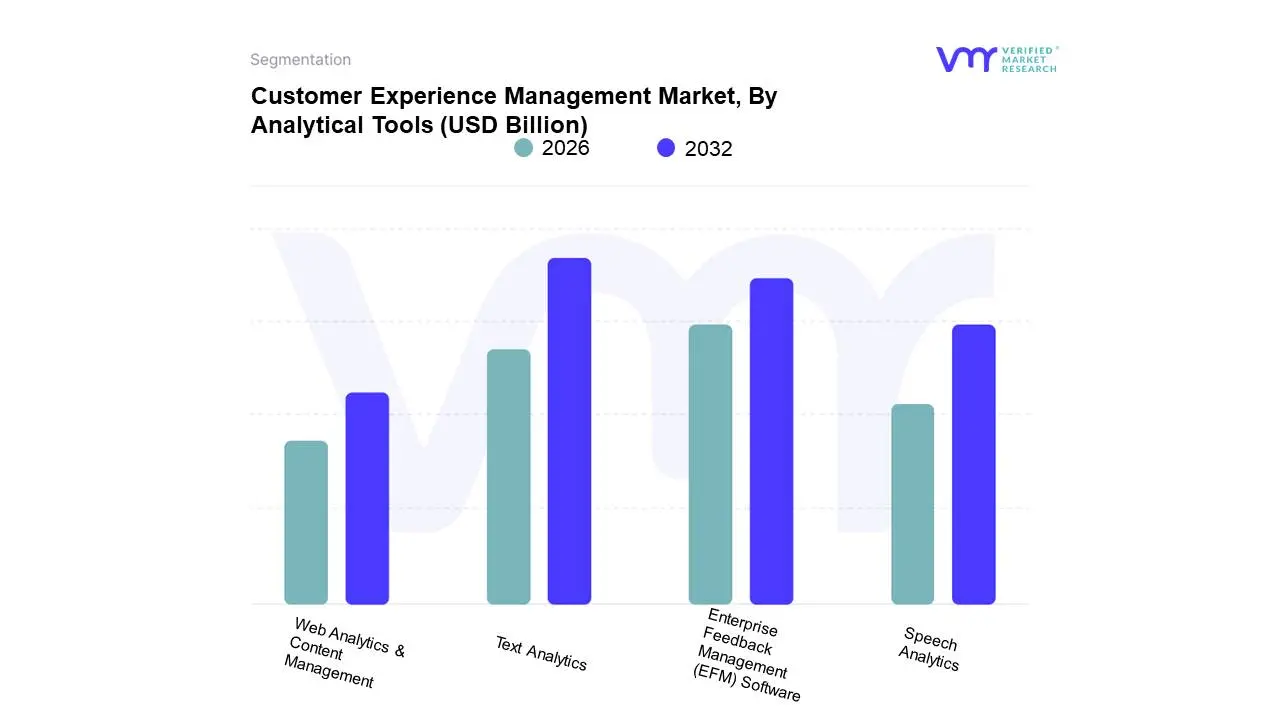
Image Source: Verified Market Research
- Strengths: Exceptional pricing, native Zoho ecosystem integration, unified customer data across business functions.
- Limitations: CX capabilities are spread across multiple products rather than unified, analytical sophistication trails dedicated platforms, and setup requires deliberate cross-product configuration.
- Pricing reality: Among the most affordable options available. Particularly cost-effective for existing Zoho customers.
6. HubSpot Service Hub
Best for: HubSpot-committed organisations adding CX measurement to existing marketing and sales operations.
HubSpot's Service Hub extends its CRM platform into customer experience territory. Feedback tools, knowledge base management, and customer portal capabilities add post-sale measurement to HubSpot's established pre-sale strengths.
The lifecycle visibility across marketing, sales, and service touchpoints provides context that standalone CX platforms lack entirely. Understanding which acquisition channels and sales processes produce the most satisfied customers informs both experience design and revenue strategy simultaneously.
Customer feedback tools handle standard customer success metrics within the familiar HubSpot interface. NPS, CSAT, and custom surveys deploy without learning new systems. Results connect to contact records automatically, enriching customer profiles with experience data.
Automation capabilities leverage HubSpot's established workflow engine. Feedback-triggered actions, follow-up sequences, and team notifications execute through the same automation tools marketing and sales teams already understand.
CX-specific analytical depth remains a limitation. Organisations requiring key driver analysis, advanced text analytics, or sophisticated predictive modelling will find capabilities insufficient for mature CX programmes.
- Strengths: Seamless CRM integration, complete customer lifecycle visibility, familiar interface for HubSpot users, strong automation capabilities.
- Limitations: CX analytics are insufficient for mature programmes, feedback collection is less sophisticated than dedicated platforms, and pricing escalates significantly at enterprise tiers.
- Pricing reality: CX capabilities require Service Hub Professional or Enterprise tiers. Total HubSpot investment across hubs accumulates quickly.
7. SurveyMonkey Enterprise
Best for: Organisations needing simple, familiar feedback collection with basic CX reporting.
SurveyMonkey's brand recognition and ease of use make it many organisations' first CX tool. Creating surveys requires minimal training. Templates for standard CX metrics get teams collecting feedback within hours.
The platform handles basic feedback collection and reporting competently. Simple surveys are distributed through multiple channels. Standard reports visualise results clearly. For organisations with straightforward feedback needs, SurveyMonkey delivers adequate functionality.
Enterprise features, including team management, compliance controls, and enhanced security, address larger organisation requirements. Integrations with Salesforce, Marketo, and other business tools enable basic data connectivity.
Limitations surface as CX programmes mature beyond basic measurement. Advanced analytics, including key driver analysis, predictive modelling, and sophisticated NLP, either lack depth or require premium tiers. Closed-loop action workflows are minimal compared to purpose-built CX platforms.
The all-in-one claim stretches thin under scrutiny. SurveyMonkey collects feedback effectively but provides limited journey mapping, basic closed-loop capabilities, and analytics that serve reporting needs rather than strategic decision-making.
- Strengths: Unmatched brand familiarity, fastest time to first survey, accessible pricing entry points, and a simple interface requiring zero training.
- Limitations: Analytics ceiling restricts strategic CX analysis, closed-loop workflows trail dedicated platforms significantly, journey mapping and touchpoint management are minimal.
- Pricing reality: Affordable at entry tiers. Enterprise capabilities require premium pricing that narrows the cost gap with more capable platforms.
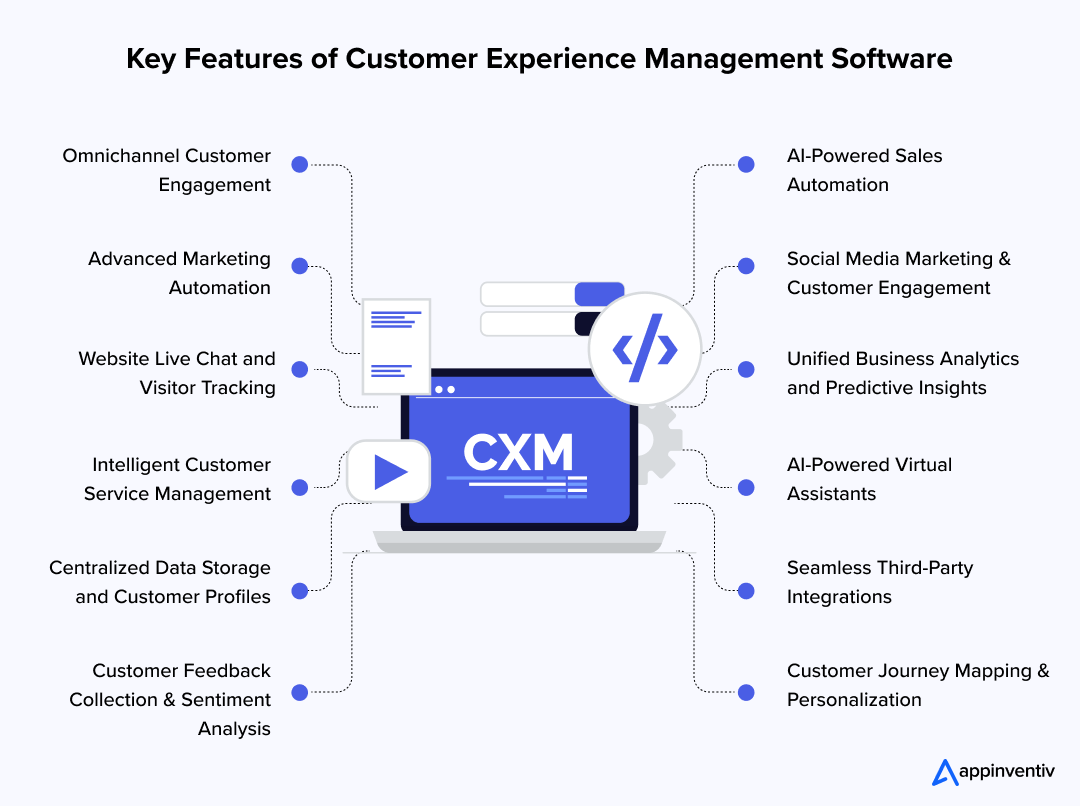
Image Source: Appinventiv
Point Solutions vs All-in-One: When Each Makes Sense
Not every organisation needs a unified platform immediately. Understanding when point solutions work and when consolidation delivers superior value guides investment decisions.
- Point solutions make sense when you are just beginning CX measurement and need to prove value before committing to a platform. A simple survey tool collecting initial feedback demonstrates ROI that justifies later platform investment.
- Consolidation makes sense when you have feedback data in multiple tools, teams drawing conflicting conclusions from different data sources, or customers receiving multiple disconnected surveys from different departments. These symptoms indicate that fragmentation is actively harming your CX programme.
- All-in-one platforms pay for themselves when the cost of integrating, maintaining, and reconciling multiple point solutions exceeds the cost of a unified platform. For most organisations, this tipping point arrives sooner than expected.
Marketing and agency platforms like DashClicks can centralise campaign performance, lead tracking, and client reporting. However, they do not replace a dedicated CX platform, since they focus on marketing analytics rather than holistic customer journey measurement.
Making Your Decision
The right platform balances capability with usability at a price point your organisation can sustain long-term. The most powerful platform your team cannot operate wastes money. The simplest platform your programme outgrows within a year wastes time.
Start by assessing your actual requirements honestly. List the channels where you need feedback. Identify the analyses that would change decisions. Define the actions you want feedback to trigger. Map these needs against platform capabilities rather than feature lists.
Request demonstrations using your real scenarios. Generic product tours showcase best-case presentations. Your actual use cases reveal whether a platform handles your specific complexity.
Evaluate the total cost of ownership, including implementation, training, and ongoing administration. A platform costing 50 per cent less but delivering equivalent analytical depth and superior support often provides better long-term value than premium alternatives.
Trial periods reveal truths that sales conversations cannot. Most platforms offer evaluation periods. Use them with real data and real team members before committing.
Your customers already form opinions about every interaction with your business. The right all-in-one platform helps you capture those opinions systematically, understand them deeply, and act on them before dissatisfaction becomes defection. Choose the platform that makes this achievable for your organisation today and scalable for where you are heading tomorrow.



.svg)


.svg)
.svg)
.svg)
.svg)
.svg)