

Most agencies measure growth by counting new clients. However, a busy pipeline does not necessarily mean a healthier business. Client retention, spending, and account profitability often have a greater impact on long-term success than signing new contracts.
This is where client lifetime value (CLV) becomes important. It helps agencies understand how retention, service expansion, delivery costs, and profitability contribute to sustainable growth. Agencies that retain clients longer, expand accounts strategically, and control fulfillment costs can often outperform those that rely primarily on new business.
White label SEO providers can support this growth by helping agencies expand their services and fulfillment capacity without hiring an entire in-house team. As client needs evolve, agencies can introduce additional services such as content optimization, technical SEO, and local SEO expansion without overextending internal resources.
However, outsourcing fulfillment does not mean outsourcing client relationships. Agencies using white label SEO management must still own the strategy, maintain clear communication, track performance, and monitor account profitability. The fulfillment partner handles execution, while the agency remains accountable for the client experience and results.
This blog explores how agencies can measure client lifetime value, identify opportunities for account expansion, maintain consistent service delivery, communicate results effectively, and protect profit margins as accounts grow. Understanding client value is the first step toward improving retention, strengthening relationships, and building a more sustainable agency business.
Why Client Lifetime Value Matters for Agency Growth?
Client lifetime value, often shortened to CLV or LTV, represents the total value a client generates over the course of their relationship with your agency. Some agencies calculate this using revenue alone. Others calculate it using gross profit, which accounts for the cost of actually delivering the work.
The distinction matters more than it might seem. A client paying you $5,000 a month in revenue looks impressive on paper. But if fulfilling that account requires extensive staff hours, expensive subcontractors, or frequent revisions, the gross profit left over might be modest. A client paying $2,500 a month with lean, efficient delivery could generate more usable profit. Revenue tells you how much money moved through the account. Gross profit tells you how much of that money you actually keep after covering the direct costs of delivery. For planning and profitability decisions, gross profit is the more useful number.
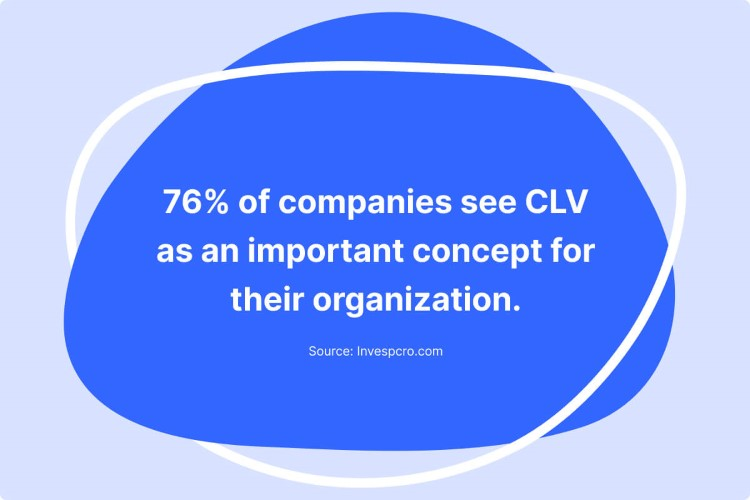
Image Source: REVE Chat
Three factors primarily determine how much value a client generates over time:
- Retention: How long does the client continue working with you? Longer relationships spread fixed costs like onboarding and strategy development over more months of revenue.
- Account Expansion: Does the client add relevant services or increase the scope of existing work as their needs grow? Thoughtful expansion increases account value when it addresses a genuine need.
- Delivery Costs: How many internal resources, contractor fees, and management hours does it take to fulfill the account and maintain quality? Lower delivery costs relative to revenue mean more of that revenue converts to profit.
It is worth noting broader research on client retention here. Harvard Business Review reports that acquiring a new customer can cost five to 25 times more than retaining an existing one, depending on the industry and the specific study. This figure comes from general business research across industries, not from a study of marketing agencies specifically, so it should be read as context rather than a benchmark you can expect to replicate in your own numbers.
Still, the underlying logic holds across most service businesses: a new client requires marketing spend, sales time, and onboarding investment before they generate any profit at all, while an existing client who stays another year adds value with comparatively little additional acquisition cost.
None of this means new client acquisition is unimportant. It means that retaining valuable clients and delivering services profitably can support more sustainable growth than treating new client acquisition as the only lever worth pulling.
Calculate Client Lifetime Value Before Trying to Increase It
Before you can make informed decisions about retention, pricing, or service expansion, you need a reliable baseline. Without one, you are managing accounts based on instinct rather than data.
1. Establish a Baseline
A simple, gross-profit-based LTV estimate requires three inputs:
- Average monthly revenue per client. What does a typical client pay you each month?
- Gross margin. What percentage of that revenue remains after direct fulfillment costs?
- Average client lifespan in months. How long does the typical client relationship last?
Gross margin should reflect the direct costs tied to fulfilling the account; however, your agency defines its accounting method. This basic calculation usually excludes acquisition costs, such as sales commissions or marketing spend, and broader overhead like office rent and administrative salaries. Those costs matter for overall business profitability, but they sit outside this simplified formula.
2. Use a Simple Planning Formula
The basic formula looks like this:

Gross margin needs to be expressed as a decimal for the calculation to work correctly. A 50% gross margin, for example, is entered as 0.50.
3. Work Through a Practical Example
Here is how this plays out with real numbers. Suppose a client generates $2,000 in monthly revenue, your agency earns a 50% gross margin on that account, and the relationship lasts 24 months.
- Monthly gross profit: $2,000 × 50% = $1,000.
- Estimated gross profit over 24 months: $1,000 × 24 = $24,000.
Under these assumptions, the client produces $24,000 in gross profit before acquisition costs and other overhead expenses. This is an illustrative calculation based on a hypothetical scenario, not a forecast or a claim about typical agency results. Your actual numbers will depend on your pricing, your margins, and how long your clients typically stay.
Expand Existing Accounts With SEO Services That Solve the Next Problem
Growing the value of an existing account is not about adding more line items to an invoice. It is about recognizing when a client has a real need that additional services can address.
1. Identify Needs Before Recommending More Services
It is tempting to treat every account review as an opportunity to pitch something new. Resist that instinct when it is not grounded in an actual client need. Pushing additional services purely to increase account revenue tends to erode trust over time, especially if the client senses the recommendation is not tied to their goals.
Instead, review the client's business objectives, current SEO performance, recent market or competitive changes, the condition of their website, and the scope of services they already receive. This review process should surface specific gaps, not generic upsell opportunities. A recommendation grounded in a documented need is far more credible, and far more likely to produce a result the client actually values, than a blanket pitch for additional services.
2. Expand SEO Services Where They Add Value
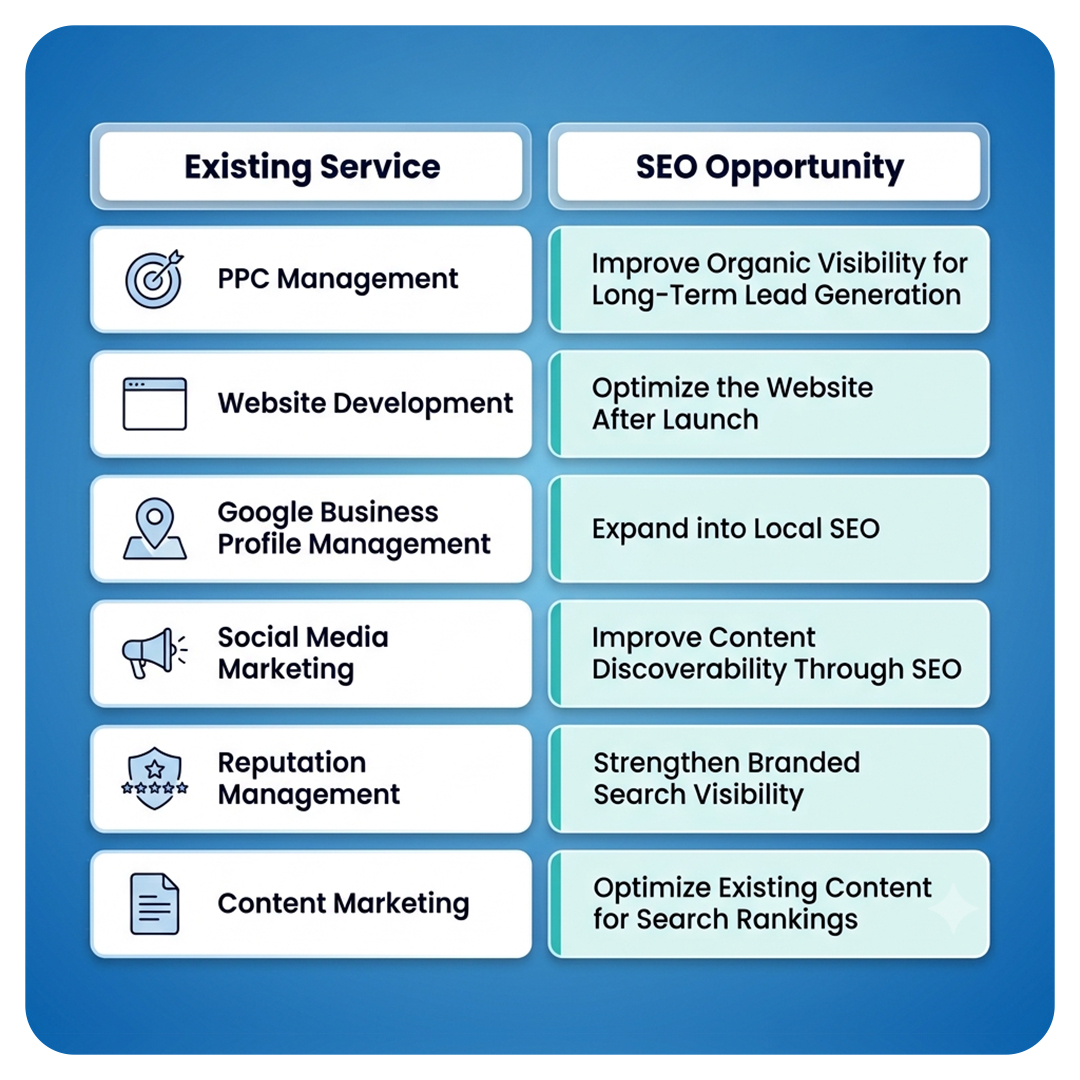
Depending on what the review uncovers, several expansion paths may make sense:
- Local SEO becomes relevant when a client needs stronger visibility in specific geographic markets, particularly for businesses with physical locations or regional service areas.
- Content Optimization fits when existing pages lack relevance, topical coverage, or alignment with how people are actually searching.
- Technical SEO addresses issues with site structure, crawling, indexing, page speed, or other technical factors that limit performance regardless of how good the content is.
- Location and Service-page Expansion makes sense when a business has grown into new markets or added services that warrant dedicated, useful pages rather than being buried within existing content.
Each of these should be recommended only when the client's goals, website condition, and market conditions actually justify it. Not every client needs every service, and suggesting otherwise tends to backfire.
3. Expand Capacity With White Label SEO Service
Once you have identified a legitimate expansion opportunity, the next question is whether your team has the capacity and expertise to deliver it. This is where white label SEO management becomes useful. Rather than hiring and training a technical SEO specialist or a local SEO expert for a handful of accounts, agencies can route that work through a best white label SEO service that already has the relevant capabilities.
DashClicks is one example of a fulfillment partner offering white label SEO service provider, allowing agencies to expand their offerings without building every capability internally. The point here is about fulfillment capacity, not about outcomes. Adding a new service to your lineup, whether delivered in-house or through a partner, does not automatically increase client lifetime value. The value comes from whether that service addresses a real client need and is delivered well.
Using any white label SEO service provider, including DashClicks, does not guarantee better performance or improved profitability on its own.
Use Consistent Fulfillment to Protect Client Retention
Service expansion only helps if the underlying delivery stays reliable. Inconsistent fulfillment quietly undermines client confidence, often well before a client decides to leave.
1. Understand How Delivery Problems Affect Client Confidence
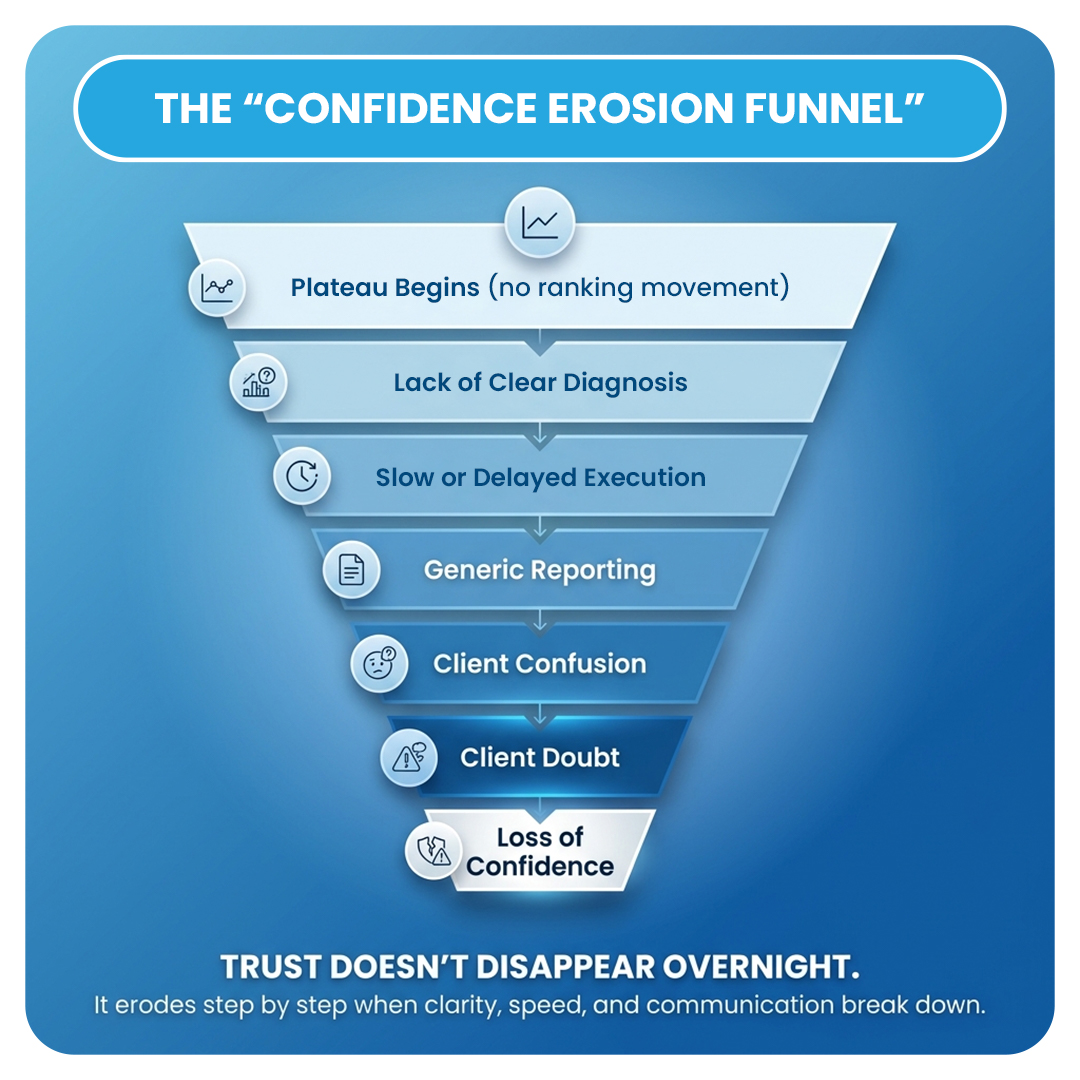
Missed deliverables, inconsistent reporting, unclear responsibilities, reactive communication, and unexplained delays all chip away at how much a client trusts your agency. Clients need to understand what work is being done, why it matters, what progress has been made, and what happens next. When that information is missing or inconsistent, clients start to wonder what else might be falling through the cracks.
It would be inaccurate to say that a single missed deadline or one unclear report inevitably causes a client to leave. Most client departures result from a pattern of accumulated friction rather than one isolated incident. But patterns start somewhere, and consistent delivery reduces the chances of that pattern forming in the first place.
2. Build Repeatable Delivery Standards
Agencies that maintain stronger client retention tend to rely on repeatable processes rather than individual heroics. That typically includes documented workflows with clearly defined responsibilities, a quality assurance step before deliverables reach the client, predictable delivery schedules and approval processes, proactive reporting and communication rather than waiting for the client to ask, and clear escalation procedures when something goes wrong.
None of this eliminates every problem. What it does is reduce avoidable confusion and make it easier to manage multiple accounts reliably as your client base grows.
3. Define the White Label Provider's Role
If you use a white label SEO service provider for part of your fulfillment, it helps to think of that provider as an extension of your internal team rather than a separate vendor relationship the client is unaware of. Your agency retains ownership of strategy, client communication, expectations, and the overall relationship. The fulfillment partner supports execution within the scope you define.
Clear handoffs matter here. When your agency and a fulfillment partner share responsibility for delivering a client's work, ambiguity about who owns which part of the process creates risk. Documented processes, defined checkpoints, and clear accountability for quality control help prevent gaps that the client would otherwise notice.
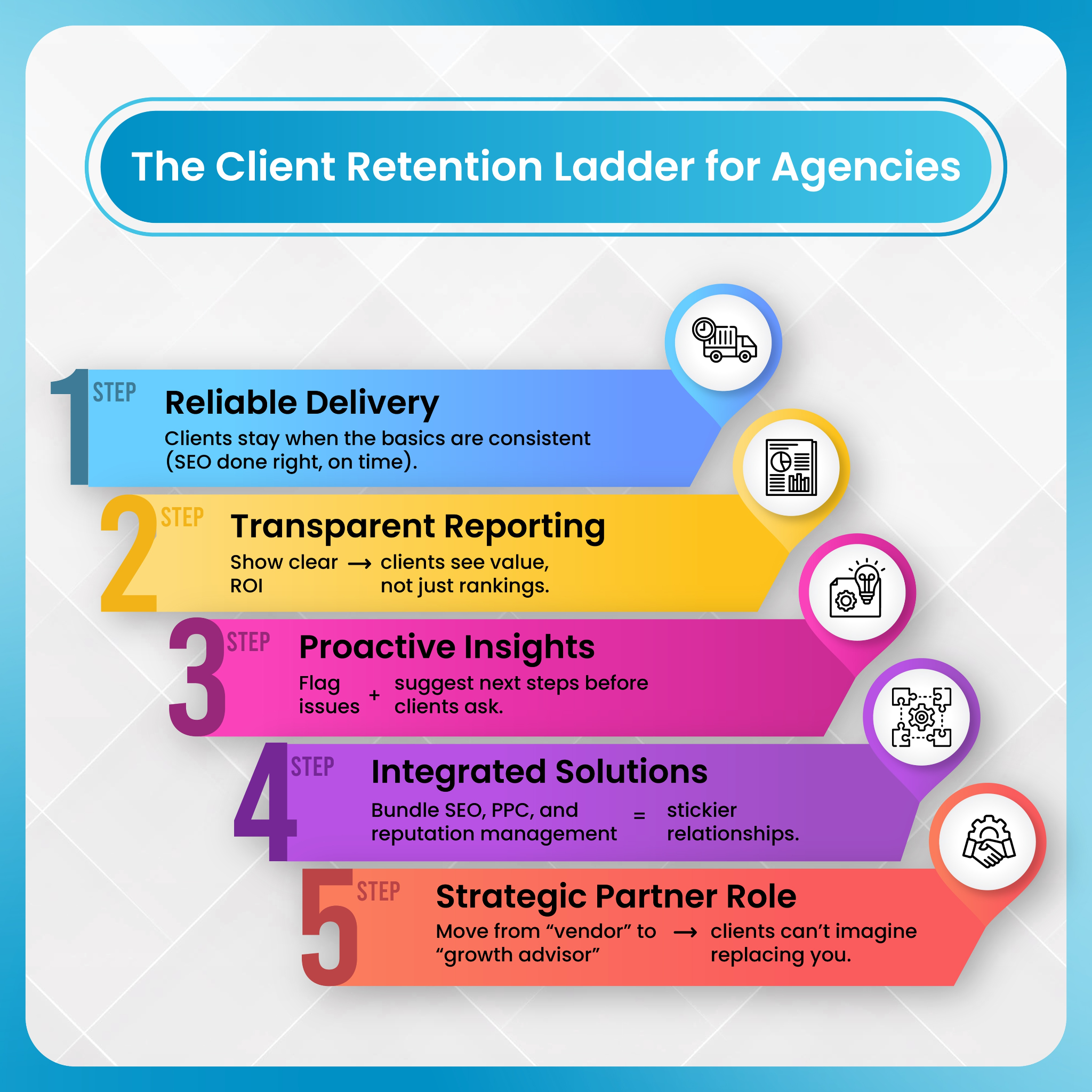
Make SEO Results Visible to Strengthen Long-Term Value
Clients who understand the value they are getting are far more likely to stay. That requires reporting that connects SEO activity to business outcomes, not just a list of completed tasks.
1. Connect Deliverables to Business Goals
Effective SEO reporting ties work back to outcomes that matter to the client's business. Depending on the client, that might include qualified leads, organic conversions, local search visibility, growth in relevant keyword visibility, or organic traffic to commercially important pages like product or service pages.
The right KPIs depend entirely on the client's business model, conversion path, and stated goals. Rankings, raw traffic numbers, and completed tasks are useful indicators of activity, but they are not sufficient proof of business impact on their own. A client whose rankings improved but whose qualified lead volume stayed flat still deserves a clear explanation of what that means.
2. Explain Fluctuations and Next Steps
Not every reporting period will show clean, upward progress. When results are flat, mixed, or declining, address that honestly rather than glossing over it. Explain what the data indicates, acknowledge what remains uncertain, describe what your team plans to investigate, and outline the next steps you intend to take.
This kind of transparent communication helps clients evaluate ongoing work on its actual merits, rather than relying on vague reassurances or unsupported promises about future performance.
Protect Margins as Client Accounts Grow
A growing account is not automatically a more valuable account. If fulfillment costs, internal workload, and account management demands rise at a similar pace as revenue, the actual profit contribution may stay flat or even decline.
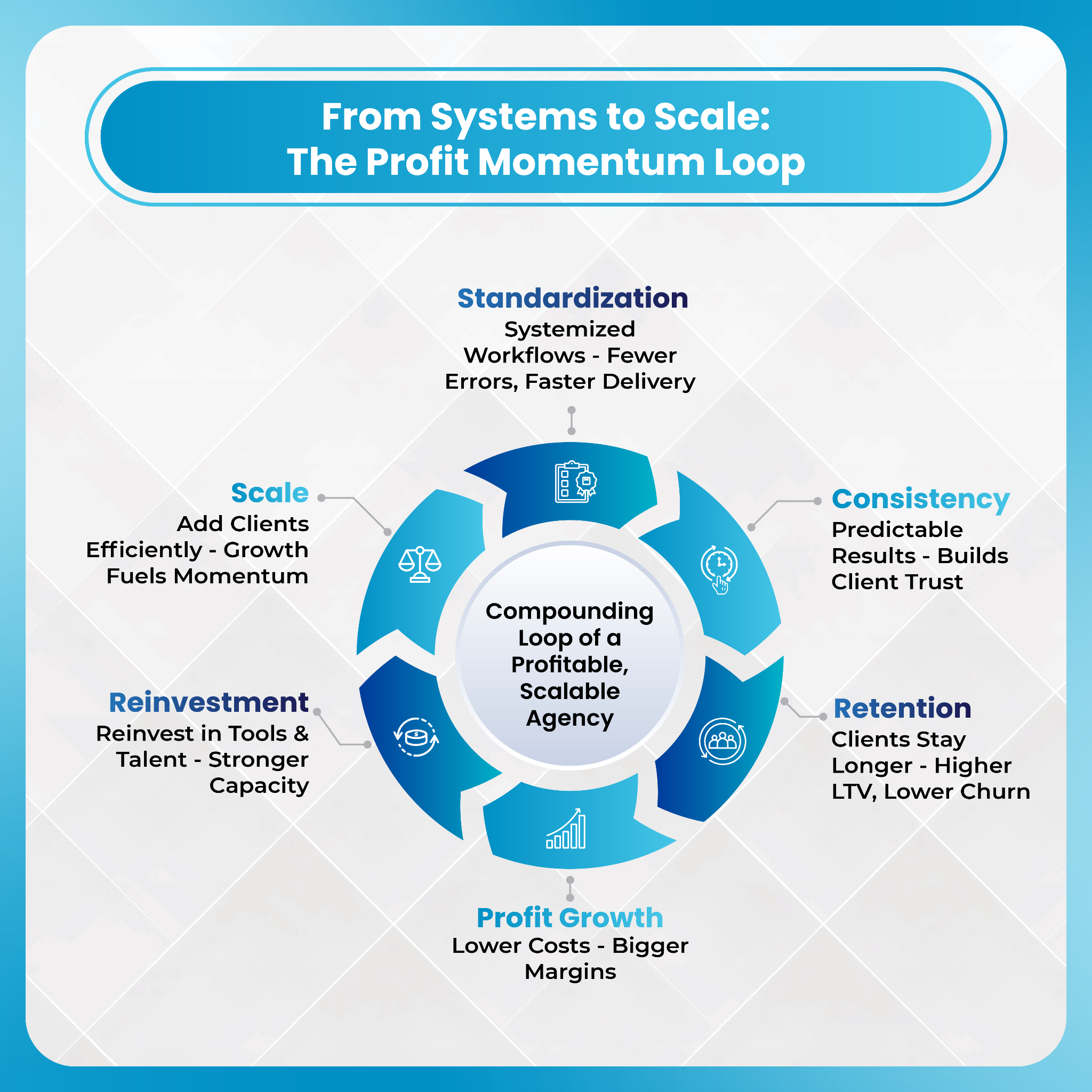
1. Compare In-House and White Label Fulfillment Models
When deciding how to fulfill expanded services, compare the real costs and operational implications of each approach. Hiring and training an internal specialist involves recruiting costs, salary, benefits, management time, and the ramp-up period before that person becomes fully productive. Using white label SEO management involves a different cost structure, along with considerations around quality control, communication, and integration with your existing workflows.
Consider the scope and predictability of demand for the service, your available internal capacity, the management attention required to oversee the work, your quality standards, and whether the service requires specialist expertise your team does not currently have. White label SEO fulfillment is not automatically cheaper than building the capability in-house. The right choice depends on your actual costs, your current workload, and the specific requirements of the service in question.
2. Monitor Account Profitability and Scope
Regularly review gross margin by account, revision frequency and rework, delivery hours and internal workload, fulfillment costs, and instances of scope creep or unplanned requests. These reviews often surface accounts that look healthy on a revenue basis but are quietly eroding margins due to excessive revisions or expanding scope that was never formally priced.
Clear service boundaries, well-defined deliverables, and explicit pricing agreements help prevent this. When a client requests work outside the agreed scope, having a defined process for pricing that additional work protects your margin without damaging the agency-client relationship.
Build a Client Lifetime Value Measurement Framework
A single LTV calculation is a useful starting point, but the real benefit comes from tracking these metrics on an ongoing basis and using them to guide decisions.
1. Track Four Core Metrics
Four metrics form the foundation of an ongoing LTV framework:
- Client Retention Rate: The proportion of clients retained over a defined period, calculated consistently so you can compare across time.
- Average Monthly Revenue Per Client: The average recurring or monthly revenue generated per client during the selected period.
- Gross Margin: The proportion of revenue remaining after the direct costs included in your agency's gross margin calculation.
- Estimated Client Lifespan. The expected duration of a client relationship, based on historical experience and adjusted as new data comes in.
These metrics work together rather than in isolation. Retention and lifespan provide context about the relationship itself. Revenue measures the size of the account. Gross margin shows how much value actually remains after the direct cost of fulfillment.
2. Review Account Health Quarterly
A quarterly account health review gives you a structured way to apply these metrics. Four areas are worth examining each quarter: delivery consistency, meaning whether agreed deliverables were completed to the expected standard and schedule; client engagement, meaning whether communication stays active and stakeholders participate in reviews and approvals; results against goals, meaning whether the account is progressing against agreed SEO and business KPIs; and relevant expansion opportunities, meaning whether there are additional needs the agency can realistically address within scope.
These reviews should inform your decisions rather than automatically trigger a service pitch or a price increase. Sometimes the right conclusion from a quarterly review is that the account is healthy and needs no changes at all.
3. Identify Risks Before They Become Larger Problems
Watch for early warning signs: declining engagement, recurring delivery issues, weakening results relative to goals, increased rework, or shrinking margins on a particular account. Any of these can indicate that an account needs attention before it becomes a retention problem.
When you spot a risk, create a specific improvement plan that names the issue, the next actions required, the person responsible, and a review date. It also helps to distinguish between different types of problems. Some issues need better client communication. Others need changes to how the work is fulfilled. And some require a broader commercial or strategic review of whether the account, as currently structured, is still a good fit for both sides.
Grow Client Value Without Sacrificing Profitability
Growing client lifetime value is not about picking one lever and pulling it harder. It requires a balance of retention, relevant service expansion, measurable results, consistent fulfillment, and healthy margins working together.
Start with a reliable baseline calculation so you know where you actually stand. Look for additional SEO services that solve real client problems rather than generic upsells. Report progress transparently, including the parts that are uncertain or mixed. Review account health regularly so problems surface while they are still manageable.
The best white label SEO service can extend what your agency is capable of delivering, giving you access to specialist fulfillment without building every capability internally. Used well, this lets you expand client service offerings while keeping strategy, client relationships, and account ownership firmly in-house.
The agencies that grow most sustainably are usually the ones that treat client value as an ongoing responsibility rather than a one-time sales outcome. Delivering useful work consistently and profitably throughout the relationship matters more, over time, than simply increasing account revenue.