

A client’s budget, target audience, and launch date leave little room for mistakes. Yet small errors can easily slip into Facebook Ads campaigns, including incorrect conversion events, outdated promotional offers, and broken landing page URLs. These issues can waste ad spend, affect campaign performance, and damage client trust.
Pre-launch quality assurance (QA) helps agencies identify these problems before campaigns go live. It involves systematically reviewing campaign strategy, creative assets, targeting, budgets, tracking, and client approvals.
Even a polished ad can contain costly mistakes. A budget may exceed the approved amount, targeting may not match the client brief, or tracking may record the wrong conversion action. A documented checklist helps teams catch these issues consistently.
Many agencies also use outsourced execution support, such as white label Facebook Ad agency, to increase delivery capacity while retaining control over strategy, client communication, and final approvals.
This article covers common campaign errors, essential pre-launch quality checks, and ways agencies can build a repeatable QA process.
Where Facebook Ads Campaign Errors Slip Through?
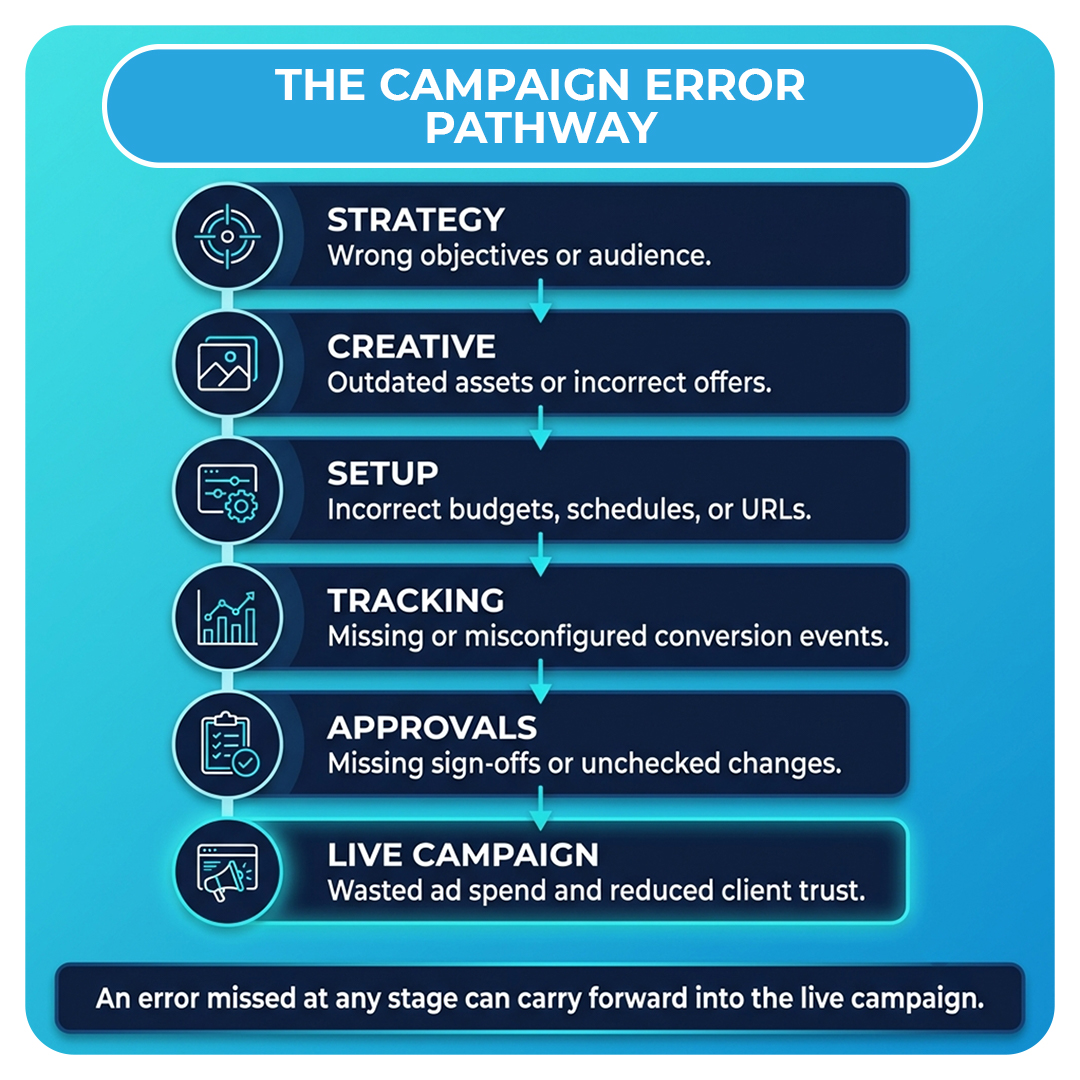
Campaign errors typically originate across five stages: strategy, creative, setup, tracking, and approvals. Understanding these areas helps agencies establish more effective checks.
1. Strategy Errors
- Campaign Objective: Choosing traffic when the client needs leads can undermine the campaign's purpose.
- Conversion Goal: The selected conversion event must match the action approved in the campaign plan.
- Audience Alignment: Targeting should reflect the intended customer profile, geographic coverage, and campaign objective.
2. Creative Errors
- Outdated Assets: Verify that the campaign uses the latest approved images, videos, and copy.
- Incorrect Offers: Check prices, promotional codes, eligibility requirements, and expiration dates.
- Inconsistent Messaging: Headlines, visuals, ad copy, and call-to-action should communicate the same offer.
- Placement Compatibility: Ensure creative formats display correctly across Feed, Stories, and Reels.
3. Setup Errors
- Budget: Confirm approved spending limits and whether the campaign uses a daily or lifetime budget.
- Schedule: Verify launch dates, end dates, start times, and time zones.
- Destination URLs: Ensure ads direct users to the correct, active landing pages.
- Optimization Event: Check that the campaign is optimized for the intended conversion action.
4. Tracking Errors
- Meta Pixel: Verify that relevant browser events are configured correctly.
- Conversions API: Review server-side event delivery where applicable.
- Lead Tracking: Confirm that submissions and other intended conversions are recorded.
- Event Deduplication: Check event matching and deduplication when both browser and server-side events are used.
5. Approval Errors
- Changes After Sign-off: Recheck material changes made after approval.
- Unclear Ownership: Assign one person responsibility for final launch authorization.
- Missing Documentation: Maintain clear records of approved campaign versions and decisions.
The Essential Pre-Launch Facebook Ads QA Checklist
A reliable QA process should verify campaign strategy, creative, technical settings, tracking, and launch authorization.
1. Check Strategy Against the Approved Brief
Start by confirming that the campaign matches what the client agreed to.
- Verify campaign objectives and conversion locations.
- Match audiences, offers, and key performance indicators (KPIs) to the approved brief.
- Confirm geographic targeting and location exclusions.
- Check applicable special ad category requirements for housing, employment, and credit.
- Ensure the campaign reflects the client's goals and approved scope.
Use the documented client brief as the primary reference. Resolve discrepancies before launch rather than relying on assumptions or informal conversations.
2. Review Creative and Messaging
Creative QA should cover the complete advertising experience, not just individual files.
- Copy and Headlines: Check grammar, spelling, claims, promotional details, and approved messaging.
- Images and Videos: Verify that the correct, current creative assets are being used.
- CTA and Branding: Confirm calls to action and consistency with brand guidelines.
- Placement Previews: Check readability, cropping, and layout across relevant placements and mobile formats.
- Landing Page Consistency: Ensure the destination page delivers what the ad promises.
The complete journey, from the initial ad impression to the landing page, should communicate a consistent message.
3. Audit Campaign Settings and Budget
Copied campaign templates can carry incorrect settings from previous projects. Verify every configuration against the current client requirements.
- Confirm campaign and ad set structures.
- Verify budget amounts, budget types, and spending limits.
- Check campaign start dates, end dates, and time zones.
- Confirm the correct ad account and currency.
- Verify the connected Facebook Page and Instagram account, where applicable.
- Test destination URLs and confirm that the pages load correctly.
Never assume that a previously successful campaign template is automatically suitable for another client.
4. Test Landing Pages and Tracking
Tracking and landing page checks should happen before the first dollar of client spend.
- Open destination URLs on desktop and mobile.
- Check mobile loading speed, readability, navigation, and form usability.
- Complete test submissions where appropriate.
- Verify Meta Pixel events using available diagnostic tools.
- Review Conversions API event delivery where configured.
- Check event matching and deduplication when both tracking methods are active.
- Confirm test conversions appear in the relevant diagnostics or reporting tools.
- Verify that leads reach the intended destination or follow the agreed handling process.
The required checks will vary depending on the campaign objective and the client's tracking implementation.
5. Confirm Policy and Launch Readiness
Complete a final review before authorizing publication.
- Review applicable Meta Advertising Standards.
- Check for account or asset restrictions.
- Verify campaign, ad set, and ad statuses.
- Confirm team permissions and access.
- Identify outstanding platform review requirements.
- Obtain internal QA sign-off and required client approval.
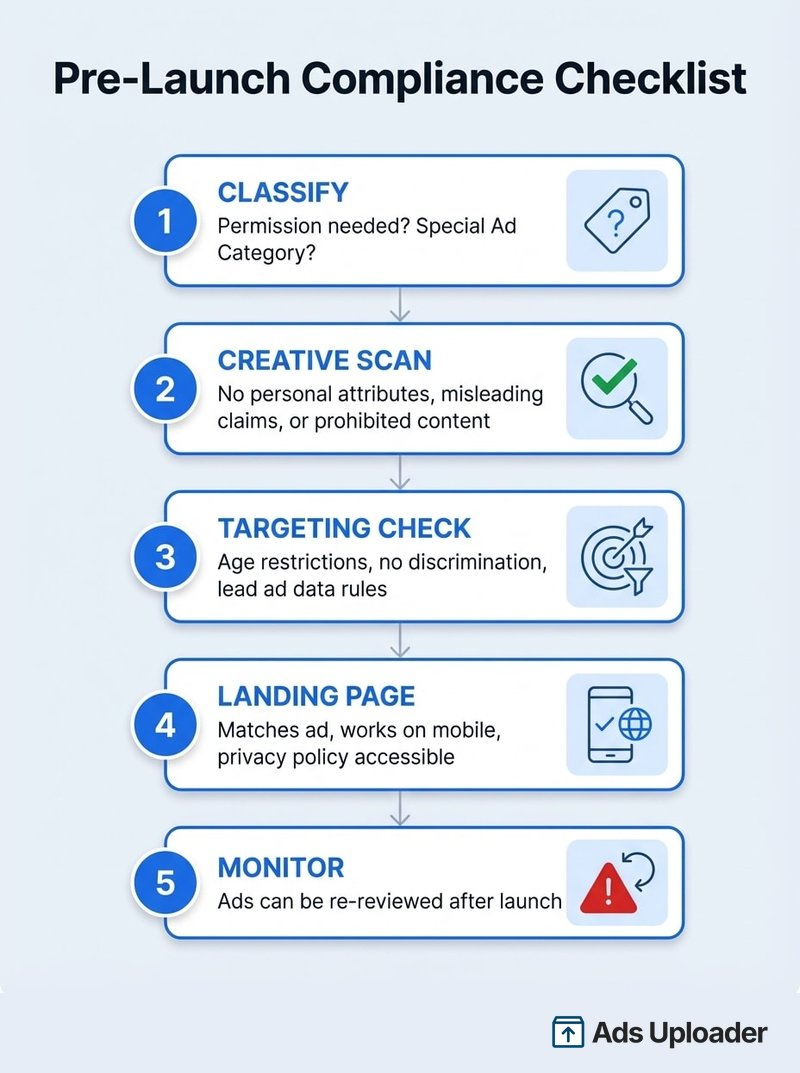
Image Source: Ads Uploader
Meta's ad approval process is different from an agency's internal QA process. Platform approval checks advertising policy compliance. It does not verify budgets, tracking accuracy, destination URLs, or alignment with the client brief.
According to WordStream's 2025 benchmark study, the median conversion rate for Facebook lead campaigns was 7.72%, down from 8.67% in the previous benchmark. This shift is a reminder of why accurate conversion configuration and measurement matter so much when interpreting campaign performance. A QA process cannot guarantee a specific conversion rate, and this benchmark does not predict how any individual client's campaign will perform. What proper QA can do is help ensure that whatever results a campaign does produce are being measured correctly, so the agency and client are working from accurate numbers.
Build a QA Process That Catches Errors Before Launch
A checklist works best when supported by a consistent review and approval process.
1. Use a Two-Stage Review
Separate campaign building from independent verification.
- Builder Review: The person responsible for campaign creation checks settings, creative, URLs, budgets, and tracking against the approved brief.
- Independent QA: A second reviewer verifies the actual campaign configuration and checks for mistakes the original builder may have overlooked.
The second reviewer should independently inspect critical settings rather than simply accepting the builder's confirmation.
2. Create Clear Approval Gates
Establish specific requirements before a campaign can go live.
- Require corrections and sign-off before publication.
- Assign clear responsibility for final launch approval.
- Repeat relevant checks whenever changes affect creative, targeting, budgets, or tracking.
- Do not rely on previous approval if the campaign has undergone material changes.
3. Document Exceptions
Not every issue needs to delay a launch, but every exception should be recorded.
- Document unresolved issues, ownership, and decisions.
- Distinguish critical launch blockers from lower-priority concerns.
- Maintain clear approval records rather than relying solely on chat messages.
- Never launch with unresolved critical issues simply to meet a deadline.
4. Maintain a Launch Record
Keep the following documentation for every campaign:
- Approved campaign brief.
- Final creative assets and ad copy.
- Approved budget, schedule, and targeting.
- Tracking configuration and test conversion results.
- Documented corrections and exceptions.
- Final launch authorization and responsible approver.
These records support accountability and make it easier to investigate problems after launch.
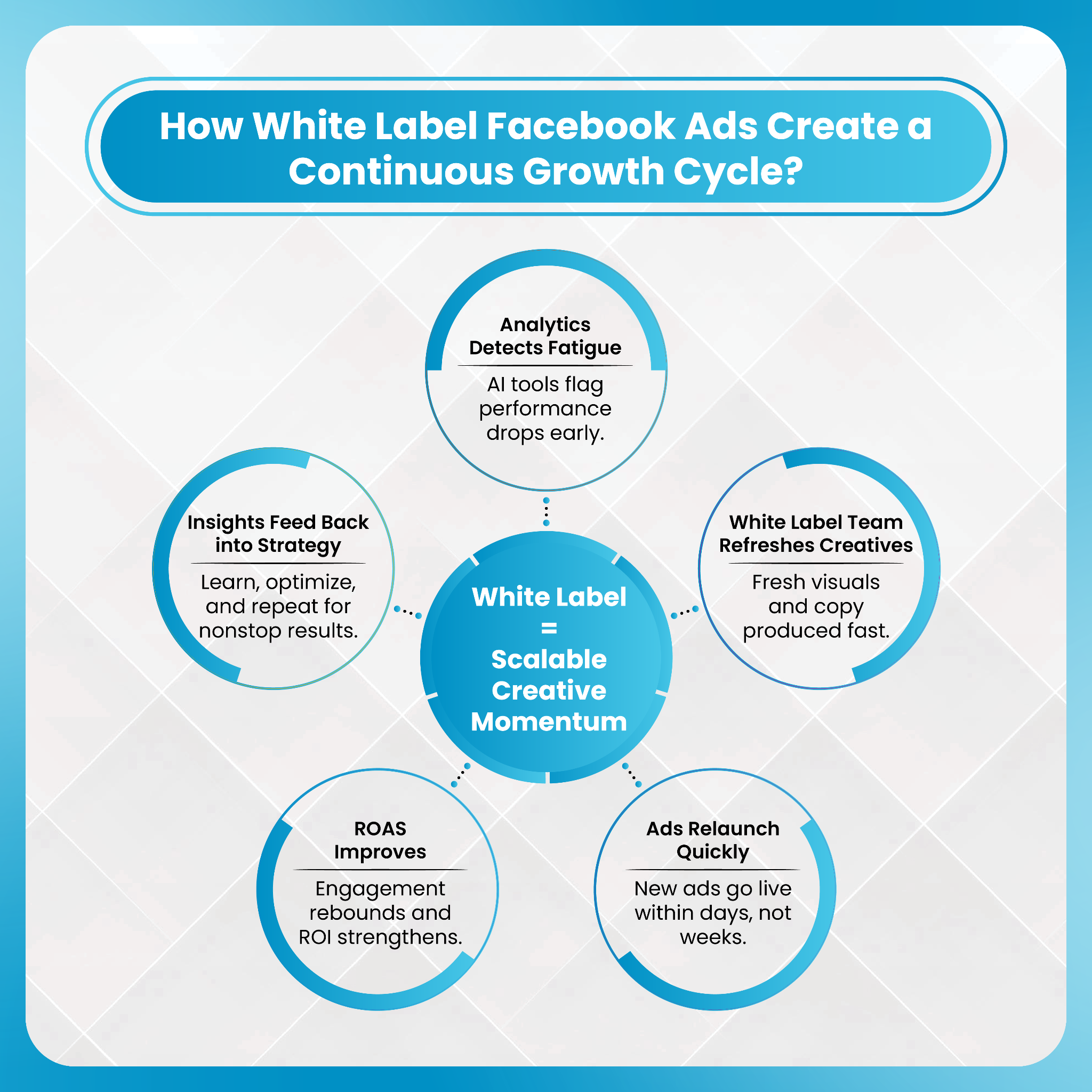
How White Label Facebook Ads Management Supports Campaign QA?
Facebook Ads Services can help agencies coordinate execution across multiple client accounts. However, outsourcing does not eliminate the need for internal oversight.
1. Standardize Execution Across Client Accounts
Consistent workflows and handoffs reduce variation in campaign delivery.
- Define requirements for briefs, deliverables, revisions, and approvals.
- Establish shared QA standards for recurring checks.
- Verify every campaign against its specific client requirements rather than relying entirely on generic templates.
2. Assign Responsibilities Between Teams
Clear responsibilities help prevent gaps in outsourced campaign fulfillment.
Fulfillment Partner Responsibilities:
- Handle agreed campaign implementation and execution checks.
- Report issues and document corrections.
- Follow established revision and approval workflows.
Agency Responsibilities:
- Manage client communication and strategic direction.
- Ensure briefs accurately reflect client requirements.
- Review critical campaign settings.
- Verify completed corrections and retain final launch approval.
Both teams should document issues and independently verify important corrections.
3. Add Specialist Support Where Needed
Agencies may outsource specific tasks, including campaign setup, creative implementation, tracking checks, routine reviews, and reporting, depending on the provider's agreed scope.
Before engaging a fulfillment partner, verify its capabilities, service inclusions, and QA procedures.
4. Maintain Oversight of Outsourced Campaigns
Facebook Ads outsourcing does not automatically guarantee error-free campaigns or Meta policy compliance.
Agencies should retain responsibility for strategy, client relationships, and agreed campaign standards. Independent reviews and clear accountability remain essential, regardless of who executes the campaign.
Common QA Mistakes Agencies Should Avoid
Even agencies with a documented process can fall into familiar traps. These are the mistakes worth watching for specifically.
- Treating Meta Ad Approval as Proof That Everything Is Correct: Platform approval confirms policy compliance. It does not verify the agency's strategy, budget, destination URLs, tracking configuration, or whether the campaign actually matches the client brief.
- Reviewing Creative in Isolation: Checking an image or video file on its own misses problems that only appear in context. Teams need to check the complete ad, placement previews, destination page, offer consistency, and the full conversion path together.
- Reusing Campaign Templates Without Verification: Copied settings can carry over incorrect budgets, mismatched targeting, outdated URLs, the wrong account assets, or an unintended conversion event from a previous client's campaign.
- Allowing Last-Minute Changes to Bypass Final Review: A material change made after sign-off needs the relevant checks repeated, not an assumption that the earlier approval still applies.
- Launching With Unresolved Tracking Issues: Missing or incorrectly configured events make reporting unreliable, which hinders informed optimization decisions throughout the campaign's life.
- Leaving Approval Ownership Unclear: Every campaign needs one clearly assigned person responsible for final launch authorization, not a diffuse sense that "someone" checked it.
WordStream's 2025 study found that the median cost per lead for Facebook lead campaigns reached $27.66, an increase of 20.94% year over year. This rising benchmark is a useful context for why agencies should verify campaign configuration and tracking thoroughly before client spend begins. The benchmark does not establish that QA lowers acquisition costs on its own. Actual costs depend on a combination of factors, including competition, targeting precision, offer strength, creative quality, and the overall conversion experience.
Documented checklists and independent reviews will not change market dynamics like rising competition or shifting ad costs. What they can do is help agencies catch preventable mistakes before those mistakes affect live campaign delivery, protecting both ad spend and client trust in the process.
How Can DashClicks Support White Label Facebook Ads Delivery?
Agencies looking for additional execution capacity sometimes turn to providers of white label Facebook Ads management, such as DashClicks, to help manage campaign fulfillment. Evaluating any fulfillment partner carefully, and defining the relationship clearly from the start, matters just as much as the QA process itself.
1. Evaluate Fulfillment Against Agency Requirements
Before onboarding any provider, agencies should assess whether that provider's service scope actually aligns with their campaign requirements, their existing delivery workflow, and their own quality standards. This means confirming actual service inclusions, clearly defined responsibilities, and the provider's specific review procedures, rather than assuming they match what the agency needs.
2. Define Responsibilities Before Work Begins
Clarity at the outset prevents confusion later. Before work starts, agencies and fulfillment partners should agree on:
- Campaign briefs and the required inputs for each engagement.
- Approved deliverables and the exact scope of service.
- Revision procedures and realistic deadlines.
- Communication channels and escalation processes for issues.
- Tracking checks and documentation requirements.
- Agency approval responsibilities before any campaign launches.
3. Maintain Agency Oversight
A fulfillment partner like DashClicks can function as an extension of the agency's delivery process, helping execute the campaigns the agency has already planned and approved at the strategic level. It is not a replacement for the agency's own QA, strategy, or client accountability. The agency should continue reviewing critical settings, verifying that corrections were actually made, maintaining direct client communication, and authorizing every launch according to its own internal process.
4. Build a Repeatable Delivery Process
Clear responsibilities and documented workflows help agencies coordinate fulfillment consistently across multiple client accounts, which is particularly valuable as an agency's client roster grows. A white label Facebook advertising agency relationship works best when both sides treat it as a defined partnership with explicit expectations, not an open-ended handoff.
This is not a claim that any fulfillment partner, including DashClicks, guarantees error-free campaigns, specific performance improvements, or capabilities beyond what has been directly confirmed. Agencies considering Facebook Ads outsourcing should verify exactly what a provider delivers before building their delivery process around it.
Catching Preventable Errors Starts With a Documented Process
Facebook Ads campaigns rarely fail because of one obvious mistake. They fail because small errors in strategy, creative, settings, tracking, or approvals go unchecked and compound by the time a campaign goes live. A documented, repeatable QA process, built around clear checklists and independent review, is what catches these errors before they affect a client's results.
Two-stage reviews and clearly defined approval gates give agencies a structured way to catch mistakes that a single reviewer working alone would likely miss. Tracking checks and landing page tests ensure that whatever a campaign does once it launches can actually be measured with confidence, giving both the agency and the client reliable data to work from.
Facebook Ads outsourcing, when properly scoped, can give agencies meaningful execution capacity without asking them to give up strategic control. The agency still owns the client relationship, the strategic direction, and the final decision to launch. A provider like DashClicks can be one option worth considering for agencies looking to coordinate campaign delivery across a growing client base while keeping that oversight intact.