

Local Facebook campaigns operate within a smaller customer pool than national or ecommerce campaigns. When targeting is off, the offer misses the mark, or tracking fails to capture meaningful results, those problems become visible faster because fewer potential customers are available to absorb the inefficiency.
Wasted impressions matter more when a campaign targets a defined geographic market. Poorly qualified leads also consume both ad spend and the client's follow-up time, which is often limited for local business owners managing daily agency operations.
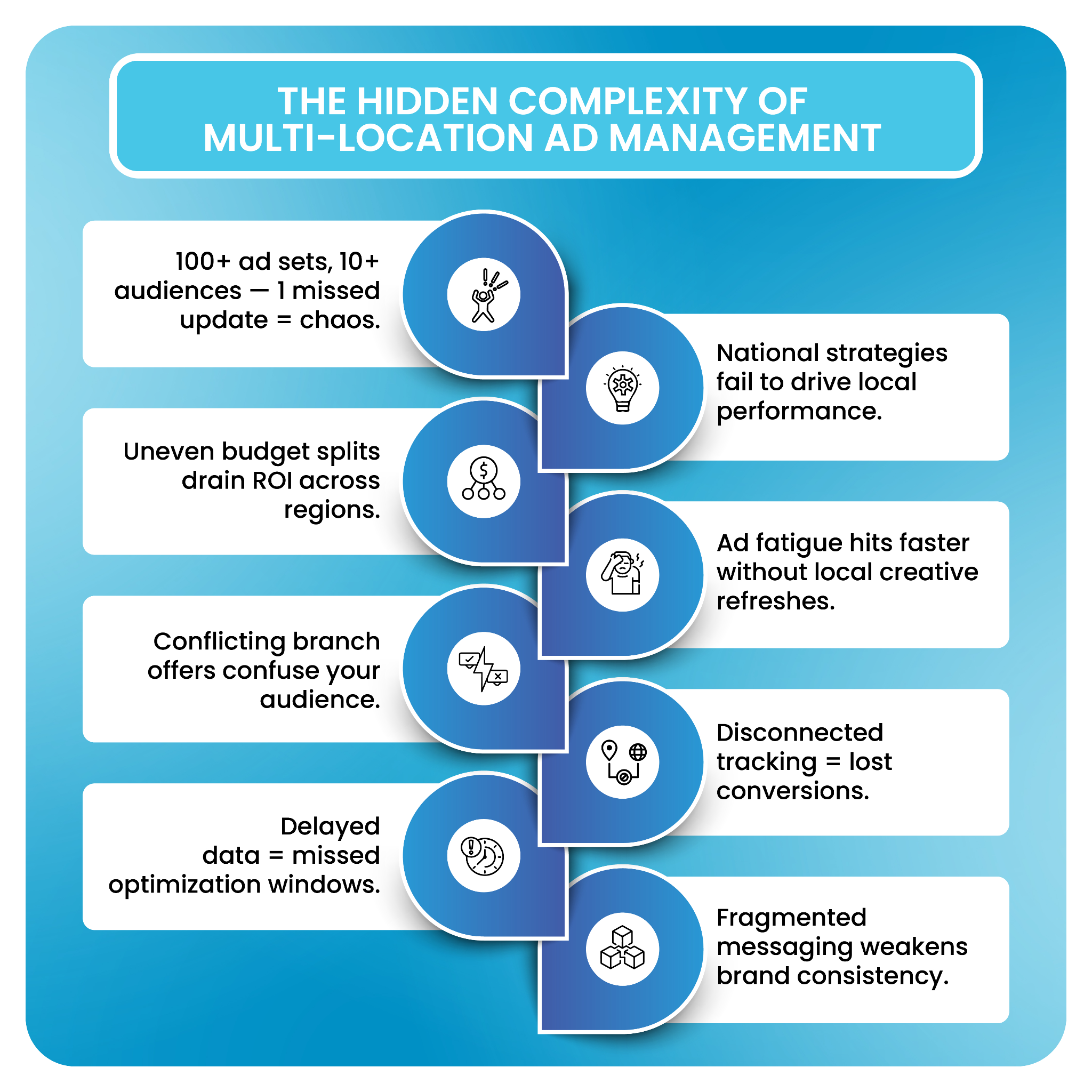
This does not make local campaigns harder or more expensive. It means the setup decisions need to work together. Location, conversion goal, audience, offer, creative, destination, and measurement all influence campaign performance.
The central issue is that performance problems often begin with setup, not optimization. Agencies can adjust bids, test creative, and refine audiences for weeks, but those changes cannot fix a campaign launched with the wrong objective, geographic scope, landing page, or measurement strategy.
WordStream's 2026 benchmark analysis of nearly 1,800 Facebook ad campaigns shows that performance varies significantly by industry and campaign objective. This reinforces an important point: there is no single benchmark or campaign structure that works equally well for every local client.
This blog covers common setup mistakes that undermine local campaigns, followed by a pre-launch checklist agencies can use before approving a campaign.
Mistake #1: Treating Every Local Client Like the Same Campaign
A dentist, a home service company, a restaurant, an attorney, and a local retailer do not share the same customer journey. Treating them identically at setup is one of the most common sources of underperformance in local accounts.
These businesses differ in several important ways:
- Purchase Cycle: A restaurant customer might decide within minutes, while a legal client may take weeks to decide who to call.
- Lead Value: A single HVAC repair might be worth far more than a single restaurant visit, which changes how much budget per lead makes sense.
- Urgency: Emergency services like plumbing or locksmiths deal with immediate need, while a retail browsing decision rarely carries that same urgency.
- Service Area: A home service company might serve a 30-mile radius, while a restaurant typically draws from a much smaller area around its location.
- Customer Intent: Someone searching for a dentist is often closer to a decision than someone scrolling past a retail ad.
- Average Consideration Time: Some purchases are impulse-driven, others require research, comparison, and follow-up conversations.
- Type of Desired Conversion: A call, a form fill, a booking, and a store visit all require different campaign configurations.
Before choosing a campaign structure, agencies need to understand what actually drives the client's business. A reusable process is valuable, but it should determine which structure fits the client. It should not force every client into the same structure.
Agency Takeaway: Start with the client's customer journey, not a reusable campaign template.
Mistake #2: Setting the Location Targeting Too Broadly
Overly broad geographic targeting is one of the easiest mistakes to make and one of the most expensive to leave uncorrected. If a client can only realistically serve customers within a 15-mile radius, targeting an entire metro area means a meaningful share of ad spend reaches people who were never going to convert.
Before launch, agencies should define the actual geographic boundaries that matter for that specific client. This includes:
- Service Areas: The real boundaries where the business can fulfill a job or deliver a service, not just where its marketing team would like more visibility.
- Multiple Business Locations: Separate targeting logic for each location so ads do not direct a customer in one neighborhood to a storefront across town.
- Radius-based Coverage: A distance setting tied to how far the business is willing or able to travel, rather than an arbitrary default.
- Location-specific Limitations: Zoning restrictions, licensing boundaries, or delivery limits that affect where a client can actually do business.
Mentioning a city name in the ad copy does not make a campaign locally targeted. The actual targeting settings need to reflect where the client can realistically acquire and serve customers.
Agency Takeaway: Geographic targeting should reflect the client's real service model, not an assumption about how large the market "should" be. Narrower targeting is not automatically better. The right scope depends entirely on what the business can support.
Mistake #3: Choosing the Campaign Objective Based on Convenience
Traffic is an easy objective to default to because clicks are simple to track and show up quickly in reporting. But clicks are not the outcome most local businesses actually care about.
Agencies should choose objectives based on the action that matters to the client's business, such as:
- Leads: Form submissions that give the business a way to follow up directly.
- Calls: Especially valuable for service businesses where a phone conversation moves a prospect toward booking.
- Messages: Useful for businesses where customers prefer a quick back-and-forth before committing.
- Bookings: Relevant for appointment-based businesses where the objective is a scheduled time slot, not just contact information.
There is a meaningful difference between optimizing for activity and optimizing toward the client's actual outcome. WordStream's 2026 benchmark data separates traffic and lead campaigns specifically because their performance metrics and goals differ. Comparing a traffic campaign's click-through rate to a lead campaign's cost per lead does not provide useful insight into either one.
Agency Takeaway: Choose the objective based on the conversion you want Meta to help generate, not the metric that looks easiest to report on later.
Mistake #4: Optimizing for Cheap Leads Instead of Useful Leads
A low cost per lead feels like a win in a reporting dashboard, but it says nothing about whether those leads are actually useful to the client. A campaign generating dozens of cheap, poorly matched leads can be far less valuable than one producing fewer leads that convert into paying customers.
Lead quality depends on several factors beyond cost:
- Service Fit: Whether the lead actually needs what the client offers, rather than a related but different service.
- Location: Whether the inquiry falls within the client's actual service area.
- Budget: Whether the lead's expectations align with what the client charges.
- Urgency: Whether the lead is ready to act now or simply browsing for future reference.
- Customer Intent: Whether the inquiry reflects genuine interest or accidental clicks from an overly broad audience.
A smaller number of qualified leads is often more valuable to a local business than a larger volume of poor-fit inquiries that consume staff time without converting. Agencies can build qualification into the campaign itself through more specific lead form questions, offers that naturally filter for intent, messaging that sets clear expectations, and a follow-up process that catches mismatches early. None of these methods guarantee better leads, but they reduce the odds of wasted follow-up effort.
WordStream's 2025 benchmark data illustrates why CPL comparisons across industries are misleading. The average Facebook lead campaign CPL was $27.66, but dental services averaged $76.71 while restaurants averaged $3.16. Applying a single CPL target across every local client ignores how much industry, objective, offer, audience, and business model affect that number.
Agency Takeaway: Evaluate CPL alongside lead quality and actual business outcomes, not as a standalone success metric.
Mistake #5: Overcomplicating the Audience Setup
Stacking excessive demographic, interest, and behavioral restrictions without a clear strategic reason is a common way agencies unintentionally shrink a campaign's potential reach. Each additional restriction narrows the available audience, which can limit how effectively Meta's delivery system finds likely converters.
Common issues include:
- Excessive Narrowing: Layering age, income, interest, and behavior filters based on assumptions rather than evidence about who actually buys.
- Reduced Available Audience: A local market is already geographically limited, and adding unnecessary demographic restrictions shrinks it further.
- Delivery Limitations: An audience that is too narrow can struggle to deliver efficiently, regardless of budget.
- Unsupported Assumptions: Deciding who "should" be interested in a service without evidence to back that targeting choice.
Local targeting does not automatically require hyper-narrow audience settings. In many cases, agencies get better results by giving Meta's delivery system enough room to identify likely converters rather than trying to manually control every audience variable. Broad targeting is not universally better either. The point is to avoid restrictions that are not supported by the client's actual strategy or campaign objective.
Agency Takeaway: Local does not automatically mean hyper-narrow.

Mistake #6: Building Ads Around the Business Instead of the Local Customer
Generic business-centric messaging, like claiming to be "the leading provider of" a service, rarely resonates with someone scrolling through their feed. Local ads perform better when they speak directly to the customer's situation rather than describing the business in the abstract.
Effective local creative should reflect:
- Local Customer Problems: The specific issue or need that leads someone to search for this type of service in the first place.
- Situations: Context that makes the ad feel relevant to this particular audience, not a generic national campaign.
- Offers: A clear reason to respond now rather than later.
- Availability: Whether the business can take on new customers immediately or has limited capacity.
- Local Context: References that feel specific to the area without relying on the city name as the only localization cue.
Local relevance is not simply repeating the city name throughout the ad copy. It means connecting with what that customer is actually experiencing. WordStream's 2026 benchmarks show substantial differences in click-through rate across industries, which reinforces that creative expectations should be tied to the client's specific vertical rather than a single universal CTR benchmark.
Agency Takeaway: Creative should reflect the local customer's needs and the client's actual offer, not just how the company describes itself.
Mistake #7: Sending Traffic to a Page That Does Not Match the Ad
A campaign should create a consistent path from ad to outcome:
Ad → Offer → Landing Page → Conversion Action
When any link in that chain breaks, conversion rates suffer even if the targeting and creative were strong.
Key factors to check before launch include:
- Message Consistency: The landing page should reflect the same offer and service mentioned in the ad, not a different promotion or general page.
- Service Relevance: If the ad promotes a specific service, the landing page should speak to that service directly rather than a broad overview of everything the business offers.
- Local Intent: The page should reinforce the local angle the ad established, rather than reading like generic, location-agnostic copy.
- Mobile Experience: Most local ad traffic arrives on mobile devices, so the page needs to load quickly and function cleanly on a phone.
- Form Usability: Lead forms should be short enough to complete easily without unnecessary friction.
- Phone Visibility: For service businesses, a visible and clickable phone number can make the difference between a conversion and a bounce.
Sending every campaign to the homepage because it is the client's main page is a common shortcut that undermines performance. Not every campaign requires a dedicated landing page, but the destination needs to match the specific service, promotion, or local intent represented in the ad.
Agency Takeaway: Campaign setup does not end inside Ads Manager. The destination is part of the campaign.
Mistake #8: Launching Without a Reliable Measurement Setup
Agencies should establish the intended conversion action before a campaign goes live, not after the first reporting cycle reveals a gap. Launching without a reliable measurement setup means discovering, sometimes weeks in, that the data needed to evaluate performance was never being captured correctly.
Measurement setup should account for:
- Intended Conversion: A clear definition of what counts as a successful outcome for this specific campaign.
- Tracking Requirements: The technical setup needed to capture that conversion accurately, including the Meta Pixel and any relevant integrations.
- Lead Attribution: A system for connecting form submissions back to the specific campaign and ad that generated them.
- Call Attribution: Where applicable, a way to track which calls originated from the campaign.
- Message Attribution: Tracking for conversations that start through Messenger or similar channels.
- Booking Attribution: Confirmation that scheduled appointments can be traced back to the originating ad.
- Reporting Setup: A dashboard or reporting structure that reflects the actual conversion data, not just surface-level engagement metrics.
Meta's business tools include measurement technologies such as the Meta Pixel, though privacy changes and platform updates can affect how advertising activity is measured over time. Agencies should verify measurement before launch rather than assume it is working correctly. If the campaign cannot reliably distinguish meaningful outcomes from clicks, optimization becomes much harder, because there is no accurate baseline to optimize against.
Mistake #9: Ignoring Creative and Placement Requirements During Setup
A single generic creative asset rarely performs equally well across every placement Meta offers. Treating creative as an afterthought, rather than planning for specific placements during production, often results in assets that look cropped, misaligned, or poorly suited to where they actually appear.
Setup should account for:
- Campaign Placements: Feed, Stories, Reels, and Audience Network all have different dimensions and user behaviors.
- Image and Video Requirements: Each placement has its own recommended specs, and ignoring them can lead to awkward cropping or distortion.
- Mobile-first Considerations: Most local ad impressions happen on mobile devices, so creative needs to read clearly at a small size.
- Vertical Placements: Reels and Stories require vertical formats, which horizontal assets cannot simply be resized into without losing impact.
- Safe-zone Considerations: Important text and visual elements need to stay within the areas not obscured by platform UI elements like captions or icons.
Meta reports that in its own tests, 9:16 video with audio and key elements placed inside the safe zone produced a 34.5% lower cost per result than image ads in Reels-only tests. This is Meta's own test data, specific to that test setup, and should not be treated as a universal guarantee that video will always outperform static images. It does, however, support the broader point: placement requirements should be considered during creative production, not adjusted after the fact.
Mistake #10: Treating the Initial Setup as Permanent
Every campaign should launch with a clear hypothesis about what will work, but the initial setup should never be treated as the final version. Early performance data exists specifically to inform what changes next.
After launch, agencies should review:
- Delivery: Whether the campaign is spending efficiently and reaching the intended target audience.
- Audience Behavior: How different segments are responding, and whether any assumptions from setup need to be revisited.
- CTR and CPC: Early indicators of how well the creative and targeting are resonating.
- Conversion Rate and CPL: Whether the funnel from click to conversion is functioning as expected.
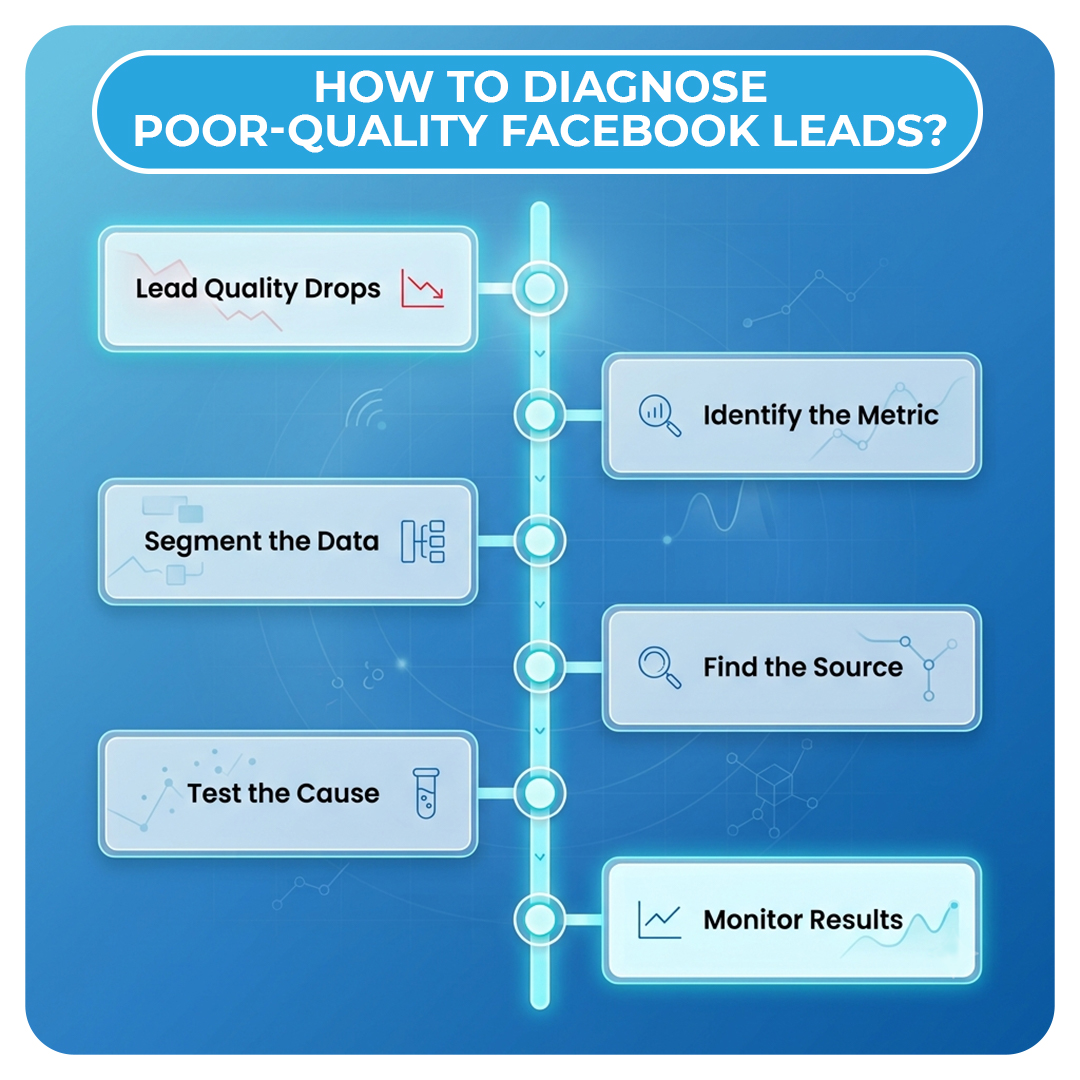
- Lead Quality: Whether the leads coming in actually match the client's ideal customer profile.
- Business Outcomes: Ultimately, whether the campaign is producing results the client values.
Making multiple major changes at once, such as adjusting the audience, creative, and objective simultaneously, makes it difficult to identify which change actually influenced performance.
The Agency Takeaway: Use early data to refine rather than constantly rebuild campaigns. This does not mean avoiding necessary changes. It means making changes deliberately and evaluating their impact before making the next one.
A Better Campaign Setup Checklist for Local Clients
This section works as a pre-launch QA framework rather than a full tutorial. Use it as a final check before approving any local launch campaign.
- Business Goal: What specific action should this campaign generate for the client?
- Service Area: Where can the client actually and realistically serve customers?
- Campaign Objective: Does the selected objective align with the outcome the client actually wants?
- Audience: Is the targeting appropriately broad or narrow given the campaign's goals and market?
- Offer: Is there a clear, compelling reason for someone to respond to this ad right now?
- Creative: Does the messaging reflect the local customer's actual situation, not just the business's description of itself?
- Destination: Does the landing experience match the specific offer and intent represented in the ad?
- Tracking: Can the campaign reliably measure the conversions that matter to this client?
- Budget: Is the budget realistic for this market, objective, and industry?
- Reporting: Are agency and client KPIs clearly defined before the campaign goes live?
Running through this list before launch catches many of the setup mistakes covered above while they are still easy to fix.
How White Label Facebook Ads Help Agencies Avoid Setup Bottlenecks
Local clients often require significant setup work and ongoing execution across geographic targeting, audience configuration, creative coordination, campaign management, optimization, QA, and reporting. As the number of local accounts grows, internal teams can struggle to maintain consistent quality control across every one of them.
White label Facebook Ads management addresses this as an execution-capacity solution rather than a replacement for agency strategy. The division of responsibilities typically looks like this:
Agency decides:
- Business goals and positioning for each client
- Strategic priorities and campaign direction
- Client expectations and communication
- Final approvals before anything goes live
Fulfillment partner supports:
- Campaign setup based on agency direction
- Day-to-day campaign execution
- Ongoing optimization
- Pre-launch and ongoing QA
- Recurring account management
- Reporting support
Outsourcing execution does not remove the need for agency-level strategy and oversight. The agency remains responsible for understanding each client's business and determining what the campaign is actually meant to accomplish. Fulfillment support simply provides the capacity to execute that strategy consistently across a growing number of local accounts.
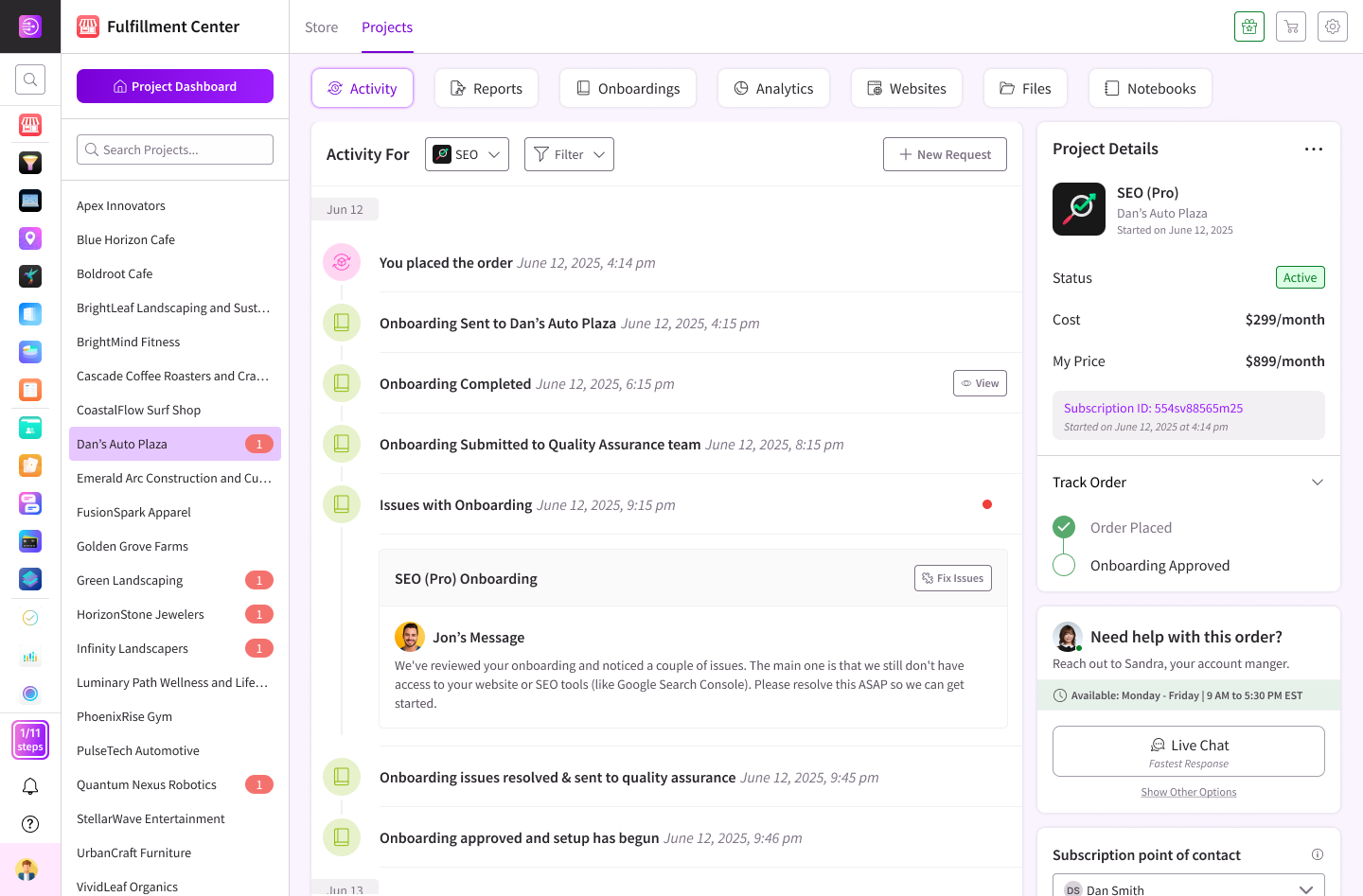
DashClicks' white label Facebook Ads services function as an extension of an agency's fulfillment capacity. Agencies can lean on DashClicks for campaign execution without necessarily building out additional internal paid-social resources as client volume increases. The platform does not replace the agency or take over the client relationship. It supports the agency's team on the fulfillment side while the agency retains strategy, positioning, and client-facing responsibility. In practice, this combination of agency strategy and specialist fulfillment capacity creates a more repeatable campaign delivery process across local accounts.
Getting Setup Right Before Chasing Optimization
Most local Facebook campaign problems are not solved by optimizing harder. They are solved by getting the setup right before the campaign ever launches. A strong campaign starts with the right objective, an accurate geographic scope, an audience strategy that matches the market, an offer worth responding to, creative that speaks to the local customer, a destination that matches the ad, and measurement that can actually be trusted.
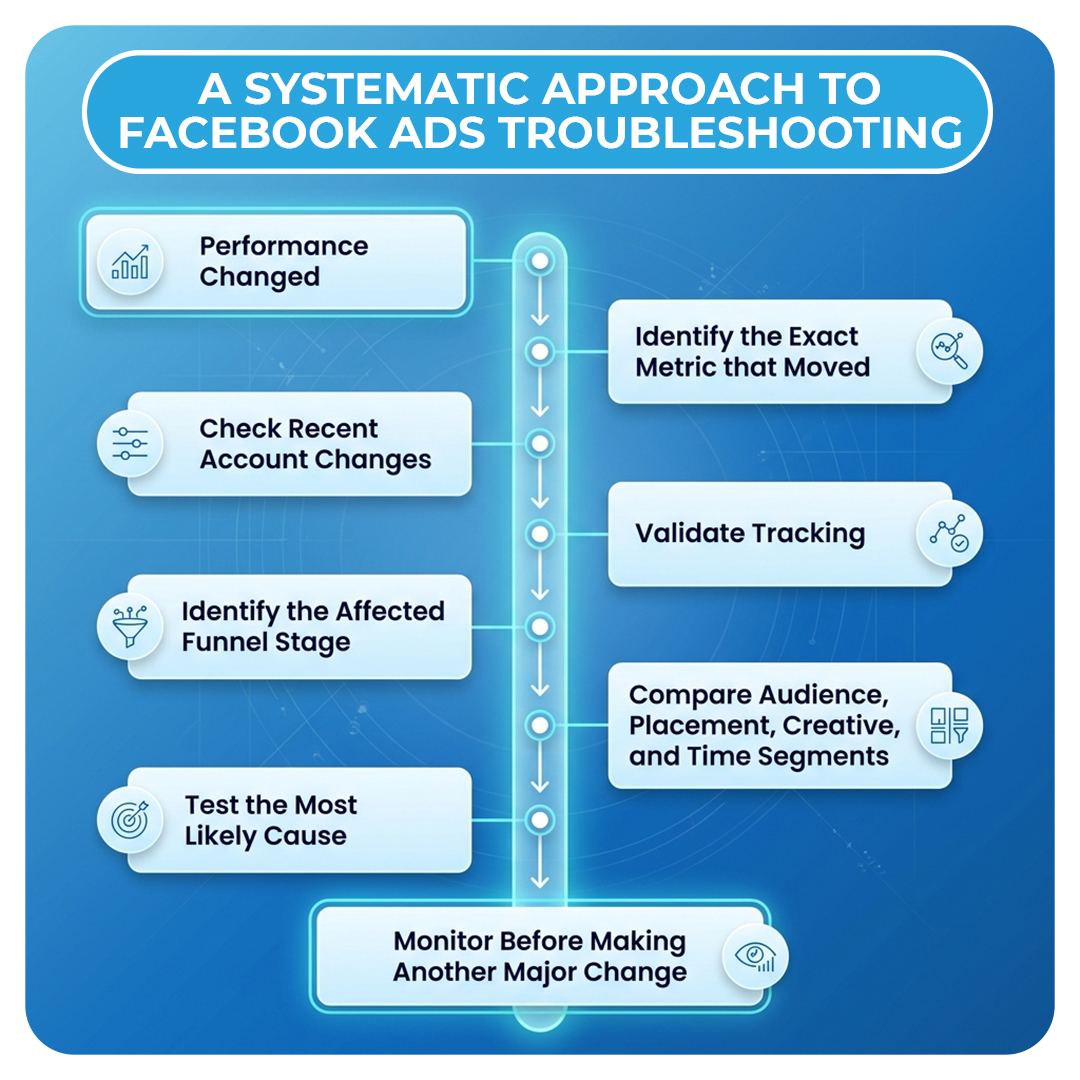
These decisions are not independent of each other. Location affects audience size. Audience size affects objective selection. Objective selection affects measurement requirements. Treating them as a connected system, rather than a checklist of unrelated settings, is what separates a reliable local campaign from one that requires constant troubleshooting after launch.
Standardized setup QA reduces avoidable errors across local accounts, but standardization should still leave room for account-specific strategy. No two local clients share the exact same customer journey, service area, or business model. As agencies take on more local clients, Facebook Ads outsourcing can help maintain execution consistency without requiring every strategic decision to move outside the agency. Getting the setup right first makes the ongoing optimization work that follows far more productive.