

.svg)

.svg)
.svg)
.svg)
.svg)
.svg)
A campaign that produces cheap leads is not the same thing as a campaign ready to scale. Agencies see this mismatch constantly: cost per lead looks great in the reporting dashboard, but the client is frustrated because half the leads never respond, fall outside the service area, or were never serious buyers.
A low CPL does not automatically indicate a healthy campaign. It only tells you that Facebook found a way to generate form submissions cheaply. Whether those submissions turn into real business is a separate question, and too many agencies skip it when recommending a bigger budget.
Before any conversation about scaling happens, an agency needs to determine whether the people entering the funnel fit the client's target customer and show meaningful purchase intent. That is the real diagnostic question, and it matters more than any single platform metric.
This leads to the central argument: fix lead quality first, then scale what is working.
For context, WordStream's 2026 benchmark analyzed nearly 1,800 Facebook ad campaigns, providing current industry-level data on CTR, CPC, conversion rate, and CPL. These benchmarks are useful for understanding where a campaign stands relative to broader industry patterns, but they are not universal targets. A niche B2B campaign and a high-volume local service business will naturally look different against the same benchmark.
The first step toward fixing lead quality starts with a question many agencies never formally answer: What does a "quality lead" actually mean for this specific client?
Define What a Quality Lead Means for the Client
Every client has a different definition of a good lead, even if they've never articulated it clearly. Before touching targeting, creative, or budget, an agency needs to pin this down.
Several factors typically shape what quality means for a given business:
- Location – whether the lead falls within the service area or market the client actually serves
- Service or Product Fit – whether the lead is interested in what the client actually offers, not a related but different service
- Budget – whether the prospect can realistically afford the client's pricing
- Purchase Intent – whether the lead is actively looking to buy or just casually curious
- Business or Customer Type – for B2B clients, whether the lead matches the right company size, industry, or role
- Urgency – whether the prospect has an immediate need or a vague, long-term interest
- Sales-readiness – whether the lead is prepared to have a sales conversation or still needs education
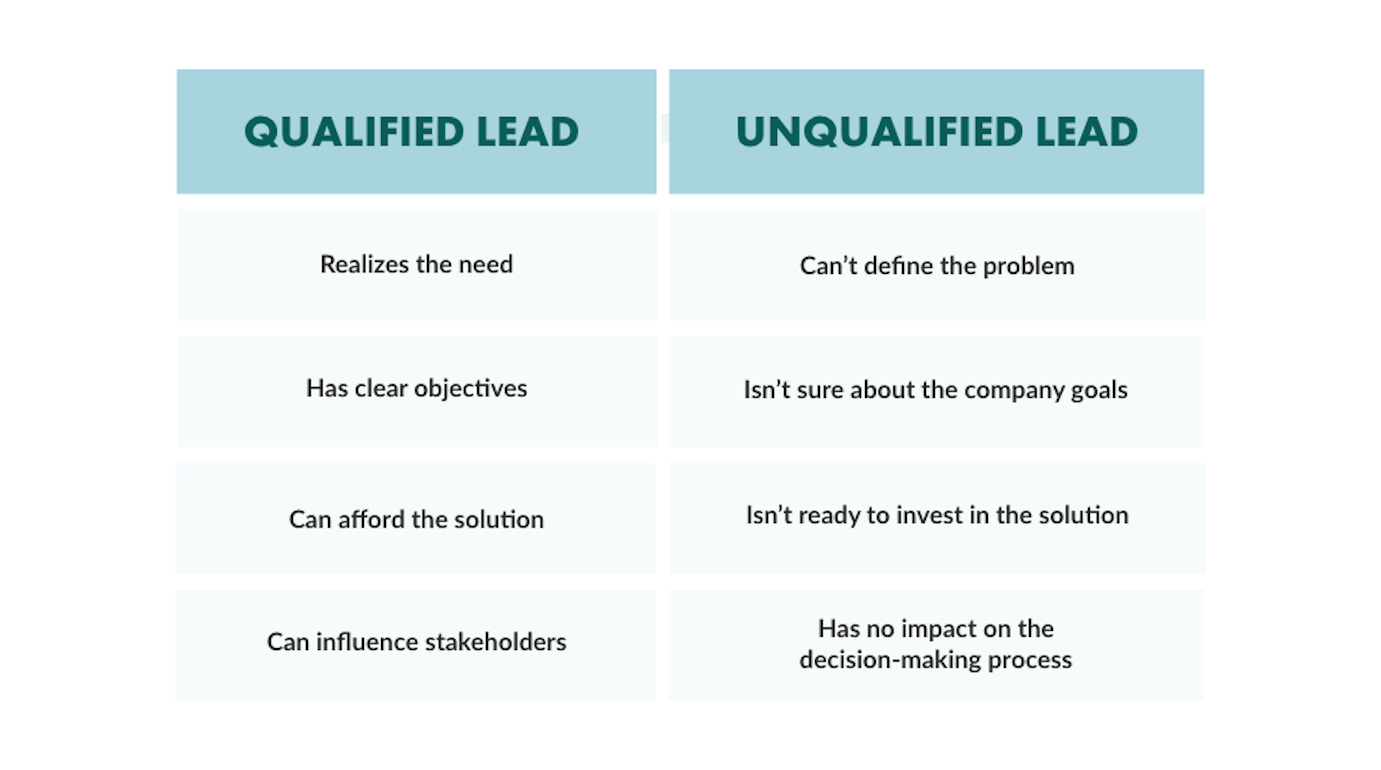
Image Source: SuperOffice
Once these factors are defined, it becomes easier to see that a lead count on its own tells an incomplete story. Leads move through stages, and each stage filters out a portion of the previous one:
Total Leads → Qualified Leads → Sales Opportunities → Customers.
The number of leads entering the CRM is only the beginning of the funnel. A campaign that generates 200 leads a month but only produces 10 qualified prospects has a very different problem than a campaign generating 50 leads with 30 qualified prospects, even though the second campaign has a higher CPL.
WordStream's 2026 data puts the average Facebook leads-campaign conversion rate at 8.54% across industries. That figure is useful for context, but it should not be treated as a universal target. Facebook Ads performance varies significantly by industry, offer, audience, and campaign setup.
A local home services client and a national SaaS company are not playing the same game, even if they're both running lead generation campaigns on the same platform. Wherever possible, agencies should compare current performance against the client's own historical data and business outcomes rather than an industry average.
Check Whether the Ad Is Attracting the Right Audience
Lead quality problems often start well before someone ever submits a form. If the target audience is misaligned with the client's actual customer base, no amount of form optimization will fix the downstream results.
A useful audit here includes:
- Audience characteristics and interests
- Geographic targeting accuracy
- Demographic considerations relevant to the offer
- Audience exclusions that may be missing
- Retargeting audience composition
- Broad versus more defined targeting approaches
- Whether the cheapest-performing segments are actually poor-fit audiences
This is where a common mistake shows up: do not optimize solely toward the cheapest audience. An audience that produces a lower CPL can still generate fewer qualified opportunities than a more expensive one. Cheap leads that never convert into sales opportunities aren't actually cheap. They're just deferred waste.
Agencies should look at the full relationship between cost, lead volume, lead relevance, qualification rate, and downstream sales potential, rather than optimizing toward any single number in isolation. It's also worth resisting the temptation to assume broad targeting or narrow targeting is inherently superior. The right approach depends on the client's objectives, the available audience data, and how Meta's delivery system is currently distributing that specific campaign.
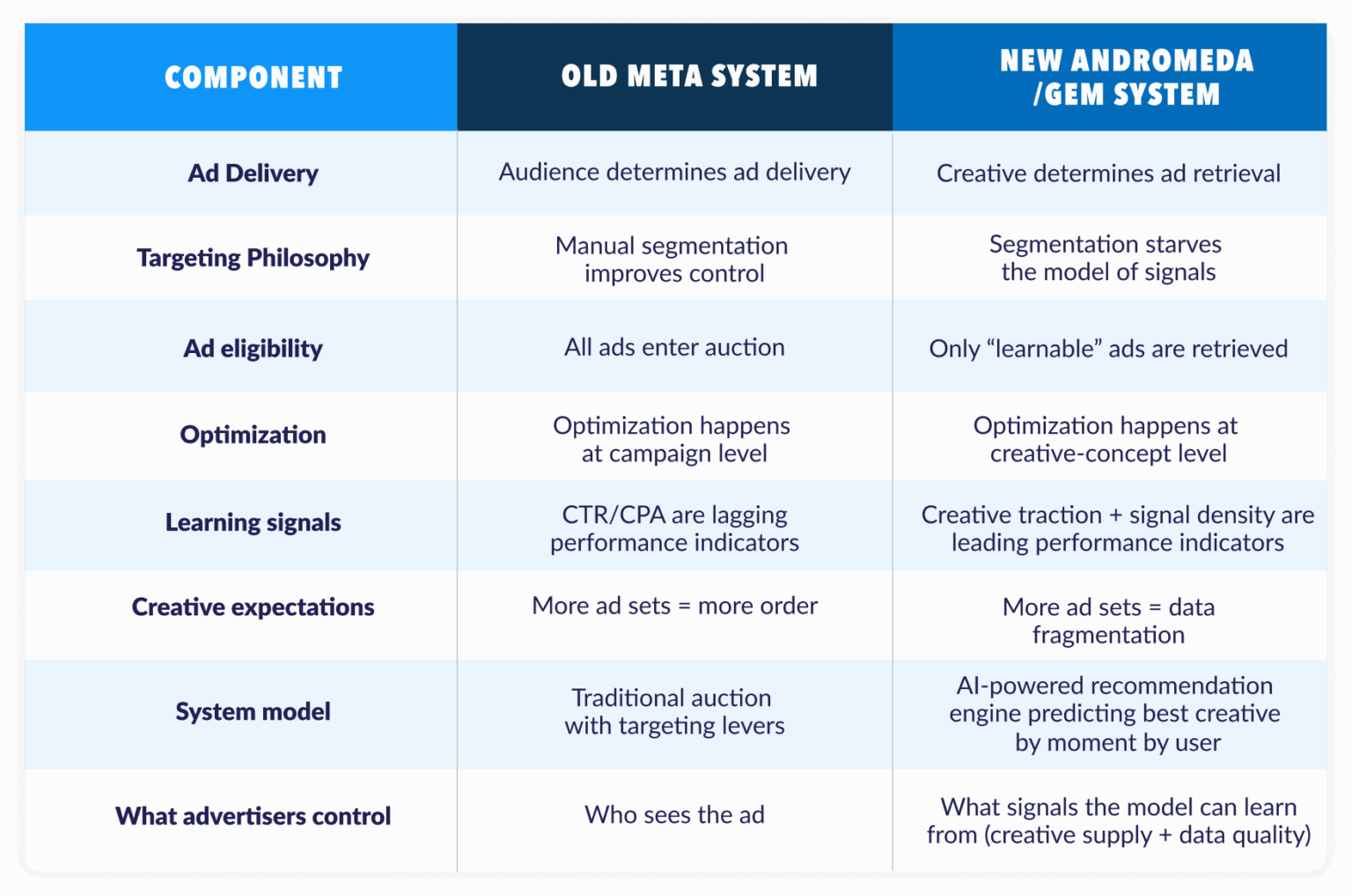
Image Source: Silverback
What worked for one client's audience structure six months ago may not work the same way today.
Use Ad Creative to Pre-Qualify Prospects
Ad creative does more than generate clicks. It shapes who decides to respond in the first place, and that makes it one of the most underused levers for improving lead qualification.
Strong creative for lead-quality purposes typically includes:
- A clear, specific offer rather than a vague value proposition
- Accurate expectations about what happens next
- Specific service or product positioning that filters out mismatched prospects
- Pricing or qualification information when it's appropriate to include
- Clear call-to-action that match the intent of the offer
- Consistency between the ad messaging and what the prospect sees after clicking
The goal isn't to maximize clicks or form submissions at all costs. It's to help prospects understand exactly what they're responding to, so the people who do submit a form are more likely to be a genuine fit. An ad that overpromises or stays intentionally vague might generate more volume, but it also invites more people who don't actually match the offer.
The 2026 WordStream benchmark puts average CTR for Facebook leads campaigns at 2.70%, up from 2.59% in the prior year's dataset. That's a useful engagement benchmark, but it comes with an important distinction: CTR measures response to the ad, not the quality of what comes after. A higher CTR does not automatically mean higher-quality leads. Agencies need to connect engagement metrics like CTR with actual lead quality and downstream outcomes rather than treating 2.70% as a target to chase for its own sake.
Review the Lead Form and Conversion Experience
The conversion experience itself, not just the ad that leads to it, plays a direct role in lead quality. For campaigns using Meta's instant forms, this deserves a close look.
Worth reviewing:
- The number of questions in the form
- Whether those questions actually qualify the prospect
- Any unnecessary friction that doesn't serve a qualification purpose
- Whether the form matches what the ad promised
- What happens immediately after someone submits
- Whether the campaign is attracting people who genuinely understand the offer
There's a balance to strike here. A form with too little information may let large numbers of poor-fit submissions through simply because it's easy to complete. A form with too many unrelated questions may create friction that discourages the exact prospects the client wants to reach.
This is worth stating plainly: more form submissions do not equal better leads. A jump in submissions after simplifying a form can look like a win in the ad account, but if qualification rates drop at the same time, the campaign hasn't actually improved.
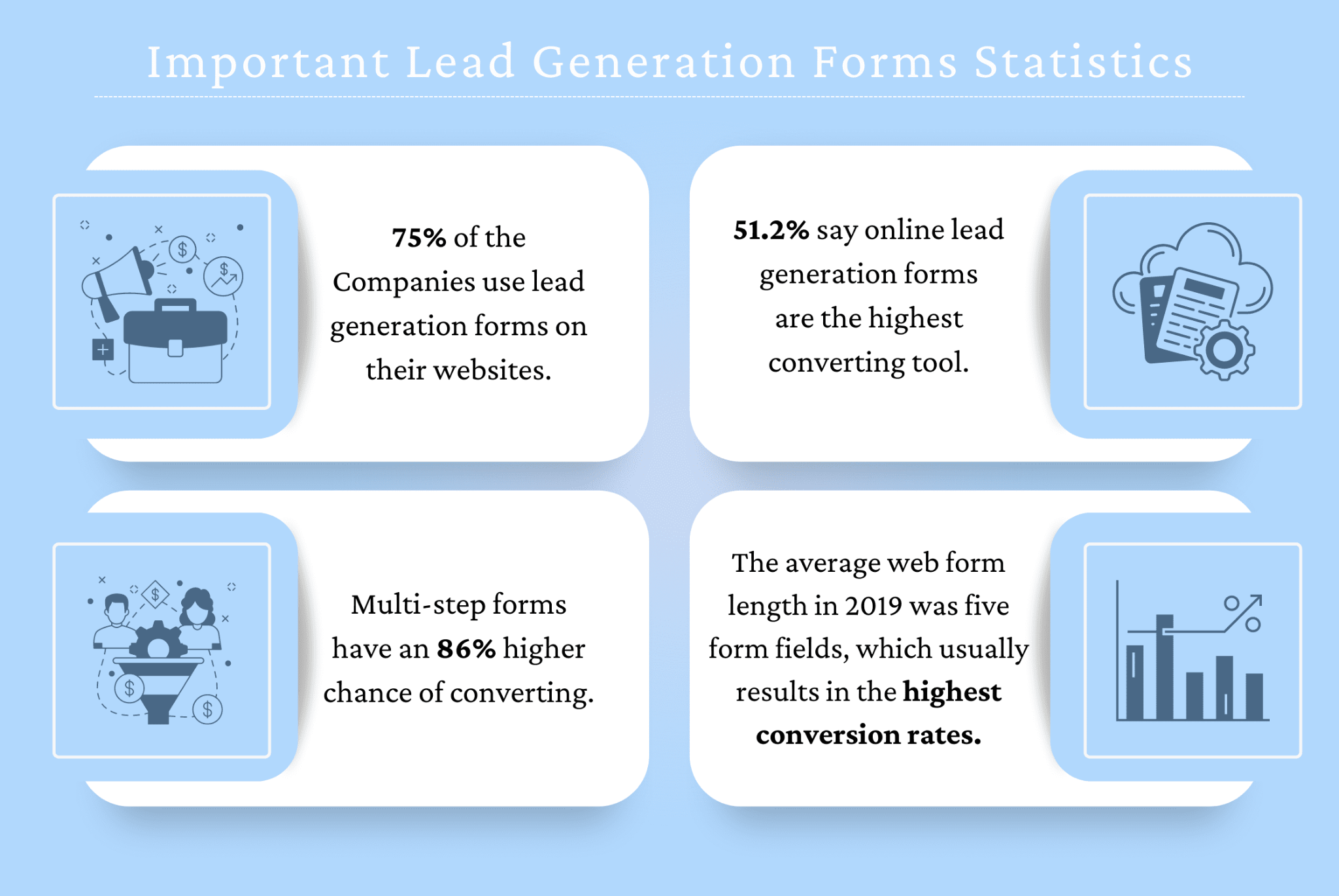
The post-submission experience matters just as much as the form itself. Agencies should understand what happens after someone completes the form, including how quickly the client follows up, because slow or inconsistent follow-up processes can waste leads that were perfectly qualified to begin with.
Further Reading: 10 Form Conversion Optimization Tips to Generate Better Leads
Stop Treating CPL as the Only Success Metric
This is where a lot of campaign reporting falls short. Cost per lead, CTR, CPC, and conversion rate are all useful diagnostic numbers, but none of them tell the full story of whether a campaign is working for the client's business.
Downstream metrics fill in the rest of the picture:
- Contact rate
- Qualification rate
- Appointment rate
- Sales opportunity rate
- Customer acquisition cost
- Revenue or other business outcomes the client cares about
Platform-level metrics are useful for diagnosing what's happening inside the ad account, but they don't automatically reflect business value. A campaign can look efficient on the Facebook Ads dashboard while producing very little actual revenue for the client, and the reverse is also true.
WordStream's 2026 benchmark reports an average CPL of about $27.66 in its 2025 dataset, while the 2026 report shows that lead-campaign costs and conversion performance vary by industry. This figure should be read carefully. It reflects a specific dataset from a specific year, and it shouldn't be presented as a current universal CPL target for every client campaign running today.
The larger point stands regardless of the exact number: a benchmark CPL should provide context, not become the definition of a good lead. A campaign with a higher CPL can potentially be more valuable if the leads it generates are substantially more qualified and more likely to become sales opportunities or customers. That doesn't mean a higher CPL is inherently better. It means CPL alone isn't sufficient to judge whether a campaign is working.
Connect Facebook Ads Data With Actual Lead Outcomes
Real lead-quality diagnosis requires connecting advertising data with what actually happens to those leads after they leave Facebook's ecosystem.
That means looking at CRM data alongside campaign data, including:
- Lead status over time
- Contacted versus unreachable leads
- Qualified versus unqualified leads
- Booked appointments
- Closed customers
- Revenue generated from those customers
This creates a fuller chain to track:
Ad → Lead → Contact → Qualified → Appointment → Customer.
Agencies should aim to optimize toward the stages that actually matter to the client's business, rather than stopping measurement at the form submission. Where the client's setup allows it, sending outcome data back into campaign analysis, and ideally back into Meta's optimization signals, helps connect ad spend with what really moves the needle for the business.
Facebook Ads data becomes far more useful once it's tied to what happened after the lead entered the business's sales process. Without that connection, an agency is optimizing based on partial information.
Diagnose Where Poor-Quality Leads Are Coming From
When lead quality drops, the instinct is often to change everything at once: new audience, new creative, new form, new budget. That approach makes it nearly impossible to know what actually fixed the problem, or whether it will recur.
A more disciplined approach breaks performance down by campaign, ad set, audience, placement, creative, form, and time period. Segmenting the data this way helps identify whether the drop in quality is concentrated in one specific area or spread evenly across the account.
This framework captures the process:
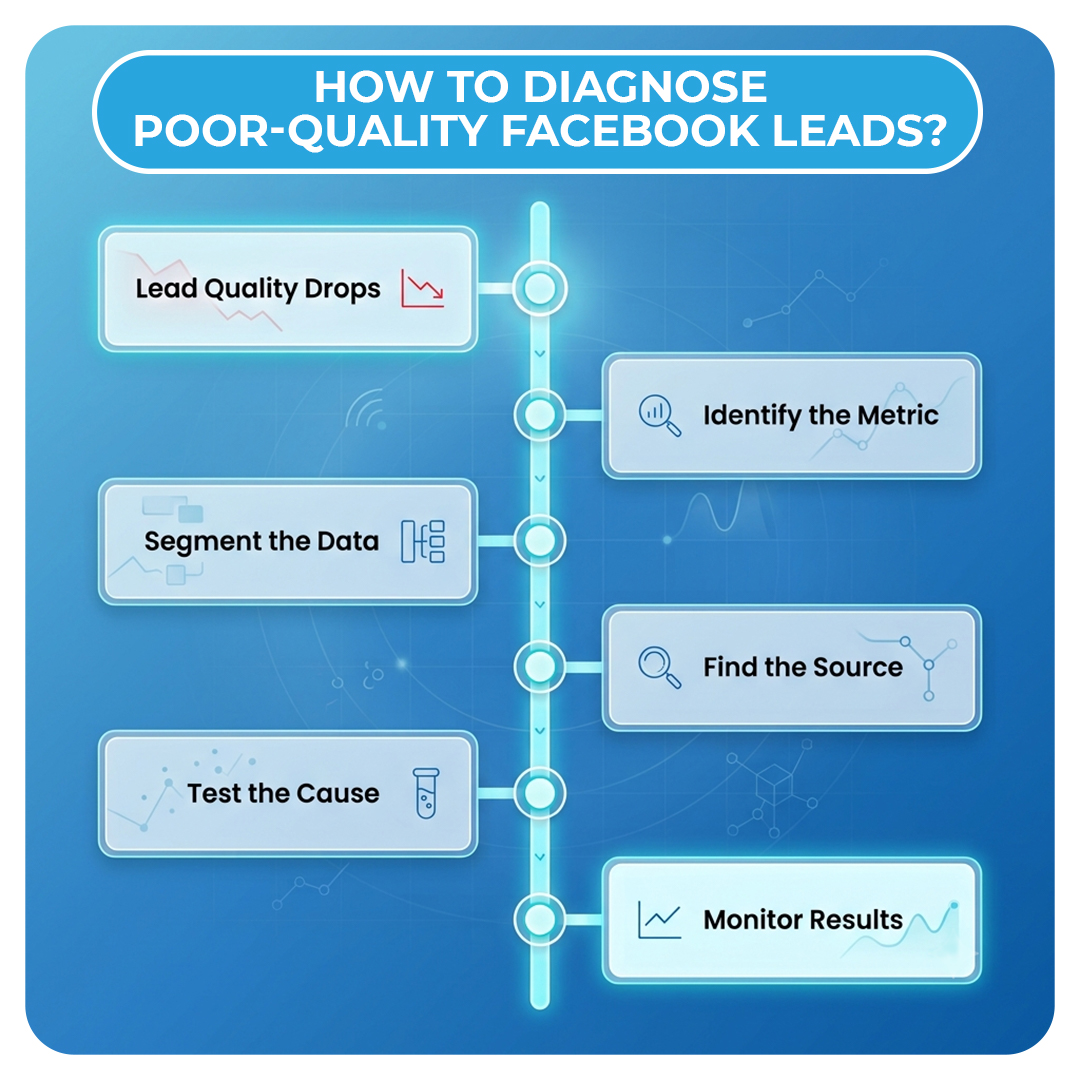
Each stage plays a distinct role:
- Lead Quality Drops. The first step is recognizing that downstream quality has actually changed, rather than assuming the issue is simply lead volume. A drop in leads and a drop in lead quality are different problems that require different fixes.
- Identify the Metric. Determine which specific measure has shifted, whether that's qualification rate, contact rate, appointment rate, or another relevant indicator further down the funnel.
- Segment the Data. Break results down across campaign, audience, placement, creative, form, and timeframe to narrow down where the change is showing up.
- Find the Source. Use that segmentation to identify where the weaker leads are concentrated, whether that's a specific audience segment, a particular placement, or a certain ad variation.
- Test the Cause. Make a targeted change based on what the data points to, rather than adjusting multiple variables simultaneously whenever it's practical to isolate the test.
- Monitor. Track whether lead quality actually improves after the change, and whether that improvement holds over time rather than being a temporary blip.
Fix Lead Quality Before Increasing the Budget
This brings the discussion to the central scaling question every agency eventually faces: when is a campaign actually ready for more budget?
Here's the principle to hold onto: scaling multiplies the existing campaign behavior. If an agency increases the budget while poor-quality leads are still entering the funnel, the likely outcome is simply spending more money to generate more of the same problem, not a better one.
Before scaling, it's worth working through a short sequence:
- Establish a quality benchmark based on the client's own data
- Identify weak segments through the diagnostic process outlined above
- Test targeting and creative changes based on what the data shows
- Monitor downstream lead quality, not just platform metrics
- Confirm that improvements are sustained over more than a single reporting period
- Increase spend gradually while continuing to monitor both volume and quality
None of this should be treated as a rigid universal rule. Campaign conditions, client objectives, market size, available budget, and the quality of available data can all differ from one account to the next. But the underlying logic holds across most situations: scaling should follow evidence that the campaign is attracting the right prospects, not simply evidence that the campaign is capable of spending more money.
Use White Label Facebook Ads to Support Ongoing Optimization
Improving lead quality is not a one-time task. It requires ongoing attention across every client account an agency manages.
Why Agencies Need Fulfillment Capacity
Maintaining the lead-quality workflow requires recurring work, including:
- Campaign monitoring: Tracking performance and identifying issues early.
- Audience refinement: Adjusting targeting based on lead quality and campaign data.
- Creative testing: Testing different ad variations to identify what resonates.
- Budget management: Adjusting spend based on campaign performance.
- Performance analysis: Reviewing campaign and lead-level data.
- Optimization and reporting: Making ongoing improvements and communicating results.
As an agency takes on more clients, maintaining this level of attention across every account can become an execution challenge. The issue isn't always a lack of strategic knowledge. Agencies also need enough fulfillment capacity to implement, monitor, test, document, and refine campaigns consistently.
How White Label Facebook Ads Can Help?
This is where facebook marketing outsource arrangements can be relevant for growing agencies. A white label fulfillment partner can provide additional execution capacity while the agency retains control of client relationships, strategic direction, campaign priorities, and communication.
A white label Facebook advertising agency partnership may support areas such as:
- Campaign setup and maintenance
- Audience targeting
- Creative testing
- Campaign optimization
- Performance monitoring
- Reporting
This allows an agency offering facebook ads services to expand its fulfillment capacity without building and training an entirely new internal team for every client.
White label support does not automatically improve lead quality or guarantee better results. The diagnostic and optimization process still matters. Fulfillment support simply makes it easier to execute that work consistently at scale.
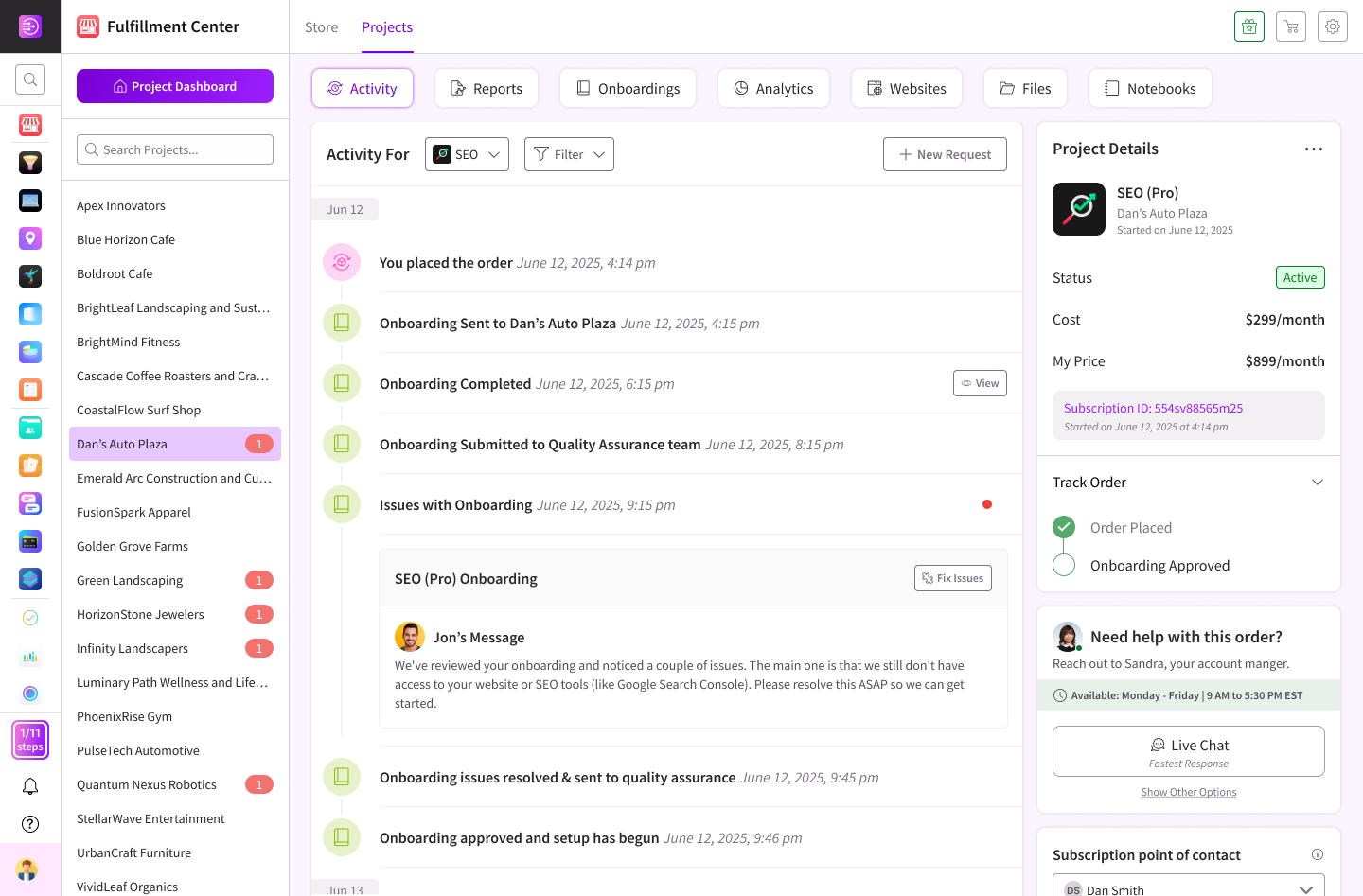
DashClicks provides 100% white label Facebook Ads fulfillment for agencies, supporting the recurring work required to manage client campaigns.
Its Facebook Ads service includes:
- Campaign setup
- Quality assurance
- Campaign approval and launch
- Monthly maintenance
- Ongoing optimization
- Audience split testing
Agencies retain ownership of the client relationship and campaign strategy while using DashClicks as a fulfillment partner.
The agency remains responsible for:
- Client communication
- Campaign strategy
- Setting priorities and goals
- Making strategic decisions
DashClicks provides the execution capacity behind the scenes. This makes the partnership complementary to agency expertise rather than a replacement for it.
The value is straightforward: additional execution capacity, consistent campaign management, and ongoing optimization support.
However, white label Facebook Ads does not guarantee better lead quality, lower CPL, higher conversion rates, or increased revenue. Those outcomes still depend on the diagnostic and optimization process applied to each client's campaign.
Build a Repeatable Lead-Quality Checkpoint Before Scaling
The final piece is turning everything above into a repeatable process rather than a one-time audit.
A useful internal workflow follows this sequence: Define Quality → Launch → Monitor → Evaluate → Diagnose → Optimize → Validate → Scale.
Before recommending a budget increase on any Facebook Ads account, agencies can run through a short checklist:
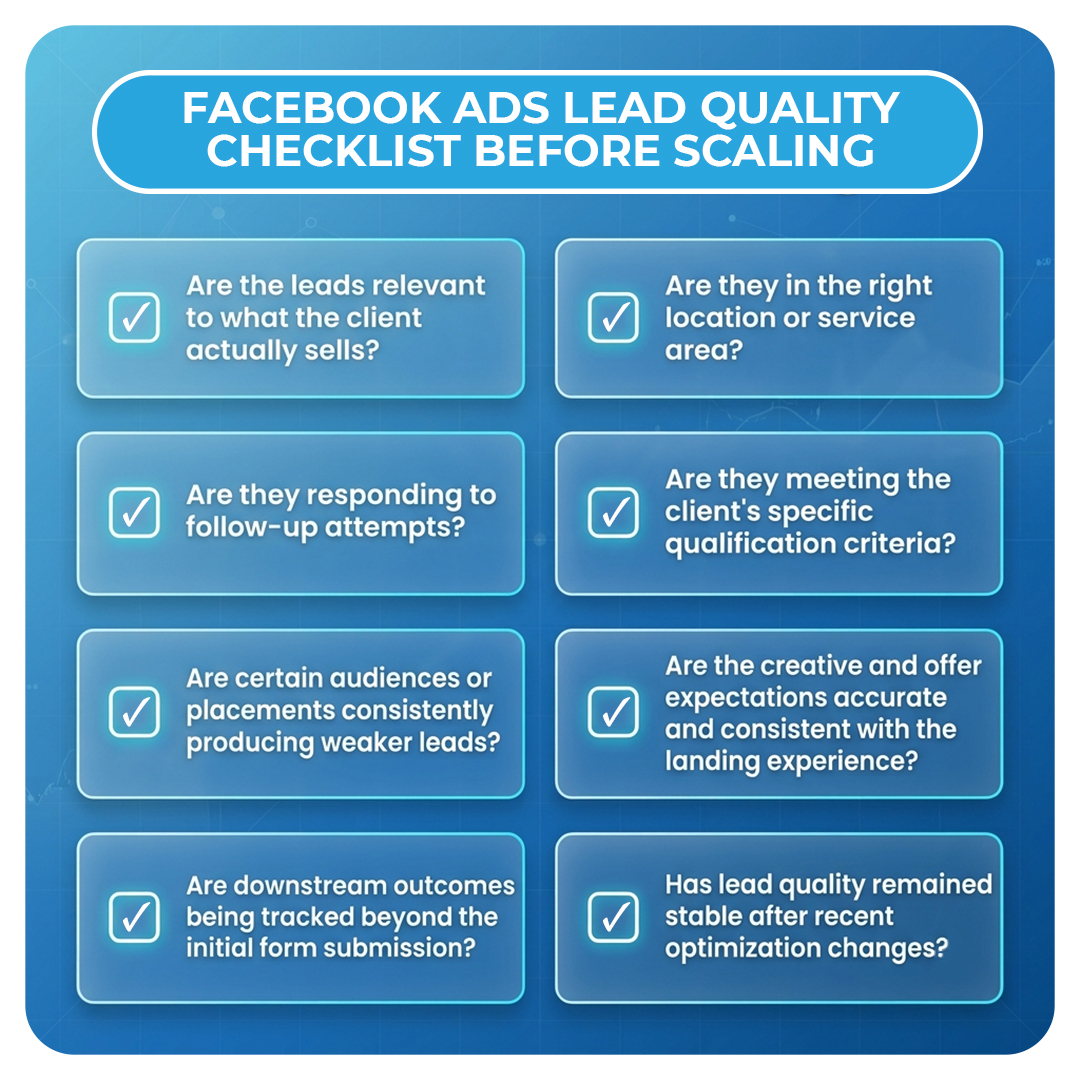
This checkpoint helps prevent agencies from treating a budget increase as the first response to disappointing campaign performance.
Scale What's Actually Working
Scaling should follow reliable lead quality, not replace fixing it. Facebook Ads campaigns should be evaluated against actual business outcomes, not just Ads Manager metrics. Lead volume and CPL are useful, but they don't tell the full story.
Finding where lead quality drops, testing targeted improvements, and monitoring results over time helps agencies scale based on stronger evidence. Increase budgets only when campaigns consistently attract the right prospects and generate meaningful downstream outcomes.
For agencies managing multiple client accounts, white label Facebook Ads fulfillment can provide the capacity needed for ongoing monitoring, testing, implementation, and optimization. It doesn't replace strategic diagnosis, but it can help turn that strategy into consistent execution across client accounts.


.svg)


.svg)
.svg)
.svg)
.svg)
.svg)