

.svg)

.svg)
.svg)
.svg)
.svg)
.svg)
Running an agency means wearing too many hats at once. One hour you are reviewing a client report, the next you are sorting emails, then you are back to chasing invoices. None of these tasks are particularly hard. But together, they eat up your day in small bites until there is barely any time left for the work that actually grows the business.
This is the trap most agency owners fall into. Not because they are bad at managing time, but because they never stop to ask: does this task actually need me?
The honest answer is that a large chunk of your weekly work does not. And that is where smart delegation comes in.
Why Agencies Struggle to Let Go?
There is a reason many agency owners hold on to repetitive tasks for too long. At first, the team was small. You do everything yourself because that is just how it works. Then the business grows, but the habit of handling everything personally does not go away.
Some people feel that handing off tasks means losing control. Others worry about the time it takes to explain things properly. And some just assume it is faster to do it themselves.
All of this is understandable. But none of it is actually true once you build the right system and bring in the right person.
The First Step: Separating "Your Work" from "The Work"
Before you can delegate anything, you need to get clear on one thing. Which tasks require your expertise, judgment, or relationships? And which tasks just require someone following a clear process?
Here is a simple way to think about it:
- Sending a proposal requires your thinking. But formatting that proposal into a PDF does not.
- Writing a strategy for a client requires your knowledge. But pulling competitor data to support it? Someone else can do that.
- Handling a difficult client call needs you. But scheduling that call and sending the follow-up summary does not.
This separation is not always obvious at first. A useful exercise is to track your time for one week. Not loosely. Write down everything. You will be surprised how many hours go toward things that follow a predictable pattern every single time. Those are your delegation targets.
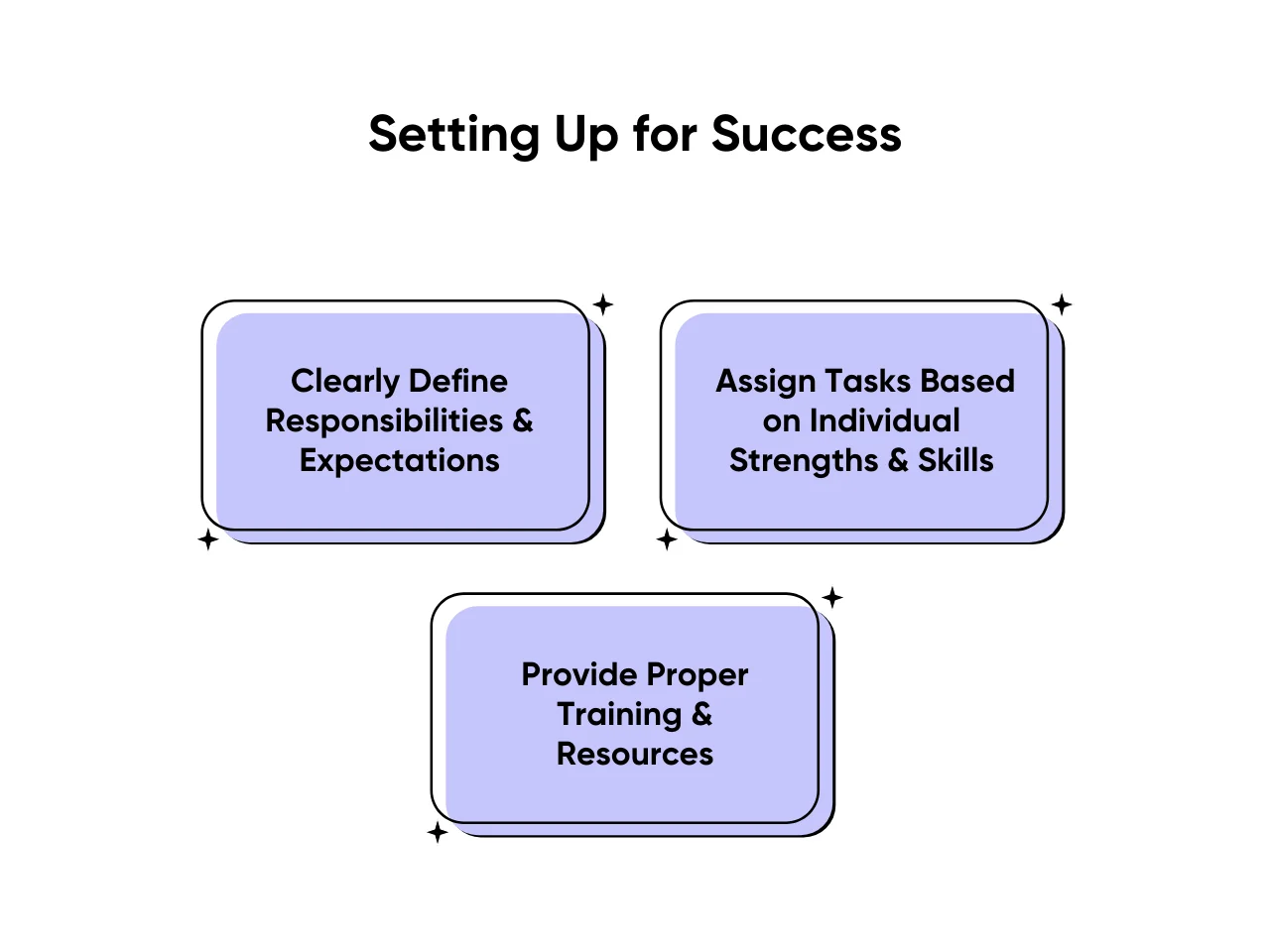
Image Source: Pearl Talent
Tasks You Can Hand Off Right Away
Once you start looking, the list gets long quickly. Here are the categories where most agencies waste the most time:
Inbox and Communication Management
- Responding to generic client questions
- Following up on unpaid invoices
- Sending meeting confirmations
- Filtering spam from real inquiries
All of this can be handled by someone working to a clear playbook you set up once.
Reporting
If you are manually pulling data from tools and dropping numbers into a spreadsheet or slides every week, that is exactly the kind of task a remote assistant can own. You just review the final output.
Scheduling and Coordination
- Managing client calls, team syncs, and onboarding sessions
- Sending reminders and calendar invites
- Rescheduling when things shift
A remote assistant handles all of this without you ever opening a calendar app.
Research Tasks
- Prospect research and lead list building
- Competitor comparisons
- Finding contact information
- Putting together a list of potential partners
These tasks take time but not expertise.
Social Media Scheduling
If content is already approved, someone else can format it, schedule it, and track basic engagement numbers. You stay out of the tool entirely.
Administrative and Finance Tasks
- Invoice tracking and payment follow-ups
- Creating expense reports
- Maintaining simple records and spreadsheets
None of this needs the agency owner.
When to Hire a Virtual Assistant?
If the list above sounds familiar, you are already at the point where it makes sense to hire a virtual assistant. Not eventually. Now.
Most agency owners wait too long on this. They think they need to reach a certain size or revenue level first. But the reality is that getting off the hamster wheel of repetitive work is often what allows the business to grow in the first place. When you are not buried in admin, you can focus on landing bigger clients, improving your service, or building the systems that create real leverage.
The key is not finding someone to dump random tasks on. It is finding someone you can train properly, give clear instructions to, and then actually trust to follow through. Start with two or three tasks. Let them build familiarity with how you work. Then gradually expand what they own.

Image Source: MyTasker
What Good Delegation Actually Looks Like?
There is a difference between handing something off and explaining it poorly, then being frustrated when it comes back wrong.
Here is what good delegation requires:
- Clear Documentation: Before you ask someone to handle a task, write down exactly how you do it. A step-by-step process with examples, preferred tools, and what a finished result should look like. A short Loom video often works better than a written guide.
- A Review Process: Do not assume everything will be perfect on day one. Build in a check for the first few weeks until you are confident in the output.
- Specific Feedback: If something is not right, say what specifically was off and how you want it done differently. Vague frustration does not help anyone improve.
Tasks That Are Not Good Fits for Delegation
Not everything should go on the list. Some things really do need you.
- Client Strategy and Recommendations: Clients are paying for your thinking, not someone else following a template.
- Difficult Client Conversations: If a client is unhappy or there is a sensitive situation to navigate, that should not be outsourced.
- Highly Unpredictable Work: If a task requires constant judgment calls that are hard to document, it is not the right fit yet.
- New Processes You Have Not Figured Out Yourself: You cannot document something you have not done enough times to understand properly.
How to Think About Building This System Over Time?
The goal is not just to get a few tasks off your plate this week. It is to build a structure where more and more operational work flows away from you over time. Think of it in three phases:
Phase 1: Identify and document Find the most time-consuming repetitive tasks. Write them down clearly. Bring in help and spend a few weeks building confidence in the handoff.
Phase 2: Spot the patterns Look at what is still reaching you. Are there decisions you keep making that follow a predictable logic? Can those be turned into rules your assistant can follow without checking in?
Phase 3: Build real leverage You now have an assistant or small team running a significant portion of the operational work. Your job becomes reviewing key outputs, maintaining client relationships, and focusing on growth.
This does not happen overnight. But it does not take years either. The agencies that get there fastest are the ones that start early and iterate quickly rather than waiting for perfect systems before beginning.
How DashClicks Helps You Actually Delegate (Without Creating More Work)?
If the goal is to get repetitive work off your plate, the biggest mistake agencies make is trying to delegate and build every system from scratch at the same time. That is where platforms like DashClicks fit in, they give you a ready-made operational layer so your assistant is not starting from zero.
Instead of stitching together multiple tools for reporting, client communication, and task tracking, DashClicks centralizes a lot of the work you are trying to offload anyway.
1. Automated Reporting (Eliminates Weekly Manual Work)
One of the easiest tasks to delegate, reporting, often still ends up taking hours because the process itself is messy.
With DashClicks’ marketing reporting software :
- Data from multiple channels is pulled automatically
- Reports are generated in a consistent format
- Your assistant only needs to review and send, not build from scratch
This directly aligns with the blog’s idea: you review outputs, not assemble them.
2. Client Communication & CRM (So You’re Not Stuck in Your Inbox)
Inbox management is one of the biggest time drains mentioned earlier. DashClicks addresses this with its built-in contacts management software and communication tools.
Using DashClicks CRM + Inbox:
- Your assistant can manage client conversations in one place
- Follow-ups, updates, and responses can follow predefined workflows
- You only step in when something actually needs your judgment
This reduces the constant back-and-forth that keeps pulling you out of deep work.
3. Task & Workflow Management (Clear Playbooks for Delegation)
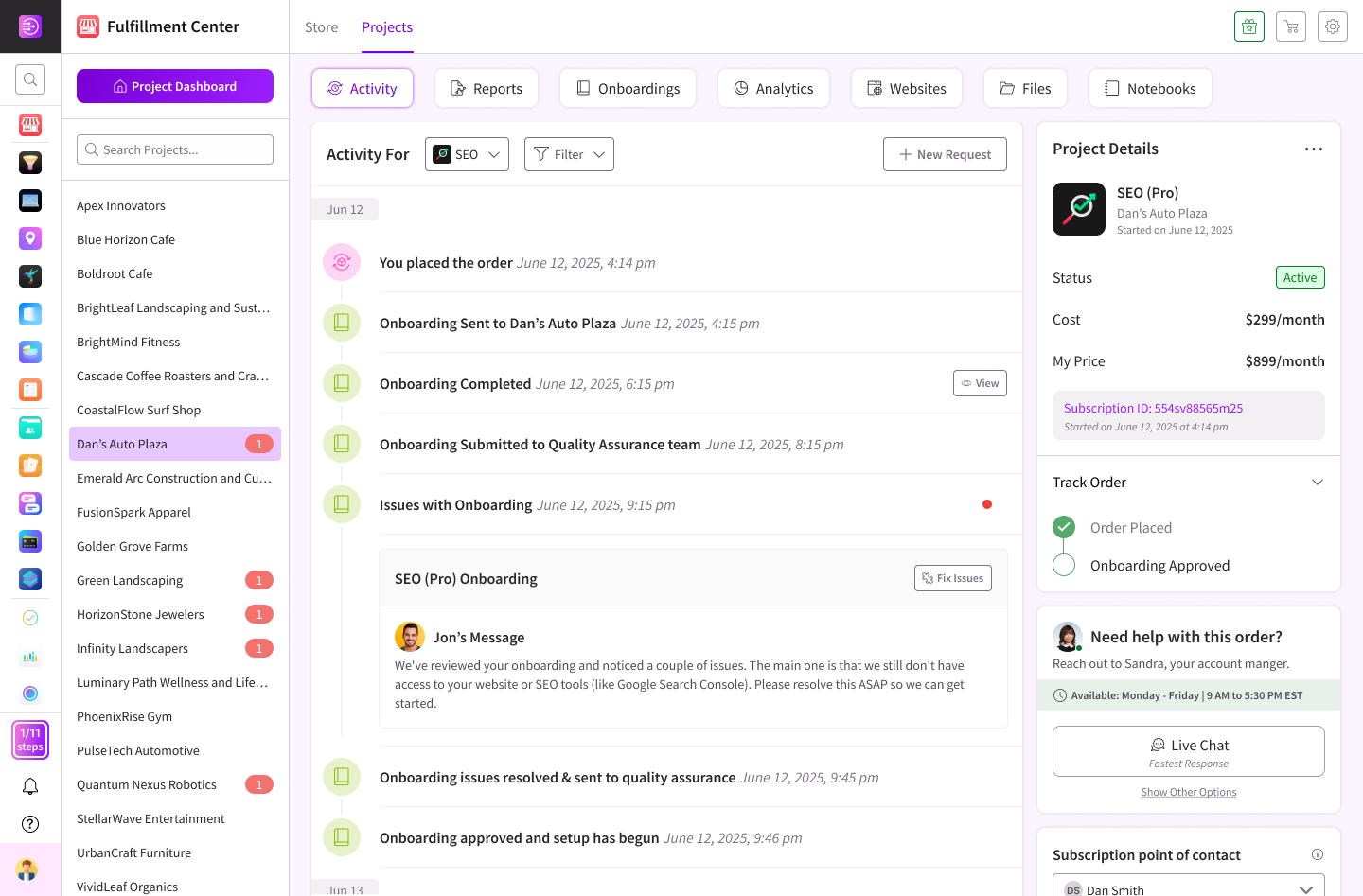
Delegation breaks when there is no structure. DashClicks includes a workflow system that helps you standardize tasks.
With DashClicks Tasks / Fulfillment system:
- You can create repeatable processes for things like onboarding, reporting, and follow-ups
- Your assistant follows a defined workflow instead of asking what to do next
- Progress is visible without you chasing updates
This directly supports what the blog emphasizes: clear processes over ad-hoc delegation.
4. White Label Dashboard (Cleaner Handoff to Assistants + Clients)
When tools are scattered, assistants struggle to manage work efficiently. DashClicks provides a centralized, white label dashboard.
- Your assistant works inside one system instead of juggling 5–6 tools
- Clients can access reports and updates without emailing you
- You reduce both internal confusion and client dependency on you
5. Lead Management & Prospecting Support
The blog mentions research and lead generation as easy delegation wins. DashClicks supports this through its lead management software.
With DashClicks lead management features:
- Your assistant can manage leads, track prospects, and organize outreach data
- You stay focused on closing, not compiling lists
Where DashClicks Fits in Your Delegation System?
DashClicks does not replace a virtual assistant, it makes your assistant effective faster.
- Without a system: You delegate tasks → spend time explaining → fix mistakes → repeat
- With DashClicks: You delegate tasks → plug them into structured workflows → review outputs
That shift is what turns delegation from “more work upfront” into actual leverage.
A Practical Way to Start This Week
Pick one task from your current week that you have done at least three times in the past month. Write down how you do it. That is the first thing you hand off.
Do not overthink the whole system before you start. One task, properly documented, properly handed off, properly reviewed. Then build from there.
The agencies that scale well are not the ones with the most talented founders working the most hours. They are the ones that figured out early what the founder actually needs to own and build systems around everything else.
Your time is the most limited resource in the business. Start treating it that way.



.svg)


.svg)
.svg)
.svg)
.svg)
.svg)