

.svg)

.svg)
.svg)
.svg)
.svg)
.svg)
A high CTR does not automatically mean a campaign is succeeding. A low CPC does not confirm that ad spend is efficient. And a strong click volume does not guarantee qualified leads or actual sales. Clients care about business outcomes, and the gap between what Google Ads reports and what clients actually need is where many campaigns quietly underperform.
Agencies that close this gap typically work across three levels of campaign optimization:
- Traffic-focused optimization (clicks, impressions, CTR)
- Conversion-focused optimization (leads, form fills, purchases)
- Business-outcome-focused optimization (qualified leads, revenue, cost per acquisition)
The further up this ladder an agency operates, the more meaningful their work becomes to the client. Getting there requires a clear framework: start with the client goal, map it to search intent, analyse conversion data, refine based on performance, and repeat consistently.
According to WordStream's 2026 benchmark analysis of more than 13,000 US-based search advertising campaigns, the average conversion rate across Google Search campaigns is 8.18%. That figure is useful context, but no single benchmark should define success for every account. Performance should ultimately be judged against each client's goals and the economics behind their conversions.
This blog walks through how agencies can build and maintain that connection between search terms and client outcomes at scale.
Why Search Terms Should Be Connected to Client Conversion Goals?
More traffic is rarely the client's final objective. Most clients want something specific to happen as a result of their advertising spend.
1. Start With What the Client Actually Wants
Before reviewing a single search term, agencies need to understand what the client considers a successful outcome. Common objectives include:
- Inbound lead generation
- Phone calls
- Appointment bookings
- Ecommerce purchases
- Quote requests
- High-value or enterprise sales
- Qualified leads within a specific customer profile
The same search term can be genuinely valuable for one client and completely irrelevant for another. A query like "commercial kitchen equipment rental" might be a high-priority conversion term for an equipment leasing company and a waste of budget for a retailer selling consumer appliances.
The Client Goal Alignment
2. Search Volume Does Not Equal Business Value
High-volume informational searches often pull significant traffic without producing meaningful conversions. Lower-volume commercial searches, searched by people who are ready to act, can generate far more business value at a lower total cost.
For example, "how to clean a commercial espresso machine" may generate thousands of monthly searches. "Commercial espresso machine service Sydney" may generate far fewer, but nearly every click comes from someone with an immediate service need. Search intent matters more than volume alone.
3. Define the Conversion Before Evaluating the Search Term
Agencies need to clarify two things before drawing any conclusions from search-term data:
- Primary Conversion: The main action the campaign is designed to generate (a phone call, a form submission, a purchase).
- Secondary Conversion: Supporting actions that may indicate intent (a page visit, a video view, a catalog download).
Without clear conversion tracking aligned to client-defined business value, search-term analysis becomes guesswork.
Agencies cannot determine whether a search term is successful until they define what "successful" means for the client.
Start With the Client Goal and Map It to Search Intent
Once the client's goal is defined, the next step is identifying which types of searches are most likely to support it. The table below provides a practical starting point.
1. Look Beyond the Keyword
There is an important distinction that shapes how agencies should think about this work.
A keyword is what an advertiser adds to a campaign. A search term is the actual query a user typed into Google. The two are not always the same.
Google defines a search term as the specific word or phrase that triggered an ad. Broad match and phrase match keywords can attract a wide range of actual queries, some of which were never anticipated when the campaign was built. Reviewing actual search queries regularly often reveals intent signals that were not visible at the keyword level.
2. Build an Intent Framework
To make search-term reviews more consistent across accounts, agencies can classify queries:
- High-intent/Conversion-ready: Users actively looking to buy, book, or enquire
- Commercial Research: Users comparing options before making a decision
- Informational: Users seeking answers rather than services
- Irrelevant: Queries unrelated to the client's offering
- Existing Customer or Brand: Searches from people already familiar with the business
- Low-value or Mismatched Intent: Searches that technically relate to the industry but fall outside the target customer profile
Applying this framework consistently makes it easier to evaluate terms against the client's actual goal rather than reacting to individual queries in isolation.
Use Search-Term Data to Identify What Actually Converts
Clicks tell you what people did. Conversion data tells you what those clicks were worth. Agencies should evaluate search terms based on outcomes.
The metrics that matter most at this stage:
- Impressions
- Clicks
- CTR
- Cost
- Conversions
- Conversion rate
- Cost per conversion
- Conversion value (where tracked)
Google's Search Terms Report shows which actual queries triggered ads and how those queries performed across these metrics. It is one of the most direct ways to understand whether a campaign is reaching people with genuine buying intent.
1. Find Search Terms Producing Valuable Conversions
Within any active campaign, search terms tend to cluster into a few distinct categories:
- Terms generating consistent, quality conversions
- Terms converting at or below the target CPA
- Terms generating high-value conversions relative to their cost
- Terms generating many clicks but few or no conversions
- Terms generating leads that fall outside the client's ideal customer profile
Each category requires a different response. Conflating them leads to poor decisions.
2. Look Beyond Conversion Volume
Conversion quantity and conversion quality are not the same thing.
Ten low-quality form submissions may be less valuable than three qualified leads that turn into sales.
When CRM data or sales outcomes are available, agencies can build a more accurate picture of which search themes are actually producing business value. This is especially important for B2B clients or service businesses where lead quality varies significantly.
3. Use Search Categories to Identify Broader Patterns
Google's Search Terms Insights groups related queries into themes, which makes it easier to spot patterns across large accounts. Rather than reviewing hundreds of individual terms, agencies can identify which categories of searches are consistently driving conversions and which are consuming budgets without producing results.
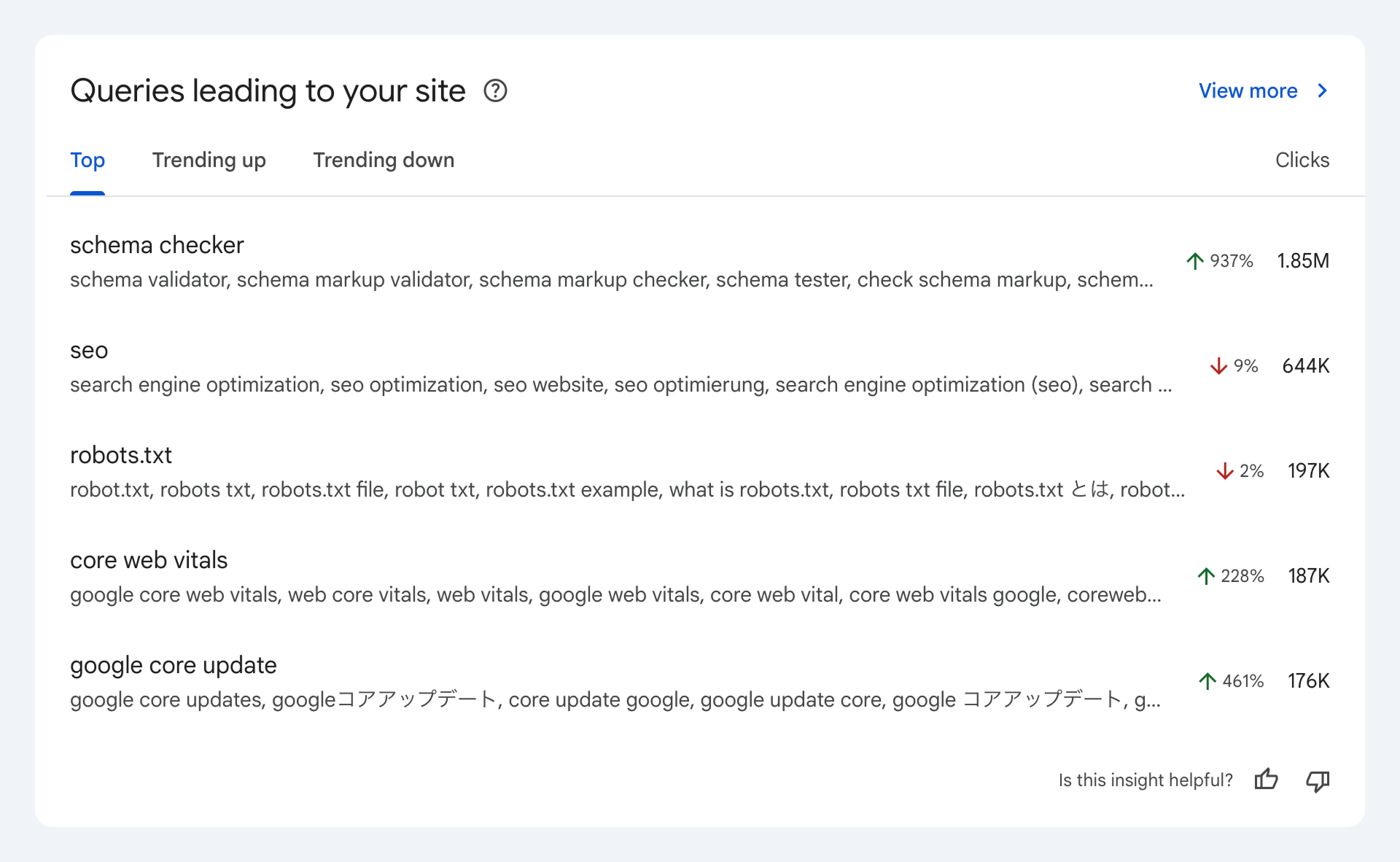
Image Source: Google Search Central
Search-term optimization should ultimately reveal which types of searches contribute to the client's actual business outcome, not just which queries generated the most activity.
Refine Search Terms With Negative Keywords and Landing-Page Alignment
Search-term analysis only creates value when it leads to action. The next step is turning those insights into practical campaign changes.
1. Turn Irrelevant Searches Into Negative Keywords
Google recommends using irrelevant search terms as negative keywords to prevent ads from appearing in response to queries that will not support campaign goals. Common candidates include:
- Searches for services or products the client does not offer
- DIY or research-oriented queries when the client needs qualified buyers
- Job and careers searches
- "Free" or "cheap" searches when they conflict with the client's positioning
- Informational queries that add traffic without supporting the conversion objective
That said, not every unconverted search term should be excluded immediately.
Some queries need more data before a decision can be made. Some informational searches may assist the customer journey even without converting directly. Cost, volume, intent, and conversion behaviour should all factor into the decision. Negative keyword choices should reflect the client's business model, not a blanket rule about low conversion rates.
2. Align Search Terms With Landing Pages
Even well-targeted search terms underperform when the landing page does not support the conversion. A quick alignment check includes:
- Does the landing page address the specific service or product being searched?
- Does it support the intended conversion (form, call, purchase)?
- Is the call to action appropriate for the search intent?
- Are high-intent searches being routed to generic or unrelated pages?
Misalignment here is one of the most common reasons well-structured campaigns fail to convert at the expected rate.

Image Source: Landing
3. Connect Search-Term Analysis to Ad Messaging
High-performing search themes reveal how potential customers describe their own problems and needs. That language is directly useful for:
- Ad copy and headlines
- Landing page messaging
- Offer framing
- Calls to action
Agencies that apply search-term insights across creative and landing page decisions create a more consistent experience from query to conversion.
Turn Search-Term Insights Into Ongoing Campaign Optimization
Search-term analysis is not a one-time cleanup. It should shape ongoing campaign decisions across budget, bidding, keyword strategy, and creative direction.
1. Adjust Budget and Bidding Around Conversion Performance
Budget and bidding decisions should follow conversion data, not surface metrics alone. Practical adjustments include:
- Directing more budget toward search themes generating consistent conversions
- Reducing spend on themes generating traffic without meaningful outcomes
- Avoiding bid decisions made purely on CTR or CPC
- Incorporating conversion value into bidding strategy where tracking supports it
2. Expand What Works
When a search theme consistently drives valuable conversions, it is worth building on it deliberately. This may involve:
- Evaluating whether the theme should become an explicit keyword target
- Developing closely related keyword themes around the same intent
- Writing ad copy that speaks directly to the language and needs of that audience
- Creating dedicated landing pages for high-performing search categories
3. Continue Refining What Does Not
Ongoing refinement applies to the full picture: negative keywords, match types, intent shifts over time, and changes in how people search as campaigns mature.
Google recommends using search-term data to refine keyword lists and match types on a recurring basis. Treating the Search Terms Report as a periodic cleanup exercise rather than a continuous input is one of the more common gaps in agency PPC management services.
How Agencies Scale Search-Term Optimization Across Client Accounts?
Understanding the process is one thing. Executing it consistently across dozens of accounts is a different challenge entirely.
1. Create a Repeatable Search-Term Review Process
A structured workflow makes it easier to maintain quality without relying on individual judgment each time. A practical review process looks like this:
- Pull and review search-term data for the period
- Identify high-value and low-value search themes
- Compare findings against the client's current conversion goals
- Evaluate conversion quality, not just volume
- Add negative keywords where the evidence supports it
- Flag expansion opportunities based on performing themes
- Document all optimization decisions made
- Translate key insights into client-facing reporting language
2. Standardise the Process Without Making Every Account Identical
Standard operating procedures create consistency without removing judgment. Client goals still determine which decisions are made. Different industries require different interpretations of search intent. A legal services client and an ecommerce brand have almost nothing in common when it comes to defining conversion quality.
Standardisation should apply to the process. Decisions should still reflect each client's context.
3. Connect Search-Term Insights to Client Reporting
Instead of reporting:
"We added negative keywords this month."
A more useful explanation is:
"We identified search themes consuming the budget without producing the type of leads you're targeting and refined the campaign to reduce that wasted spend."
This shift in reporting language makes PPC performance more meaningful to clients and helps them understand what they are paying for beyond the metrics.
Scale Google Ads Delivery With DashClicks' White Label PPC
Consistent search-term optimization across multiple accounts requires recurring work. It is not something that can be done once per quarter and expected to produce reliable results.
The ongoing requirements include:
- Campaign monitoring and performance tracking
- Regular search-term analysis
- Negative keyword management
- Conversion-focused optimization
- Performance reporting
- Ongoing campaign adjustments based on new data
For agencies managing a growing number of client accounts, DashClicks' white label PPC services provide the fulfillment infrastructure to support this recurring work without requiring agencies to scale their internal teams proportionally.
The division of responsibility works as follows:
Agency: Owns the client relationship, defines the strategy, communicates goals, and makes final decisions.
Fulfillment Partner: Supports campaign execution, ongoing optimization, performance monitoring, and recurring PPC management.
The platform provides Google Ads campaign management, ongoing optimization aligned to client goals, white label reporting, client dashboards, and dedicated fulfillment support. These capabilities are designed to integrate with the agency's existing workflow rather than replace it.
The core benefit is practical: DashClicks helps agencies maintain the recurring PPC execution required to turn search-term insights into ongoing campaign optimization, without requiring the agency to build a larger in-house fulfillment team.
For agencies growing their PPC offering, this kind of fulfillment partnership makes consistent delivery across multiple accounts operationally realistic.
What White Label PPC Adds to Search-Term Optimization?
Search-term optimization is not just a strategy task; it requires consistent execution. Every client account generates new search queries, performance data, negative keyword opportunities, and optimization decisions. As agencies take on more accounts, maintaining this level of attention internally can become difficult.
White label PPC fulfillment gives agencies additional execution capacity without requiring them to give up strategic control. The agency can define the client's goals, determine what successful conversions look like, and guide the overall strategy, while the fulfillment team supports the recurring campaign work.
This can include:
- Reviewing search-term performance
- Identifying irrelevant or low-value queries
- Expanding successful search themes
- Monitoring conversion and cost trends
- Implementing campaign optimizations
- Tracking and reporting on changes
The key benefit is the connection between strategy and execution. Agencies can identify which searches are driving meaningful results and have the fulfillment capacity to consistently act on those insights across client accounts.
White label PPC allows agencies to stay focused on client strategy while maintaining the ongoing campaign execution needed to turn search-term insights into measurable improvements.
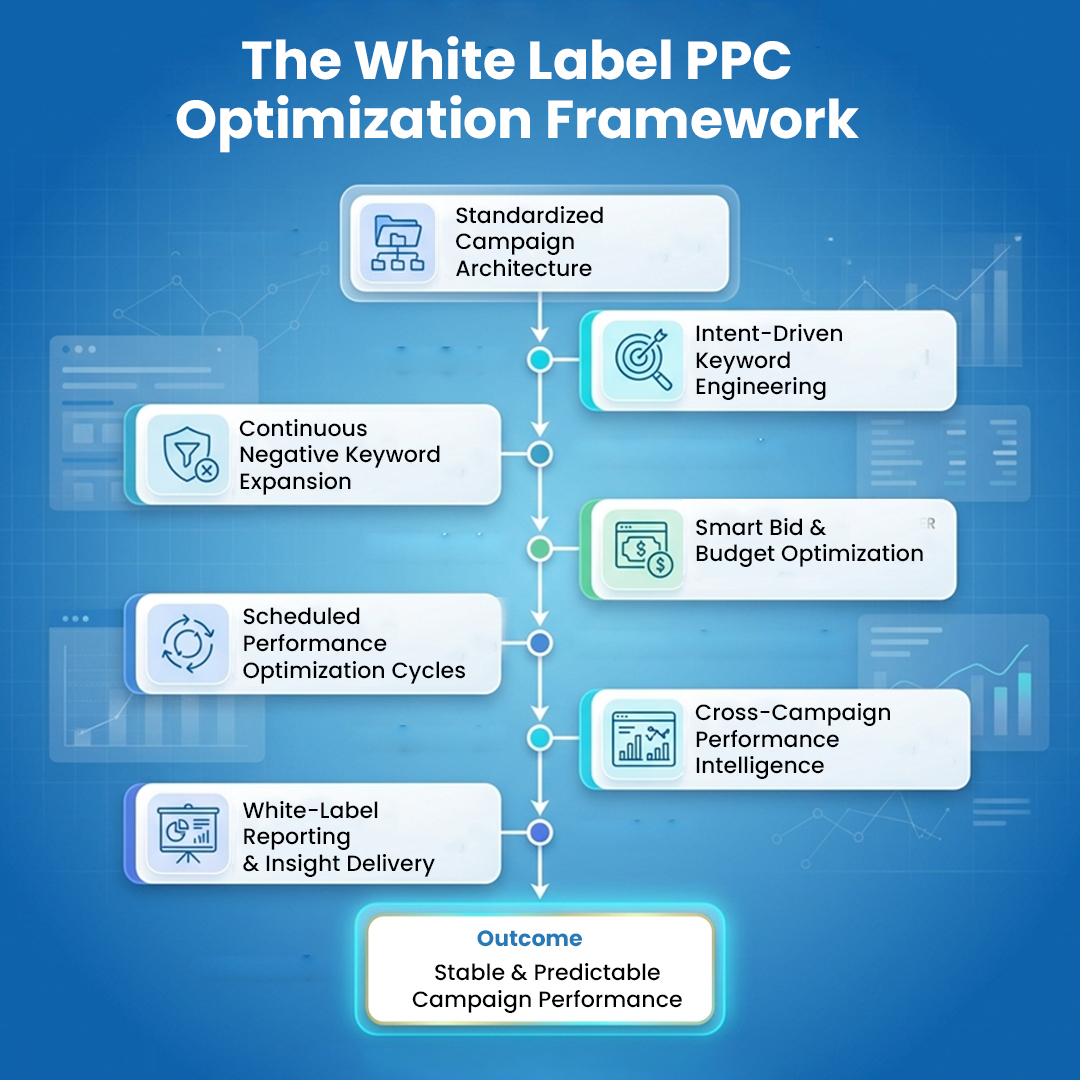
Further Reading: White Label PPC: Your Complete Agency Growth Guide
Successful Search Terms Are Defined by Client Goals, Not Click Volume
The search terms that generate the most clicks are not always the ones delivering the most business value. Agencies should evaluate search terms against a more complete picture:
- Search intent
- Conversion performance
- Lead quality
- Conversion value
- Client business objectives
Search-term optimization is a recurring process. Intent shifts, campaigns mature, and client goals evolve. Agencies that treat this as ongoing work rather than a periodic task are better positioned to reduce wasted spend and improve campaign efficiency over time.
For agencies managing multiple accounts, the larger challenge is not knowing what to do. It is executing it consistently across every client, every month. Aligning search terms with conversion goals is how agencies make Google Ads performance genuinely meaningful to the clients who depend on it.



.svg)


.svg)
.svg)
.svg)
.svg)
.svg)