

.svg)

.svg)
.svg)
.svg)
.svg)
.svg)
Search engine rankings feel great — nothing signals success quite like seeing a client’s website move up to page one. But if you care about long-term success and real business impact, rankings are only the beginning. For agencies working with white label SEO partners, it’s essential to track deeper, more meaningful performance metrics. These advanced indicators show what really matters: traffic, engagement, conversions, and client satisfaction.
In this post, we’ll explore the most powerful metrics to measure beyond keyword positions, explain why they matter, and show how a white label SEO partner helps agencies deliver those results under their own brand.
Why “Beyond Rankings” Matters?
Many agencies stop at “we moved the site up on Google.” But for a business paying for SEO, what truly counts is what happens after users find their site. Think about it:
- A top-ranking page that gets no clicks adds little value.
- A site with high bounce rates wastes traffic.
- Page one rankings don’t guarantee conversions or revenue.
Focusing on advanced KPIs aligns your SEO program with real business goals — leads, sales, and retention. It improves transparency, trust, and long-term client satisfaction.
Plus, it gives you data to show return on investment (ROI). This matters especially when you’re reselling white label SEO: your clients expect more than just vanity metrics.
Advanced KPIs to Measure
Here’s a deeper look at useful KPIs beyond rankings and what they reveal about the overall health of an SEO campaign.
1. Organic Traffic and New Users
Looking at total organic traffic and the number of new users helps you see how many people are discovering your client’s site through search. These numbers tell you whether visibility is improving and whether your content is reaching the right audience.
Total organic sessions reflect search-driven volume. When this trend increases over several months, it usually shows stronger visibility, better search presence, and content that aligns with what users want.
The ratio of new vs returning organic users adds more context. High new-user numbers indicate your SEO is reaching new audiences and expanding the client’s presence. If the majority of traffic consists of returning visitors, it may signal the need to broaden keyword targeting, publish new content types, or explore untapped search opportunities.
Why it matters: Traffic opens the door to conversions and sales. High rankings only matter if people are actually visiting the site.
2. Click-Through Rate (CTR) from Search Results
Click-through rate measures how many people who see your page in search results actually click on it. It’s one of the fastest ways to understand whether your titles and descriptions are compelling.
A solid CTR (often somewhere between 3 and 10 percent depending on competition and intent) usually shows that your title tags, meta descriptions, and snippets match what users are looking for.
If you see strong rankings paired with a weak CTR, that’s a sign to improve meta tags, enhance schema markup for better rich snippets, or revise content to better match search intent. Even small adjustments can make a noticeable impact.
A healthy CTR ensures your visibility turns into website visits instead of impressions that go to waste.
3. Bounce Rate and Dwell Time / Session Duration
These engagement metrics help you understand how visitors interact with your site once they arrive.
Bounce rate measures how many people leave after viewing only one page. A high bounce rate often means the content, layout, or loading experience didn’t meet their expectations. It can also point to mismatched keywords or vague headlines that attract the wrong audience.
Average session duration and pages per session offer more insight into engagement. Longer sessions and multiple page views usually mean your content aligns with user intent, answers key questions, and encourages people to explore further.
Tracking bounce rate and engagement over time helps you refine navigation, page speed, structure, and content depth so visitors stay longer and get more value from the site.
4. Conversion Rate (CVR) and Goal Completions
The real purpose of SEO isn’t just visibility. It’s an action. Whether that’s booking an appointment, completing a purchase, filling out a form, or signing up for a newsletter, conversions are what clients care about.
Conversion rate measures how well organic traffic turns into meaningful actions. Tracking CVR over time shows whether your SEO work is attracting qualified visitors who are ready to move forward.
Goal completions reflect the actual number of leads, sign-ups, downloads, or purchases. They give you a clear view of the value your SEO work delivers instead of relying only on traffic trends.
For many businesses, these numbers hold more weight than rankings or impressions because they directly affect revenue.
Further Reading: Conversion Rate Optimization (CRO): 8 Ways to Get Started
5. Return on Investment (ROI) and Cost per Acquisition (CPA)
If you know how many organic conversions occurred and the average value of each customer, you can start calculating financial performance, which is essential for long-term planning.
Cost per acquisition shows how much it costs to secure a lead or customer through SEO efforts. If CPA drops over time, it’s a sign the campaign is becoming more efficient.
ROI helps you understand whether the client’s SEO investment is paying off. Showing that organic search contributes more revenue than it costs is one of the most powerful ways to reinforce the value of ongoing SEO.
These financial KPIs help agencies demonstrate transparency, justify budgets, and make smarter decisions about where to invest next.
6. Backlinks & Referring Domains Quality
SEO still depends significantly on off-site signals. But instead of just counting backlinks, focus on quality and relevance:
- Number of new referring domains (especially authoritative ones).
- Domain authority or trust metrics.
- Ratio of do-follow to no-follow links (depending on strategy).
Quality backlinks improve authority and long-term ranking stability.
7. Page Speed & Core Web Vitals
User experience matters. Search engines — and users — increasingly value performance.
- Measure page load times, First Contentful Paint (FCP), Largest Contentful Paint (LCP), and Cumulative Layout Shift (CLS).
- Fast, stable pages reduce bounce and improve engagement, especially on mobile.
With mobile traffic now dominating global web usage, performance matters more than ever.
8. Local SEO Signals
For local businesses, these matter a lot:
- Consistency of business listings and citations (Name, Address, Phone).
- Reviews and review growth rate.
- Local search traffic and conversions.
Measuring these helps build visibility for local queries and drives real customers through the door.
9. Content Engagement & Quality Signals
When your campaign includes content marketing (blogs, articles, guides), these metrics reveal its impact:
- Shares, social engagement, time on page — show how valuable the content is to readers.
- New organic keywords discovered per piece of content — indicates content is ranking for long-tail queries over time.
- Internal link performance — which pages keep users engaged and reduce bounce.
Strong content performance strengthens your site for long-term growth.
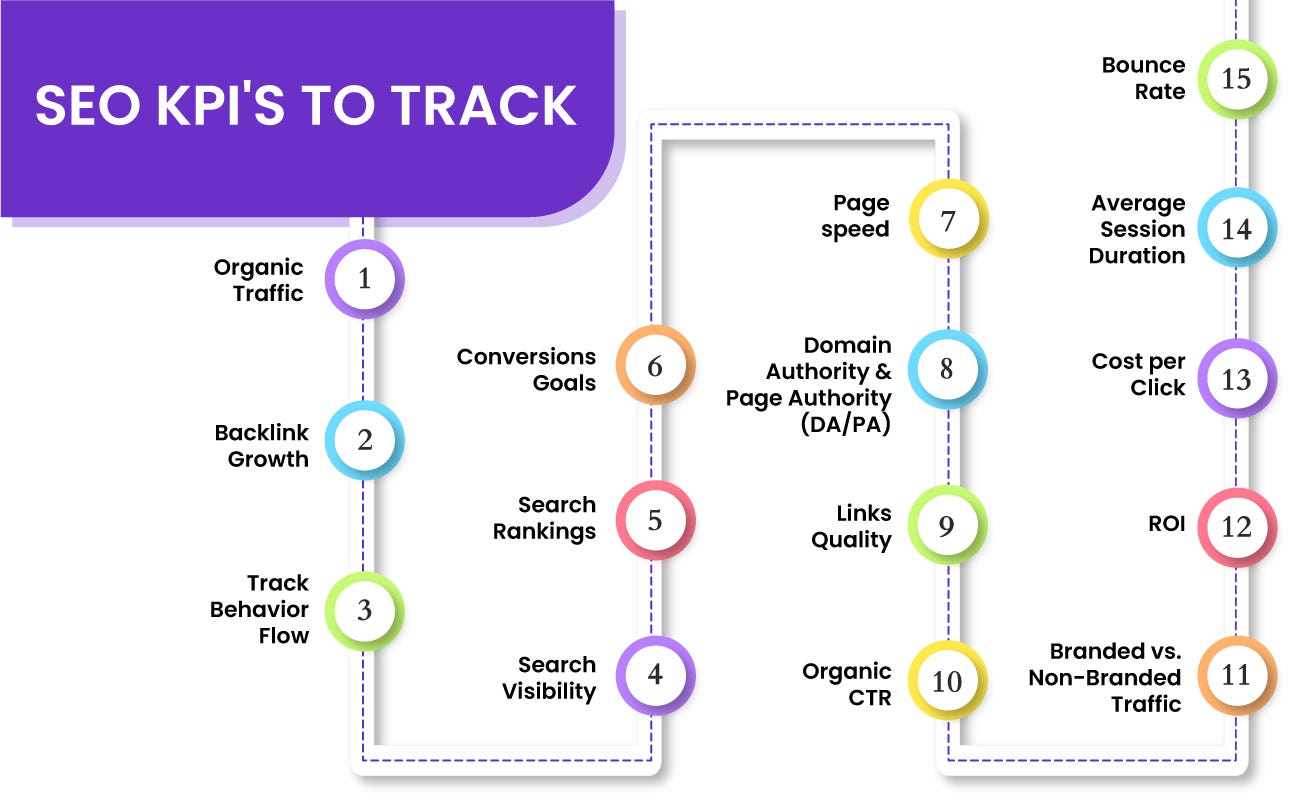
Image Source: Medium
How DashClicks Makes Tracking Advanced KPIs Easy for Agencies?
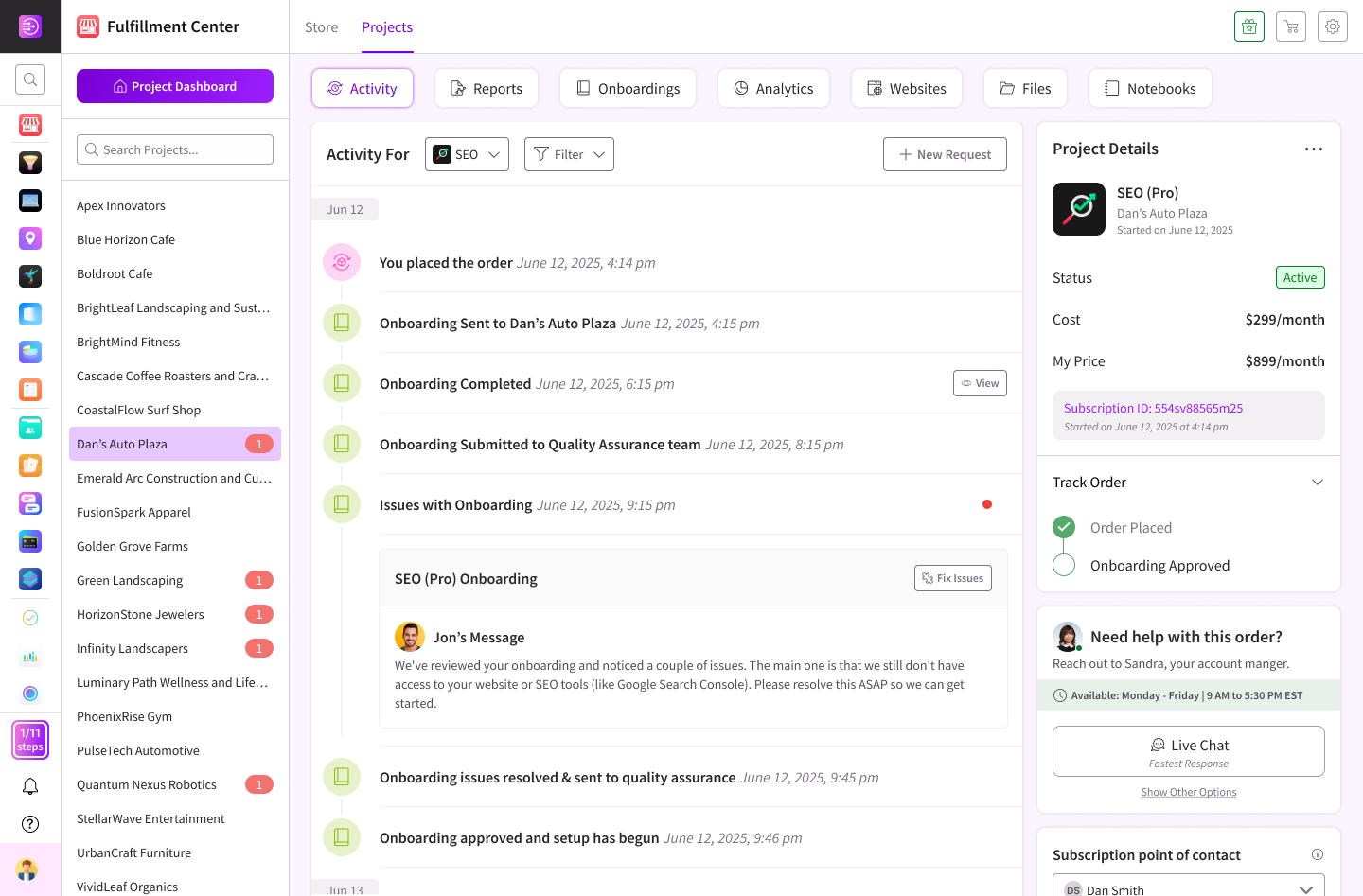
DashClicks offers fully white label SEO services along with a unified dashboard, which simplifies tracking and reporting on advanced KPIs. Here’s how it fits in with the advanced KPI approach:
- DashClicks handles essentials like technical audits, content optimization, link-building, and page-speed improvements, ensuring the technical and SEO foundations are strong.
- Through its dashboard, agencies get real-time reports — showing organic traffic, conversions, backlink growth, and site performance — all under their own brand.
- Agencies don’t need to buy expensive tools like SEMrush or Ahrefs on their own. DashClicks gives access to data-driven SEO analytics through its fulfillment model.
- The scalable, white-label model lets agencies handle many clients with predictable workflows while delivering consistent, quality SEO results — making it easier to track KPIs across multiple client campaigns without chaos.
In short, DashClicks helps you go beyond just monitoring “Where do we rank?” — you can show clients the full picture: traffic, engagement, conversions, and value.
Best Practices for Measuring Advanced SEO KPIs
- To get the most value from your tracking and reporting, it helps to follow a consistent approach that keeps data accurate, meaningful, and easy for clients to understand.
- Set clear baseline data at the start. Before making any optimization changes, record current traffic levels, conversion counts, bounce rates, engagement metrics, and ranking positions. Baseline data gives you a reliable point of comparison and makes it easier to show progress over time.
- Segment data by traffic source and device. Breaking down organic, paid, referral, direct, and social performance highlights how each channel contributes to growth. Device segmentation helps you see whether mobile users behave differently from desktop visitors, which can uncover UX issues or content gaps.
- Use conversion tracking and goals in your analytics setup. Make sure every important action is being tracked correctly, whether it’s a form submission, phone call, purchase, download, or time-based goal. Without clean tracking, it’s impossible to evaluate the quality of organic traffic or understand what’s driving results.
- Report on a regular schedule, either monthly or quarterly. Consistent reporting helps you identify patterns, seasonal trends, early warning signs, or sudden drops that need attention. It also allows you to communicate progress in a clear and timely way.
- Compare metrics over meaningful periods, not just month to month. Month-to-month shifts can be noisy due to holidays, algorithm updates, or natural fluctuations. Quarterly or year-over-year comparisons give you a more stable view of long-term progress.
- Communicate KPIs in a way clients can easily understand. Go beyond numbers by explaining what each metric means and why it matters. Help clients see that rankings or traffic growth are valuable, but engagement and conversions are stronger indicators of real performance. Clear explanations make it easier for clients to appreciate the full impact of your SEO work.
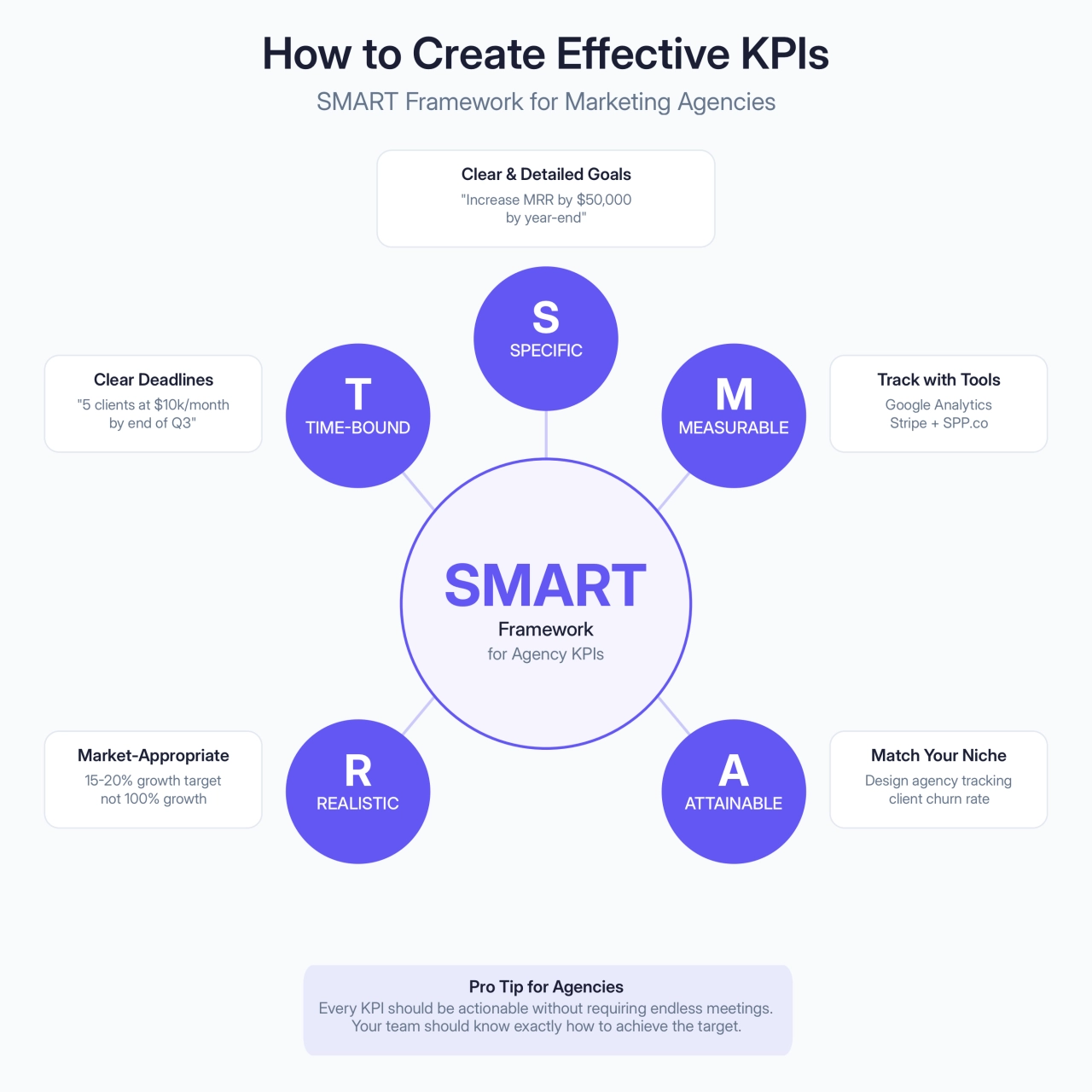
Image Source: Service Provider Pro
Why Advanced KPIs Matter More Now Than Ever?
SEO has evolved. Algorithms constantly shift. User expectations have risen. Here’s why deeper KPIs matter more than ever:
- Search engines now reward page experience, mobile performance, and user engagement — not just backlinks or content.
- With more content online than ever, competition is fierce. Quality, relevance, and user experience make the difference.
- Businesses expect measurable ROI. They want revenue, leads, or real conversions — not just “top 10 ranking.”
- Over time, advanced KPIs help spot problems early: a site might lose conversions even with stable traffic (bad UX or broken links), or gain traffic but lose engagement (weak content).
Challenges and How to Overcome Them?
Measuring advanced KPIs is not without challenges. Here are some common issues:
1. Data Overload — Too many metrics can overwhelm.
Solution: Focus on 4-6 key metrics per client (e.g., organic traffic, conversions, bounce rate, page speed, backlink growth, CTR).
2. Attribution Difficulties — Not all conversions are from organic SEO.
Solution: Use clear tracking (UTM tags, analytics goals) and distinguish organic vs other channels.
3. Slow ROI on SEO — SEO takes time; conversions may lag.
Solution: Set realistic timelines (many campaigns show strong results in 3–6 months) and report interim progress (traffic, engagement).
4. Client Misalignment — Clients may care only about rankings.
Solution: Educate them early about the value of deeper KPIs. Show how rankings + conversions = business growth.
Conclusion
Focusing solely on keyword rankings is like judging a movie by its poster — it gives a hint, but not the full story.
Advanced KPIs reveal what truly matters: whether real people visit the site, stay engaged, convert, and come back. They help you build transparency, trust, and lasting value for your clients.
By tracking metrics like organic traffic, CTR, bounce rate, conversions, backlinks, page speed, and engagement — and by presenting them clearly and regularly — you can transform SEO from a vanity service into a measurable engine for growth.
If you partner with a white label SEO agency like DashClicks, you gain access to tools, data, reporting, and white label dashboards that make advanced KPI tracking effortless and scalable. DashClicks doesn’t just help you hit higher rankings — it helps you deliver real performance, under your brand.


.svg)


.svg)
.svg)
.svg)
.svg)
.svg)