

.svg)

.svg)
.svg)
.svg)
.svg)
.svg)
Your content might already be shaping how people understand your topic, even if they’ve never visited your website.
Let’s get one thing out of the way first. Visual and structured content didn’t start working because of AI. It was already useful long before that. What changed is where people now encounter information.
They don’t always land on your page first. Sometimes they don’t land at all. They see explanations, summaries, and blended answers pulled from many places. In that environment, messy content doesn’t disappear because it’s bad — it disappears because it’s hard to reuse.
This is where structure and visuals quietly become a big deal. The problem is not AI. The problem is compression.
The Problem Is Not AI. The Problem Is Compression
Most modern discoveries work by compression. Long explanations get shortened. Detailed articles get summarized. Multiple sources get blended. This happens everywhere now.
When information is compressed, only certain parts survive:
- Clear definitions
- Clean structures
- Obvious relationships
- Simple visuals
Everything else fades away. Unstructured text doesn’t compress well. It loses meaning.
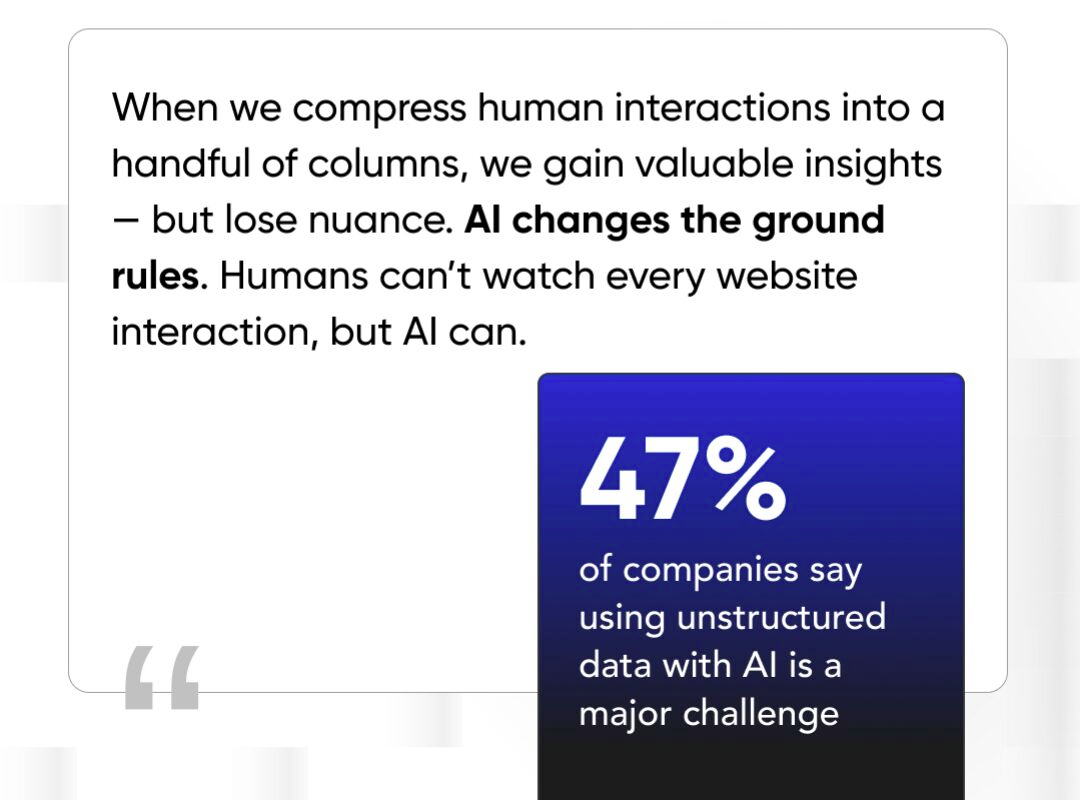
Image Source: LinkedIn
Visual and structured content holds together longer. That’s the real reason it “wins.”
What “Winning” Actually Means in AI Search Contexts?
Winning doesn’t mean ranking first. It doesn’t mean getting all the clicks.
Often, it just means:
- Your explanation still makes sense when shortened
- Your idea isn’t distorted
- Your brand doesn’t disappear entirely
That’s a low bar, but it’s realistic.
When people read AI-generated answers, they’re often reading a condensed version of many sources. If your content was clear to begin with, it has a better chance of being represented accurately.
If it wasn’t, it gets blended into generic noise.
Visibility Is Hard to See Without the Right Lens
This is where the idea of visibility becomes tricky.
- You might not see traffic.
- You might not see impressions.
- You might not see referrals.
But your content could still be shaping how a topic is understood.
Teams start using an AI brand visibility tool to observe how their brand shows up in AI-generated answers across different platforms. Not to control anything. Just to understand representation and adjust their content strategy.
That kind of visibility isn’t about optimization tricks. It’s about feedback. And feedback matters when you’re not directly in the loop.
Structured Content Is Easier to Understand
Let’s ignore AI for a second. Structured content is easier for humans too. When someone lands on a page and sees:
- Clear headings
- Short sections
- Logical progression
- Lists where they make sense
They relax. They know what’s coming. They know where they are. This matters even more when attention is low and search intent is high. People don’t want to work hard to understand something. They want help understanding it.
Structure helps.
Visuals Are Not Decoration, They’re Anchors
A lot of people think visuals are about engagement. That’s partly true. But for complex topics, visuals do something more important.
They anchor meaning. A simple diagram can:
- Clarify relationships
- Reduce misinterpretation
- Replace paragraphs of explanation
When content is reused or summarized, visuals often shape how the explanation is interpreted, even if the image itself isn’t shown.
The idea survives because the thinking was clear.
Walls of Text Collapse Under Reuse
Here’s something you can test yourself.
Take a long, unstructured article. Try to summarize it in a few sentences without losing meaning. It’s hard. Now take a well-structured piece with headings and visuals. The summary almost writes itself.
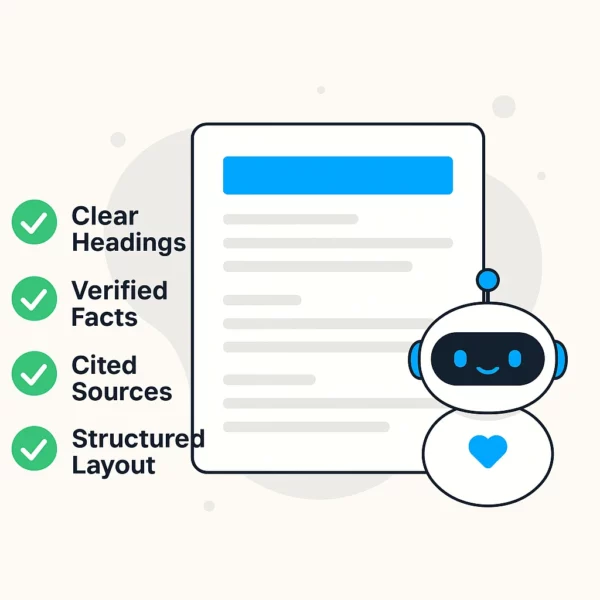
Image Source: ROI Minds
That’s not an accident.
When content is reused by others, structured pieces are easier to reference, paraphrase, and combine. Messy content forces interpretation. And interpretation leads to distortion.
This is why some agencies are moving toward structured, reusable content systems instead of one-off blog writing. DashClicks’ white label content services follow this logic by designing content that holds its meaning when reused, summarized, or blended across platforms.
Clarity Is the Only Thing That Travels Well
In modern discovery environments, clarity travels.
- Not tone.
- Not personality.
- Not clever phrasing.
Clear explanations survive being shortened. Everything else degrades. Visuals help with clarity. Structure reinforces it.
That’s why these formats keep showing up, even when nobody explicitly planned for it.
For teams producing content at scale, this is not just a writing preference, it is an operational need. DashClicks supports this by delivering white label content that is built for clarity first, not keyword stuffing or surface-level SEO.
Why Does This Matters for Brands?
This is not just a content formatting issue. It is a business one.
When your ideas are reused, summarized, or interpreted by others, they shape how your brand is understood. Even when no one clicks through, your thinking can still influence decisions.
This affects every major content type.
- Sales Pages: If your value is not clearly structured, it gets reduced to generic claims. When your message is compressed, only the clearest benefits survive. The rest fades into noise.
- Service Pages: When your process and differentiation are unclear, your services start sounding like everyone else’s. Structure protects what makes you distinct.
- Educational Blogs: These are often the source material for summaries and explanations. If they are vague or unstructured, your ideas will be blended into the crowd. If they are clear, your perspective is more likely to be represented accurately.
- Brand Positioning: Over time, repeated exposure to clear, consistent explanations shapes how people remember you. Not through slogans, but through the way you break down problems.
Clarity changes how people feel about you:
- It builds trust, because your thinking feels reliable
- It increases buying confidence, because people understand what you actually do
- It improves brand memory, because your ideas have a recognizable structure
- It strengthens authority perception, because disciplined structure signals expertise
This is how content creates influence even when you are not present to explain it.
This Is Not About Writing for Machines
It’s tempting to think this is about “formatting for AI.” It’s not. It’s about writing for reuse.
When information moves through systems, tools, summaries, and conversations, it needs to stay intact. Structure and visuals protect meaning.
That’s the entire strategy.
Structured Content Reduces Ambiguity
Ambiguity is dangerous in technical or business topics.
If two people read the same content and come away with different interpretations, something went wrong. Structure reduces that risk:
- Clear definitions reduce confusion
- Ordered steps reduce misreading
- Tables and lists reduce assumptions
This matters more when content is consumed indirectly. You’re not there to explain what you meant.
Visuals Help When Language Falls Short
Some ideas are just hard to explain with text alone.
- Processes.
- Comparisons.
- Flows.
- Dependencies.
Visuals fill that gap. They don’t replace explanation, but they support it.
When content is summarized later, the visual logic often guides the shortened explanation, even if the visual itself isn’t visible.
That’s influence without control.
Not All Visuals Help (Some Hurt)
Let’s be clear. Decorative visuals don’t help much. Stock photos rarely add clarity.
What works:
- Simple diagrams
- Labeled flows
- Comparison tables
- Step-by-step visuals
What doesn’t:
- Generic illustrations
- Abstract art
- Visuals with no labels
- Charts without context
If a visual doesn’t explain something faster than text, it’s probably not helping.
Structure Forces Better Thinking
This part is uncomfortable but true. When you structure content properly, you expose gaps in your own thinking. You notice:
- Missing steps
- Weak transitions
- Unsupported claims
Unstructured writing lets these problems hide. Structure forces discipline. And disciplined thinking reads as authority.
That’s why structured content often feels more credible, even when the ideas aren’t new.
Visual Content Slows Down Misinterpretation
When content is reused, misinterpretation is a real risk. Visuals slow that down. They give context. They show relationships. They limit how far an idea can be twisted.
This doesn’t mean visuals prevent misunderstanding completely. But they reduce it. And reduction matters at scale.
High-Intent Readers Scan Before They Read
This is important. People with intent don’t read line by line at first. They scan. They look for:
- Headings
- Diagrams
- Lists
- Clear sections
If they don’t find them, they bounce or skim poorly. Structured content respects how people actually behave.
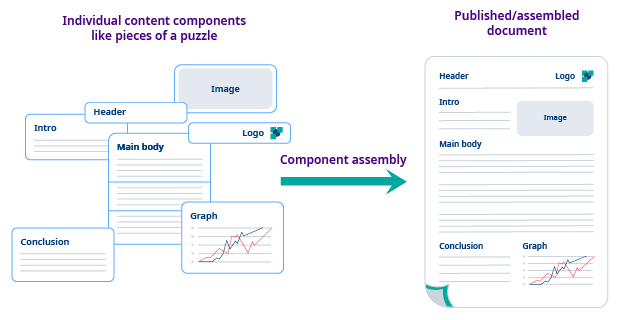
Image Source: RWS
Visuals give them confidence that the content is worth their time.
AI Search Didn’t Create This Behavior
This behavior existed before AI summaries. AI just amplified it. Now, scanning happens earlier. Sometimes before a click.
If your content doesn’t scan well, it doesn’t get a chance to explain itself. That’s not unfair. It’s just reality.
Structure Makes Updates Easier
This is a practical benefit people overlook. Structured content is easier to update. You can:
- Fix one section without rewriting everything
- Replace a visual without touching the text
- Add clarification where confusion appears
This keeps content accurate over time. Accuracy builds trust. Even quietly.
Visual Consistency Builds Brand Memory
When visuals follow a consistent logic, people start recognizing them. Not logos. Not colors necessarily. Patterns.
The way you explain things. The way you break down ideas. That recognition builds familiarity, even when brand names aren’t front and center.
This matters when discovery is indirect.
Structured Content Is Kinder to the Reader
This sounds simple, but it’s often forgotten. Structure is kindness. It says:
- “I know your time is limited.”
- “I won’t make you work harder than needed.”
- “I’ll guide you.”
People respond to that, especially when they’re trying to make decisions.
This Is Not a Hack. It’s Maintenance
Visual and structured content isn’t a growth hack. It’s maintenance.
It keeps your ideas understandable as they move through different environments. It reduces decay.
In a world where information is constantly reused, maintenance is strategy.
What Teams Should Actually Focus On?
If you strip everything down, focus on this:
- Clear headings
- One idea per section
- Visuals that explain, not decorate
- Simple language
- Logical flow
That’s it. No special tricks. No optimization games. Just content that holds up when it leaves your control.
Many agencies understand this framework but struggle to apply it consistently. White label content services by DashClicks exist to make this structure repeatable across clients, pages, and campaigns, without sacrificing meaning.
Final Thought
Visual and structured content doesn’t win because systems reward it. It wins because meaning survives longer.
When explanations travel, clarity is the only thing that makes the trip intact. AI search didn’t change what good content looks like. It just made bad content easier to lose.
And in that environment, structure and visuals aren’t optional extras. They’re how your thinking stays recognizable when you’re not in the room.



.svg)


.svg)
.svg)
.svg)
.svg)
.svg)