

.svg)

.svg)
.svg)
.svg)
.svg)
.svg)
Most ecommerce brands run conversion rate optimization the same way: test a button color, tweak a headline, swap a hero image, and wait to see what moves the needle. The problem isn't the testing — it's the randomness. Without a clear framework for where friction actually lives in the purchase journey, most tests produce marginal gains that never add up to meaningful revenue growth.
Smarter conversion rate optimization works differently. Instead of chasing isolated wins, it identifies the highest-friction moments in the funnel first, addresses those systematically, and builds on each result. That approach compounds over time in a way that one-off experiments simply don't. Pursuing ecommerce growth through conversion rate optimization becomes far more predictable when the work is anchored to where customers actually drop off.
It's also worth calibrating expectations early. Ecommerce conversion rate benchmarks vary significantly by industry, traffic source, and device, so there's no universal number to chase. What matters more is whether the rate is improving relative to a store's own baseline, and on platforms like Shopify, that measurement is entirely within reach.
What Smarter Ecommerce CRO Looks Like
Smarter CRO is less about doing more and more about doing things in the right order. Rather than running tests at random, it means identifying the highest-friction moments in the purchase journey first and addressing those before moving on to lower-impact changes. The goal is to ecommerce growth through conversion rate optimization in a way that's tied to measurable revenue impact, not just incremental metric shifts.
That prioritization is what separates brands that see compounding gains from those that accumulate a long list of inconclusive tests. Conversion psychology and behavioral data both point to the same truth: shoppers don't abandon purchases randomly. They stall at predictable moments, and those moments are fixable once they're properly identified. Ecommerce conversion rate benchmarks vary widely by category and device, so the more useful target is consistent improvement against a store's own baseline rather than an industry average.
Start with Friction, Not More Traffic
More traffic sent to a broken funnel doesn't improve revenue; it amplifies the leak. Before testing new acquisition channels or launching another paid campaign, the smarter move is to identify exactly where shoppers are stopping and why.
Where Shoppers Hesitate Before Buying
Friction rarely announces itself. It accumulates quietly across four stages where purchasing intent is most likely to collapse: product discovery, product page clarity, cart abandonment, and checkout optimization.
At the product page level, shoppers stall when information gaps create doubt. Unclear sizing, weak imagery, or buried social proof are all behavioral barriers that interrupt the decision process. Conversion psychology tells us that uncertainty defaults to inaction, so any ambiguity in product page optimization is effectively a vote against the purchase.
Cart abandonment tends to reflect a different kind of friction: price shock, forced account creation, or a sudden loss of trust just before commitment. Checkout optimization problems often overlap here, particularly when the path from cart to confirmation involves too many steps or too few payment options.
Tools like Google Analytics and Hotjar help surface where this friction concentrates. Scroll depth, drop-off rates, and session recordings reveal behavioral patterns that page-level metrics alone won't show.
Which Fixes Deserve Attention First
Not all friction points are equal, and treating them that way wastes effort. Prioritizing by three factors, namely volume of affected sessions, severity of the drop-off, and ease of implementation, keeps the work focused on actual revenue impact rather than cosmetic changes.
A checkout field that causes 30% of users to abandon deserves attention before a headline font adjustment. Teams can validate friction patterns using a mix of analytics, session behavior review, and specialized ecommerce testing workflows such as Runner AI Ecommerce CRO, alongside proven tactics to lift your conversion rates, to build this prioritization into their process from the start.
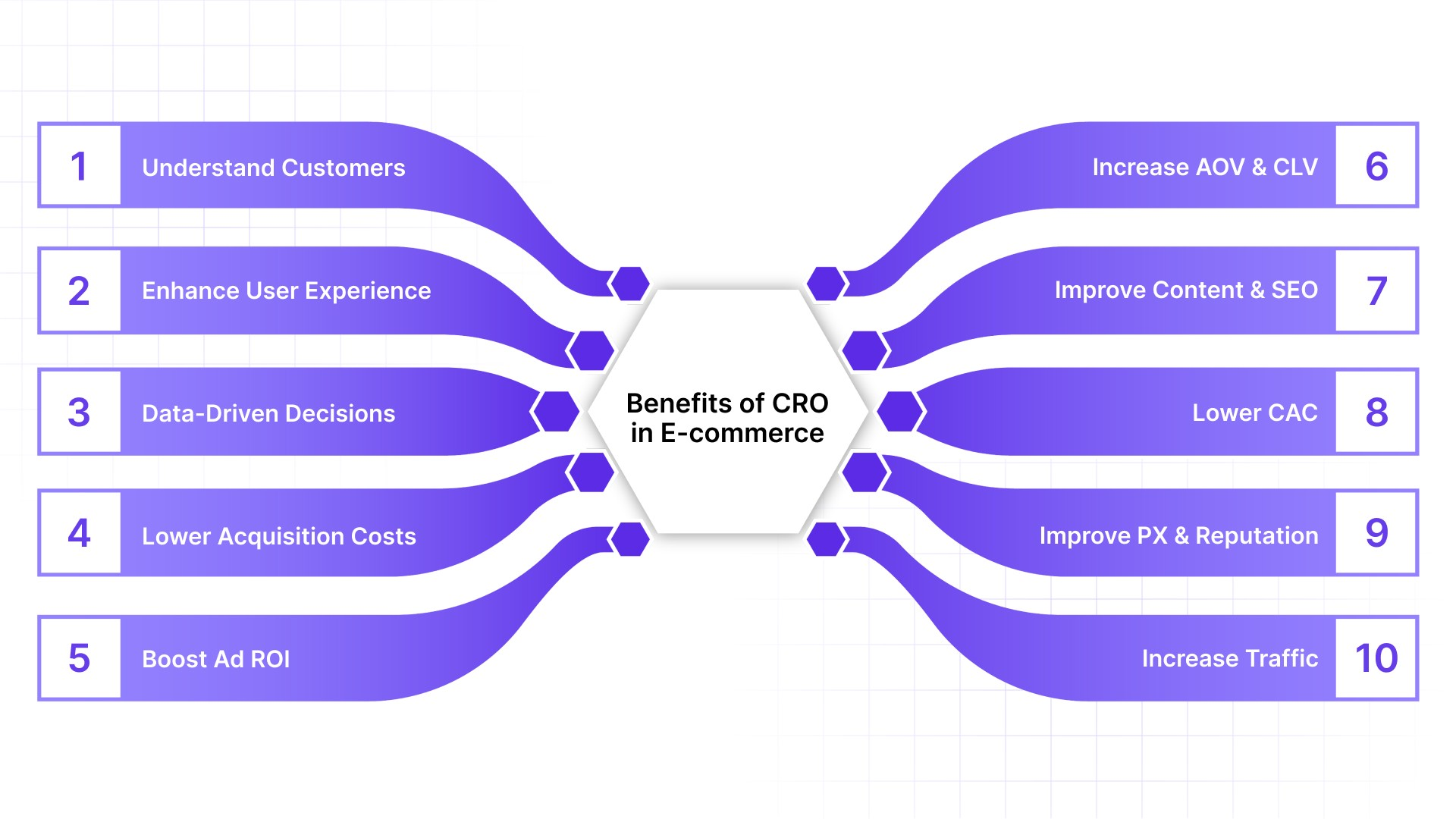
Image Source: Nudge
Fix the Moments Closest to Purchase
The sections above focus on diagnosing where shoppers stall. This section focuses on what to do about it, specifically at the two points in the journey that most directly influence whether a purchase is completed: the product page and the checkout.
Make Product Pages Easier to Trust
Once shoppers land on a product page, the clock starts. Every moment of uncertainty, whether it's a vague description, a missing size guide, or an absence of reviews, moves them closer to leaving without buying.
Strong product page optimization addresses this by narrowing the gap between what shoppers want to know and what the page actually tells them. Clear value propositions, detailed specs, and well-placed social proof all reduce the mental effort required to feel confident about a purchase. Practical trust signals that make a real difference include:
- Recent customer reviews with verified purchase labels
- Clear return and refund policies visible near the add-to-cart button
- Accurate stock levels that create honest urgency without manufactured pressure
Personalization and product recommendations also reduce decision fatigue for shoppers who aren't immediately sure what they want. When relevant alternatives or complementary items appear at the right moment, they keep intent alive rather than letting it evaporate.
Remove Checkout Friction on Every Device
Mobile optimization is still treated as a design problem by many teams, but it's really a purchase-path problem. A product page that looks fine on mobile but requires excessive scrolling or small tap targets to reach checkout creates friction that directly suppresses conversion.
Checkout optimization depends on how little it asks of the shopper. Shorter forms, no surprise costs at the final step, and multiple payment options all reduce the moment of hesitation that causes abandonment.
Page speed and Core Web Vitals connect directly to this. Slow load times on mobile don't just frustrate users; they actively reduce the probability of a completed transaction. Treating performance as a conversion variable, not a technical checkbox, keeps teams focused on what it actually affects: whether someone buys.
Test Changes That Can Prove Revenue Lift
A/B testing works when it starts with a hypothesis, not just a hunch. The question isn't "what if we try this?" It's "we believe this specific change will reduce drop-off at this step, and here's why." That shift in framing is what separates tests that inform future decisions from tests that produce a number and nothing else.
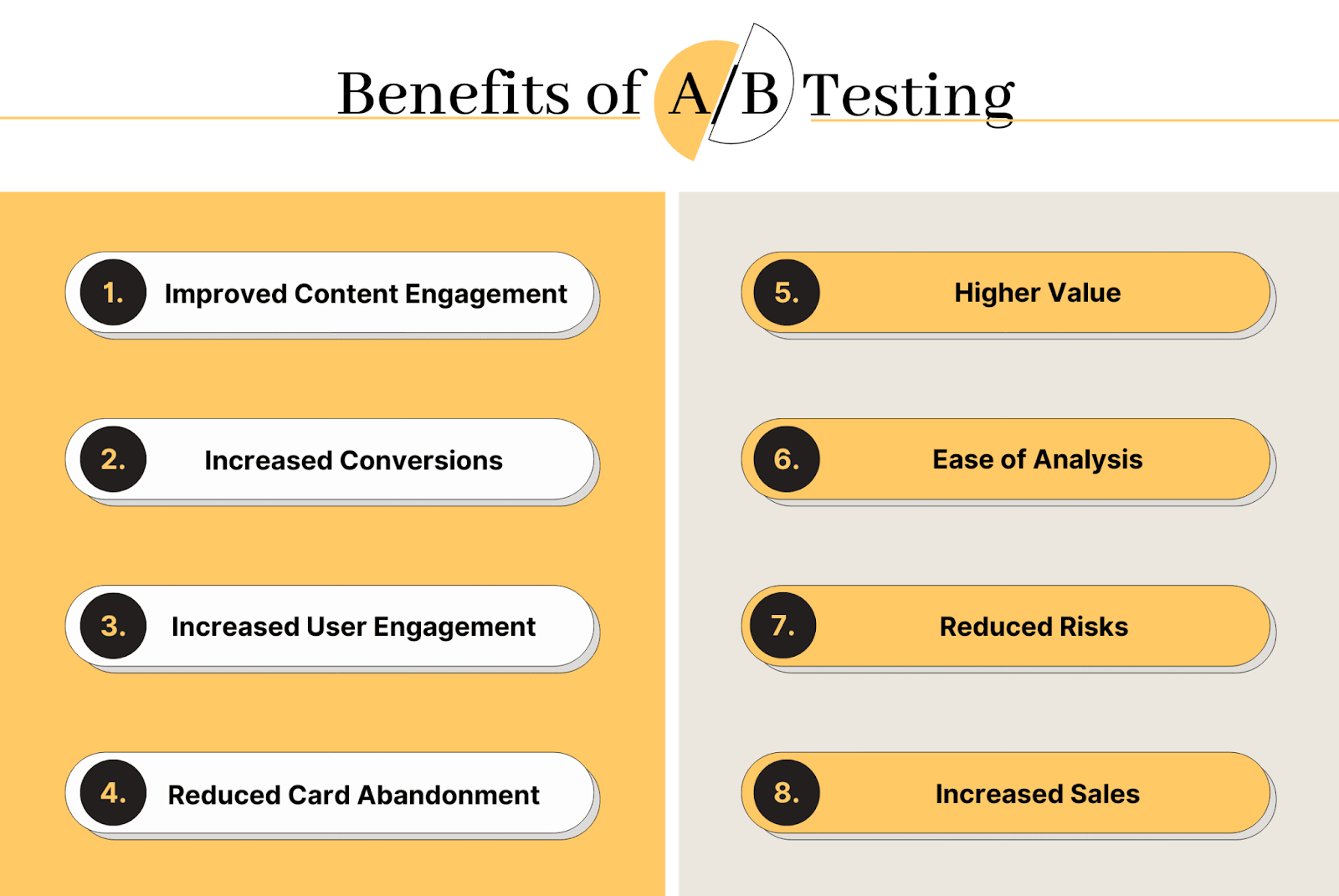
What to Measure Before and After a Test
Before any test goes live, teams should establish a baseline across the metrics that actually reflect business outcomes. Conversion rate is the obvious starting point, but average order value, revenue per visitor, and abandonment rate tell a more complete story about whether a change moved the needle in a meaningful direction. Segment-level data matters too, since a change that improves performance for mobile users while hurting desktop visitors is not a clean win.
Google Analytics provides the quantitative layer: what happened, to whom, and where. Qualitative tools like Hotjar and platforms like Optimizely add the missing dimension by showing why behavior changed, including what users clicked, where they hesitated, and what they ignored entirely.
Two common mistakes undermine otherwise well-designed tests. Running too many variables at once makes it impossible to attribute outcomes to any single change. Declaring a winner before reaching statistical significance produces false confidence that leads to poor prioritization down the line.
CRO measurement isn't just about validating a single test. The results should feed directly into resource allocation, telling teams which hypotheses to pursue next and which friction points are worth the investment to address.
Conversions Do Not End at Checkout
Most ecommerce brands treat a completed purchase as the finish line, but the post-purchase experience is where trust is either reinforced or quietly eroded. Confirmation flows, delivery communication, and returns handling all shape how a customer feels about a brand after the transaction, and that feeling determines whether they come back.
Post-purchase messaging does more than confirm an order. When it's done well, it reduces buyer's remorse by reassuring shoppers that they made the right decision, and it opens space for repeat purchase opportunities through timely, relevant follow-ups. A well-timed email with honest product recommendations based on purchase history feels helpful rather than intrusive, and it keeps the brand present without being pushy.
Personalization plays a real role here. Recommendations that reflect what someone actually bought, rather than generic bestseller lists, increase the likelihood of reconversion without requiring new acquisition spend.
This connection between post-purchase experience and reconversion is what makes it relevant to smarter CRO. Retention reduces the cost of growth by converting existing customers rather than constantly replacing them. When the full purchase cycle is treated as the optimization target, not just the first transaction, the compounding effect of that work becomes far more significant.
Further Reading: How Conversion Rate Optimization Transforms Ecommerce Growth in 2025
Conclusion
Smarter conversion rate optimization isn't about running more tests; it's about running the right ones, in the right order, starting where purchasing intent actually breaks down.
The framework that holds this together is straightforward: diagnose friction first, prioritize by impact, test with clear hypotheses, and carry that learning into the next cycle. A/B testing produces its best results when it's part of an ongoing process rather than a series of disconnected experiments.
No single change transforms a store's performance. What does is the discipline of returning to the same diagnostic cycle, identifying where shoppers stall, making targeted improvements, and measuring outcomes honestly. Over time, that compounding effect is what separates brands that grow predictably from those that keep chasing the next quick fix.



.svg)


.svg)
.svg)
.svg)
.svg)
.svg)