

.svg)

.svg)
.svg)
.svg)
.svg)
.svg)
Google Search Engine Optimization (SEO) is evolving faster than ever, and AI is a primary driver of this change. Marketers no longer depend on guessing, keyword studies done by hand, and repeating the same tasks over and over again. These days, AI tools help companies determine what people are looking for, enhance their content, and make more informed decisions based on data.
AI has not only made SEO easier, but it has also improved it. AI tools are transforming how brands gain online attention and connect with the right audience by identifying the most relevant topics and creating and analyzing content.
Why Is AI Transforming SEO?
AI is reshaping SEO because it changes how search engines understand content and how marketers optimize for it. Google’s algorithms now rely on machine learning models like RankBrain, BERT, and MUM to interpret context, intent, and user behavior far more accurately than before. This means SEO is no longer about matching keywords—it’s about delivering content that aligns with what users truly mean.
AI tools help marketers analyze massive amounts of data that would be impossible to process manually. They uncover keyword intent, reveal content gaps, predict trends, and optimize pages with precision. Instead of guessing what works, AI provides data-backed insights that improve rankings faster.
In simple terms, AI makes SEO smarter, faster, and more human-focused, enabling brands to create better content, fix issues quickly, and stay ahead of competitors in a constantly evolving search landscape.
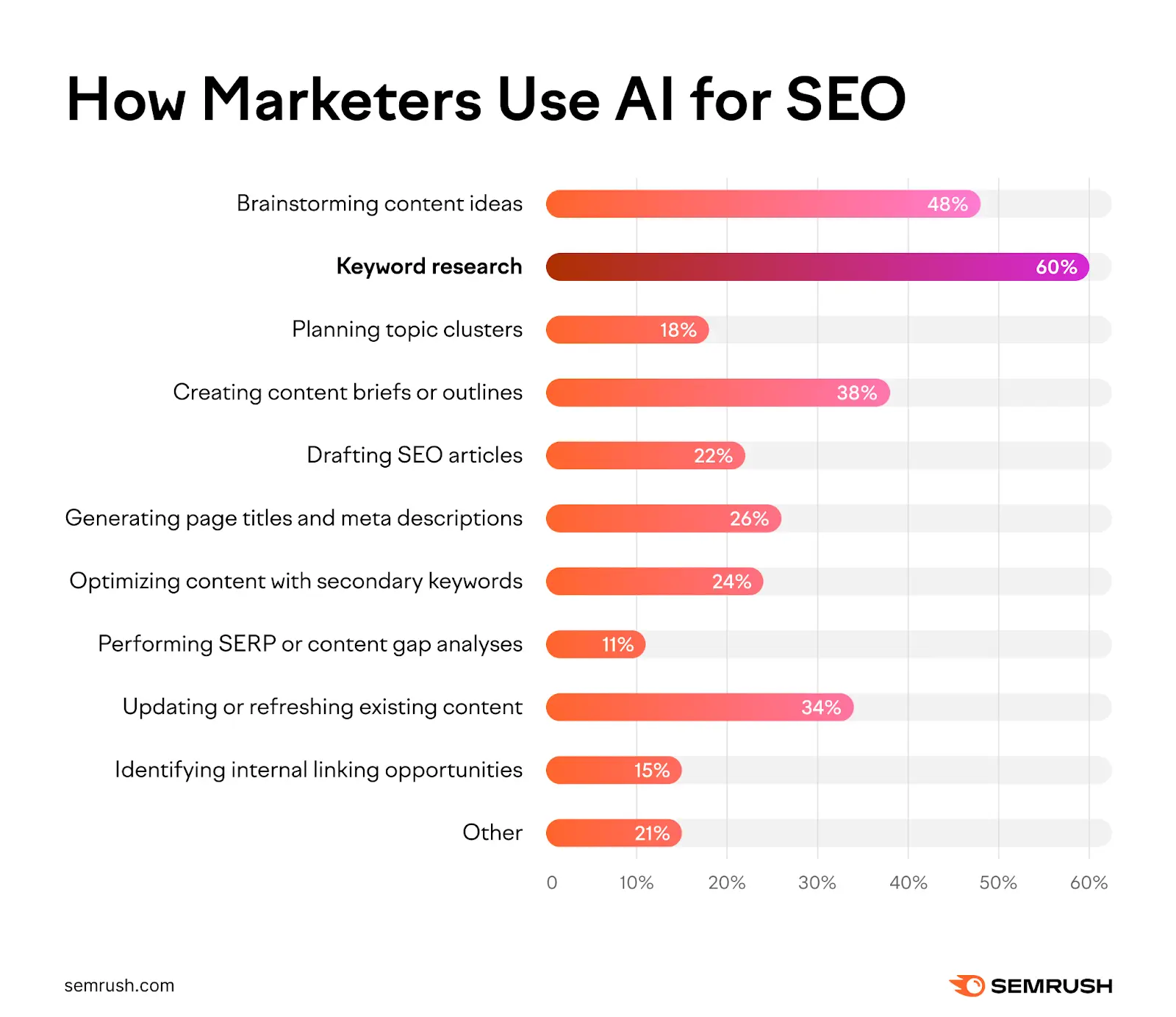
Image Source: Semrush
We'll discuss how AI is transforming SEO today and how you can leverage its benefits.
1. Better Research on the Keyword
Keyword study remains significant for SEO, but AI has made it more effective. Marketers used to look for keywords manually that had a high volume of searches and little competition. Now, AI tools like Ahrefs, SEMrush, and Surfer SEO utilize complex algorithms to identify hidden keyword opportunities and determine the user's intent behind each search.
When someone searches for "best laptops," AI can determine whether they want to buy, compare, or simply read reviews. With this information, you can ensure that the content you send is directed to the right people.
AI helps you focus on purpose instead of just numbers, which means you can get more engaged users and more sales.
2. Creating and Optimizing Content With AI
AI has taken the place of the king as the planner behind the throne. Modern tools like Jasper, Byword, and ChatGPT (GPT-5) can look at pages that are already doing well and help you write well-structured, SEO-friendly content in minutes. Not only do these tools write text, but they also give advice on tone, length, readability, and even the best keywords to use easily.
On the other hand, optimization platforms like Clearscope, Frase, and MarketMuse look at your current pieces and tell you precisely what you're missing, like internal links, related phrases, or specific themes.
What happened? It's possible for you to maintain your own style while still creating content that is useful for readers and search engines.
To make content even more engaging, brands are also using AI-powered visual creation tools. For example, platforms like AI Infographic Generator help turn complex data into clean, SEO-friendly visuals that keep users on the page longer and increase shareability. Visuals such as infographics, one-pagers, and flowcharts not only improve user experience but also attract high-quality backlinks — a major factor in SEO success.
3. Better Search Intent Analysis
AI is beneficial for SEO because it helps marketers figure out why people look, not just what they search for.
Google's own AI systems, such as RankBrain and BERT, prioritize meaning and context over individual terms. When you write something, you need to think about how people think and ask questions, and explore topics across the entire AI domain of search intent and user behavior.
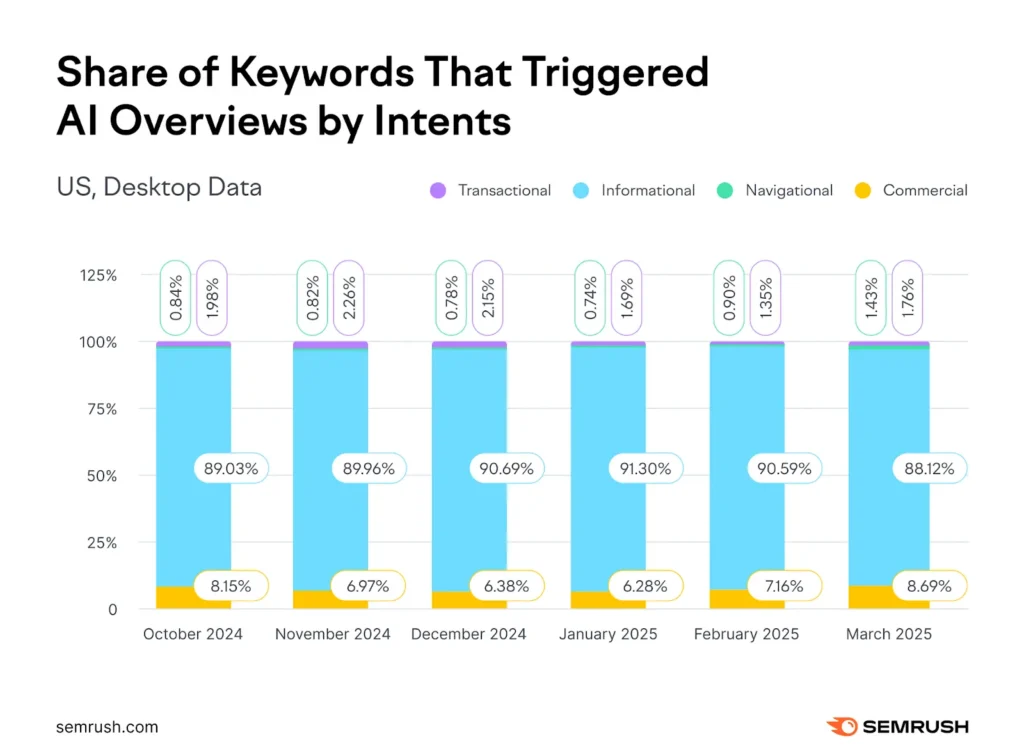
Image Source: Semrush
AI tools can analyze a vast amount of search data to determine what people genuinely want. What if many people search for "how to fix slow Wi-Fi?" An AI tool could find questions like "why is my router slow?" or "best way to speed up internet" that are connected.
With these insights, you can create more comprehensive and helpful content that addresses all related questions, which Google favors and rewards with higher rankings.
4. Google Trends and Predictive SEO Analysis
AI not only studies the past, but it also guesses what will happen in the future. Many marketers learn these predictive techniques through an AI Marketing Course, which helps them understand how machine-driven insights guide long-term SEO planning.
Agentic AI-powered platforms can predict future search trends by analyzing user behavior, seasonal trends, and market fluctuations. You can use tools that use predictive analytics to find keywords that are likely to become more prevalent.
This lets you plan your content calendar around new topics and get ahead of your rivals before they even know what's trending.
For example, if AI notices that searches for "AI-powered fitness apps" are going up, writing content early on about that topic can help you get a lot of traffic as the trend grows.
5. Voice Search and Conversational Optimization
These days, voice search is very important for SEO because of intelligent helpers like Alexa, Siri, and Google Assistant.
AI helps close the gap between how people speak and how they type. People might ask, "What's the best pizza near me?" with voice questions, which sound more like conversations, instead of putting "best pizza places."
AI tools can find these trends in natural English. This can help you write content that sounds more natural and ranks higher for voice searches.
You're more likely to show up in Google's featured snippets, which are the "position zero" results that voice helpers read out loud, if you optimize your site for voice search.

Further Reading: 6 Timely SEO Strategies and Resources for Voice Search
6. Optimized Technical SEO
Technical SEO can be terrifying because there are so many things to keep track of, like crawling mistakes, lost links, page speed, and mobile optimization. AI makes it easier, though.
AI is now used in tools to quickly scan whole websites, find problems, and rank the importance of fixes. Some tools even explain the issues in simple terms and suggest answers on their own.
This saves you hours of work and makes sure your website works perfectly, which is very important because Google's algorithms strongly favor websites that load quickly, are well-structured, and are easy for people to use.
7. Build and Reach Out to Links Smarter
One of the most complex parts of SEO is still building backlinks. AI can take away a lot of the work. AI-powered platforms analyze websites, identify pertinent backlink opportunities, and even generate customized outreach messages.
AI helps make tailored pitches that have a better chance of succeeding, so that hundreds of general emails are not sent. These AI-tailored pitches land even better when they point to real, measurable outcomes, like a case study showing how a team streamlined a messy workflow.
AI can also check the quality of backlinks and flag any that could hurt your results. It can also suggest better ways to work together or post as a guest.
Advanced AI Applications in Modern SEO
1. AI for Competitor Analysis
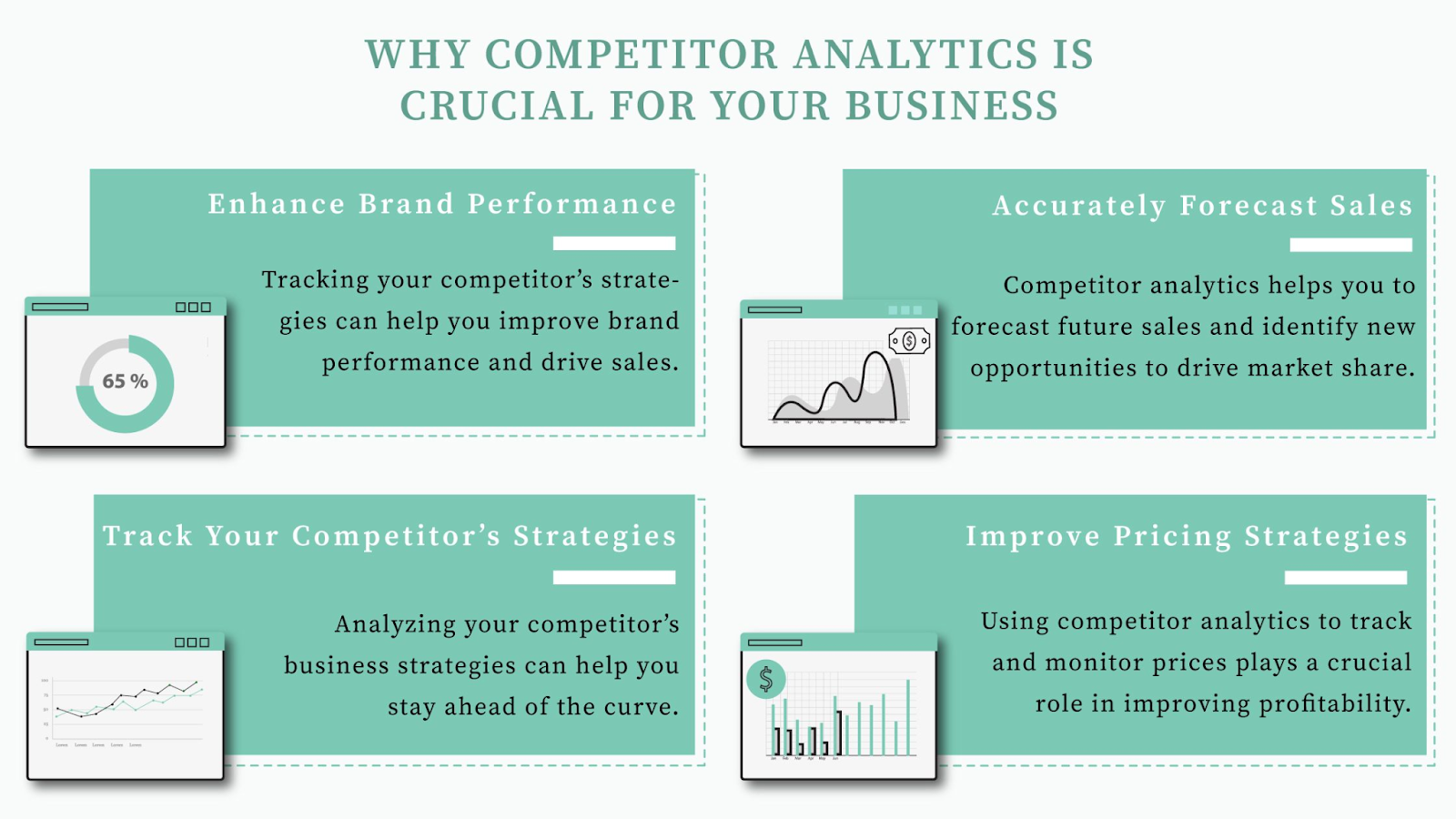
AI has dramatically improved how marketers analyze competitors and SERP landscapes. Instead of manually checking ranking pages, AI tools scan thousands of competitor URLs to identify keyword gaps, backlink patterns, top-performing content formats, and ranking signals. As AI-generated results reshape the SERP, the OpenWeb Ninja's Real-Time Web Search API lets SEO teams pull Google AI Overviews and AI Mode data programmatically, so they can track exactly which queries have shifted to AI answers alongside organic results, People Also Ask, and Knowledge Graph data.
Platforms use machine learning to show which topics competitors are doubling down on, how their traffic shifts, and what opportunities they’re missing. This helps brands make smarter, data-driven decisions and stay ahead in competitive niches.
2. AI for UX Optimization
User experience plays a major role in SEO, and AI makes it easier to understand how real users interact with websites. AI tools analyze heatmaps, scroll depth, click behavior, and engagement patterns to pinpoint friction points and areas where users drop off. With this data, brands can improve layout, navigation, content structure, and overall usability. AI-powered A/B testing tools also recommend variations that increase engagement and satisfaction—both of which directly support better search rankings.
3. AI for Local SEO
Local SEO has evolved beyond citations and Google Business Profile updates. AI now helps businesses optimize for hyperlocal intent by analyzing nearby search patterns, competitor listings, local keyword clusters, and customer sentiment in reviews. AI tools can automatically audit your GBP profile, monitor ranking fluctuations across locations, and suggest improvements that increase visibility in “near me” searches. This gives local businesses a measurable competitive advantage in crowded regional markets.
4. AI for Multimodal SEO
Search is no longer limited to text—users search using images, voice, and video. AI helps brands optimize for this multimodal world by generating accurate alt-text, analyzing visual content relevance, transcribing videos, identifying keyword opportunities within transcripts, and optimizing YouTube content. With models like Google MUM understanding visuals + text together, AI ensures your multimedia assets meet modern search expectations. This leads to better rankings in image packs, video carousels, and voice-driven queries.
5. AI for Automation Workflows
AI is enabling SEO teams to automate repetitive tasks and scale their operations. From automating keyword clustering and content briefs to scheduling internal link updates, generating meta tags, and running technical audits, AI reduces hours of manual work. Using platforms like DashClicks can build workflows that perform recurring SEO checks, pull fresh data, and even update pages automatically. This ensures consistency, speed, and long-term SEO stability.
6. AI for Content Quality & EEAT
As AI-generated content becomes more common, Google places more emphasis on expertise, experience, authoritativeness, and trustworthiness (EEAT). AI plays an important role here by analyzing top-ranking pages and identifying what high-EEAT content looks like—data evidence, expert quotes, structure, depth, and tone.
AI tools can flag factual gaps, detect weak or generic content, and suggest improvements to increase credibility. They also help ensure accuracy by cross-referencing information with reliable sources, making your content stronger in Google’s eyes.
How DashClicks’ White Label SEO Services Help in SEO?
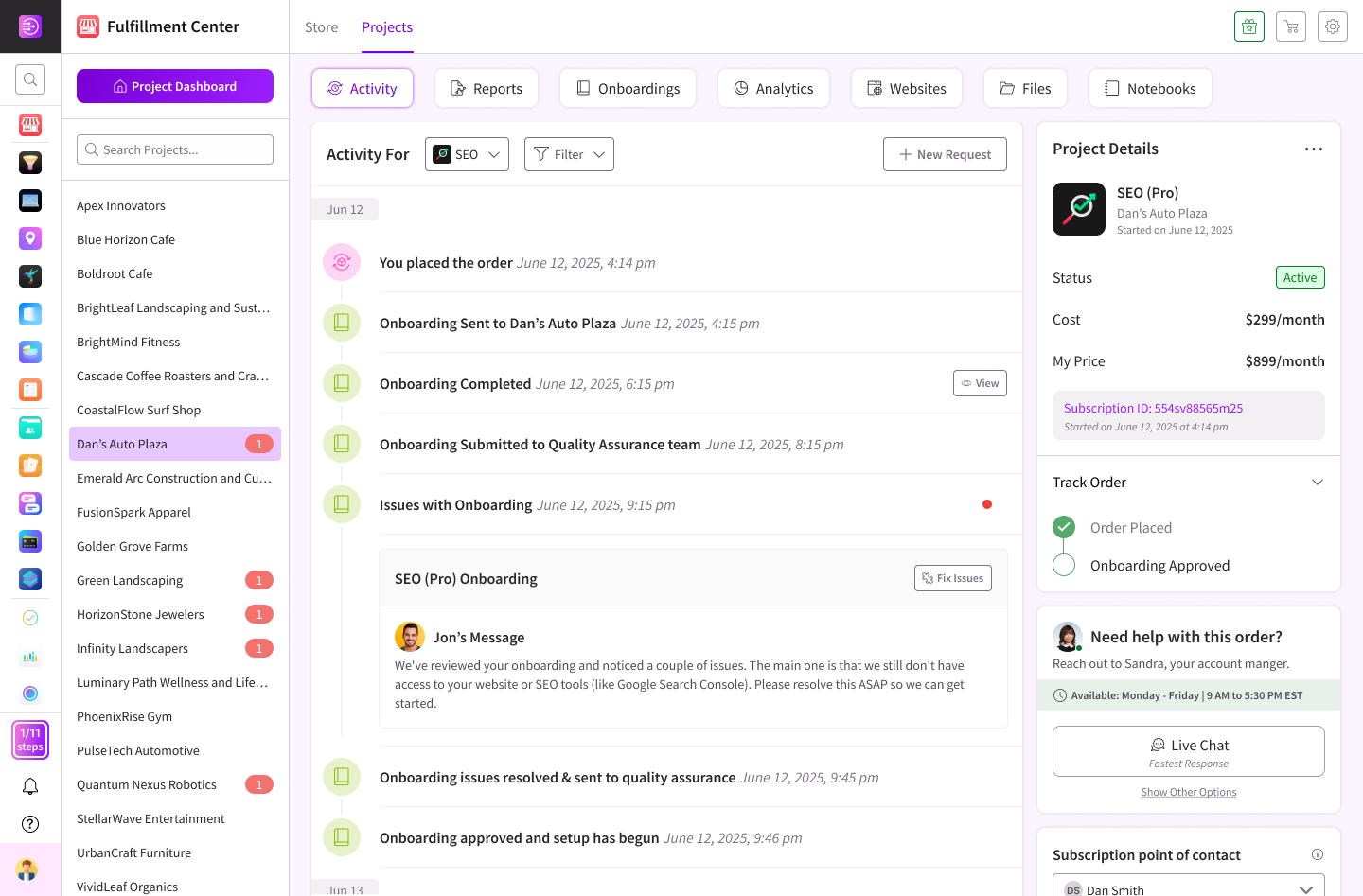
DashClicks’ white label SEO services and software provide agencies with a complete, ready-to-deliver SEO infrastructure that streamlines operations and improves campaign results. Instead of managing everything in-house, agencies can outsource SEO tasks to a dedicated team while still presenting the work under their own brand.
The service covers all essential areas of SEO, including keyword research, on-page optimization, technical audits, backlink outreach, and ongoing performance tracking. DashClicks also offers detailed reporting through white-labeled dashboards, giving clients full visibility into rankings, traffic changes, and campaign progress.
By handling execution, reporting, and optimization, DashClicks allows agencies to focus on strategy, client acquisition, and relationship management. This makes it easier to scale, maintain consistent quality across campaigns, and deliver SEO results without expanding internal resources.
Wrapping It Up
The way we think about SEO has changed a lot because of AI. It's made the process go more quickly, correctly, and with the intention of giving people real value.
With AI tools, marketers can do everything from keyword research and content optimization to technical checks and predictive analytics. This gives them an edge in the crowded digital space.



.svg)


.svg)
.svg)
.svg)
.svg)
.svg)