

.svg)

.svg)
.svg)
.svg)
.svg)
.svg)
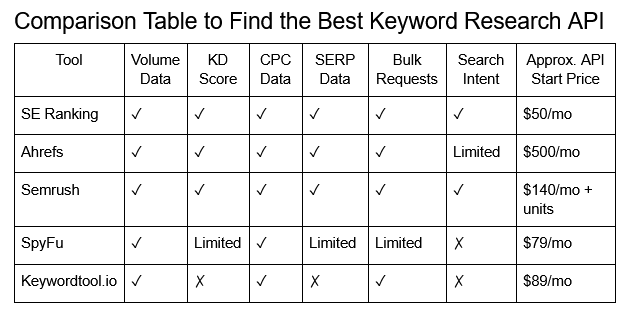
Building custom SEO tools, automating reporting pipelines, or running programmatic content at scale all require programmatic access to keyword data. The keyword research API you choose will shape what data you can pull, how often you can pull it, and what the whole operation costs at scale - especially when you are dealing with tens of thousands of requests per month.
The right keyword research tool API depends on your database requirements, your request volume, and your budget. This list covers five strong options: SE Ranking, Ahrefs, Semrush, SpyFu, and Keywordtool.io. I have worked with all of them across white-hat content programs and more aggressive gray-hat projects - rank farms, bulk content builds, PBN keyword mapping. What follows is an assessment built on actual use.
What Is the Best Keyword Research API?
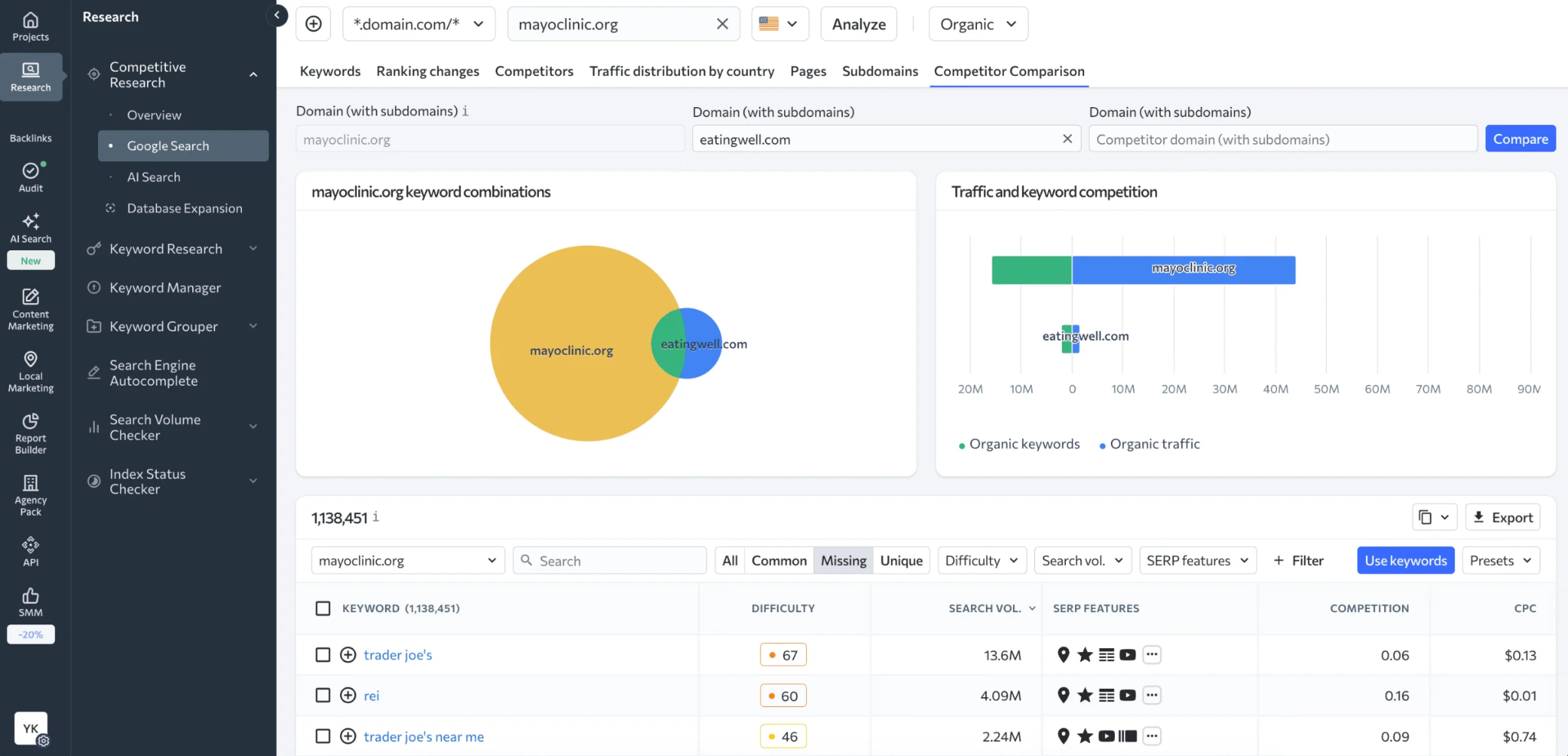
SE Ranking is the top pick for most teams. Its keyword research tool API returns search volume, keyword difficulty, CPC, competition data, and SERP feature information across multiple regions via a well-documented REST API. The platform's SEO keyword API supports bulk requests, covers both organic and paid data, and integrates cleanly into custom dashboards or automated pipelines. SE Ranking also allows you to track your AI visibility across Google AI Mode, Google AI Overviews, Gemini, Perplexity, and ChatGPT. You can start with a $50 minimum deposit.
1. SE Ranking API
Key features of SE Ranking API:
- REST API with endpoints for keyword volume, difficulty, CPC, and competition data
- Bulk keyword lookups supporting thousands of keywords per request
- Multi-region and multi-language coverage (Google, Bing, YouTube, Amazon)
- SERP feature data: featured snippets, People Also Ask, local packs, image packs
- Built-in keyword clustering endpoint that groups keywords by SERP similarity for topic mapping
- Keyword API endpoints deliver complete keyword data API output - volume, difficulty, CPC, competition, backlinks, and rank tracking from a single integration
- Accessible API documentation with code samples in Python and JavaScript
- Maintained changelog - breaking changes announced in advance, not discovered at 2 a.m.
- SE Ranking's keyword research tool API also supports white-label data delivery for agencies building client-facing dashboards
What Are the Pros and Cons of SE Ranking API?
Pros:
- Pricing is accessible compared to Ahrefs and Semrush for comparable data depth
- Keyword clustering is built into the keyword analysis API - rare at this price point
- Covers both organic and paid keyword data from the same request set
- Works across multi-client agency workflows without per-seat API pricing
- Fast response times on bulk requests; rate limits are generous on Business-tier plans
Cons:
- Total keyword database is smaller than Ahrefs or Semrush (sufficient for most operations, but a real constraint in ultra-niche regional markets)
- Some regional markets outside major geographies have thinner data coverage
- Rate limits on the lowest plans can restrict large automated runs
- No official SDK outside Python and JavaScript
What Is the Pricing of SE Ranking API?
- A standalone automated programmatic plan starts at $318.00 per month when billed annually. This is built for pure programmatic access without the standard user interface.
- Standard monthly billing for the base programmatic plan starts at $159.00 per month if you have a Core or Growth plan.
- A 14-day free trial is available. This provides 100,000 free credits for initial logic testing and pipeline setup.
- Simple SERP extraction endpoints cost exactly 10 credits per individual call.
- Deep domain overview requests require 100 credits per call.
- Backlink queries burn exactly 1 credit per returned record in the JSON array.
- Heavy LLM extraction tasks and generative search metrics consume 2000 credits per call.
Best Use Cases of SE Ranking API
- Agencies building white label reporting dashboard for client accounts at scale
- Content teams automating keyword gap analysis across 20 or more client domains simultaneously
- Gray-hat operators who need a bulk keyword analysis API for programmatic content builds without paying enterprise rates
- Developers building keyword tool API products internally who want clustering without bolting on a separate service
- Budget-conscious teams that want a complete SEO keyword API covering organic, paid, SERP, and backlink data from a single provider
2. SpyFu
Key features of SpyFu:
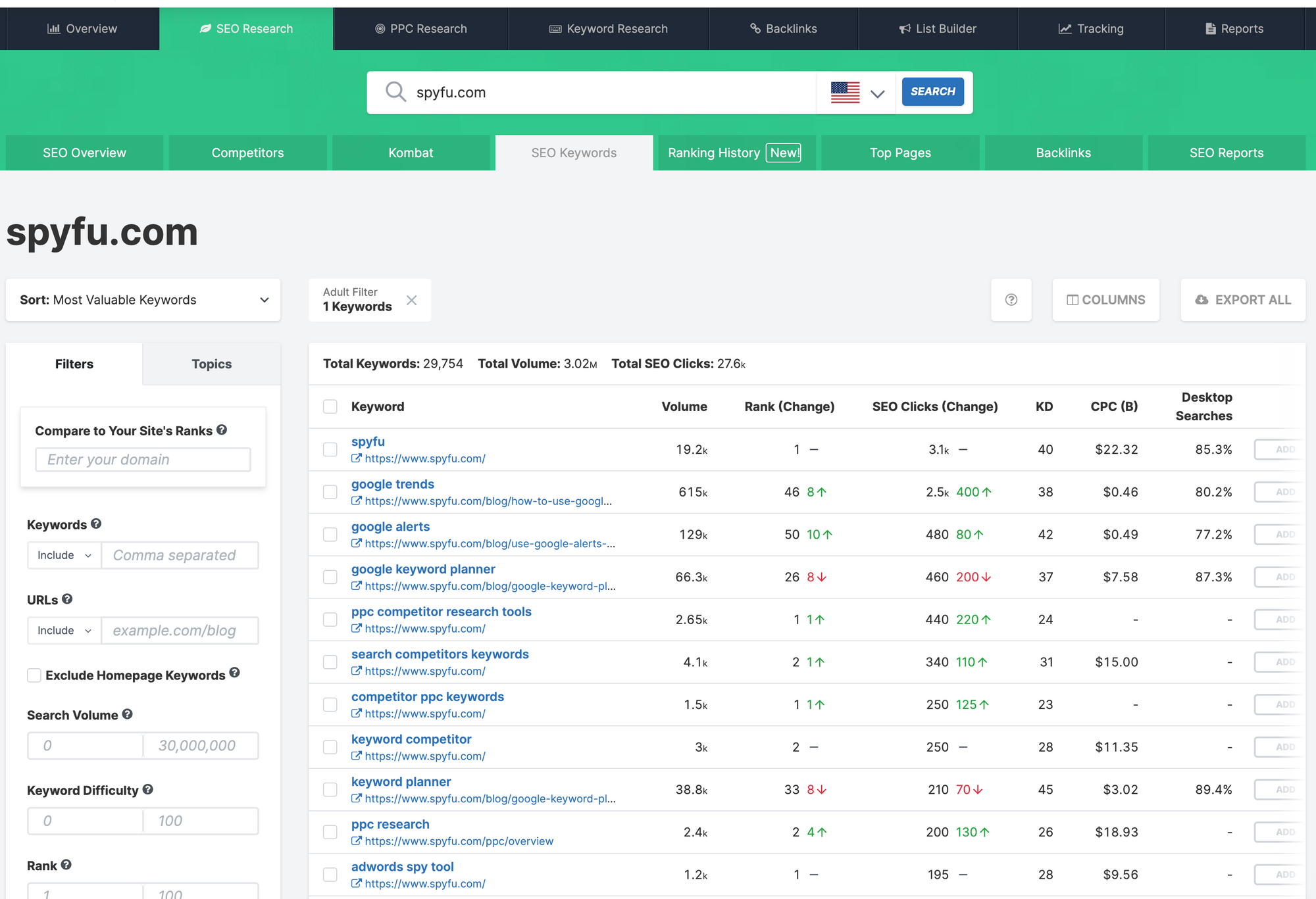
- PPC and organic keyword data accessible via REST API
- Competitor keyword research - see which keywords rival domains rank for organically and in paid
- Google Ads historical data going back to 2006; the deepest archive available on this list
- Domain keyword overlap analysis with side-by-side competitor comparison
- SERP ranking history per keyword over time
- Search volume, CPC, and estimated click data included
- Bulk domain and keyword lookups on Professional and Team plans
- Keyword suggestion API built from competitor keyword sets, not just database matching - surfaces terms your rivals are actively bidding on or ranking for
- Works as a keyword suggestion tool API for discovering adjacent terms through competitor organic footprints
What Are the Pros and Cons of SpyFu?
Pros:
- Historical PPC data back to 2006 - no other tool on this list comes close for ad competitive research
- Domain overlap reports are fast and practical for competitive gap mapping
- Competitor intelligence approach is genuinely differentiated from Ahrefs and Semrush
- Keyword tools API is easy for developers to authenticate and start testing quickly
- Good value for paid search-focused teams compared to full-suite platforms
Cons:
- Organic keyword volume accuracy is weaker than Ahrefs or Semrush
- SERP feature data is minimal - not suitable for SERP feature tracking workflows
- API documentation is older and less polished than competitors
- Not the right tool for pure organic content operations at scale
- Volume estimates in low-competition niches can be inconsistent
What Is the Pricing of SpyFu?
- Basic Plan ($39/month): 10k search result rows, 10k exports, 1 live tracking project, 10+ years historical data, RivalFlow (0 sites), ChatGPT integration, AI brand monitoring, 5k weekly keyword tracking, 10 automated reports, Google Ads templates, GSC integration, white-label reporting, API access, 1 user
- Pro + AI Plan ($59 first month, then $119/month): unlimited search results & exports, 10 tracking projects, 10+ years historical data, RivalFlow (1 site), ChatGPT integration, AI brand monitoring, 15k weekly keyword tracking, 100 automated reports, Google Ads templates, GSC integration, white-label reporting, API access, 1 user (+$30 per extra)
- Team / Agency Plan ($249/month): unlimited search results & exports, unlimited tracking projects, 10+ years historical data, RivalFlow (10 sites), ChatGPT integration, AI brand monitoring, 50k weekly keyword tracking, unlimited automated reports, Google Ads templates, GSC integration, white-label reporting, API access, 5 users (+$30 per extra)
Best Use Cases of SpyFu
- PPC managers who need a keyword research API workflow built around competitor ad history going back years
- Competitive intelligence pipelines targeting specific rival domains and their full paid keyword sets
- Agencies running paid search audits across multiple client verticals at scale
- Gray-hat operators reverse-engineering competitor paid keyword strategies before building their own campaigns
- Competitive intelligence operators who need a keyword tool API with years of historical paid data behind it
- Teams that primarily need keyword data API output for ad copy research, bid gap analysis, and PPC keyword expansion
3. Ahrefs API
Key features of Ahrefs API:
- Over 28 billion keywords across 200+ countries - the largest database on this list
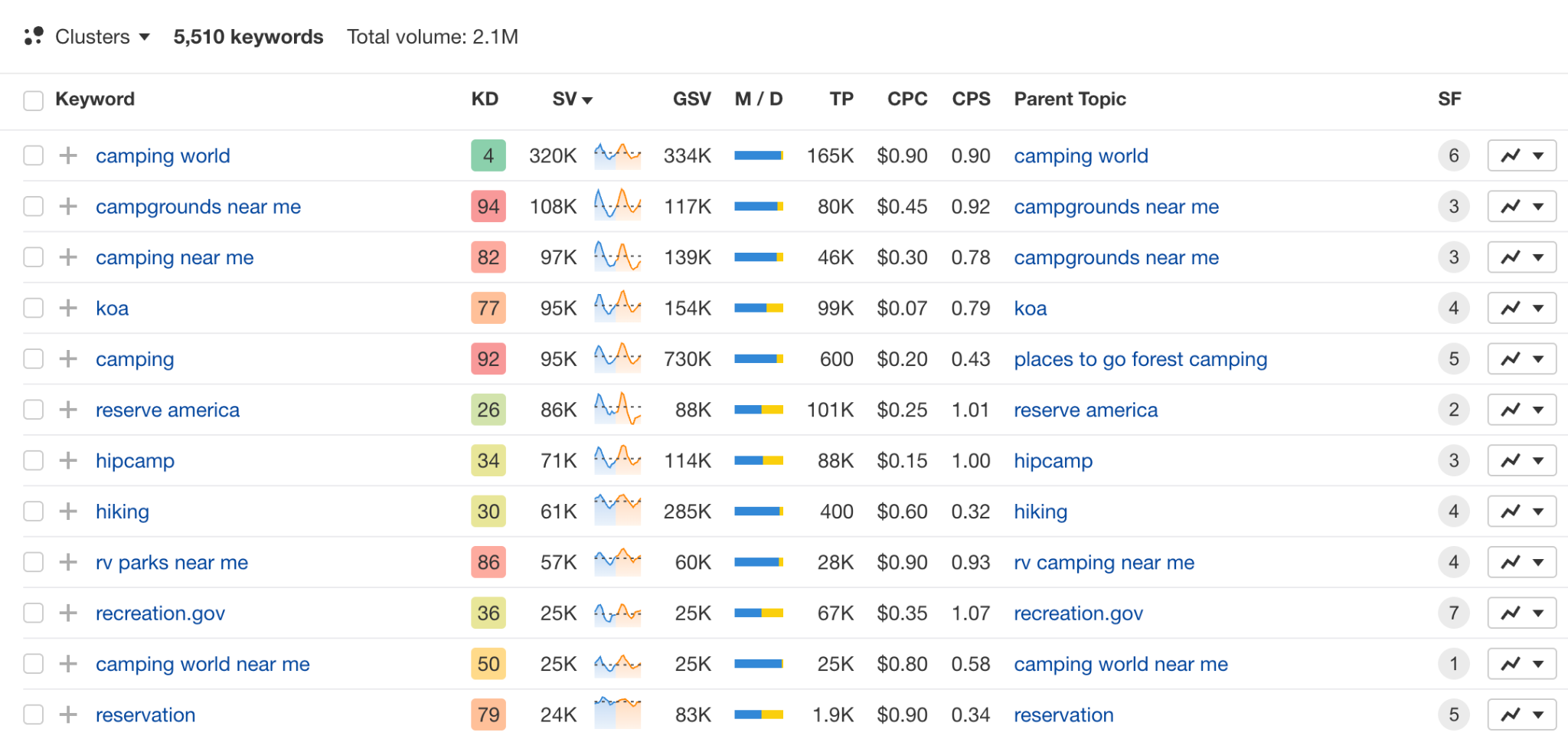
- Keyword difficulty scores calculated from real link data, not just competition ratios
- Volume data that includes click and return rate metrics alongside raw search numbers
- SERP overview data: who ranks, what features appear, estimated traffic share per result
- Parent topic identification per keyword
- Keyword ideas endpoint covering questions, related terms, newly discovered keywords, and also-rank-for data
- Traffic value estimates per keyword for prioritization
- Backlink and site audit data accessible within the same keyword API, no second subscription needed
- Keyword suggestion API via the keyword ideas endpoint surfaces semantically related terms based on SERP overlap
What Are the Pros and Cons of Ahrefs API?
Pros:
- Largest keyword database on this list - strongest for obscure niches and non-English markets
- KD metric is widely considered the most accurate available across the industry
- Click data adds depth that raw volume figures alone cannot provide
- Fast API response times and reliable uptime
- Strong developer documentation with active support channels
- One of the most complete SEO keyword API offerings in terms of raw data quality
Cons:
- Most expensive option - API access starts at approximately $500/month as a separate product
- Costs scale quickly at high request volumes; units deplete fast in bulk operations
- API access is separate from the main Ahrefs subscription - both must be paid independently
- Solo operators and small agencies rarely justify the cost
- Some advanced endpoints remain in beta with no SLA guarantees
What Is the Pricing of Ahrefs API?
- API access starts at approximately $500/month for 500 units
- Units consumed per row of data returned; bulk queries exhaust allocations fast
- Additional unit packages available at volume-based pricing
- No free tier or trial for API access
- Enterprise plans include custom unit allocations and dedicated account support
Best Use Cases of Ahrefs API
- Large-scale SEO platforms that need the deepest keyword research tool API available, covering 200+ countries
- Enterprise teams running global, multi-language keyword programs where data gaps are unacceptable
- Developers building a keyword tool API product for agency resale or B2B SaaS where KD accuracy is a selling point
- Technical SEO consultants in link-heavy niches (finance, legal, health) where an imprecise KD score causes real strategic errors
- White-hat content operations where data quality is the primary requirement regardless of API cost
4. Semrush API
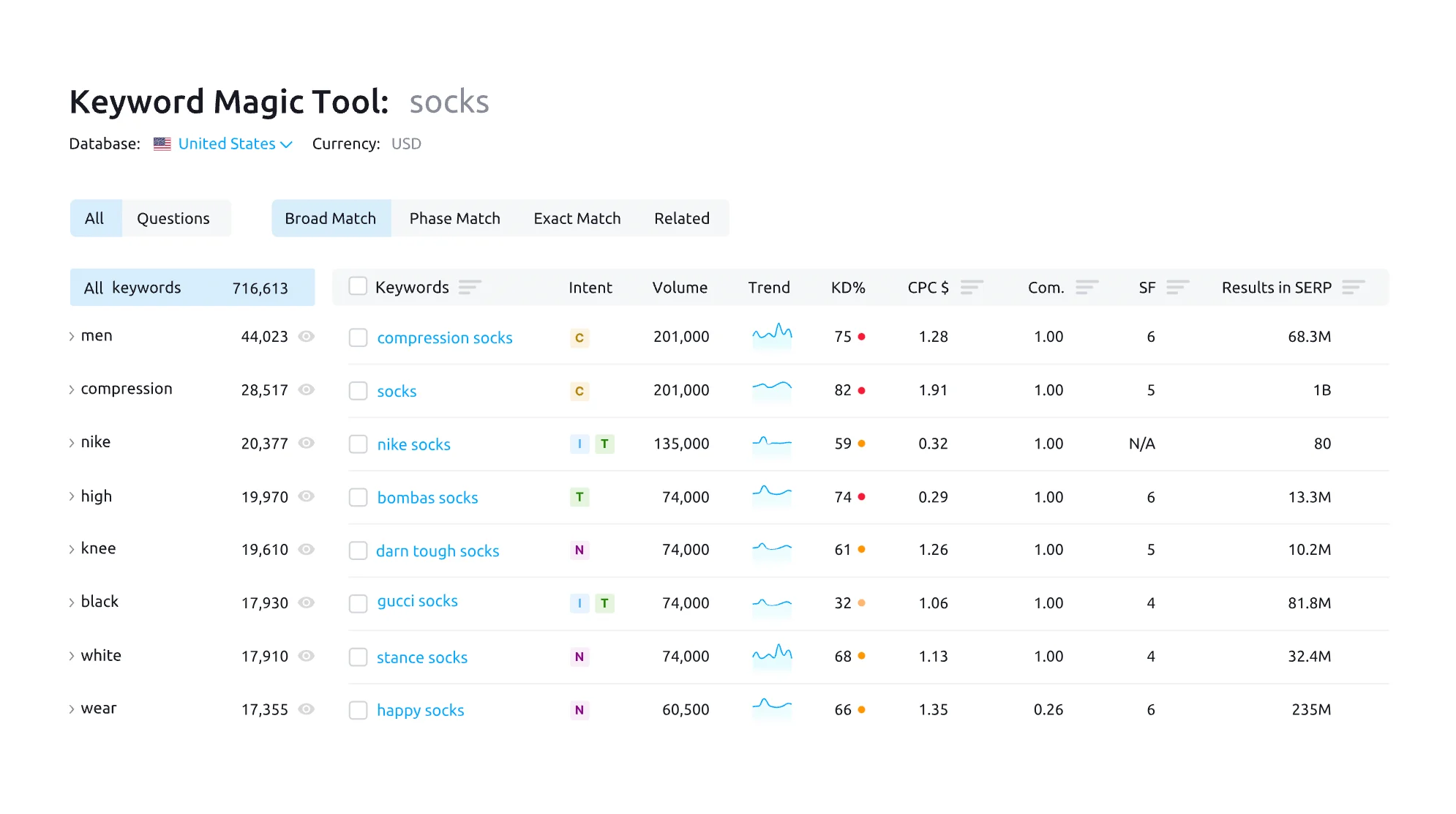
Key features of Semrush API:
- Over 25 billion keywords across 142 regional databases
- Keyword overview endpoint: volume, KD, CPC, trend data, and search intent signals per keyword
- Phrase match and related terms available through keyword suggestion tool API endpoints
- Functions as a keyword suggestion API for content cluster ideation - surfaces related terms and parent topics alongside raw volume data
- Domain vs. domain keyword comparison for organic and paid analysis in the same endpoint
- Position tracking data accessible programmatically
- Topic research endpoint for content cluster ideation - no direct equivalent exists in the Ahrefs API
- Search intent classification (informational, navigational, commercial, transactional) per keyword
- Backlink, traffic analytics, and site audit endpoints within the same API
What Are the Pros and Cons of Semrush API?
Pros:
- Search intent classification is a data advantage that no other tool on this list matches natively
- Topic research endpoint for content clustering has no equivalent in the Ahrefs API
- Complete SEO keyword API for full-funnel teams - organic, paid, and content research from one provider
- Works for content and paid media teams from a single data source, reducing vendor complexity
- Strong SDKs and documentation across multiple programming languages
Cons:
- API units are priced separately from the base subscription - costs accumulate fast at volume
- Smaller-market data is thinner than Ahrefs; non-English niche markets show the gap clearly
- Rate limits at lower plan tiers create friction for large bulk operations
- Number of available endpoints makes initial setup time-consuming for new developers
- Pure competitive intelligence teams focused on KD accuracy may prefer Ahrefs
What Is the Pricing of Semrush API?
- Pro plan: approximately $139.95/month (limited API units included)
- Guru plan: approximately $249.95/month (more units, historical data access)
- Business plan: approximately $499.95/month (highest included unit allocation)
- Additional API units purchasable as paid add-ons at all tiers
- Enterprise pricing available with custom unit packages
Best Use Cases of Semrush API
- Content teams that need a keyword suggestion API with search intent classification included in every response
- Agencies managing both organic and paid search programs across large client portfolios from a single API connection
- Programmatic SEO builders who need topic cluster data at scale via a keyword tools API with intent signals
- Competitive intelligence teams tracking keyword rank movements across multiple rival domains over time
- Agencies that need a keyword analysis API covering topic clusters, search intent, and competitive ranking data from one platform
- Any operation using keyword data API output to build a full-funnel content strategy from awareness-stage queries down to transactional terms
5. Keywordtool.io API
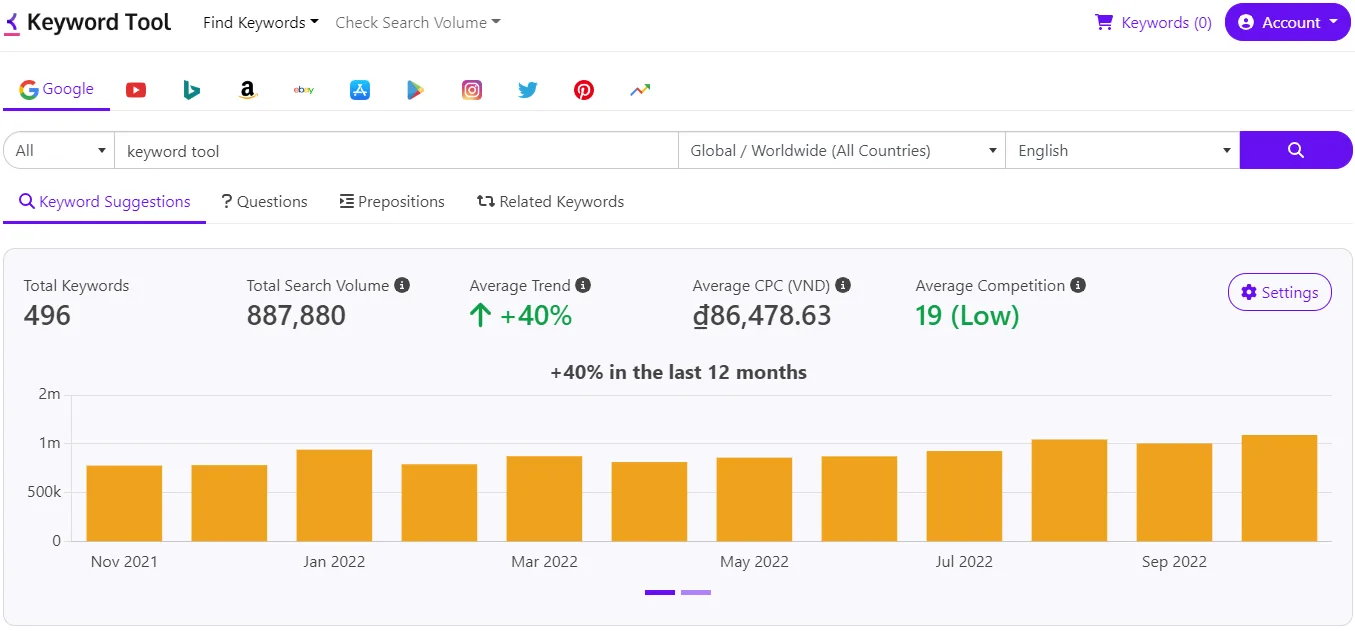
Key features of Keywordtool.io API:
- Pulls keyword suggestions from Google Autocomplete, Bing, YouTube, Amazon, Instagram, Twitter, and App Store
- Generates long-tail keyword lists from a single seed keyword input
- Covers 192 countries and 83 languages
- Search volume, CPC, and competition data via Google Ads API integration
- Questions, prepositions, and hashtag keyword variations available through separate endpoints
- Bulk keyword input supported on all paid plans
- Works as a keyword suggestion tool API for long-tail content mapping and topical expansion across multiple platforms simultaneously
- Simple REST API with clean JSON responses; among the fastest to set up on this list
What Are the Pros and Cons of Keywordtool.io API?
Pros:
- Autocomplete-based suggestions surface long-tail keywords that database tools frequently miss
- Multi-platform coverage (YouTube, Amazon, App Store) is valuable for non-Google SEO work
- Among the simplest APIs on this list to authenticate and begin calling
- Fast for building large long-tail lists from small seed sets
- Pricing is reasonable for the volume of suggestions returned per request
Cons:
- No keyword difficulty score - a significant gap for keyword analysis API workflows that require competitive benchmarking
- Missing the keyword tools API features that matter most for competitive SEO: KD scoring, SERP analysis, and backlink data
- No SERP data of any kind
- Volume data sourced from Google Ads, not a proprietary database - accuracy varies and is not independently verified
- No backlink or domain-level analysis
- Not suitable for competitive intelligence, link-based KD work, or rank tracking
What Is the Pricing of Keywordtool.io API?
- The Starter plan runs $88 per month. It allows exactly 50 requests per day.
- The Growth plan costs $188 per month. It allows exactly 100 requests per day.
- The Scale tier is $388 per month. It provides exactly 200 daily requests.
- The top Agency tier demands $788 per month. It provides exactly 400 daily requests.
- Daily request limits are shared globally across the standard web interface, the MCP server, and programmatic calls.
Best Use Cases of Keywordtool.io API
- Content teams building large long-tail keyword lists for programmatic SEO where competitive data is not the priority
- E-commerce teams pulling Amazon and Google Autocomplete suggestions at scale for product page optimization
- App developers who need App Store keyword data via a dedicated keyword API connection
- YouTube SEO specialists who need video keyword suggestions in bulk without the overhead of a full-suite platform
- Teams that want a lightweight keyword suggestion tool API covering Google, YouTube, and Amazon from a single integration - without paying for competitive analysis features they will not use
Conclusion
The right keyword analysis API for your operation depends on what you are building and what you are willing to pay for.
SE Ranking is the strongest default for most agencies and mid-size teams - it delivers a complete keyword tools API covering keyword research, clustering, backlinks, and rank tracking at an accessible price. Ahrefs is the technical best-in-class option when database scale and KD accuracy are non-negotiable. Semrush wins when search intent classification is a requirement. SpyFu is the right call when paid search competitive intelligence drives most of your keyword research work. Keywordtool.io handles autocomplete-based suggestion at scale, particularly across non-Google platforms.
For teams building a scalable keyword tool API product from scratch, Ahrefs offers the deepest data foundation. For everyone else, start with SE Ranking and move up when your requirements exceed what it delivers.
FAQ
Q1. What is a keyword research API?
Ans. A keyword research API is a programmatic interface that returns keyword data - search volume, keyword difficulty, CPC, and competition metrics - in response to API requests. Instead of using a platform's UI manually, you send structured requests and receive JSON responses that feed directly into your own tools, dashboards, or reporting pipelines.
Q2. Which keyword research API has the largest database?
Ans. Ahrefs. With over 28 billion keywords across 200+ countries, it has the widest coverage on this list. Semrush is close behind at 25 billion across 142 regional databases. For most projects, either is large enough - the real differentiator is what additional data (intent, clicks, clustering) sits alongside the raw keyword volume.
Q3. Is there a free keyword research API?
Ans. No major SEO platform offers a free keyword research tool API with meaningful data depth or call limits. SE Ranking offers a 14-day free trial and 100,000 credits. Google Search Console API and Google Ads Keyword Planner API return some keyword data at no cost, but they are not full keyword tools API solutions - they lack KD scores, competitor data, and SERP analysis.
Q4. Can I use these APIs for gray-hat SEO projects?
Ans. The APIs themselves are data delivery tools with no restriction on project type. Bulk content builds, PBN keyword mapping, and aggressive link anchor research all work fine with SE Ranking, Semrush, and Ahrefs keyword data API outputs. SpyFu is particularly useful for gray-hat competitive work - its historical ad data helps reverse-engineer competitor strategies quickly.
Q5. How do keyword API units or credits work?
Ans. Most platforms measure API usage in units. Each row of keyword data returned typically costs one unit. SE Ranking allocates monthly keyword API units per plan tier with the option to purchase additional units. Pulling bulk keyword lists of tens of thousands of terms can exhaust a monthly allocation quickly - factor this into your plan selection before committing.
Q6. What is the difference between a keyword suggestion API and a keyword research API?
Ans. A keyword suggestion API generates keyword ideas from a seed term - it tells you what else people search for around your input topic. A full keyword research API adds volume data, difficulty scores, CPC, SERP analysis, click metrics, and competitive positioning on top of those suggestions. Keywordtool.io operates primarily as a keyword suggestion tool API focused on Autocomplete-based discovery. SE Ranking, Ahrefs, and Semrush are full research platforms that cover the complete keyword tool API data set - from raw suggestions through to competitive benchmarking.



.svg)


.svg)
.svg)
.svg)
.svg)
.svg)