

.svg)

.svg)
.svg)
.svg)
.svg)
.svg)
Every SaaS founder hits the same wall. Revenue is growing, customers are signing up, and the product is gaining traction. But behind the scenes, the team is drowning in operational tasks that pull focus away from what actually drives growth.
The instinct is to hire more full time employees. But for early stage and growth stage SaaS companies, expanding headcount too quickly creates financial strain and organizational complexity that can derail momentum.
There is a smarter path forward. This guide explores how SaaS startups can scale operations efficiently by leveraging strategic delegation, optimizing workflows, and building lean teams that punch above their weight.
The Hidden Cost of Doing Everything In House
SaaS founders and their core teams often wear multiple hats during the early stages. The developer handles customer support tickets between coding sprints. The marketing lead manages social media while running paid campaigns. The founder answers sales calls while trying to close funding rounds.
This hustle mentality works temporarily. But it becomes unsustainable as the company grows. Tasks that once took a few hours each week multiply into full time responsibilities that nobody has bandwidth to handle properly.
The real cost is not just burnout. It is opportunity cost. Every hour your senior developer spends on administrative work is an hour not spent improving the product. Every moment your marketing lead dedicates to scheduling social posts is time stolen from campaign strategy and optimization.
Research shows that SaaS companies with higher operational efficiency achieve faster growth rates and better unit economics. The companies that scale successfully learn to protect their core team's focus by delegating tasks that do not require their specialized expertise.
Identifying Tasks That Drain Your Team's Productivity
Before you can solve the problem, you need to understand where time is actually going. Most SaaS teams underestimate how much of their week disappears into low leverage activities.
Start by auditing your team's workload for two weeks. Track every task and categorize them into three buckets. Core activities directly contribute to product development, customer acquisition, or revenue generation. Support activities enable core work but do not require specialized skills. Administrative activities keep the business running but could be handled by anyone with proper training.
Common time drains for SaaS teams include email management and inbox organization, calendar scheduling and meeting coordination, data entry and CRM updates, basic customer support inquiries, social media posting and community monitoring, research and competitive analysis, invoice processing and expense tracking, and recruitment screening and interview scheduling.
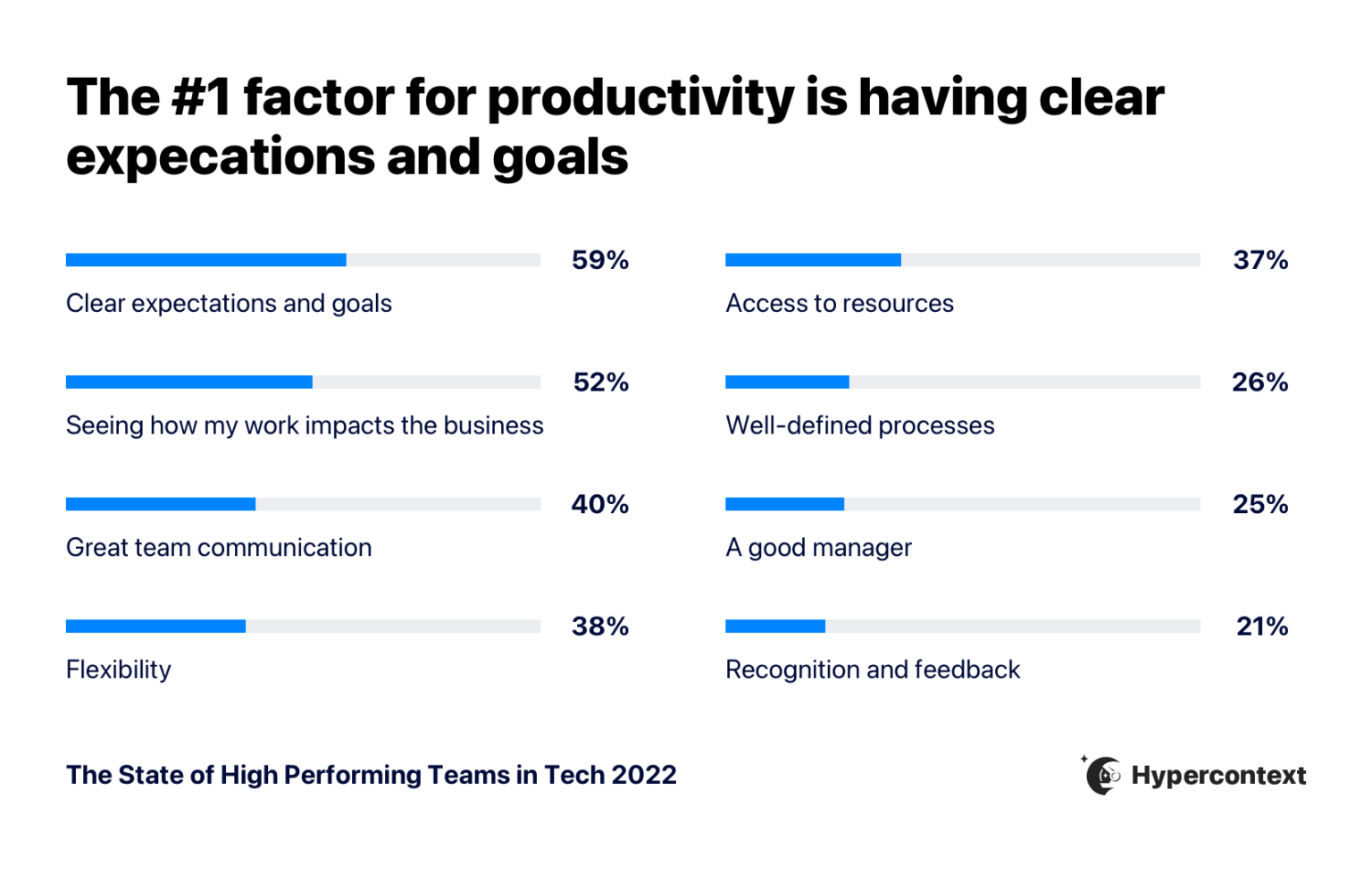
Image Source: Hypercontext
Most teams discover that 20 to 40 percent of their time goes toward support and administrative tasks. That represents a massive opportunity to reclaim productive hours without adding expensive full time roles.
Building a Delegation Framework That Actually Works
Delegation sounds simple in theory. In practice, many founders struggle to let go of tasks they have always handled themselves. The fear of losing control or receiving subpar work keeps them trapped in operational quicksand.
Successful delegation requires a systematic approach. Start by documenting processes for every task you want to hand off. Create step by step instructions with screenshots, templates, and examples of completed work. This documentation becomes the foundation for consistent quality regardless of who performs the task.
Next, establish clear communication protocols. Define how tasks will be assigned, what information needs to accompany each request, and how completed work should be delivered. Specify response time expectations and escalation procedures for questions or issues.
Finally, build feedback loops into your delegation system. Regular check ins allow you to catch problems early and provide guidance that improves performance over time. The goal is continuous improvement, not perfection from day one.
The Strategic Advantage of Virtual Support for SaaS Companies
Many SaaS companies are discovering that virtual assistants offer the perfect solution for scaling operations without the commitment of full time hires. This model provides flexibility that matches the unpredictable growth patterns of software businesses.
When you hire a virtual assistant from a managed service like Wing Assistant, you gain access to trained professionals who can handle a wide range of operational tasks. Unlike freelancers who require constant oversight, managed services provide quality assurance, backup coverage, and dedicated account management.
The economics make sense for SaaS companies at various stages. Early stage startups can access professional support at a fraction of the cost of a full time hire. The same principle applies to talent acquisition, where AI sourcing tools can help teams identify qualified candidates more efficiently without expanding internal recruiting resources. Growth stage companies can scale support up or down based on current needs without the complexity of hiring and firing employees.
Virtual assistants excel at the repetitive, process driven tasks that consume so much of a SaaS team's time. Email management, calendar coordination, data entry, research, and basic customer support all transfer well to virtual team members with proper training and documentation.
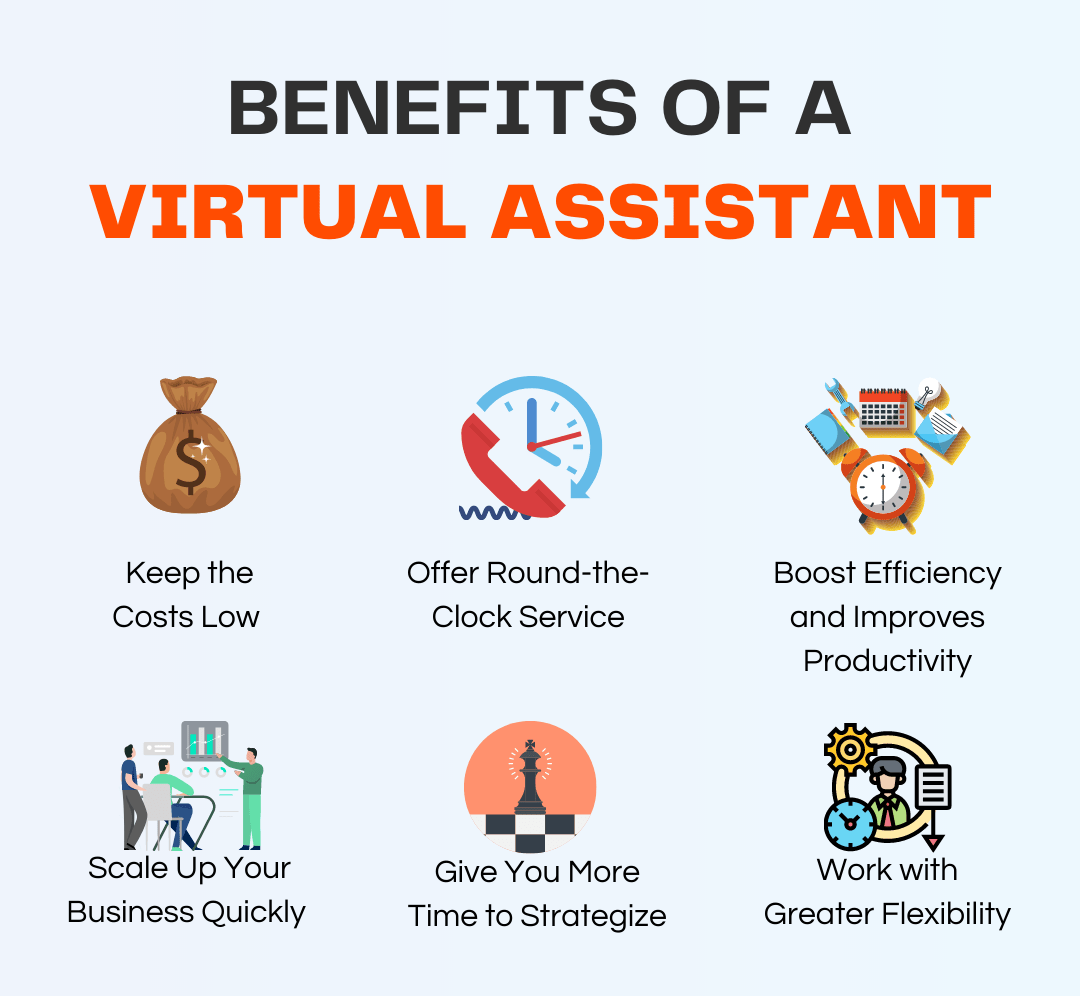
Image Source: Zirtual
Optimizing Your Marketing Operations
Digital marketing is one area where SaaS companies consistently struggle to maintain momentum. The sheer volume of channels, content formats, and campaign types overwhelms small teams trying to compete with well funded competitors.
Content marketing alone requires research, writing, editing, formatting, publishing, promotion, and performance tracking. Social media demands daily attention across multiple platforms. Paid advertising needs constant monitoring and optimization. Email marketing requires list management, sequence creation, and ongoing testing.
Smart SaaS marketers focus their energy on strategy and creative direction while delegating execution tasks. A virtual assistant can handle social media scheduling, content formatting, image sourcing, influencer outreach, and campaign reporting. This allows your marketing lead to concentrate on the high impact decisions that actually move metrics.
The key is maintaining quality control without micromanaging every task. Provide clear brand guidelines, content templates, and approval workflows. Review outputs regularly and provide specific feedback that improves future work. Over time, your virtual team members will internalize your standards and require less oversight.
Using a Unified Marketing Platform to Support a Lean Team
While virtual assistants help execute day-to-day marketing tasks, SaaS startups also need a structured system to manage campaigns, performance, and client or lead data without building a large internal marketing department.
This is where platforms like DashClicks can support a lean marketing operation by bringing multiple digital marketing functions into one centralized environment.
For SaaS startups and growing marketing teams, this kind of platform helps streamline both execution and visibility across channels.
How DashClicks Supports Scalable Digital Marketing?
DashClicks provides a combination of software and services that help startups operate like a larger marketing team without expanding headcount:
- White-Label Marketing Services: Outsource execution for SEO, PPC, content marketing, social media, and website development while maintaining full control over branding and client or stakeholder communication.
- Automated Client and Campaign Dashboards: Track campaign performance, leads, traffic, and conversions across channels in one place—eliminating the need to juggle multiple reporting tools.
- CRM and Lead Management: Organize inbound leads, sales pipelines, and customer data so marketing and sales teams stay aligned without manual tracking.
- Sales and Proposal Tools: Create and send branded proposals, manage prospects, and track deal status inside a single platform.
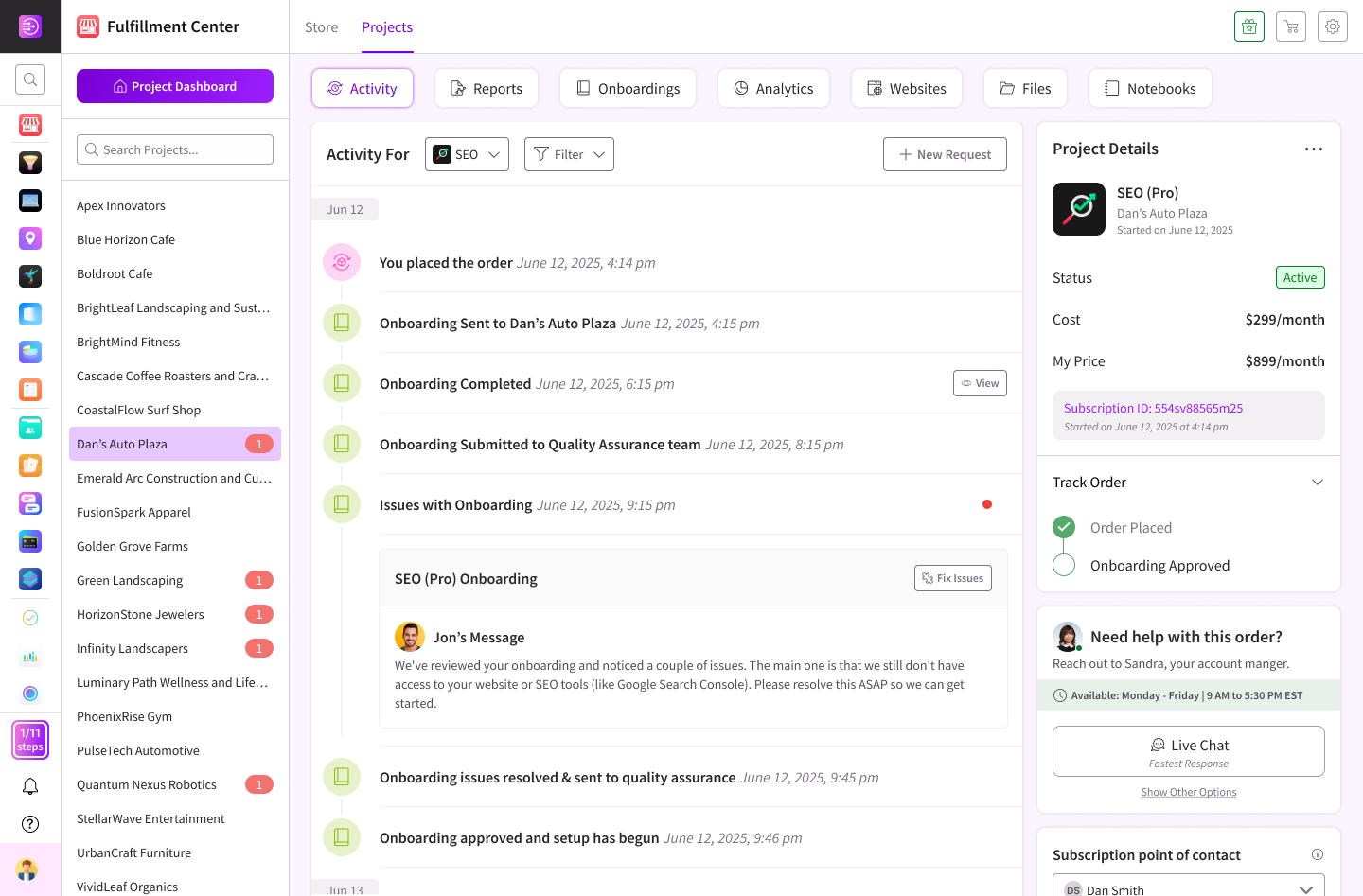
- Marketing Fulfillment and Task Management: Assign, monitor, and deliver marketing work without relying on scattered emails, spreadsheets, or disconnected tools.
By combining execution, reporting, and workflow management into one system, platforms like DashClicks help in SaaS startup marketing through professional-grade marketing operations while keeping teams lean, focused, and cost-efficient.
Streamlining Customer Success Without Sacrificing Quality
Customer retention drives SaaS profitability. But delivering excellent customer experiences becomes increasingly difficult as your user base grows. Support tickets multiply. Onboarding new customers consumes more time. Proactive outreach falls by the wayside.
The solution is not to hire a large customer success team before you can afford one. Instead, create systems that allow a small team to support more customers effectively.
Start by building a comprehensive knowledge base that answers common questions. Document solutions to frequent issues so customers can find answers without submitting tickets. Create onboarding sequences that guide new users through key features automatically.
Then use virtual support to handle tier one inquiries that follow predictable patterns. Password resets, basic how to questions, and billing inquiries can all be resolved by trained virtual assistants following documented procedures. This frees your customer success team to focus on complex issues, strategic accounts, and proactive relationship building.
Managing the Transition to Delegated Operations
Shifting from doing everything yourself to leading a distributed team requires new skills and mindsets. Many founders underestimate the adjustment period and become frustrated when results do not appear immediately.
Expect the first few weeks to feel slower, not faster. You will spend time training, answering questions, and reviewing work that you could have completed yourself in less time. This investment pays dividends once your virtual team members reach proficiency.
Resist the urge to take back tasks at the first sign of imperfection. Minor mistakes are part of the learning process. Focus on whether errors are decreasing over time and whether the overall quality meets acceptable standards. Perfect is the enemy of good when you are trying to scale.
Celebrate early wins to build momentum. When delegation works well, acknowledge the success and look for additional tasks to hand off. Small victories compound into significant operational improvements over time.
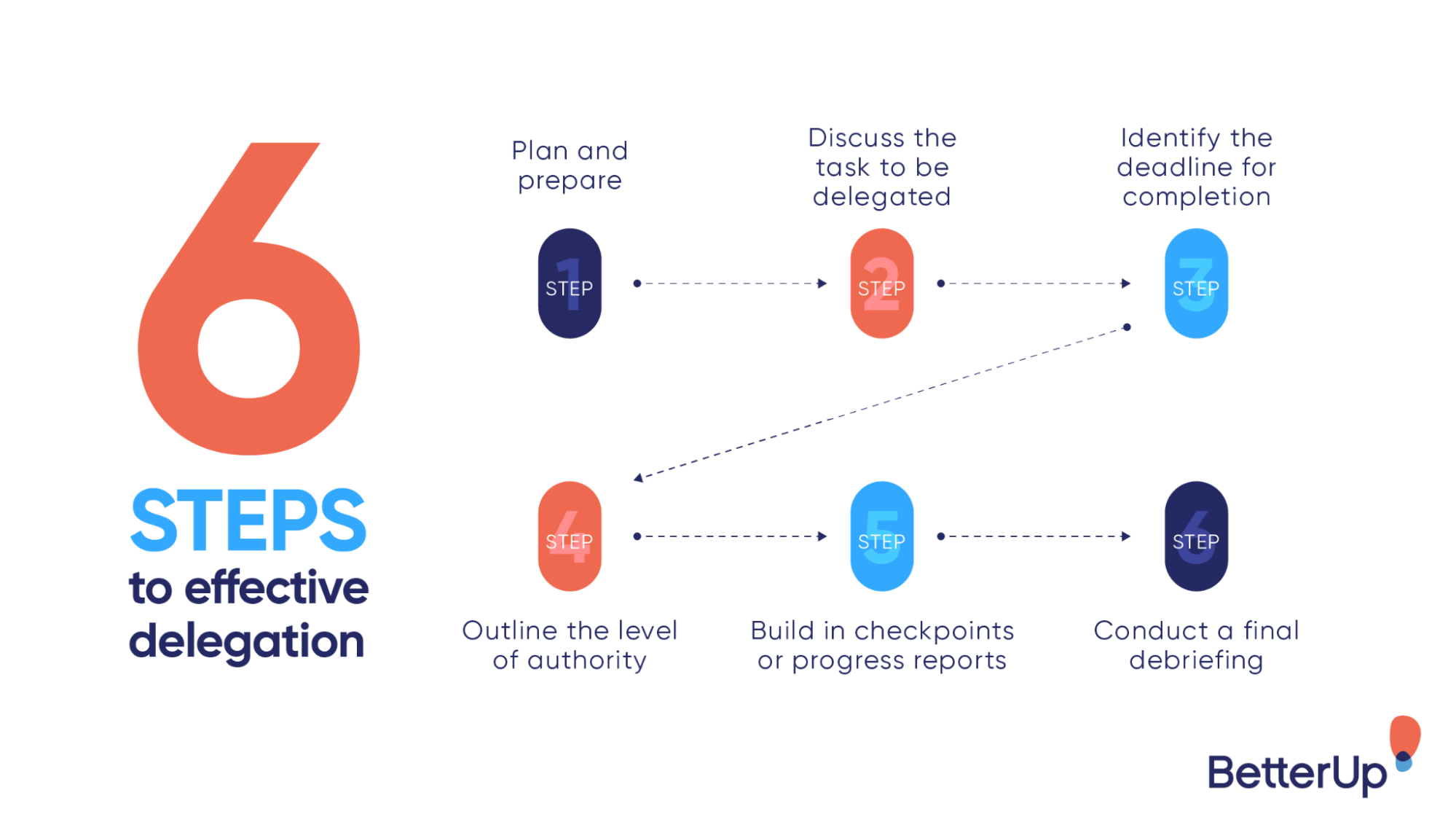
Image Source: BetterUp
Measuring the Impact on Your Business
Track metrics that demonstrate the value of your delegation investments. Hours saved per week provides a baseline measure of operational improvement. Calculate the dollar value of those hours based on what your team members could accomplish with that time.
Monitor leading indicators of business health. Are you shipping features faster? Publishing more content? Responding to customers more quickly? Closing more deals? These outcomes matter more than the delegation itself.
Compare your cost per task under the new model versus the old approach. Factor in not just direct costs but also the opportunity cost of having highly paid team members perform low leverage work. Most SaaS companies find that strategic delegation delivers positive ROI within the first few months.
Building for Long Term Scalability
The operational systems you build today determine how smoothly you can scale tomorrow. Companies that rely on heroic individual efforts eventually hit ceilings that require painful restructuring to overcome.
Invest in documentation, processes, and delegation infrastructure even when it feels like overhead. These foundations enable you to onboard new team members quickly, maintain quality as you grow, and adapt to changing business needs without starting from scratch.
Think of virtual support as a flexible layer that expands and contracts with your business. During product launches or funding rounds, increase support to handle the surge in activity. During quieter periods, scale back to optimize costs. This flexibility is impossible with traditional employment models.
Taking the First Step
Scaling a SaaS company is hard enough without drowning in operational tasks that distract from your core mission. The founders who succeed learn to protect their time and their team's focus by delegating everything that does not require their unique expertise.
Start small. Pick one or two tasks that consistently drain your productivity and experiment with handing them off. Document your processes, set clear expectations, and give the relationship time to develop. The results will likely convince you to delegate more.
The path to sustainable SaaS growth runs through operational efficiency. Build the systems and partnerships that allow your small team to accomplish what larger competitors struggle to achieve. Your future self will thank you for making the investment today.



.svg)


.svg)
.svg)
.svg)
.svg)
.svg)