

.svg)

.svg)
.svg)
.svg)
.svg)
.svg)
For more than a decade, marketers have discussed “full-funnel marketing” as if it were a straightforward concept to implement. Launch awareness ads at the top, deploy retargeting in the middle, and optimize conversions at the bottom. On paper, the model appeared clean, logical, and efficient. In practice, it rarely reflects how people actually buy. Real buyer journeys have always been messier, slower, and far less linear than traditional funnels suggested. By 2026, that disconnect has become impossible to ignore.
Today’s buyers are more informed, more skeptical, and significantly less predictable. They research anonymously, consult with peers and online communities, compare options across platforms, and form strong opinions long before filling out a form or speaking with a sales representative. As a result, full-funnel marketing is no longer about controlling each step of the journey. It’s about building adaptive systems that respond to how decisions are truly made.
The Death of the Linear Funnel
The classic marketing funnel assumed a neat, predictable progression: awareness leads to interest, interest leads to consideration, and consideration leads to conversion. That structure made sense in a time when media channels were limited, buyer behavior was easier to track, and brands controlled most of the information flow. Marketers could reasonably expect prospects to move forward step by step.
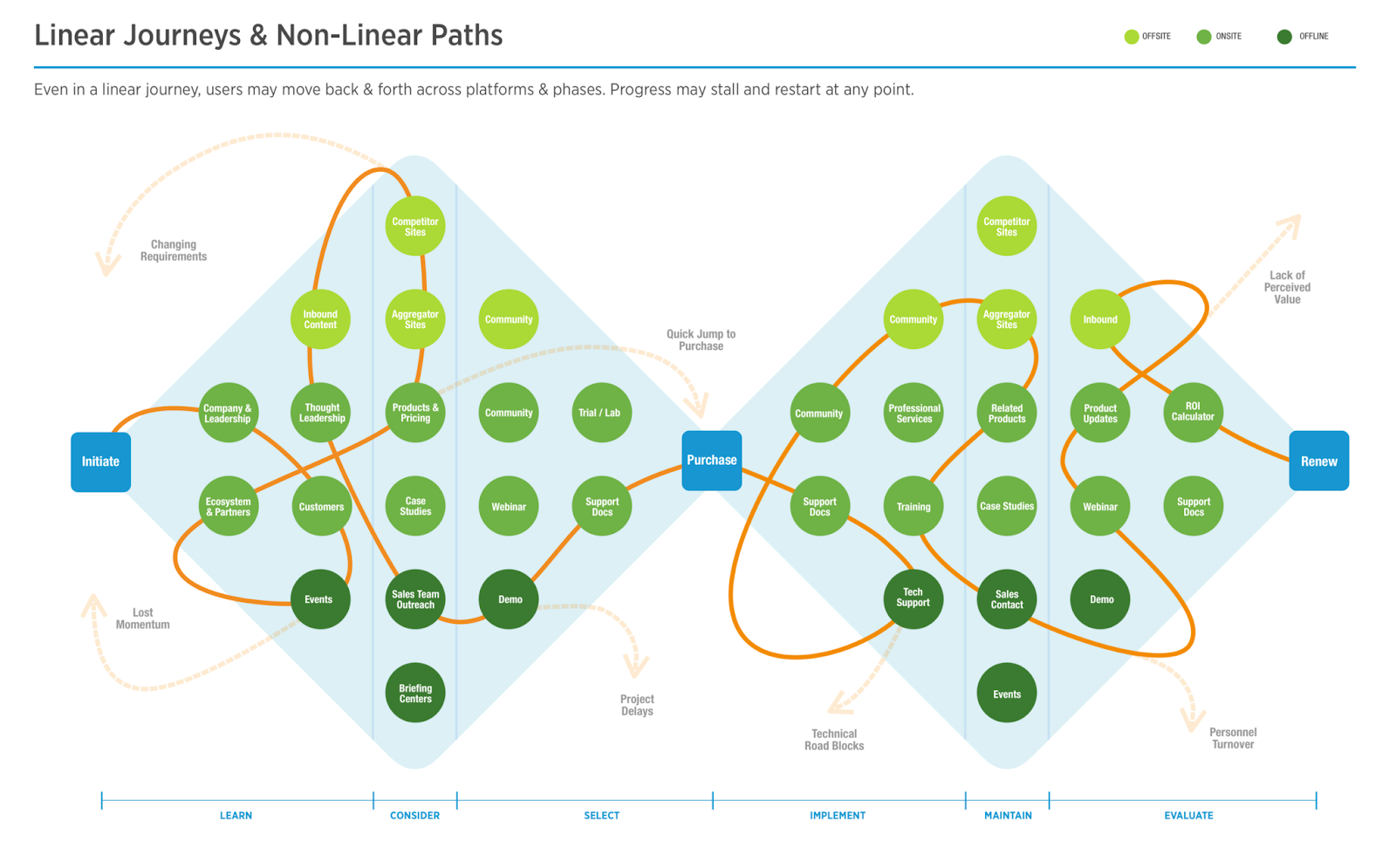
In 2026, that assumption no longer holds. The modern buyer journey is fragmented, recursive, and highly unpredictable. Prospects may encounter your brand multiple times over weeks or even months before showing any visible intent. They move forward, backward, and sideways—often simultaneously—while researching privately and validating decisions outside of tracked channels.
Full-funnel marketing today recognizes that:
- Buyers enter the journey at different points.
- Decision-making happens privately, not visibly.
- Momentum is built through repeated exposure, not single actions.
Instead of forcing users through rigid stages, modern funnels function as adaptive ecosystems. The goal is no longer linear progression—it’s sustained presence. Brands that cling to outdated funnel logic lose relevance the moment buyers behave differently than expected.
Full-Funnel Does Not Mean Omnichannel Chaos
One of the most persistent myths in marketing is that full-funnel execution means being everywhere at once. In response, many teams add more channels, more tools, and more campaigns, assuming broader coverage automatically leads to better results. The outcome is often the opposite: fragmented messaging, duplicated effort, and internal complexity that dilutes impact.
In 2026, high-performing full-funnel strategies are intentionally narrow and deeply integrated. Rather than chasing every emerging platform, successful teams focus on:
- Channels where their audience already trusts information.
- Formats that support long-term recall, not short-term engagement spikes.
- Messaging consistency across paid, owned, and earned media.
This approach enables each touchpoint to reinforce the others, rather than competing for attention. Full-funnel success no longer comes from volume or visibility alone. It comes from coordination. A smaller number of well-orchestrated interactions—delivered with clarity and intent—consistently outperform sprawling, disconnected efforts that confuse buyers and weaken brand credibility.
Awareness Marketing Has Become Subtle and Contextual
The loud, interruptive awareness tactics that once dominated marketing are steadily losing effectiveness. Buyers today are overwhelmed by constant promotion, increasingly ad-blind, and far more selective about what earns their attention. As a result, traditional reach-driven campaigns generate visibility without influence. “Awareness today is built through repeated, credible presence, not volume. When buyers recognize your expertise across trusted contexts, trust forms long before intent,” says Raphael Yu, CMO at LeadsNavi.
In 2026, awareness marketing is quieter, more contextual, and significantly more persistent. Instead of interrupting buyers, it appears naturally in places where they are already learning, asking questions, or validating decisions. Awareness now feels less like advertising and more like participation.
Effective awareness strategies include:
- Expert commentary and credible thought leadership.
- Presence in trusted industry publications and earned media.
- Educational content embedded within real conversations.
Rather than chasing fleeting attention, full-funnel marketing focuses on earning familiarity. Repeated exposure in trusted environments builds recognition and credibility over time. Awareness is no longer a single impression or campaign launch—it is the slow, deliberate accumulation of trust signals that shape perception long before buyers take action.
Content Is Designed for Discovery and Decision-Making
One of the most significant shifts shaping full-funnel marketing in 2026 is how content is structured across the buyer journey. Content is no longer treated as a single, uniform layer meant to “educate” broadly. Instead, it is deliberately designed around search intent, with different assets serving distinct roles at different moments.
Discovery content helps buyers explore problems, trends, and emerging possibilities. It answers high-level questions and establishes relevance early in the research process. Validation content, by contrast, supports decision-making. It helps buyers assess risk, confirm fit, and build confidence in a specific solution.
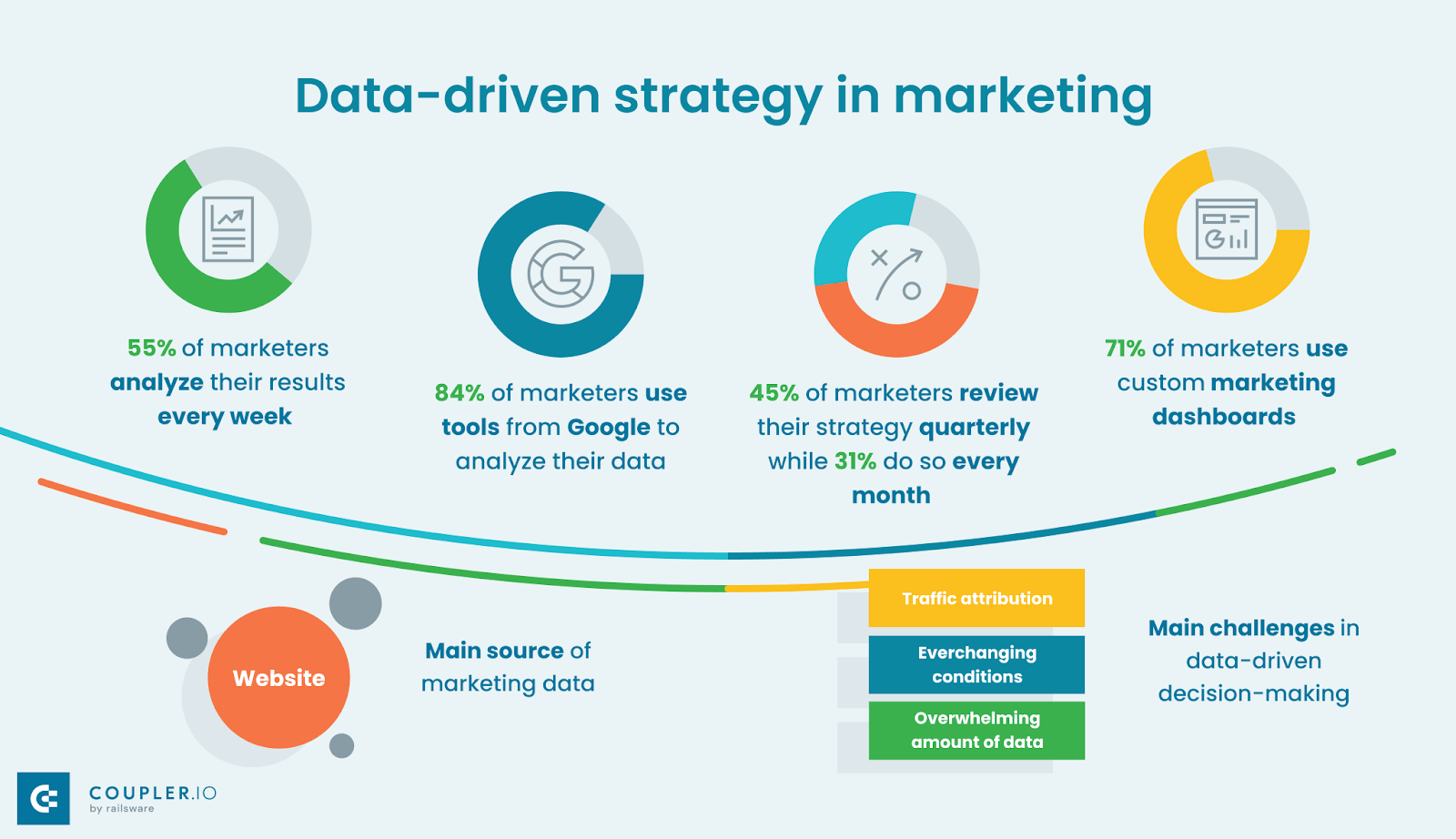
Source: Coupler
Strong full-funnel content strategies typically include:
- Educational articles and insights for early research.
- Use-case and role-specific content for mid-funnel evaluation.
- Proof-driven assets such as case studies, comparisons, and FAQs.
Funnels break down when content stops at awareness. In 2026, the brands that outperform are those that actively guide buyers through uncertainty, providing clarity and reassurance—not just clicks. “Discovery content earns attention, but decision content earns commitment. Buyers move forward when content reduces uncertainty, not just when it explains ideas,” says William Fletcher, CEO at Car.co.uk.
The Middle of the Funnel Is Where Deals Are Won or Lost
Generating top-of-funnel traffic has become relatively easy, and bottom-of-funnel conversions are often the most straightforward to measure. The real point of failure for most funnels lies in the middle—where buyers hesitate, compare options, and delay decisions. This is the stage where uncertainty is highest, and momentum is most fragile.
In 2026, the middle of the funnel is no longer treated as a passive nurture sequence filled with generic emails. Instead, it functions as an active decision-support layer designed to reduce friction and build confidence.
Effective middle-funnel strategies include:
- Transparent pricing explanations that remove ambiguity.
- Side-by-side comparisons with alternatives to aid evaluation.
- Objection-handling content written in clear, plain language.
- Human touchpoints that feel advisory rather than pushy.
Brands that invest intentionally in this stage shorten sales cycles, improve conversion quality, and help buyers move forward with confidence. Even without increasing traffic volume, strong middle-funnel execution often delivers disproportionate gains in revenue and deal velocity.
Further Reading: The Power of Middle-of-the-Funnel (MOFU) Content: Convert Leads to Loyal Customers
Personalization Is Driven by Intent, Not Identity
For years, personalization in marketing relied heavily on static identifiers such as job title, company size, or industry classification. While those attributes still provide useful context, they are no longer sufficient on their own. In 2026, they tell marketers who someone is, but not why they are engaging or what they actually need in the moment.
Modern personalization is driven by behavioral intent. It focuses on how buyers interact rather than how they are labeled. Signals such as:
- What content someone consumes repeatedly.
- Where they hesitate, pause, or drop off.
- Which questions or topics do they keep revisiting.
These insights allow full-funnel systems to adapt messaging, sequencing, and recommendations dynamically. The result is an experience that feels relevant without being intrusive. Buyers aren’t pushed into predefined segments; they are supported based on real-time curiosity and concern. “Identity explains who a buyer is. Intent reveals what they’re trying to solve right now, and that’s where effective personalization actually begins,” says Sharon Amos, Director at Air Ambulance 1. When personalization responds to intent instead of assumptions, it feels genuinely helpful rather than automated, increasing trust and forward momentum throughout the funnel.
Paid Media Supports the Funnel, It Doesn’t Lead It
Paid advertising continues to play an important role in marketing, but by 2026, it no longer defines or drives the funnel on its own. Instead, paid media is most effective when it reinforces momentum that already exists across organic, earned, and owned channels. Attempts to use ads as a shortcut to trust or demand creation are increasingly ineffective and expensive.
High-performing teams use paid media strategically to echo messages buyers have already encountered elsewhere, helping reinforce familiarity rather than introduce entirely new narratives. Paid placements also help maintain brand recall during long, non-linear decision cycles, ensuring the brand remains visible without feeling intrusive. In addition, ads are used to fill visibility gaps where organic reach naturally tapers off, not to replace the slower work of trust-building through content and credibility.
When paid media is integrated into a broader full-funnel system, it feels consistent and familiar. When it operates in isolation, it feels disruptive. In 2026, successful funnels treat paid media as an amplifier, not a crutch.
Sales and Marketing Now Share the Same Funnel
The handoff between marketing and sales was once one of the most fragile points in the buyer journey. Leads were passed from one team to another, valuable context was lost, and messaging often shifted abruptly at the moment when clarity mattered most. For buyers, the experience felt disjointed and transactional.
“When sales and marketing operate from the same funnel, buyers experience continuity instead of conversion pressure, and deals move forward with less friction,” says Tom Bukevicius, Principal at Scube Marketing.
By 2026, that separation will rapidly disappear. Full-funnel marketing now includes sales enablement as a core component rather than a downstream consideration. Messaging is developed collaboratively and remains consistent across marketing content, sales conversations, and supporting materials. Insights from sales—particularly common objections, hesitations, and deal blockers—directly inform content strategy and funnel optimization.
Metrics are also shared rather than siloed, creating accountability across the entire journey instead of isolated performance reporting. The result is continuity. Buyers no longer feel like they are being handed off between departments. Instead, the funnel flows seamlessly from marketing engagement into sales interaction, reinforcing trust and momentum rather than resetting the conversation.
Trust Signals Matter More Than Creative Execution
Creative execution still plays an important role in capturing attention, but in 2026, trust has become the decisive factor in whether buyers move forward. This is especially true for high-consideration and B2B decisions, where risk, reputation, and long-term impact matter more than clever messaging. Buyers are no longer persuaded by polish alone—they look for proof.
“Creative gets attention, but trust earns progression. Buyers move forward when credibility shows up before persuasion,” says Dana Ronald, CEO of the Tax Crisis Institute.
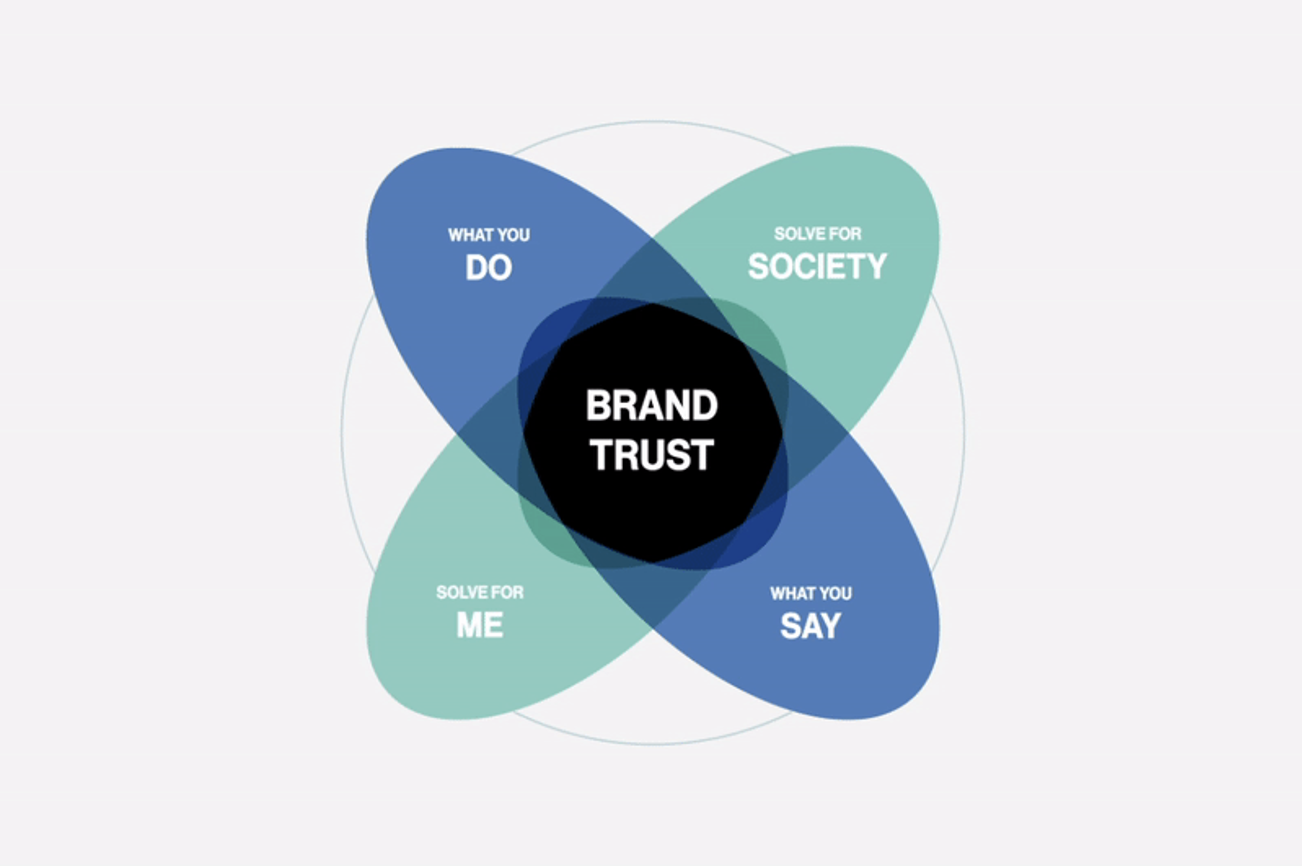
Modern full-funnel strategies embed trust signals throughout the entire journey rather than reserving them for the final conversion stage. These signals include:
- Independent reviews and credible third-party validation.
- Earned media placements and expert mentions.
- Transparent storytelling that acknowledges limitations and trade-offs.
Instead of hiding proof behind gated assets or sales conversations, high-performing teams surface credibility early and consistently. This builds confidence before buyers ever raise their hand. In 2026, trust is not something you earn at the close of a deal—it is established long before. Full-funnel marketing treats trust as a foundational layer that supports every interaction, from first exposure to final decision.
Measurement Has Shifted From Attribution to Insight
For years, attribution models have struggled to accurately reflect how buyers actually move through marketing funnels. Even multi-touch attribution, while more sophisticated than last-click models, still reduces complex, non-linear journeys into simplified paths that rarely tell the full story. As buyer behavior becomes more fragmented, the limitations of attribution become increasingly clear. “Attribution tries to assign credit. Insight explains behavior. In 2026, the teams that win are the ones measuring momentum, not just touchpoints,” says Tal Holtzer, CEO of VPSServer.
In 2026, full-funnel measurement prioritizes directional insight over perfect credit assignment. Instead of asking which channel “caused” a conversion, teams focus on understanding what accelerates or slows decision-making. Key areas of focus include:
- Time-to-decision trends across different segments.
- Stage-to-stage movement and momentum.
- Content influence on buyer progression.
- Reduction in friction, hesitation, and drop-offs.
The purpose of measurement is no longer to justify spending or defend individual channels. It is to generate learning. Measurement exists to reveal where confidence is built, where friction emerges, and how the funnel can be continuously refined to better support real buyer behavior.
Retention Is Designed Into the Funnel From Day One
Retention is no longer treated as something that happens after the sale. In 2026, it is a core stage of the funnel that directly influences growth, referrals, and long-term revenue. Forward-thinking teams recognize that how a buyer is acquired sets the tone for how long they stay and how much value they generate over time.
Modern full-funnel strategies build retention from the very beginning. Onboarding content is designed during the acquisition phase, ensuring expectations are clear before a purchase is made. Educational assets are created to anticipate future needs, helping customers progress rather than react when problems arise. Advocacy loops are also intentionally designed, giving satisfied customers natural opportunities to share experiences and influence others.
The funnel no longer stops at conversion. It compounds through loyalty, trust, and continued value delivery. In 2026, retention is not a downstream metric; it is a growth engine that strengthens every stage of the funnel.
Community Has Become a Strategic Growth Lever
Communities were once considered a “nice to have”—a brand accessory rather than a core growth channel. By 2026, that perception has changed entirely. Communities have become powerful funnel accelerators because they influence how buyers discover brands, evaluate options, and remain loyal over time.
Across the funnel, communities play distinct roles:
- Awareness is driven through organic peer discussion and shared insights.
- Consideration is shaped by real experiences, honest feedback, and practical advice.
- Retention is strengthened through a sense of belonging, support, and ongoing value.
What makes communities effective is not scale, but authenticity. The most successful brands do not force participation or dominate the conversation. Instead, they create environments where customers, prospects, and experts naturally exchange knowledge and support one another. These spaces build trust in ways traditional marketing cannot replicate.
In 2026, the community is no longer separate from the funnel—it is embedded within it. When designed thoughtfully, community turns marketing from a broadcast function into a shared, self-reinforcing growth system.
AI Enhances the Funnel, but Strategy Remains Human
AI plays a significant role in modern full-funnel marketing, supporting everything from content variation and behavioral analysis to timing optimization and performance forecasting. Its value lies in speed, scale, and pattern recognition—but it does not replace strategy. In fact, overreliance on automation without human oversight often leads to generic messaging and eroded trust.
The strongest teams use AI intentionally to:
- Identify behavioral patterns humans might miss.
- Improve timing and relevance across touchpoints.
- Scale consistency without sacrificing clarity or coherence.
While AI enhances execution, human judgment still defines positioning, narrative, tone, and credibility. Strategic decisions about what a brand stands for, how it communicates value, and where it draws boundaries remain fundamentally human responsibilities.
In 2026, full-funnel marketing succeeds when AI supports thinking rather than replaces it. Technology amplifies insight, but it cannot replicate empathy or context. The most effective funnels blend intelligent automation with deliberate human strategy, ensuring that efficiency never comes at the expense of trust or meaning.
Teams Are Organized Around Outcomes, Not Channels
As the full-funnel strategy has evolved, organizational structure has shifted alongside it. In 2026, high-performing marketing teams are no longer organized around individual channels or tools. Instead of having separate owners for paid search, social media, or email, teams are increasingly structured around funnel outcomes and buyer progression.
This model creates clear ownership across key stages of the journey, including:
- Discovery and activation.
- Evaluation and conversion.
- Expansion and advocacy.
By aligning teams around outcomes rather than channels, organizations reduce internal friction and eliminate competing priorities. Optimization efforts focus on improving the overall experience instead of maximizing isolated metrics. Messaging becomes more consistent, handoffs become smoother, and accountability extends across the entire funnel rather than stopping at departmental boundaries.
This structure also encourages cross-functional collaboration, bringing marketing, sales, customer success, and product teams into closer alignment. In 2026, organizing around outcomes ensures that growth efforts reflect how buyers actually move, not how internal teams are traditionally divided.
How DashClicks Funnels Support Modern Full-Funnel Marketing?
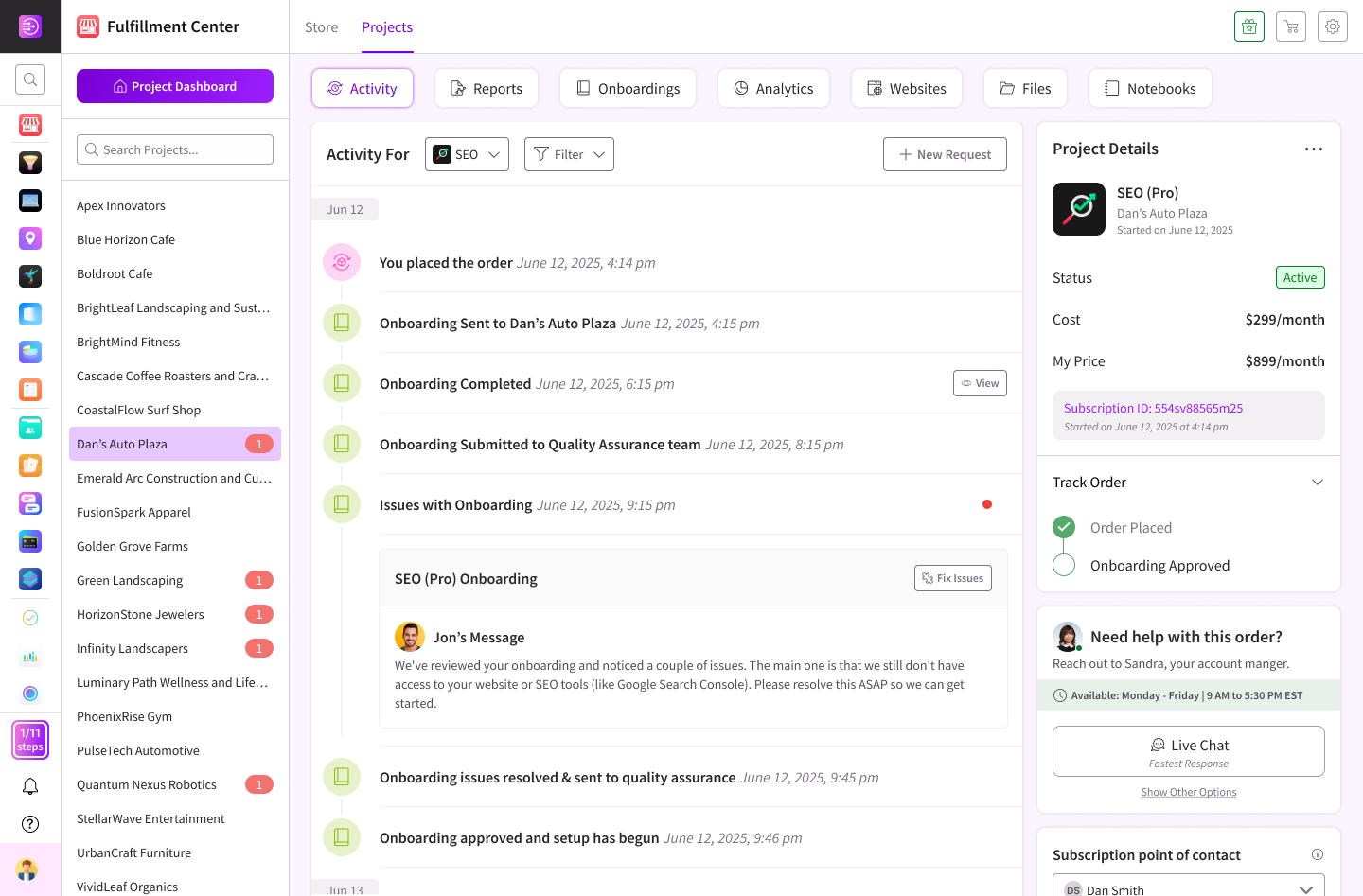
As outlined in the blog, full-funnel marketing in 2026 is about guiding buyers through non-linear, intent-driven journeys rather than pushing them through rigid stages. DashClicks’ Funnels Software fits this model by helping teams create focused, conversion-ready paths that reduce friction and build momentum.
The software enables marketers to design high-impact landing pages, offers, and checkouts using a drag-and-drop builder—making it easier to support discovery, evaluation, and conversion in one connected flow. Instead of relying on disconnected touchpoints, funnels provide clarity at moments where buyers hesitate most, especially in the middle of the funnel.
By integrating funnels with lead management, reporting, and automation, DashClicks helps teams maintain consistency across the journey—supporting the blog’s core idea that full-funnel success comes from coordination, trust, and sustained presence rather than channel overload.
What Full-Funnel Marketing Truly Means in 2026
At its core, full-funnel marketing in 2026 is about coherence. It is no longer measured by how many campaigns are launched or how many channels are activated. Instead, it is defined by how well every touchpoint connects into a unified system that reflects how buyers actually think, behave, and make decisions over time.
This approach is not about doing more. It is about bringing clarity and alignment to what already exists. The brands that win are not the loudest, fastest, or most complex. They are the ones that remain consistent across interactions, credible in their messaging, and intentional in how they guide buyers through uncertainty. Every piece of content, every interaction, and every signal reinforces the same core narrative.
Full-funnel marketing no longer asks, “How do we push people down the funnel?” That question belongs to an outdated model. Instead, it asks, “How do we show up meaningfully, every time they look for us?” That shift—from control to consistency—is what defines full-funnel marketing in 2026 and explains why it finally works.


.svg)


.svg)
.svg)
.svg)
.svg)
.svg)