

.svg)

.svg)
.svg)
.svg)
.svg)
.svg)
Ad verification confirms that ads render correctly and appear in the intended context, location, and placement, without deceptive redirects or manipulated inventory. According to WARC (January 2026), global advertising spend is forecast to grow 9.1% in 2026 to about $1.3 trillion. Higher spend spread across more platforms and geos raises the cost of misdelivery, so verification teams need reliable sampling that reflects real regional outcomes rather than one office network view.
Verification only works when checks resemble real browsing conditions. Platforms personalize content by location and network signals, and they react quickly to repeated scans from the same address. Proxies help teams keep testing consistent while still sampling enough viewpoints to trust the result.
What Is Ad Verification?
It measures whether ad delivery matches the intended settings and whether the ad experience stays safe and consistent across environments. Teams treat it as an evidence process, not a screenshot task, because repeatability matters more than one-off observations. Clear definitions keep results comparable across geos, devices, and publishers.
What Teams Actually Check?
Teams check creative rendering, visible placement, and surrounding content for brand safety signals. They also review redirect chains and landing behavior because malicious or misleading routes often appear only in specific conditions. Consistent checks track mismatches such as wrong geo delivery, missing disclosures, or unexpected pop-ups.
Why IP Identity Changes the Result?
Platforms use IP-based signals to localize content, enforce policies, and rate-limit suspicious traffic. One corporate IP can trigger blocks that hide the real user experience or force alternate content. Multiple network identities produce a truer sample of what audiences see in different locations.
Why Do Proxies Matter for Ad Verification?
Proxies let teams test delivery from controlled network identities rather than a single-office connection. That control prevents narrow sampling from turning into false confidence. It also reduces failures when targets throttle or block repetitive validation traffic.
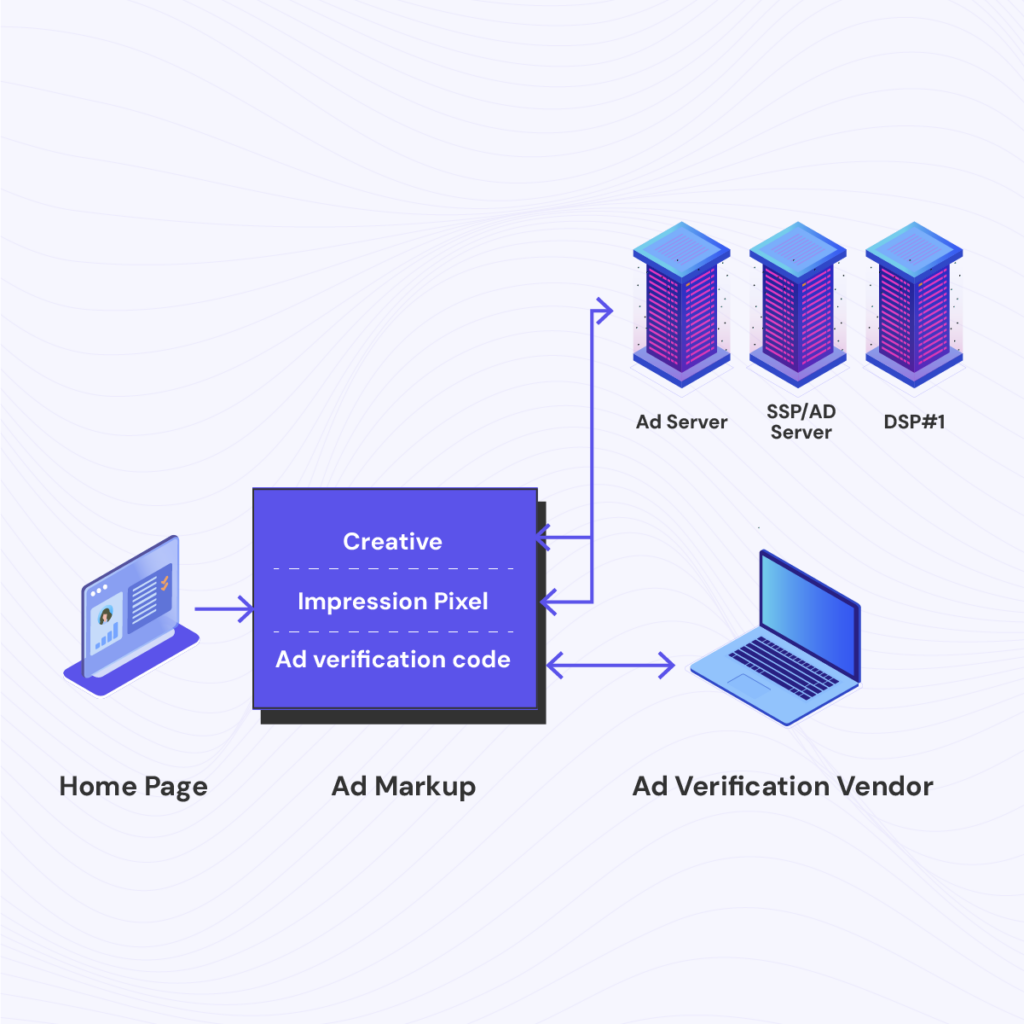
Image Source: ProxyJet
This section lists the highest-impact reasons proxies shape verification results.
- Geo-Accurate Sampling: Location-matched IPs expose how ads and landings change across markets.
- Block Resistance: Distributed IPs reduce repetitive request patterns that trigger friction and soft bans.
- Repeatable QA Baselines: Consistent IP profiles make it easier to compare results across runs and spot real delivery changes instead of random network noise.
- Publisher and Network Parity: Different networks can change what loads and how fast they load, which helps explain delivery gaps across environments.
- Brand Safety Spot Checks: Different IP identities can surface risky placements or surrounding content that does not appear from one fixed network.
- Redirect Chain Validation: Stable identity options make it easier to trace multi-hop redirects and confirm the final landing behaves as expected.
- Geo Compliance Validation: Controlled locations help confirm that restricted offers, disclosures, and consent flows appear where policies require them.
For agencies managing multiple client accounts, proxy-enabled verification is typically integrated into broader campaign management stacks. Using platforms like DashClicks for reporting and client-facing visibility while proxies handle geo-validation allows teams to connect delivery verification directly to measurable campaign outcomes.
Which Proxy Types Fit Ad Verification Workflows?
Different IP types fit different validation goals, and the wrong match creates noisy outcomes. Trust signals and network context affect what loads, what gets challenged, and what inventory appears. A good workflow assigns proxy types by publisher strictness and check depth.
- Residential Proxies: Residential IPs resemble home browsing and help validate sensitive placements where trust signals affect delivery. They support checks where a datacenter identity would trigger blocks or altered content. Teams often use them for publisher inventory sampling and brand safety validation.
- Mobile Proxies: Mobile IPs reflect carrier networks and help validate in-app and mobile-first delivery behavior. They make sense when the creative, landing speed, or tracking flows differ on mobile traffic. Teams use them to confirm mobile-only targeting and carrier-linked variations.
- ISP and Datacenter Proxies: ISP IPs provide a stable identity for multi-step checks that need continuity across redirects and sessions. Datacenter IPs can support lightweight monitoring on lower-friction targets where speed matters more than trust. Teams often separate these roles to avoid mixing results across very different network identities.
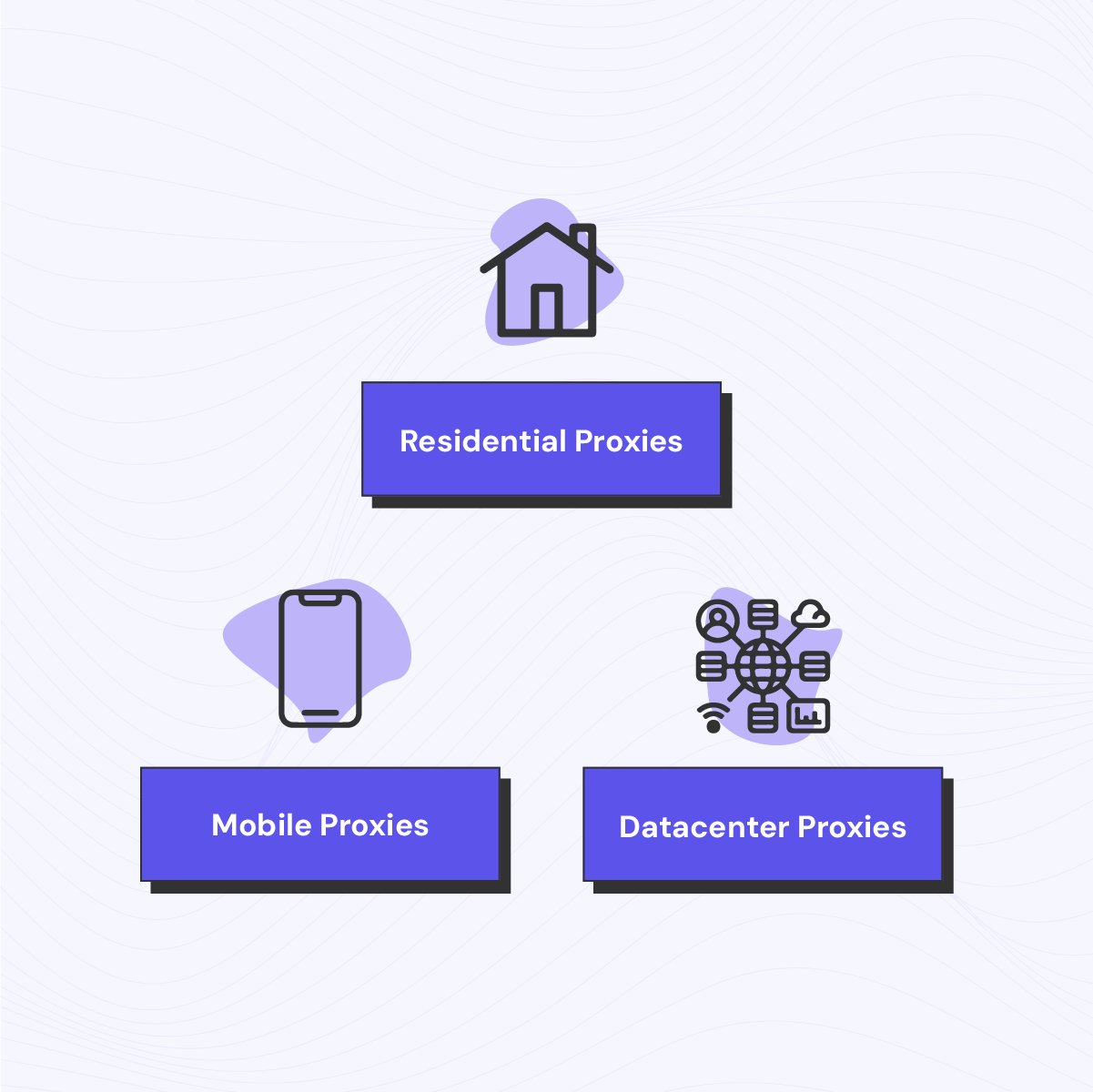
Image Source: ProxyJet
For agencies offering white label PPC services, verification forms part of the quality assurance layer. While platforms such as DashClicks handle campaign deployment and reporting, proxy-based verification helps validate real-world ad delivery across markets.
When Does a Rotating Proxy Improve Ad Checks?
A rotating proxy improves coverage when verification needs many viewpoints without reusing the same address repeatedly. It supports broad sampling across publishers and locations while lowering pattern-based blocking. It works best when rotation aligns to task boundaries so results stay consistent. Rotation adds the most value in these cases.
- High-Volume Sampling: Rotation expands coverage across many placements without rapid IP reuse.
- Geo Sweeps: Rotation supports city or region checks without narrowing visibility to a few IPs.
- Fraud and Cloaking Spot Checks: Rotation helps surface conditional behavior that appears only for certain IP reputations or locations, which makes anomalies easier to catch without overfitting to one identity.
Which Proxies Are the Best for Ad Verification in 2026?
The best options combine clean IP reputation, reliable geo targeting, and session controls that keep identity stable through redirects and landing checks. Strong providers also offer enough proxy variety to match different risk levels across publishers, ad networks, and verification endpoints.
The following list highlights seven providers that fit ad verification workflows in 2026.
- Live Proxies: Private allocation and session controls built for strict targets and repeatable verification runs.
- Oxylabs: Enterprise proxy portfolio with large pools and broad protocol support for high-scale verification.
- Decodo: Balanced proxy mix with extensive residential coverage and automation-friendly setup for daily verification.
- SOAX: Precise geo targeting with residential, mobile, ISP, and datacenter options suited to geo-based ad QA.
- DataImpulse: Residential plus mobile and datacenter options designed for scalable checks and geo sampling.
- Webshare: Self-serve proxy stack with residential and datacenter access and SOCKS5 availability for flexible tooling.
Let’s take a quick comparison.
1. Live Proxies
Live Proxies fits ad verification teams that need stable identity signals on strict targets and predictable control over IP reuse. The network positions itself around private usage, with millions of IPs across 55+ countries for enterprise workflows. A rotating proxy setup helps spread verification requests across clean residential IPs without repeating the same address too often on strict publishers.
Sticky sessions run up to 24 hours, which supports multi-step checks that must keep the same IP through redirects and landing validation. Rotating residential is positioned with 99.9% uptime, and the stack supports HTTP, HTTPS, and SOCKS5 for common automation clients.
Proxy Types for Ad Verification
- Rotating Residential Proxies: Built for geo sampling and high-volume coverage where clean resets matter between checks.
- Rotating Mobile Proxies: Built for carrier-like delivery paths where mobile inventory behaves differently than broadband traffic.
Features
- Private Allocation Model: The service frames allocation is around reducing cross-tenant overlap on the same targets for stricter endpoints.
- Session Control: Sticky sessions up to 24 hours keep identity stable during multi-step flows, and rotation supports batch coverage.
- Live Proxies Proxy Tester: A tool that validates a proxy string end-to-end and returns quick diagnostics like location and connection timing before scheduled ad verification runs.
2. Oxylabs
Oxylabs advertises a 175M+ residential proxy pool and positions it for high-scale collection with broad global coverage. It also publishes advanced targeting options that include country, state, city, ZIP, and ASN, which helps when ad delivery shifts at the city level or by network.
It offers SOCKS5 access and highlights unlimited concurrent sessions for traffic-intensive workflows. For protected endpoints, Oxylabs provides managed unblocking products that reduce interruptions during verification runs.
Proxy Types for Ad Verification
- Residential Proxies: Used for strict inventory where consumer-like identity affects delivery and rendering.
- Mobile Proxies: Used for mobile placements where carrier context changes outcomes.
- ISP Proxies: Used for a stable identity when a long flow needs continuity.
- Datacenter Proxies: Used for fast monitoring passes on lower-friction endpoints.
Features
- Advanced Targeting Controls: Supports targeting layers such as ASN and ZIP when verification needs controlled network identity.
- Unlimited Concurrent Sessions: Designed for high-throughput checks that must run in parallel.
3. Decodo
Decodo advertises 115M+ residential IPs from 195+ locations and publishes a 99.86% success rate for its residential network. The platform also highlights state, city, and ASN-level targeting, which fits repeatable geo sampling rules.
A company positions Site Unblocker and Web Scraping API as options for pages that break under normal proxy checks due to CAPTCHA, bans, or heavy JavaScript. This mix fits teams that want both raw proxy access and a managed fallback path.
Proxy Types for Ad Verification
- Residential Proxies: Used for geo sampling and consumer-like access on strict publishers.
- Mobile Proxies: Used for carrier-context checks and mobile-first delivery paths.
- ISP Proxies: Used when a stable identity improves repeatability across longer validations.
- Datacenter Proxies: Used for throughput-focused monitoring where trust requirements are lower.
Features
- Site Unblocker: Handles CAPTCHA and IP bans to keep checks running on protected pages.
- Web Scraping API: Handles JavaScript rendering and returns outputs designed for automation pipelines.
- Targeting Depth: Supports location rules down to state and city, plus ASN-level selection for network consistency.
4. SOAX
SOAX advertises access to 191+ million clean, whitelisted IPs and positions the platform as a combined proxy and Web Data API stack. The Web Data API is described as handling proxies, CAPTCHA, fingerprinting, JavaScript rendering, and session management, which helps when verification endpoints reject raw checks.
Provider also states that the API can return outputs in HTML, JSON, Markdown, or screenshot format, which fits evidence capture workflows. This setup works when teams need both broad sampling and a resilient path for protected pages.
Proxy Types for Ad Verification
- Residential Proxies: Used for strict inventory and geo-accurate ad previews.
- Mobile Proxies: Used for mobile placements where delivery varies by network context.
- ISP Proxies: Used for continuity when verification flows require a stable identity.
- Datacenter Proxies: Used for fast monitoring and low-friction targets.
Features
- Web Data API Output Modes: Returns HTML, JSON, Markdown, or screenshot outputs for verification evidence.
- Protected-Site Handling: Covers CAPTCHA handling, fingerprinting resistance, and rendering for JavaScript-heavy pages.
5. DataImpulse
DataImpulse advertises a residential IP pool of 90M IPs worldwide and positions it for simple integration. The platform describes both rotating and sticky residential proxy modes, which help separate wide publisher sweeps from continuity checks. DataImpulse also states support for HTTPS and SOCKS5 protocols, which fits common ad QA tooling. The service highlights continuous support coverage, which matters when verification runs on schedules.
Proxy Types for Ad Verification
- Residential Proxies: Used for consumer-like identity and geo-accurate sampling.
- Mobile Proxies: Used when mobile delivery differs from broadband behavior.
- Datacenter Proxies: Used for speed-focused monitoring on lower-friction endpoints.
Features
- Rotating And Sticky Modes: Supports both request-level rotation and sticky behavior for deeper validation flows.
- Protocol Support: Supports HTTPS and SOCKS5 for common verification tooling compatibility.
- Global Pool Scale: Positions a 90M worldwide pool to support broad geo sampling without narrow reuse.
6. Webshare
Webshare advertises an 80M+ rotating residential pool sourced from 195 countries and publishes a 99.8% average success rate for the product. It also documents rotation controls through recurring replacements, including schedules like every 5 minutes and once a month. This cadence control helps teams tune identity refresh to match scan frequency and target sensitivity. Webshare positions its setup as self-serve, which suits teams that want quick deployment without complex configuration.
Proxy Types for Ad Verification
- Residential Proxies: Used for geo sampling and stricter sites where consumer-like identity improves fidelity.
- Datacenter Proxies: Used for lightweight monitoring where speed matters more than trust signals.
Features
- Rotation Scheduling: Supports recurring replacement intervals from every 5 minutes to once per month.
- Country Coverage Publishing: States residential coverage across 195 countries for broad sampling.
- Success-Rate Disclosure: Publishes a 99.8% average success rate for rotating residential checks.
7. FleetProxy
FleetProxy fits ad verification teams that want budget-friendly, pay-as-you-go access without sacrificing global geo coverage. The network draws from a 30M+ residential IP pool spanning 195+ countries, with pricing starting at $2.65/GB and volume discounts scaling up to 40% off at higher tiers. City and country-level targeting supports the granular geo checks ad verification workflows depend on.
Sessions can run per-request rotation or stick for up to 24 hours, which covers both broad publisher sweeps and multi-step redirect/landing validation within a single plan. Beyond residential, FleetProxy's catalog includes static ISP, datacenter (IPv4/IPv6), and 4G/5G mobile LTE proxies, giving teams a single provider to match proxy type to publisher strictness.
Proxy Types for Ad Verification
- Rotating Residential Proxies: Used for geo-accurate sampling and consumer-like access on stricter publishers, with per-request rotation or sticky sessions.
- Mobile (4G/5G LTE) Proxies: Positioned for app and ad testing where carrier-level trust affects delivery.
- Static Residential (ISP) Proxies: Dedicated IPs for high-trust sessions that need continuity across a verification flow.
- Datacenter Proxies (IPv4/IPv6): Lower-cost options for high-frequency, lower-friction monitoring passes.
Features
- Session Flexibility: Supports both per-request rotation and sticky sessions up to 24 hours in the same plan.
- Global Targeting Depth: City and country-level targeting across a 195+ country network.
- 24/7 Live Support: Live chat and email support alongside a 99.99% network uptime SLA.
What Features Define Ad Verification-Ready Proxies?
Reliable verification depends on accuracy and control, not just speed. Small gaps in location fidelity or session behavior can distort the outcome. Strong proxy features keep checks stable across repeated runs.
- Geo Depth and Consistency: Accurate geo targeting keeps location signals aligned with campaign settings and compliance boundaries. Consistency matters because drift creates conflicting outcomes across repeated checks. Teams validate geo accuracy early to avoid wasting time on misleading samples.
- Session Control and Stability: Session control keeps identity stable through redirects and multi-step landings. Stability reduces forced logouts, captchas, and broken tracking checks. Teams rely on predictable session behavior to separate true delivery issues from test instability.
- Pool Quality and IP Reputation: Clean pools reduce bias caused by flagged or heavily reused addresses. Reputation affects whether pages load normally or fall into challenge modes that alter the experience. Teams monitor block patterns to spot when IP quality skews results.
How Should Proxies Be Tested Before Running Always-on Verification?
A short pilot reveals whether results are repeatable under realistic frequency and load. Testing should mirror real targets, real geos, and real timing patterns rather than synthetic single-page checks. Logs should capture failures and partial loads so teams can tune the workflow. The test plan should stay measurable and practical.
- Success Rate: Track full-load completion across ads, redirects, and landing pages.
- Geo Accuracy: Verify observed location against the intended country or city across repeats.
- Error Patterns: Classify blocks and challenges by type to target the real constraint.
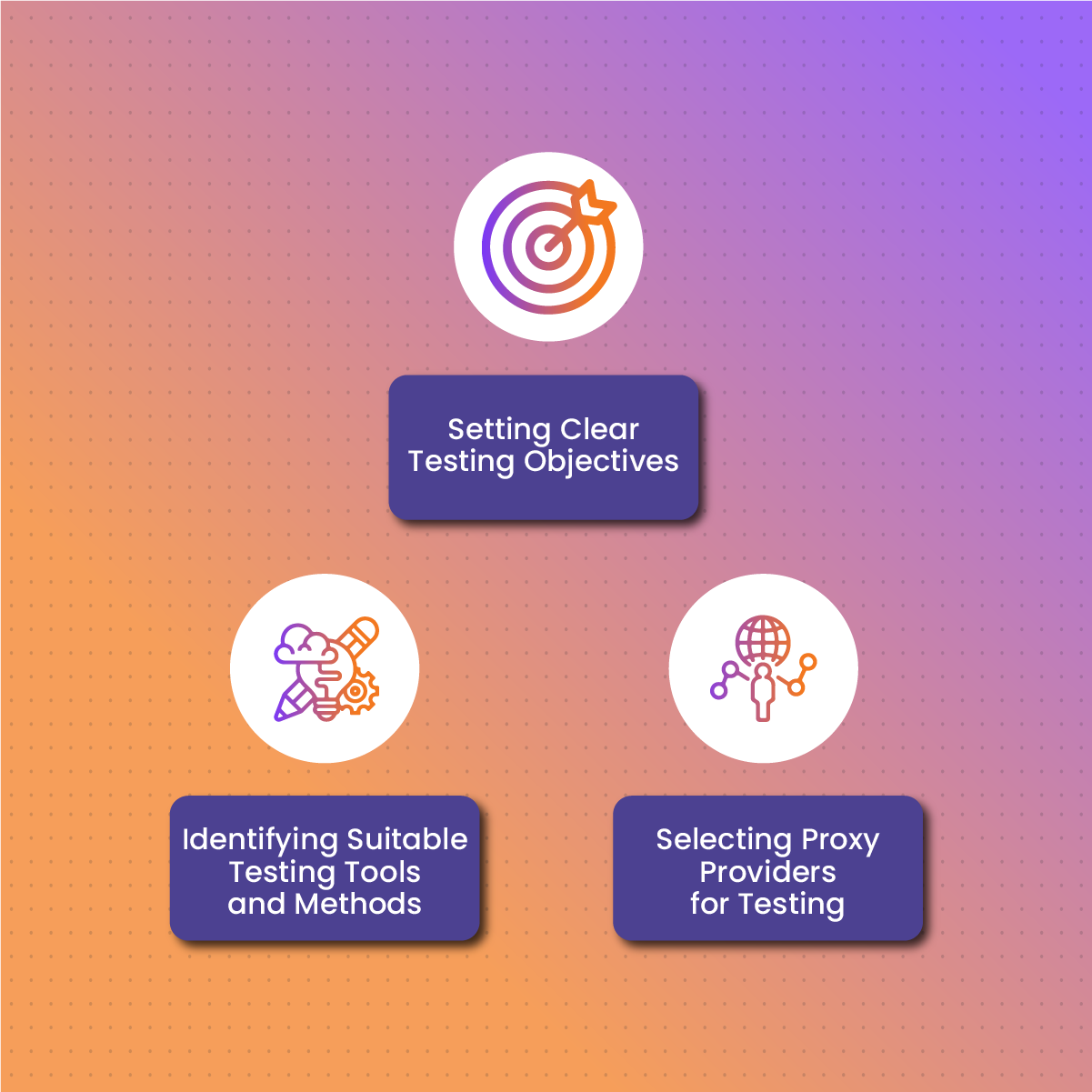
Image Source: NetNut
How Should Ad Verification Be Run Without Skewing Results?
Reliable results come from controlled variables and repeatable sampling rules, not from random scans. Teams get cleaner signals when they separate baseline checks from exploration runs and log the same environment details every time. Stable methodology makes it easier to spot real delivery issues instead of test noise.
A practical workflow stays simple and consistent across publishers and geos.
- Define a Baseline Geo Set: Use the same small set of countries or cities for daily checks so trends stay comparable across weeks.
- Separate Baseline and Exploration: Run baseline checks on fixed schedules, then run separate sweeps for new publishers, new creatives, or anomaly follow-ups.
- Align Session Behavior to the Task: Keep one identity through redirects and multi-step landings, then rotate only between tasks to avoid mixed signals.
- Log What Actually Matters: Record timestamp, geo, device profile, redirect chain outcome, and final landing status so issues reproduce cleanly.
- Throttle Like Real Traffic: Use realistic pacing and concurrency caps per target so results reflect delivery rather than rate-limit reactions.
- Classify Failures by Type: Split blocks, captchas, timeouts, and content mismatches into separate buckets so fixes target the real constraint.
Conclusion
Strong ad verification in 2026 depends on repeatable sampling, clean IP reputation, and session controls that match the depth of each check. Rotating setups improves coverage for broad monitoring, while stable identity improves accuracy for redirects, logins, and multi-step landing validation. Clear logging and disciplined baselines reduce false alarms and help teams isolate real misdelivery patterns across geos and publishers.



.svg)


.svg)
.svg)
.svg)
.svg)
.svg)