

.svg)
.jpg)
.svg)
.svg)
.svg)
.svg)
.svg)
Which backlink checker gives you the most accurate data?
There isn't one backlink checker that produces the most accurate data for every use case. Some tools prioritize massive link indexes, others crawl more frequently, while specialist platforms focus on toxic-link analysis and penalty recovery. The right choice depends on which of those dimensions matters most to your workflow.
Accuracy in a backlink checker is really three numbers multiplied, index size × crawl freshness × toxic-link precision. This comparison scores all eight tools on exactly that, so the best backlink checker for your workflow is the one whose numbers hold up where you need them.
How We Compared Them: The Metrics That Matter
Every backlink checker markets on totals. We scored them on five measurable dimensions instead, because a big number attached to stale data is worth less than a smaller number refreshed daily.
- Index size - total links plus referring domains. This is the raw denominator: the count of link records a tool can actually show you, measured in trillions.
- Crawl freshness - how often the crawler re-sees a link. A 40-trillion index refreshed quarterly surfaces fewer live links than a 2-trillion index refreshed daily.
- Toxic-link precision and disavow workflow - does the tool score per-link risk and export a disavow file, or leave you to judge manually?
- Metric transparency - DR, Trust Flow, SDR, and Authority Score are all vendor *predictions*, not Google signals. Treat them as relative rankings within one tool, never as absolute scores across tools.
- Data access- API availability, row caps per export, and file formats.
Why link *quality* now outweighs raw count: only 1% of visits to a page with an AI summary produced a click on a cited source, and 88% of those summaries cited three or more sources. Visibility increasingly means being one of several authoritative sources an answer cites, so when you check backlinks, the accuracy of your backlink checker tool, not just its total, is what you're optimizing.
Backlink Checkers Compared at a Glance
Five measurable dimensions separate these tools: index size, crawl freshness, toxic-link handling, authority-metric transparency, and entry cost. Read each row as a data point, not a verdict.
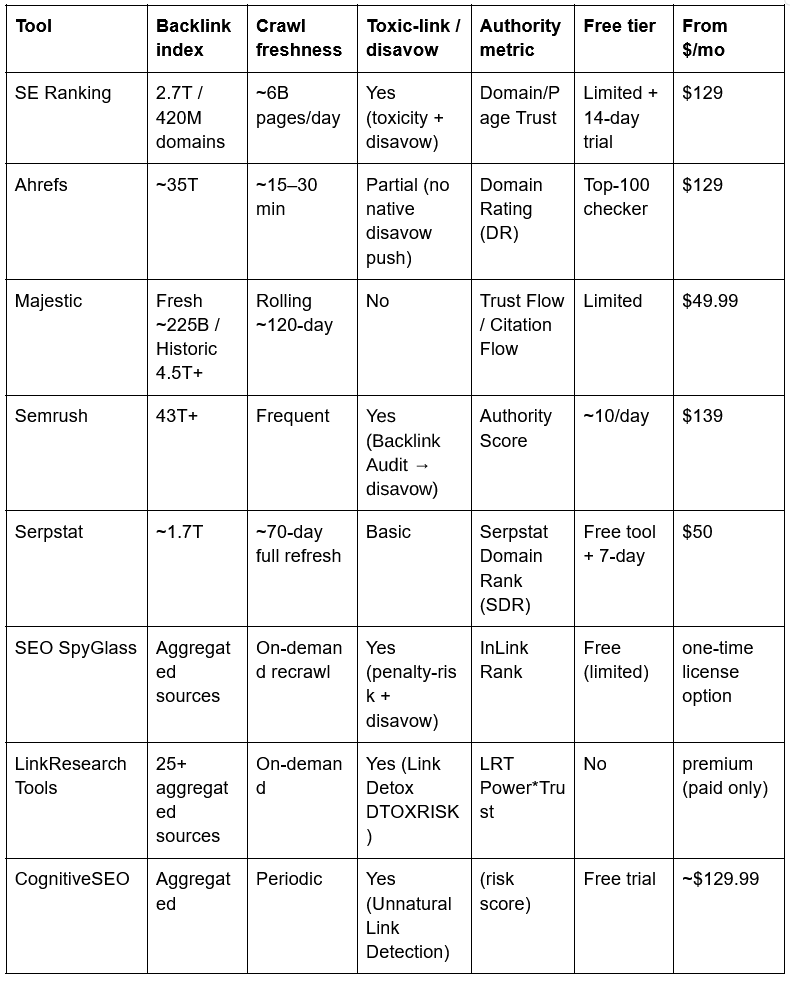
The 8 Best Backlink Checkers, Ranked on the Data
I scored each backlink checker on five measured dimensions: index size, crawl freshness, toxic-link precision, metric transparency, and data access.
1. SE Ranking
The data: SE Ranking's backlink checker runs on an index of 2.7 trillion backlinks and 420 million referring domains, re-crawling about 6 billion pages a day. That size-times-freshness combination is what drives accuracy, a large index that refreshes slowly keeps reporting links that have already dropped. At ~6 billion pages a day, the gap between what the tool shows and what is live on the web stays narrow, which is the variable that matters most when you are checking backlinks to make a disavow or outreach decision.
On metrics, it scores authority with Domain Trust and Page Trust on a 0–100 scale, flags toxic links, and feeds a disavow workflow plus continuous monitoring for new and lost referring domains. API and MCP access ship on every plan, so analysts can pull raw link data into their own models rather than working only through the UI, a boundary condition that separates it from tools that gate data access behind higher tiers.
Pricing starts at $129/mo on Core ($103.20/mo billed annually), with a 14-day trial that needs no card.
Two honest cons. Domain Trust is not quoted by third parties the way Ahrefs' DR is, so external benchmarking is thinner. And on raw index size alone, the two priciest specialists sit higher, freshness closes much of that gap, but not all of it.
The data says: across the five dimensions, SE Ranking returns the best all-round accuracy for teams that need index size, freshness, and toxic-link data in one backlink checker.
2. Ahrefs
Ahrefs publishes the largest live link index in this group, roughly 35 trillion external backlinks, and its crawler re-checks known links every 15–30 minutes, the tightest refresh cadence any tool here claims. For measurement work, freshness counts as much as size: a link confirmed today tells you more than one last verified six weeks ago. Domain Rating (DR), 0–100, is the most widely referenced third-party authority score, though it stays a vendor prediction, not a Google signal. The constraints are real. Full data starts at $129/mo (Lite), there's no traditional free trial, and access is metered by credit and row limits. The free public checker returns only the top 100 links, with no native disavow push.
The data says: the biggest, freshest raw index in the set, worth the price if link volume and recency drive your analysis.
3. Majestic
Majestic runs two separate indexes, and the split matters for accuracy. Its Fresh Index holds roughly 225 billion URLs on a rolling ~120-day window; its Historic Index carries 4.5 trillion-plus URLs dating to 2006, the deepest backward archive in this comparison. If you're reconstructing a domain's link history across a decade, no other tool here matches that reach. Its metrics, Trust Flow, Citation Flow, and Topical Trust Flow, score authority and topical relevance separately, which is more granular than a single 0–100 number. Boundary condition: it's link-only. No keyword research, rank tracking, or traffic estimates, the interface is dated, and there's no toxicity scoring, so disavow candidates need a separate workflow. Lite starts at $49.99/mo.
The data says: unmatched historic depth, the tool to reach for when link archaeology, not current-index breadth, is the question.
4. Semrush
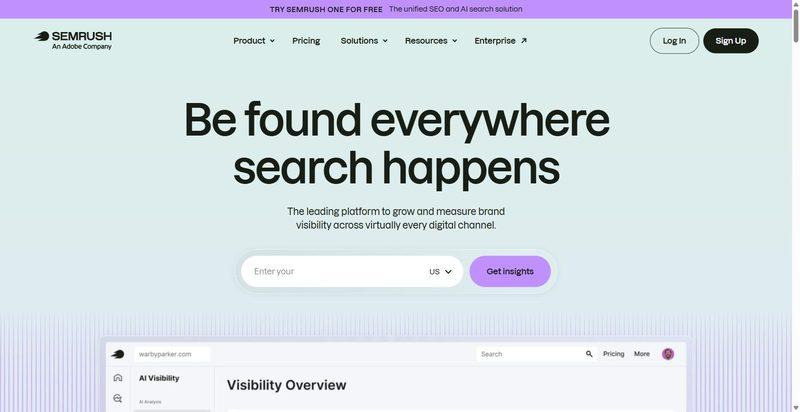
Semrush reports 43 trillion-plus backlinks (larger on paper than Ahrefs' live index), paired with Authority Score, its 0–100 composite metric. Its Backlink Audit scores link toxicity and exports flagged domains straight to Google's disavow file, keeping the cleanup loop inside one tool. The structural difference is context: backlink data sits beside keyword, PPC, and content datasets, so you can trace a referring domain's organic footprint without switching tools. The trade-offs are cost and depth. At $139/mo (SEO plan) it's the highest listed monthly entry price here, and seats plus add-ons stack on top. On pure link-only depth, the specialists, Ahrefs on live index, Majestic on history, still edge it.
The data says: strongest when backlinks are one input among many, not the only question you're measuring.
5. Serpstat
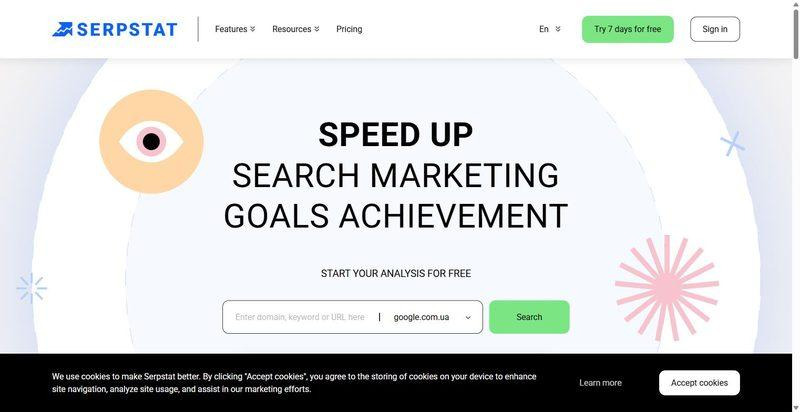
Serpstat runs an all-in-one platform with a backlink module sized at roughly 1.7 trillion links, refreshing its full index about every 70 days. Its authority metric is Serpstat Domain Rank (SDR), and the backlink API is usable for programmatic pulls, which is the reason it earns a place here. Two boundary conditions to log: the index is smaller and the full-refresh cadence slower than the leaders, and on the Individual plan ($50/mo) backlink reports cap at ~2,000 rows, a hard ceiling if you export at scale. Data also thins in some niches. There's a free backlink tool plus a 7-day trial.
The data says: if you need a working backlink API at the lowest entry price in this set, Serpstat clears the bar, provided you can accept the 2,000-row cap and the ~70-day refresh lag.
6. SEO SpyGlass
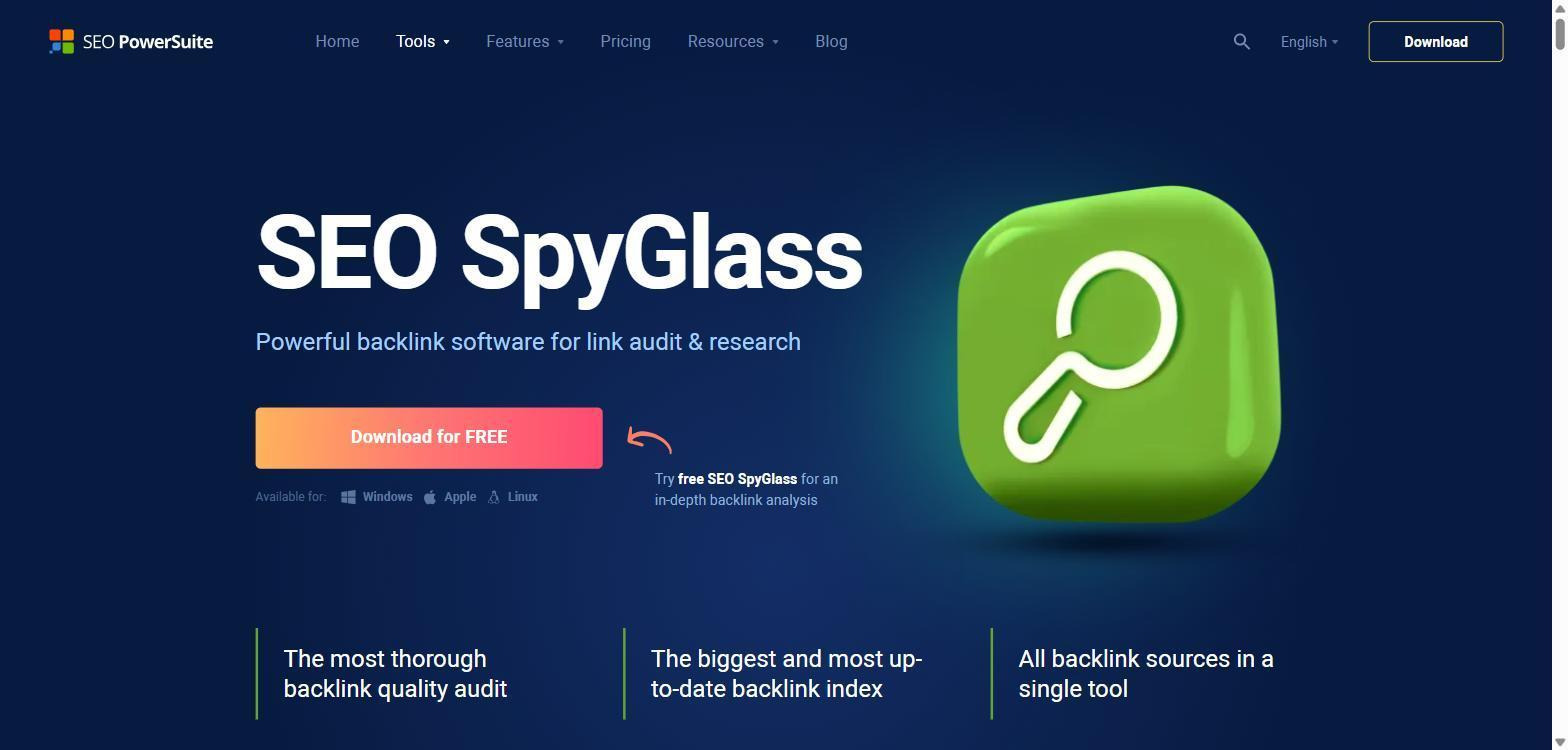
SEO SpyGlass is a desktop application, part of the SEO PowerSuite bundle, built around link cleanup rather than index-size marketing. Its differentiators are per-link penalty-risk scoring, a nofollow/dofollow and anchor-text breakdown, a disavow-file generator, and a one-time license option instead of subscription-only pricing. Index depth comes from its own crawler plus aggregated third-party sources, so coverage varies by target. Boundary conditions: it's desktop-bound, analysis runs on your machine, not a cloud dashboard, the aggregated index depth is uneven, and the interface is dated. The free version is limited.
The data says: for disavow and penalty-cleanup work on a one-time cost rather than a recurring subscription, SEO SpyGlass is the strongest route here, just don't lean on it for exhaustive index coverage.
7. LinkResearchTools
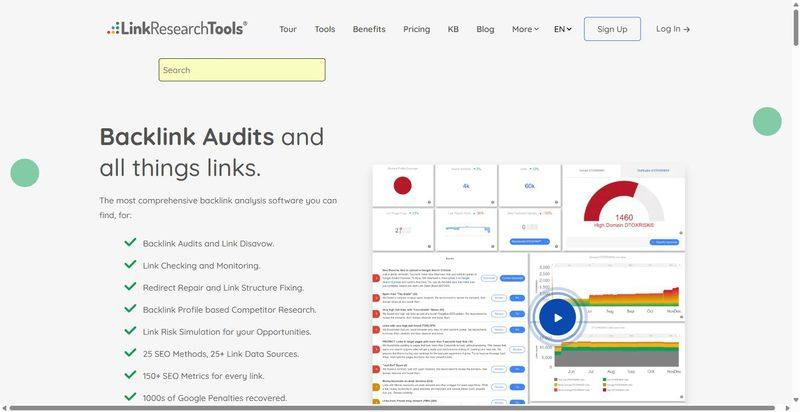
LinkResearchTools doesn't run one proprietary crawler. It aggregates link data from 25+ sources, then scores every link with DTOXRISK inside Link Detox, the deepest toxic-link and penalty-recovery workflow in this set. Worth grounding the risk framing in Google's own position: Google defines link spam and when to disavow narrowly, most sites carry no manual-action risk and shouldn't disavow at all. Boundary condition: that precision has a price. LRT is paid-only and sits at the top of the market, the learning curve is steep, and for routine backlink checking it's more workflow than the job needs.
The data says: Built for serious penalty recovery across 25+ aggregated sources, match it to that job, not everyday backlink analysis.
8. CognitiveSEO
CognitiveSEO's Unnatural Link Detection flags disavow candidates, then layers rank tracking, content optimization, and competitive link analysis on top; it absorbed the former Monitor Backlinks tool, so treat that name as part of this suite. The scale of Google's enforcement explains the emphasis: SpamBrain detected 5x more spam sites in 2022 than 2021, a step-change that makes automated link-risk scoring more defensible than manual review. Pricing starts at ~$129.99/mo, with a free trial. Boundary condition: the interface is dated, and its strength is audits and recovery, not raw index size, several tools here crawl deeper.
The data says: An audit-and-recovery suite from ~$129.99/mo, pick it when link cleanup, not index depth, is the measured goal.
Which Tool Wins on Which Metric?
No single tool led on every dimension in our comparison. Match the winner to the measurement you actually care about, not to a headline number.
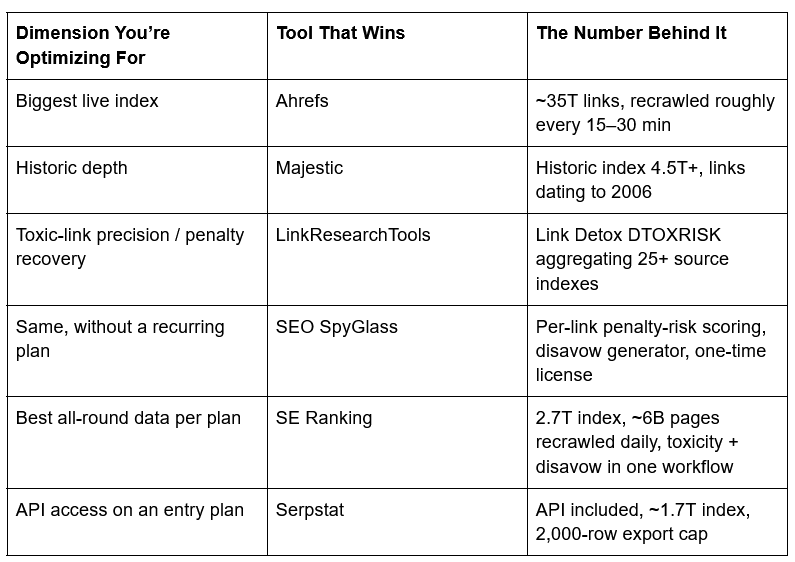
So the best backlink checker depends on the dimension you're measuring. The largest index isn't automatically the best choice, just as the most sophisticated toxicity analysis may be unnecessary for routine backlink monitoring. Match the platform's strengths to the data your team actually needs.
The data says: the most accurate backlink checker is the one whose index actually covers your niche and refreshes often enough to matter, raw trillions are a weak proxy if your referring domains aren't in the crawl. And before acting on any toxicity score, note Google's guidance: the disavow tool is intended only for sites facing a manual action for unnatural links (Search Console Help). Don't over-prune a healthy profile on a vendor's toxicity number alone.
Move From Backlink Analysis to Fulfillment With DashClicks
A backlink checker tells you what a site's link profile looks like. The next challenge is actually building the links your clients need.
For agencies that want to offer backlink campaigns without adding another fulfillment workload to their internal team, DashClicks' white label backlink services provides an outsourced option. The service is built specifically for agencies, allowing you to resell backlink fulfillment to clients under your own brand.
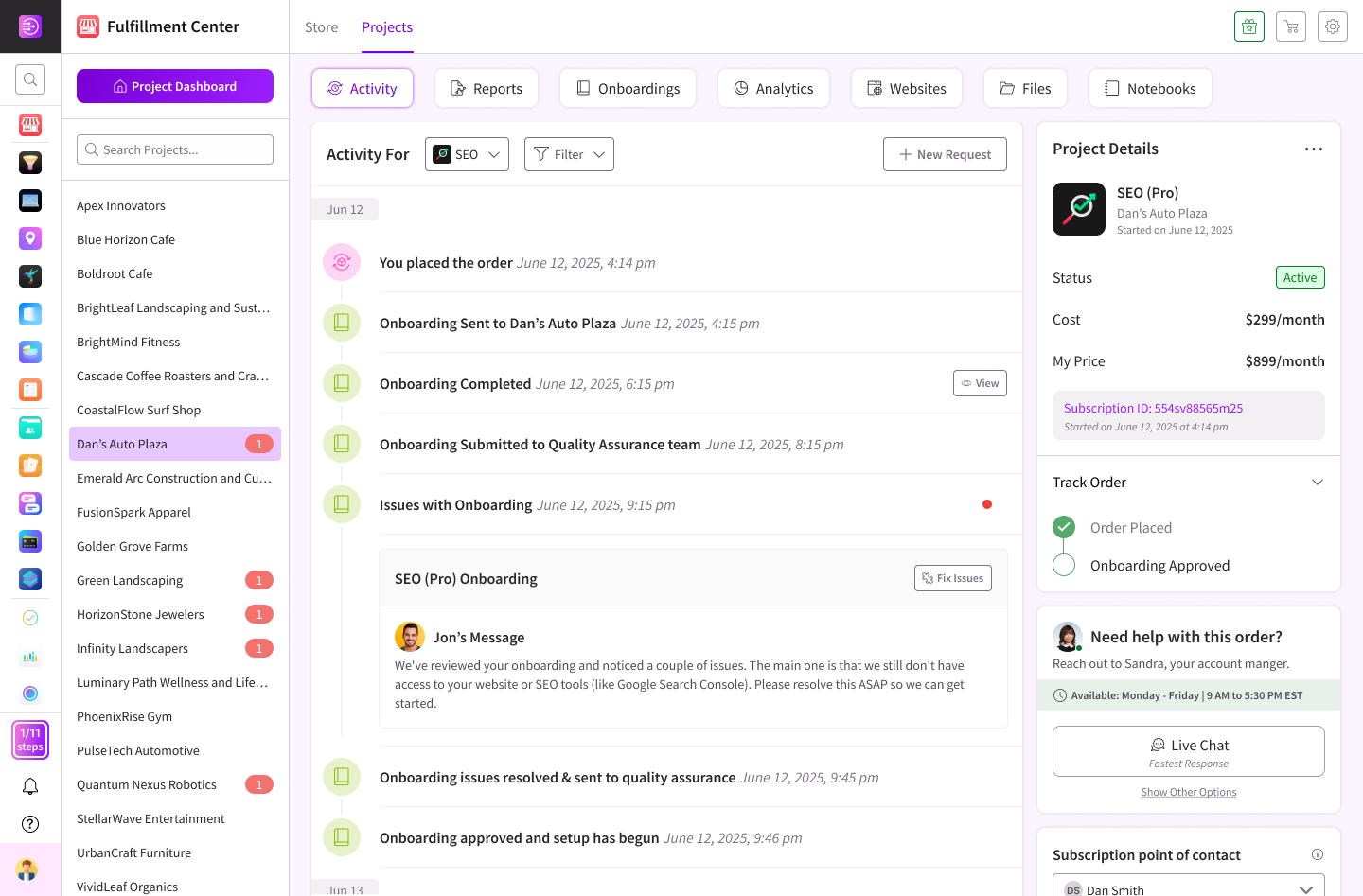
Once a campaign is onboarded, the DashClicks fulfillment team handles backlink analysis, identifies relevant websites, develops outreach strategies, and takes the campaign through setup, quality assurance, launch, and ongoing maintenance.
The agency side of the workflow stays centralized as well. Automated onboarding helps collect the information needed to start a campaign, while order tracking provides real-time updates as fulfillment progresses. Agencies also receive monthly reports detailing completed work, making it easier to keep clients informed without managing every part of backlink acquisition internally.
This makes the two sides of backlink work complementary: use backlink checkers to understand the profile, uncover gaps, and monitor links; use white-label fulfillment when you need additional capacity to execute backlink campaigns for your clients.
FAQ
Q1. How Do You Check Backlinks in Google?
Ans. How to check backlinks in Google depends on whose profile you need. Google offers no public backlink checker. For a site you own, Google Search Console's Links report shows your top linking sites, most-linked pages, and top anchor text, the links Google actually attributes to you. For a competitor's profile, you need a third-party backlink checker; Google's own tools cover only verified properties you control.
Q2. Why Do Backlink Checkers Show Different Numbers?
Ans. Because each tool reports its own crawled index, not Google's. Index sizes range from roughly 1.7 trillion to 43 trillion links, and crawl-refresh cadence runs from minutes to months, so two tools rarely agree on a domain's total. Treat the trend and the relative comparison as the signal, not any single absolute count.
Q3. How Do You Find Backlinks in Google Analytics?
Ans. GA4 doesn't list backlinks; it shows referral traffic. Check Reports > Acquisition > Traffic acquisition and filter the Referral channel to see which linking domains actually sent visitors. That surfaces links that drive traffic, but not your full backlink profile, for that, you still need a backlink checker.
Q4. What's the most accurate backlink checkerWhat’s the Most Accurate Backlink Checker?
Ans. No tool sees the whole web, so there isn't a universally most accurate backlink checker. Accuracy depends on factors such as index coverage, crawl frequency, link freshness, and the type of analysis you're performing. Rather than comparing backlink totals across different platforms, pick a reliable tool and use it consistently so your data remains comparable over time.


.svg)


.svg)
.svg)
.svg)
.svg)
.svg)