

.svg)

.svg)
.svg)
.svg)
.svg)
.svg)
The modern pay-per-click landscape is moving faster than most internal agency teams can adapt. As AI-driven automation, privacy regulations, and rising costs dominate the industry, traditional campaign management is no longer effective. Partnering with a white label PPC agency provides immediate access to specialized expertise, allowing your business to scale operations, maintain campaign performance, and stay highly competitive.
The PPC advertising environment looks fundamentally different today than it did even two years ago. We are now navigating an ecosystem that is heavily AI-driven, automation-first, and intensely privacy-focused. For marketing agencies, this rapid evolution creates a massive operational challenge. Your clients expect faster returns on investment with greater efficiency. Meanwhile, advertising platforms are evolving faster than most internal agency teams can realistically keep up with. Client expectations are steadily increasing while campaign complexity rises alongside them.
Recent industry analyses show that Google Search cost-per-click (CPC) rates increased by roughly 45% across many campaigns in 2025. Furthermore, zero-click searches reached an astonishing 59% in 2024 as AI search experiences fundamentally changed user behavior. The challenge for modern agencies is no longer just running PPC campaigns. The real challenge is adapting operationally fast enough to maintain competitive performance. Unfortunately, most agencies are trying to manage modern PPC using structures built for a much simpler advertising landscape.
The New PPC Landscape Is Moving Faster
To understand the immense pressure on modern marketing agencies, we must look at how rapidly the foundational elements of paid advertising are shifting. The sheer volume of platform updates makes it incredibly difficult for agencies to manage campaigns internally.
1. AI Is Replacing Manual Campaign Management
Manual bid adjustments and granular keyword targeting are rapidly becoming obsolete. Key developments include:
- Artificial intelligence now powers the core functionality of major advertising platforms
- Smart Bidding strategies dominate Google Ads
- Performance Max campaigns rely heavily on machine learning to distribute ads across multiple channels
- Meta's Advantage+ automation similarly takes control of targeting, bidding, and even creative variations
- AI-generated creatives and automated optimizations require a completely different skill set than traditional manual campaign management
- Google Ads automation became the defining core trend of 2025
- Meta continues to heavily automate ad creation and optimization using advanced machine learning models
2. Privacy Changes Are Reshaping Targeting
Data privacy regulations and platform tracking restrictions have completely altered how agencies target audiences and measure success:
- First-party data is now an essential requirement for effective campaign management
- Implementing technologies like Google Consent Mode is mandatory for accurate reporting
- Navigating complex server-side tracking setups is now a baseline requirement
- Agencies are dealing with reduced visibility into attribution, making it harder to prove campaign success to clients
- Agencies must know how to feed high-quality data back into the platforms so the algorithms can optimize properly
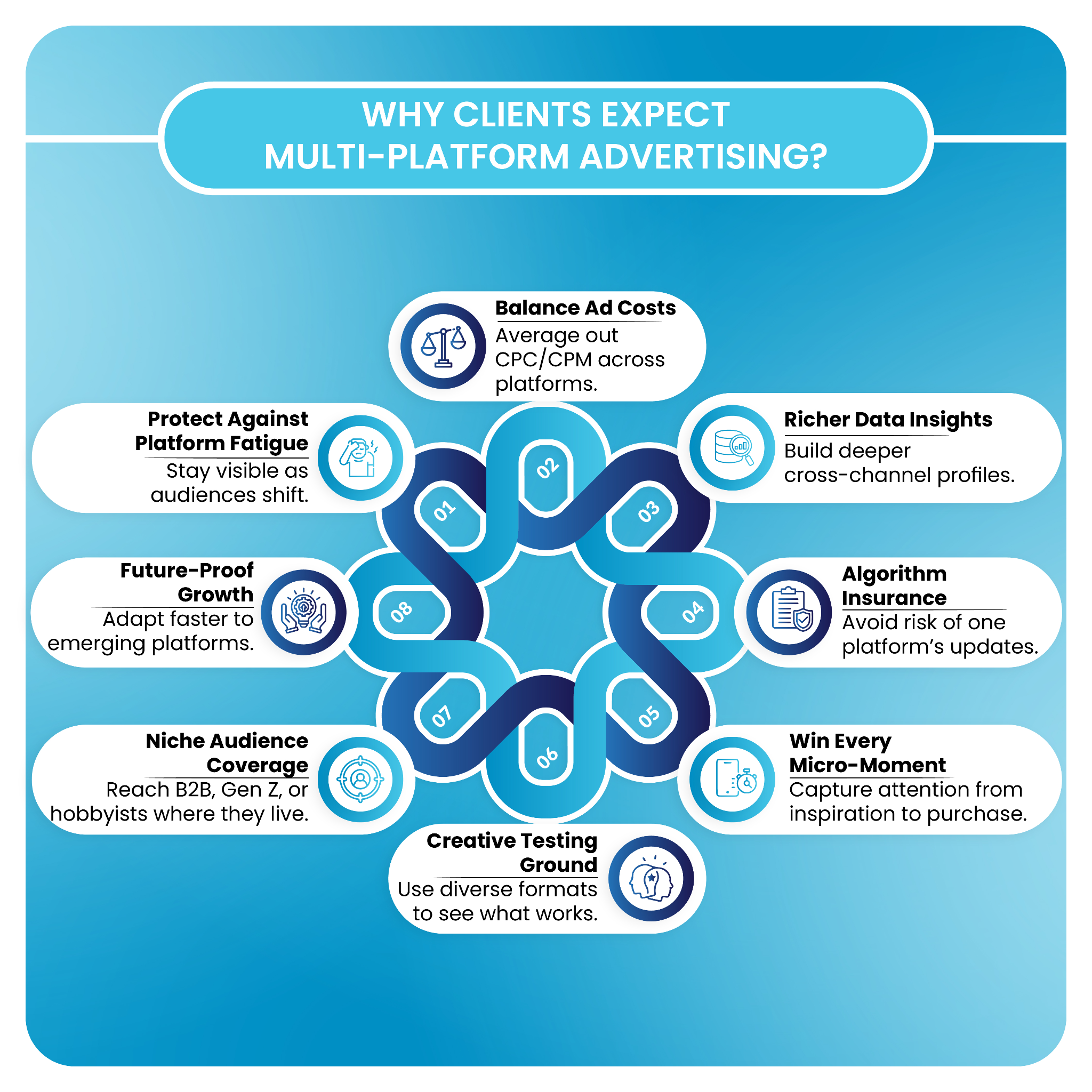
3. Multi-Platform PPC Is Now Mandatory
Relying exclusively on Google Ads is no longer a viable strategy for most businesses. A comprehensive approach now requires:
- Visibility and campaigns across Meta, YouTube, LinkedIn, and TikTok
- Optimization for AI-search visibility
- Management of massive cross-channel reporting complexity
- Understanding how a video ad on TikTok influences a branded search conversion on Google days later
4. PPC Optimization Cycles Are Shorter
Because algorithms process data so quickly, optimization cycles have drastically shortened:
- Faster algorithms shift demand for more frequent testing requirements
- Agencies report highly unstable performance and increased optimization volatility in modern PPC environments
- Campaigns can no longer be set up and checked on once a week
- The pace of change requires constant vigilance and rapid strategic pivots
- Many agencies are not failing because they lack a solid strategy; they are failing because their operational model cannot evolve at platform speed
- This operational gap creates a series of challenges that directly impact campaign performance, profitability, and client retention
Why Agencies Specifically Struggle to Keep Up With PPC Trends?
Recognizing the shift in the landscape is only the first step. The next step is identifying the specific operational bottlenecks holding agencies back.
1. PPC Expertise Is Becoming Too Specialized
Managing a successful digital ad campaign now requires deep technical knowledge across multiple disciplines:
- Marketers must understand how to train AI bidding algorithms effectively
- E-commerce campaigns require advanced product feed optimization
- Loss of third-party cookies forces agencies to master conversion modeling and first-party data integration
- Advanced attribution modeling requires technical skills that many generalist marketers lack
- A single media buyer cannot master all these specialized disciplines simultaneously
2. In-House Teams Cannot Scale Fast Enough
Building an internal team takes considerable time and resources:
- Agencies face hiring delays when searching for qualified talent
- The industry currently experiences a severe talent shortage for technical media buyers
- Training new employees takes months, and platforms often change before the training concludes
- Existing employees face burnout from managing multiple complex accounts simultaneously
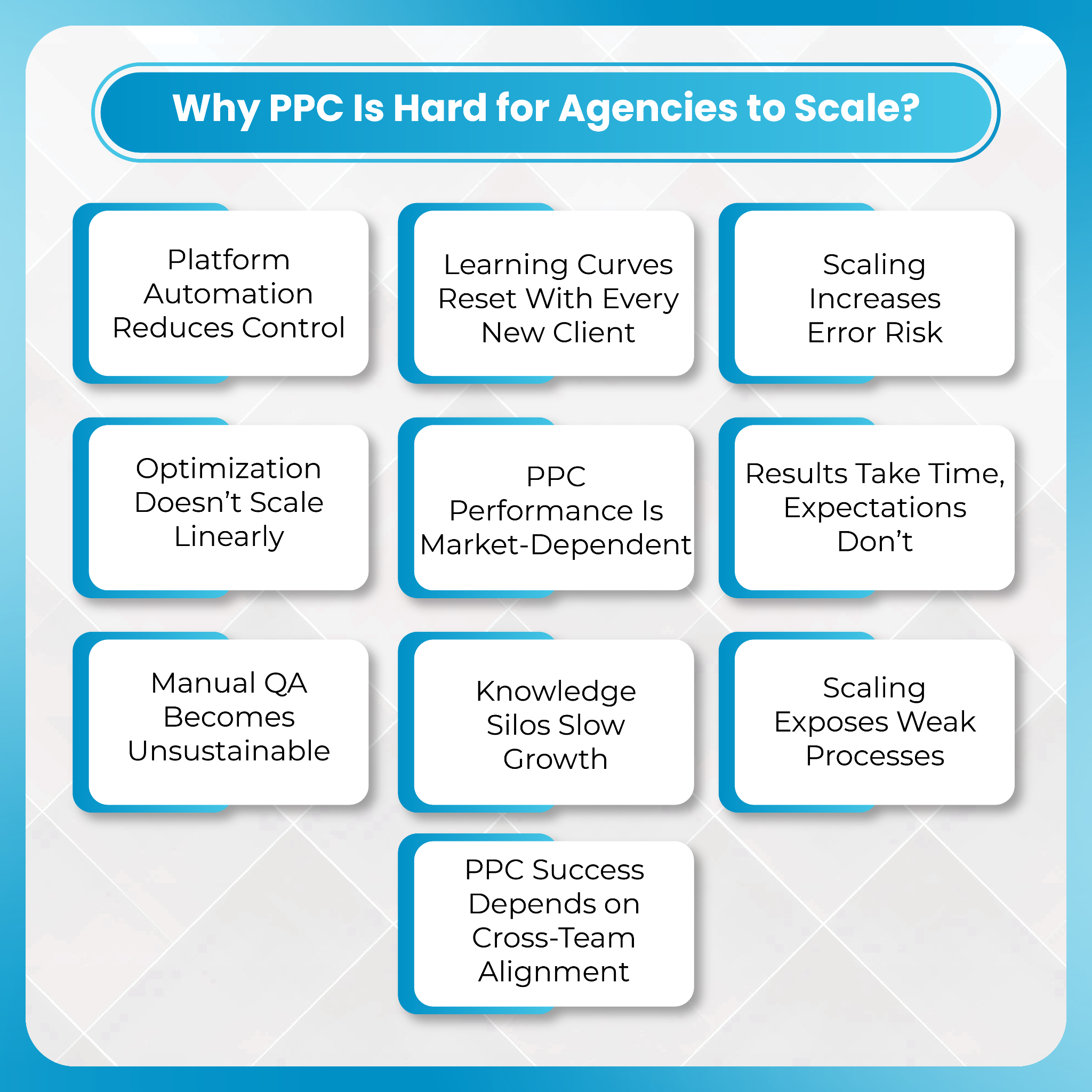
3. Agencies Are Stuck Between Client Expectations and Platform Complexity
This tension creates a difficult position for most agencies:
- Clients continuously demand a lower cost per acquisition and a higher return on ad spend
- Simultaneously, advertising platforms provide less transparency into search terms and target audience data
- Reporting complexity increases as agencies try to explain automated campaign performance to clients
- Agencies must justify their retainer fees, while platforms obscure the specific levers marketers pull to generate results
4. Agencies Spend Too Much Time Reacting Instead of Innovating
Constant platform updates force agencies into a reactive state:
- Media buyers spend countless hours troubleshooting, tracking issues, and fixing broken product feeds
- Campaign maintenance overload consumes the entire workweek
- This leaves limited time for strategic growth or high-level campaign planning
- Agencies become trapped in a cycle of tactical execution
5. AI Search and Zero-Click Behavior Are Changing PPC Economics
New search behaviors are reshaping the fundamental economics of paid advertising:
- AI Overviews now appear above traditional search ads for many user queries
- This shift impacts ad visibility and changes user click behavior
- Commercial intent moves differently through the marketing funnel when users get direct answers on the search results page
- Agencies must develop entirely new optimization frameworks to capture attention in AI-driven search environments
- Over 90% of paid campaigns now rely on AI-driven automation
- Many agencies report rising volatility in B2B and e-commerce campaigns
- The biggest risk for agencies is falling behind platform evolution while competitors adapt faster
- This operational bottleneck explains why many firms are adopting white label PPC services as a strategic growth mechanism
How White Label PPC Helps Agencies Stay Ahead of PPC Trends?
Partnering with a specialized provider offers a clear path out of the operational bottleneck. White label PPC services allow you to deliver top-tier results to your clients without the burden of managing the execution internally.
1. Agencies Gain Immediate Access to Specialized PPC Expertise
White label partnerships instantly upgrade an agency's talent pool:
- Agencies gain access to AI-first execution strategies and platform-specific specialists
- This dramatically increases their adaptation speed to new industry trends
- Smaller agencies can suddenly offer enterprise-level capabilities to their clients
- The impact is an immediate elevation in service quality
For example, a boutique web design agency wants to offer Google Ads. Instead of trying to learn AI bidding from scratch, they use a white label PPC partner that implements advanced smart bidding strategies on day one. The partner solves the knowledge gap; the partner agency invests heavily in training and platform certifications, passing that specialized expertise directly to the agency's clients.
2. White Label PPC Creates Operational Agility
Agility is the ability to move quickly without breaking existing structures. White label services provide:
- Rapid launch speed for new campaigns
- Accelerated testing speed across platforms
- Flawless implementation speed at scale
- The ability to pivot campaign strategies overnight
- The capacity to never say "no" to a client request due to bandwidth
Imagine a retail client needs to launch a massive Black Friday campaign across three platforms with only a week's notice. An internal team would scramble and likely make errors. White label PPC partners have the infrastructure to absorb these sudden spikes in workload; they can deploy new campaigns and scale budgets quickly, ensuring the agency delivers on client demands.
3. Agencies Stay Competitive Without Increasing Overhead
Financial health is just as important as campaign performance. Using white label PPC services delivers:
- Reduced hiring needs across the organization
- A significantly lower training burden on internal staff
- Strict margin protection throughout the year
- Expenses that scale directly with revenue instead of carrying fixed payroll costs during slow months
For instance, an agency loses a major client and suddenly has three salaried media buyers sitting idle, draining profits. White label PPC mitigates this risk entirely; agencies only pay for the fulfillment services they actively need, keeping overhead low and profit margins high and predictable.
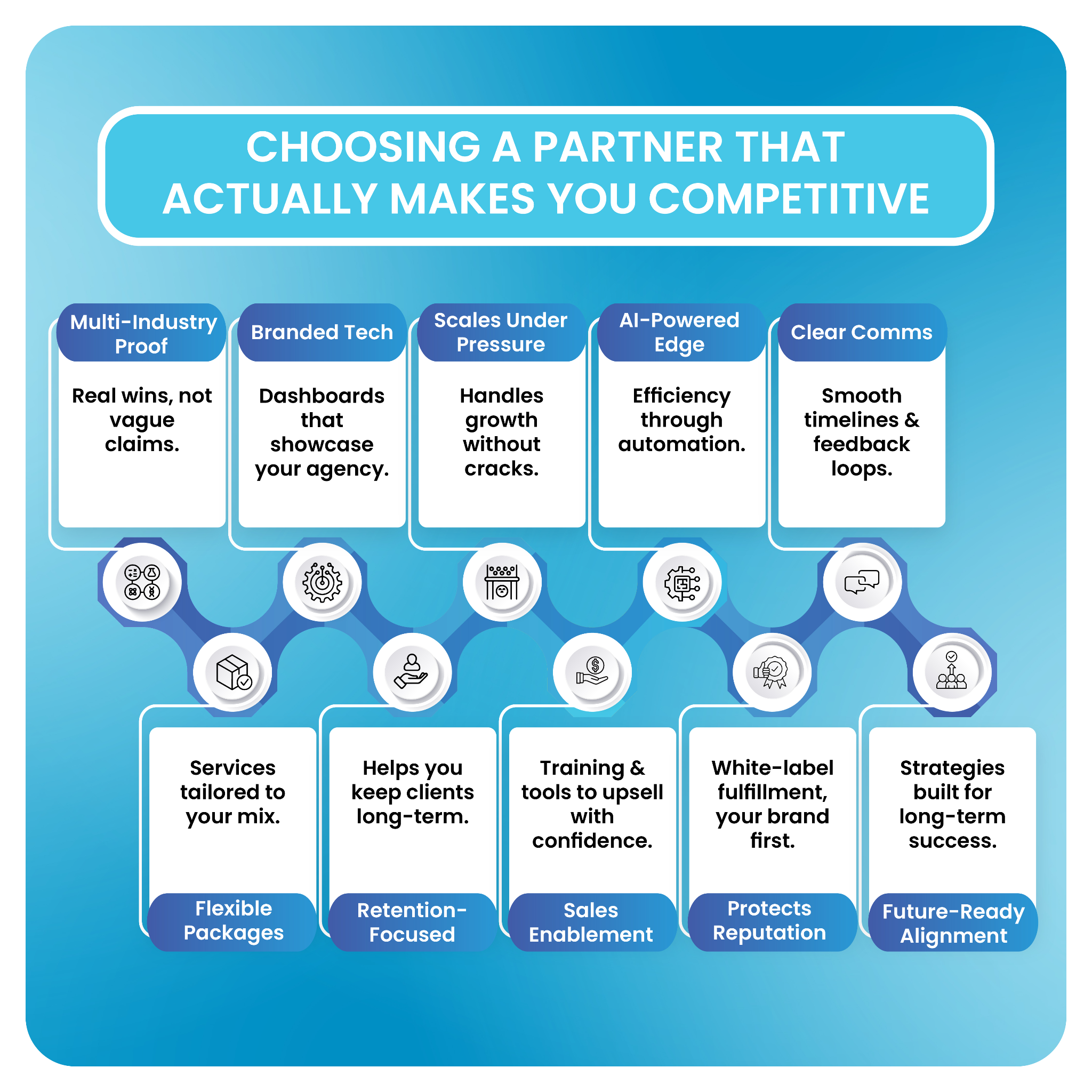
4. White Label PPC Improves Campaign Performance Consistency
Consistency keeps clients happy and reduces churn. Premium white label partners provide:
- Rigorous daily monitoring of all active campaigns
- Transparent reporting accessible to clients
- Proactive tracking management before issues escalate
- A reduction in campaign volatility
- Steady client growth rather than wildly fluctuating returns
Consider a scenario where an internal buyer goes on vacation, and a campaign's CPA doubles because nobody was monitoring the automated rules. White label PPC ensures uninterrupted oversight with dedicated teams and robust software systems; campaigns are monitored continuously, ensuring stable and consistent performance year-round.
5. Agencies Can Focus on High-Value Growth Activities
Offloading fulfillment changes the fundamental role of the agency owner. With execution handled externally, agencies can focus on:
- Client acquisition and new business development
- High-level strategy and advisory services
- Retention initiatives to protect existing revenue
- Upselling current accounts on additional services
- Transitioning from a service execution company to a strategic advisory firm
Scenarios where this model particularly thrives include:
- Performance Max optimization: The white label team handles the technical asset groups, while the agency owner discusses overarching business goals with the client.
- eEommerce Feed + Creative Management: The partner optimizes the catalog, while the agency consults the client on pricing strategies.
- Lead-gen First-Party Data Setup: The white label team integrates the CRM data, allowing the agency to upsell the client on email marketing automations.
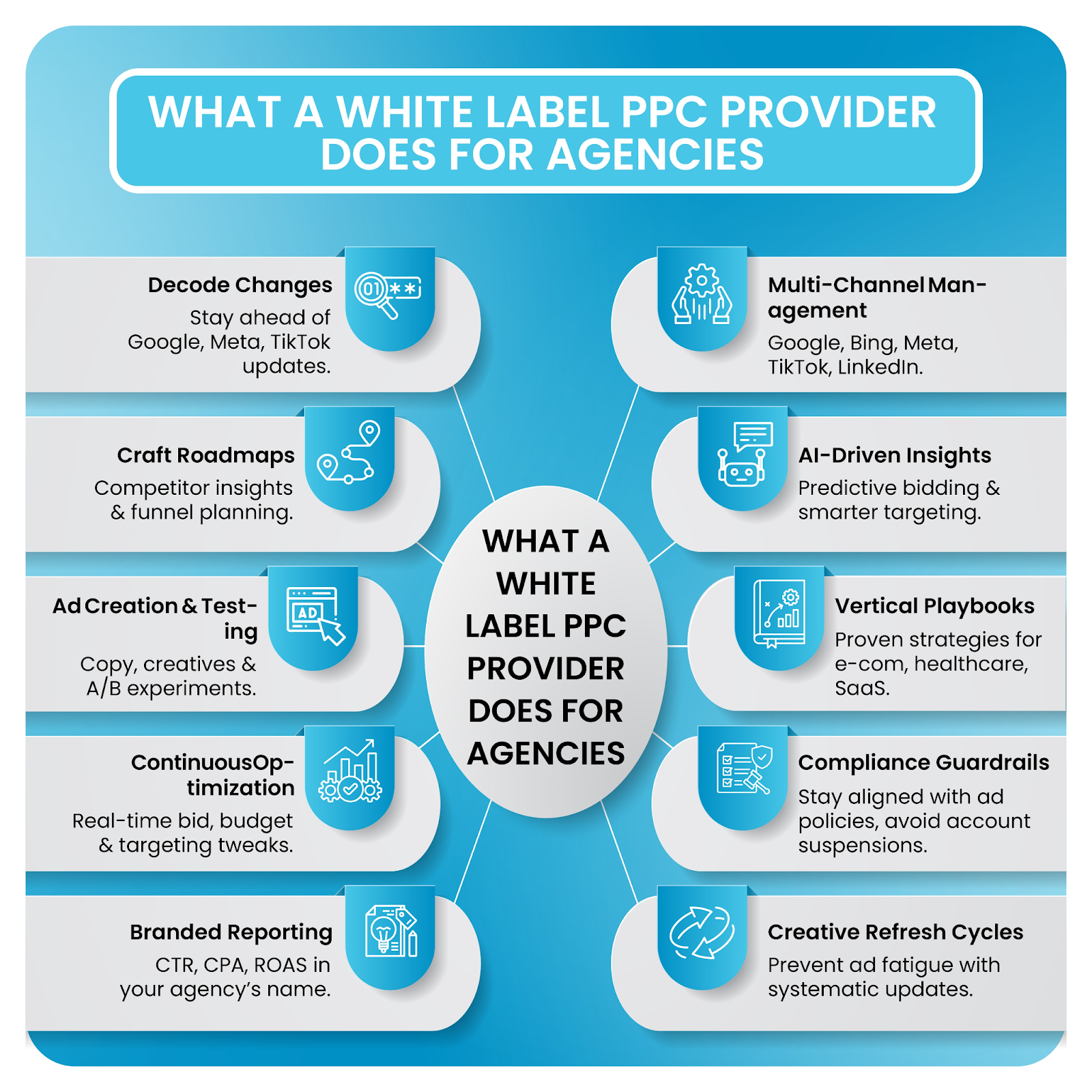
In a PPC landscape driven by automation, AI, and rapid platform evolution, adaptability is becoming the defining advantage.
How DashClicks’ White Label PPC Services Help Agencies Stay Competitive?
Finding the right fulfillment partner is critical for agency adaptation. DashClicks’ white label PPC services are designed to help marketing agencies scale faster.
1. Specialized PPC Support
- Fully white labeled fulfillment delivered by experts with over 15 years of experience
- The fulfillment team handles the heavy lifting of campaign management
- Services include strategy development, ad creation, bid management, and continuous optimization
- Agencies can confidently offer high-level paid media services without needing to hire an internal media buying department
2. Faster Campaign Execution
- Agencies need to move quickly to secure client trust
- DashClicks provides easy online ordering and an intuitive onboarding process
- This streamlined process allows agencies to launch client campaigns much faster than traditional internal setups
- Faster execution means clients see data and results sooner
3. Reporting and Visibility
- Client retention relies heavily on transparent reporting
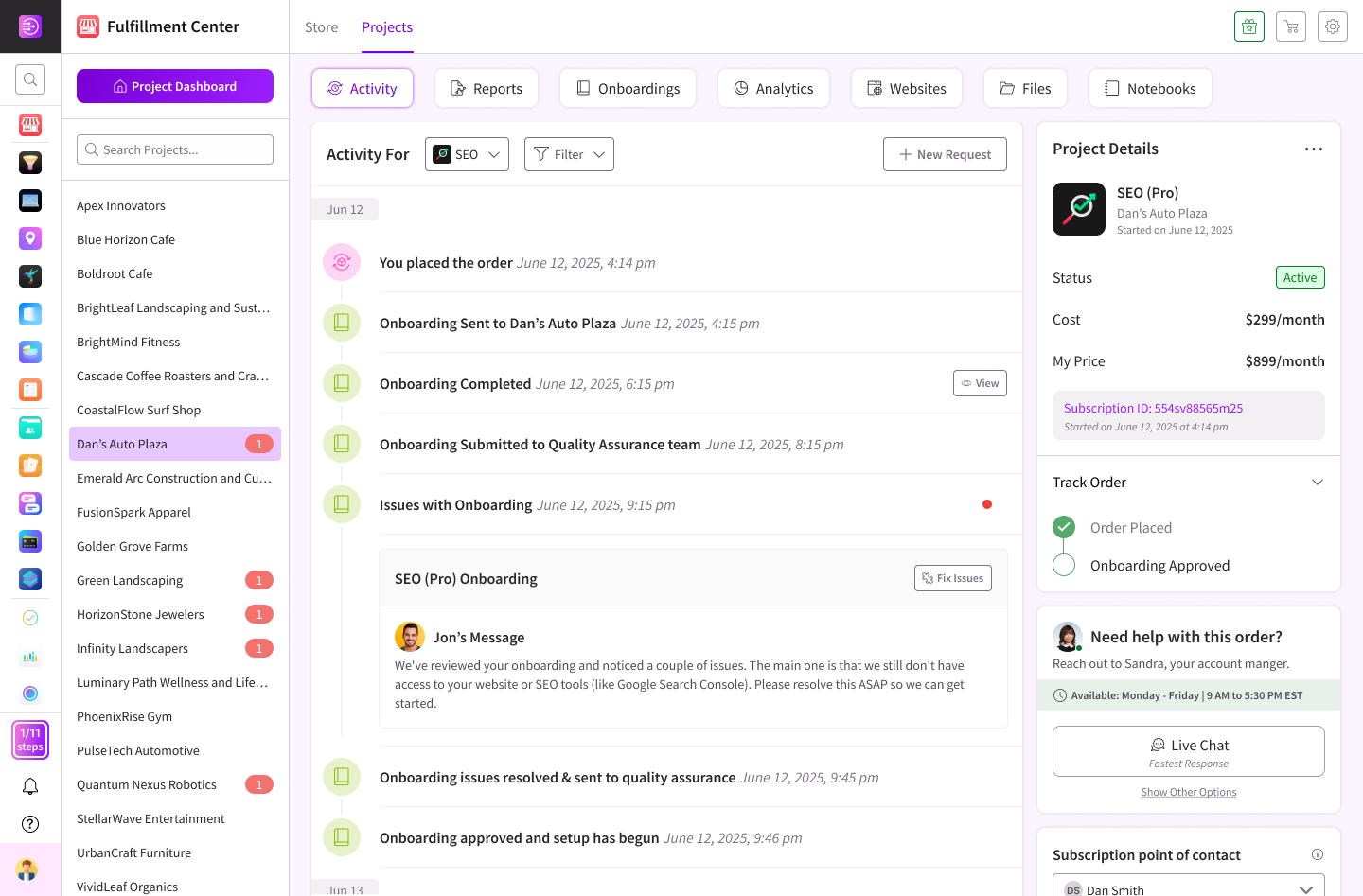
- DashClicks provides a unified white label client dashboard
- Agencies can pull their data into one location for easier management
- Clients can log in and check on their own accounts using a fully branded dashboard
- This builds trust and reduces the time account managers spend building manual reports
4. Operational Flexibility
- Agencies must manage their workflows efficiently
- The DashClicks platform includes comprehensive project management tools
- Agency owners can oversee analytics, manage teams, and track project fulfillment in real time
- This single platform ecosystem removes the friction of jumping between multiple disparate software tools
5. Scalable Agency Growth
- Scaling an agency requires repeatable processes
- DashClicks allows agencies to resell services under their own brand
- With unlimited sub-accounts and unlimited users, agencies can grow their client base without facing technical limitations
- The platform provides the necessary infrastructure to maintain quality while increasing volume
The Future of Agency Adaptation
Modern pay-per-click advertising is too fast-moving and technically demanding for many agencies to manage efficiently using traditional internal structures. Utilizing a white label PPC agency is a competitive adaptation strategy.
Agencies that leverage specialized white label PPC support can:
- Adapt faster to platform changes as they happen
- Maintain stronger campaign performance for their clients
- Reduce operational strain on internal teams
- Scale more efficiently without proportional overhead increases
- Stay competitive in AI-driven advertising ecosystems
The future of digital advertising belongs to agencies that evolve operationally as quickly as the platforms themselves. Evaluate your current fulfillment processes and consider integrating a white label partner to secure long-term agency growth.


.svg)


.svg)
.svg)
.svg)
.svg)
.svg)